
Plot Summary
Prologue: Shadows in the Garden
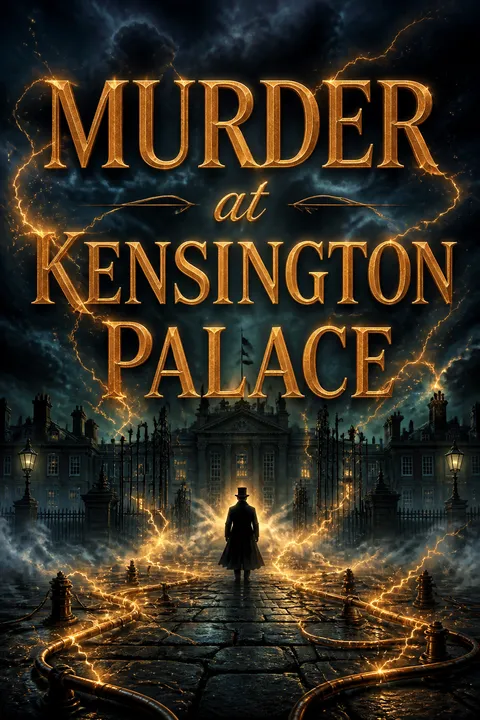
At a scientific gathering in Kensington Palace, the future of discovery is toasted by London's brightest minds. Among them are the Chittenden twins, Cedric and Nicholas, whose sibling rivalry simmers beneath their golden charm. After the party, Cedric wanders the misty palace gardens, lost in thought and wine. He is ambushed and murdered in Queen Anne's Alcove, his body left with a single, precise wound and a gruesome mutilation. The killer, cloaked in darkness, whispers that Cedric's death serves a greater purpose. The night's beauty is shattered by violence, setting the stage for a mystery that will entwine science, ambition, and the secrets of the heart.
The Bloody Butcher Strikes
Charlotte Sloane, satirical artist and secret aristocrat, learns of another "Bloody Butcher" murder—this time, a titled gentleman. The city buzzes with horror and speculation. Charlotte's young wards, Raven and Hawk, bring her the news, and she quickly realizes the victim's identity will shake the highest circles. She seeks information from her friend and sometimes adversary, the Earl of Wrexford, a brilliant but volatile chemist. Their partnership, forged in previous investigations, is tested anew as they confront the possibility that the killer is not a madman preying on the poor, but someone with access to the elite. The city's appetite for scandal grows, and Charlotte's own past threatens to resurface.
Secrets and Suspicions
Charlotte's world tilts when she learns the murdered man is Cedric Chittenden, her beloved cousin and childhood companion. The shock is so profound she faints—a rare loss of composure for the fiercely independent woman. Wrexford, unsettled by her reaction, suspects a deeper connection. As Charlotte recovers, she is torn between grief and duty. The investigation becomes personal, and her carefully constructed life—built on secrecy and self-reliance—begins to unravel. Meanwhile, Nicholas, Cedric's twin, is arrested for the murder, the evidence damning and the motive—inheritance—clear. Charlotte's loyalty is tested as she vows to prove Nicholas's innocence, even if it means exposing her own hidden identity.
A Family Shaken
Charlotte's memories of childhood with Cedric and Nicholas flood back, intensifying her resolve. She recalls their shared mischief and the love that once bound them. Now, with Nicholas accused of fratricide, the family is shattered. Charlotte's grief is compounded by fear for Nicholas, who languishes in Newgate, bewildered and desperate. Wrexford, recognizing the depth of Charlotte's attachment, commits to helping her, despite his skepticism about Nicholas's innocence. The investigation draws in their circle of friends and allies, each with their own secrets and vulnerabilities. The stakes rise as Charlotte realizes that saving Nicholas may require sacrificing her hard-won independence and anonymity.
The Accused Twin
Wrexford and Charlotte visit Nicholas in prison. He swears his innocence, but the evidence—a bloody knife and incriminating handkerchief—seems insurmountable. Nicholas reveals tensions within the Eos Society, a group of young intellectuals fascinated by radical science and social reform. He mentions rivalries over love and money, particularly with Sir Kelvin Hollister and Benjamin Westmorly. The investigators pursue these leads, questioning whether the murder was a crime of passion, a calculated act, or something more sinister. The city's underworld offers little help, and the possibility that the real killer is hiding among the elite becomes ever more likely.
The Eos Society's Mysteries
The Eos Society, named for the goddess of dawn, is a haven for brilliant but reckless young men. Their debates on science, politics, and philosophy are tinged with rivalry and ambition. Cedric, Nicholas, Hollister, and Westmorly are at the center, their relationships complicated by romantic entanglements and financial disputes. The society's experiments with electricity—particularly the voltaic pile—hint at a fascination with the boundaries of life and death. As Wrexford and Charlotte probe deeper, they uncover a culture of secrecy and competition, where the pursuit of knowledge may have crossed into obsession and madness.
Science, Scandal, and Satire
Charlotte's alter ego, A. J. Quill, shapes public opinion with biting caricatures and commentary. Her latest drawing casts doubt on Nicholas's guilt, stirring debate and outrage. The investigation takes her from the glittering salons of Mayfair to the grimy streets of London, where she gathers information from urchins, servants, and criminals. Wrexford's scientific expertise and connections at the Royal Institution provide another avenue of inquiry. Together, they navigate a world where reputation is everything, and the line between genius and madness is perilously thin. The city's hunger for scandal threatens to consume the truth.
Clues in the Shadows
Raven and Hawk, Charlotte's resourceful wards, uncover a crucial clue: a distinctive Wellington hat seen at multiple murder scenes. Hawk's keen eye for detail and budding talent for art help reconstruct the suspect's appearance. Meanwhile, Charlotte finds snuff at the crime scene, its unique scent offering another thread to follow. The investigation becomes a race against time, as Nicholas's trial looms and the killer remains at large. The clues point to someone within the Eos Society or their circle, but the evidence is maddeningly elusive. Charlotte's intuition and Wrexford's logic are tested to their limits.
The Brothel and the Body
Wrexford and his friend Sheffield visit Boudicca's Bosom, an exclusive brothel, to verify Nicholas's alibi. Jeannette, a courtesan, confirms Nicholas's presence but also reveals strange marks on Cedric's body—burns and cuts suggestive of dangerous experiments. Wrexford and surgeon Henning examine Cedric's corpse, finding evidence of electrical burns and a fragment of copper wire. The investigation uncovers a world of clandestine scientific inquiry, where the boundaries of morality and reason are blurred. The possibility that Cedric's death is linked to radical experiments with electricity becomes increasingly likely.
The Voltaic Pile
The voltaic pile, a revolutionary scientific device, becomes central to the mystery. Nicholas and the Eos Society have been experimenting with it, inspired by the work of Galvani, Aldini, and Volta. The experiments, meant to unlock the secrets of life, have taken a dark turn. Cedric's body bears the marks of these dangerous pursuits, and the obsession with reanimation and vital forces haunts the investigation. Wrexford and Charlotte grapple with the ethical implications, questioning whether the pursuit of knowledge has unleashed forces beyond their control. The line between scientific curiosity and madness grows ever thinner.
Dangerous Experiments
As the investigators delve deeper, they uncover a web of ambition, jealousy, and betrayal. Hollister and Westmorly's involvement in the experiments is confirmed, and the rivalry over Lady Julianna Aldrich adds another layer of complexity. The Eos Society's quest for fame and immortality has led to reckless and unethical actions. The discovery of a hidden laboratory, secret experiments, and the use of rare botanical ingredients in the voltaic pile point to a conspiracy that reaches beyond personal vendettas. The danger intensifies as the killer grows more desperate to protect their secrets.
Society's Masks Unveiled
Charlotte makes the momentous decision to reveal her aristocratic heritage, enlisting the help of her formidable great-aunt, Lady Peake. The revelation shocks her friends and wards but ultimately strengthens their bond. The investigation becomes a collective effort, with each member of the unconventional family contributing their skills and courage. The masks of society are stripped away, exposing the vulnerabilities and strengths of each character. Charlotte's willingness to sacrifice her independence for justice inspires those around her, and the power of love and loyalty becomes a force for hope in the face of darkness.
The Price of Truth
The investigation reaches its climax as the clues converge on Lady Julianna Aldrich and her guardian, DeVere. The rare plant Curcuma longa, found only in Kew Gardens, is identified as a key ingredient in the killer's experiments. Charlotte, risking everything, infiltrates DeVere's villa and discovers a hidden laboratory where Julianna, driven mad by grief and ambition, plans to use her as the final subject in a grotesque experiment. The truth is revealed: the murders were committed in the name of scientific progress, but at the cost of humanity and reason. In a desperate struggle, Charlotte defeats Julianna, ending the reign of terror.
Revelations and Resolutions
With the killer unmasked and Nicholas exonerated, the circle of friends gathers to celebrate survival and the triumph of good over evil. The scars of the ordeal remain, but the bonds of love and friendship are stronger than ever. Wrexford and Charlotte, having faced death and darkness together, acknowledge the depth of their feelings. The future is uncertain, but hope prevails. The lessons of the past—about the dangers of unchecked ambition, the importance of compassion, and the power of truth—resonate as the characters look ahead to new challenges and adventures.
The Dragon's Return
Lady Peake, the indomitable dowager, orchestrates Charlotte's reentry into society. Her wit, wisdom, and fierce loyalty provide a bulwark against the judgment and gossip of the ton. Charlotte's transformation from anonymous artist to celebrated lady is both daunting and liberating. The support of her unconventional family—Wrexford, the boys, McClellan, and their friends—gives her the strength to face the future. The world of balls, salons, and intrigue awaits, but Charlotte is determined to remain true to herself and her values.
Games of Chance
Sheffield, inspired by Lady Cordelia Mansfield, learns the mathematics of probability and the art of making choices. The theme of risk—whether in science, love, or life—runs through the narrative. The characters grapple with uncertainty, weighing the odds and trusting their instincts. The investigation itself is a game of chance, where intuition and logic must work together. The courage to act, even in the face of fear and doubt, becomes the defining trait of the heroes.
The Hat and the Hunter
The distinctive Wellington hat, seen at multiple crime scenes, becomes the symbol of the hunter and the hunted. The investigation narrows as Charlotte and Wrexford piece together the evidence, realizing that the killer has been hiding in plain sight. The pursuit becomes a test of wits and will, culminating in a final confrontation where the truth is revealed and justice is served. The hat, once a clue, becomes a reminder of the dangers of deception and the importance of seeing beyond appearances.
The Botanist's Secret
A visit to Kew Gardens uncovers the final piece of the puzzle: the rare Curcuma longa plant, used in the killer's experiments. Hawk's keen observation and Charlotte's intuition lead to the discovery that only someone with access to the Royal Botanic Gardens could have obtained the ingredient. The connection to DeVere and Julianna is confirmed, and the investigators race to prevent another murder. The beauty of the gardens contrasts with the horror of the crimes, underscoring the duality of nature and human ambition.
The Final Experiment
Charlotte confronts Julianna in the hidden laboratory, where the boundaries between science and madness dissolve. Julianna, consumed by her quest to conquer death, reveals the full extent of her crimes. The final experiment is a grotesque parody of scientific progress, fueled by grief, obsession, and the desire for immortality. In a desperate struggle, Charlotte uses her wits and courage to survive, destroying the evidence and ending Julianna's reign of terror. The cost of ambition is laid bare, and the true meaning of life and love is affirmed.
Death and Discovery
The aftermath of the ordeal brings relief, sorrow, and reflection. Nicholas is freed, DeVere faces the consequences of his complicity, and the circle of friends gathers to celebrate survival. Wrexford and Charlotte, having faced death together, find solace in each other's arms. The lessons of the past—about the dangers of unchecked ambition, the importance of compassion, and the power of truth—resonate as the characters look ahead to new challenges and adventures. The darkness has been dispelled, but the journey toward healing and hope continues.
Love and Light
In the story's final moments, the characters gather to celebrate life, love, and the triumph of good over evil. Charlotte and Wrexford, their bond deepened by adversity, look to the future with hope and determination. The boys, now part of a loving family, embrace new opportunities. Lady Peake, the Dragon, stands as a guardian of tradition and change. The world is still full of uncertainty, but the light of friendship, courage, and love shines brightly. The dance of life continues, with all its risks, joys, and surprises.
Analysis
A modern reflection on ambition, ethics, and the power of chosen familyMurder at Kensington Palace is more than a historical mystery—it is a meditation on the costs and consequences of ambition, the ethical boundaries of scientific progress, and the enduring need for love and belonging. Set against the backdrop of Regency London's intellectual ferment, the novel explores how the pursuit of knowledge can inspire both wonder and horror. The dangers of unchecked ambition, the seduction of power, and the temptation to sacrifice humanity for progress are embodied in the tragic figure of Lady Julianna and her circle. Yet, the story's heart lies in the resilience of its characters—the courage to face loss, the willingness to risk vulnerability, and the healing found in friendship and chosen family. Charlotte and Wrexford's partnership, built on mutual respect and emotional honesty, offers a model for navigating uncertainty and embracing change. The novel ultimately affirms that light can triumph over darkness, not through genius or force, but through compassion, integrity, and the willingness to stand together against the shadows.
Review Summary
Characters
Charlotte Sloane
Charlotte is the heart of the story—a woman who has built a life on wit, resilience, and secrecy. Once Lady Charlotte Mallory, she fled the constraints of aristocratic society to become A. J. Quill, London's most incisive satirical artist. Her sharp mind and keen eye for detail make her a formidable investigator, but her greatest strength is her capacity for love and loyalty. The murder of her cousin Cedric shatters her carefully constructed world, forcing her to confront her past and risk everything for justice. Her relationship with Wrexford is a dance of intellect, passion, and vulnerability, as both struggle to trust and open their hearts. Charlotte's journey is one of self-discovery, sacrifice, and the courage to embrace both her strengths and her fears.
Earl of Wrexford
Wrexford is a man of science and contradictions—rational, logical, and often caustic, yet capable of deep loyalty and compassion. Haunted by the loss of his brother and the burdens of his past, he finds solace in the order of chemistry and the challenge of unraveling mysteries. His partnership with Charlotte is both a source of frustration and inspiration, as her intuition and emotional intelligence complement his analytical mind. Wrexford's journey is one of learning to trust, to feel, and to accept that love and logic are not mutually exclusive. His willingness to risk his reputation and safety for Charlotte and her family reveals a core of honor and courage beneath his sardonic exterior.
Nicholas Locke
Nicholas is Cedric's twin, caught in a web of suspicion and betrayal. Sensitive, intelligent, and prone to self-doubt, he is devastated by his brother's death and his own implication in the crime. His relationship with Charlotte is rooted in childhood affection and shared memories, but the ordeal of imprisonment and accusation forces him to confront his own weaknesses and strengths. Nicholas's innocence is ultimately proven, but not before he is tested by fear, guilt, and the threat of execution. His journey is one of survival, redemption, and the enduring power of family bonds.
Cedric Chittenden
Cedric is the golden twin—charming, ambitious, and driven by a passion for discovery. His involvement in the Eos Society and dangerous experiments with electricity make him both a pioneer and a victim of his own curiosity. Cedric's death is the catalyst for the story, exposing the dark side of ambition and the perils of unchecked scientific inquiry. His memory haunts Charlotte and Nicholas, serving as a reminder of the cost of genius and the fragility of life.
Lady Julianna Aldrich
Julianna is a brilliant, beautiful heiress with a fascination for science, mysticism, and the boundaries of life and death. Her traumatic past and obsession with reanimation drive her to madness and murder. As the mastermind behind the Bloody Butcher murders, she manipulates those around her—Hollister, DeVere, and even Charlotte—in pursuit of her vision. Julianna's character is a study in the dangers of unchecked ambition, the allure of power, and the tragic consequences of losing touch with humanity.
Justinian DeVere
DeVere is a wealthy, influential scholar who serves as Julianna's guardian and the Eos Society's patron. His encouragement of radical inquiry and his own fascination with the limits of science make him both a guide and a cautionary figure. DeVere's complicity in Julianna's crimes is rooted in his belief that genius requires sacrifice, but his failure to intervene leads to tragedy. His character embodies the ethical dilemmas of scientific progress and the responsibility of those in power.
Sir Kelvin Hollister
Hollister is a member of the Eos Society, driven by ambition and rivalry with Cedric and Westmorly. His involvement in the experiments and subsequent panic make him both a perpetrator and a victim. Hollister's weakness and susceptibility to manipulation lead to his downfall, illustrating the dangers of peer pressure, envy, and the desire for recognition.
Benjamin Westmorly
Westmorly is a clever but unscrupulous member of the Eos Society, skilled at mathematics and games of chance. His discovery of the group's secrets and attempt to profit through blackmail seal his fate. Westmorly's character highlights the corrosive effects of greed and the risks of playing with forces beyond one's understanding.
Lady Cordelia Mansfield
Cordelia is a formidable intellect, unafraid to challenge convention and pursue her passions. Her friendship with Sheffield and her role in the investigation provide both insight and emotional depth. Cordelia's willingness to defy societal expectations and her loyalty to her friends make her a symbol of female empowerment and the importance of intellectual curiosity.
Raven and Hawk
Raven and Hawk are Charlotte's adopted family—streetwise, clever, and fiercely loyal. Their sharp eyes and quick wits provide crucial clues in the investigation, while their vulnerability and longing for belonging add emotional resonance. The boys' growth, nurtured by Charlotte's love and Wrexford's mentorship, embodies the story's themes of found family, resilience, and hope.
Plot Devices
Dual Narrative Structure
The novel employs a dual narrative, shifting between Charlotte's and Wrexford's points of view. This structure allows readers to experience the emotional and intellectual challenges of the investigation from both a rational and intuitive perspective. The interplay of logic and feeling, skepticism and faith, mirrors the central themes of the story and heightens the suspense as the mystery unfolds.
Foreshadowing and Red Herrings
The plot is rich with foreshadowing—early references to the voltaic pile, the Eos Society's ambitions, and the distinctive Wellington hat all hint at deeper mysteries. Red herrings, such as the suspicion cast on Nicholas, Hollister, and Cordelia, keep readers guessing and reflect the uncertainty and complexity of real investigations. The gradual revelation of clues, often through small details and seemingly insignificant observations, rewards careful reading and underscores the importance of intuition and perseverance.
Symbolism and Motifs
Electricity, light, and scientific experimentation serve as both literal and metaphorical motifs. The voltaic pile symbolizes the double-edged nature of progress—capable of illuminating or destroying. The motif of transformation—whether through disguise, personal growth, or scientific discovery—runs throughout the narrative, reflecting the characters' journeys and the era's spirit of change. The Wellington hat, the rare plant, and the cards all function as symbols of identity, ambition, and the search for meaning.
Social Commentary and Satire
Charlotte's alter ego, A. J. Quill, provides a lens for social commentary, using satire to expose hypocrisy, injustice, and the absurdities of the era. The interplay of public scandal and private suffering highlights the power of reputation and the dangers of gossip. The novel critiques the limitations placed on women, the ethical dilemmas of scientific progress, and the complexities of class and privilege.
Found Family and Emotional Arc
At its core, the story is about the creation of a chosen family—people bound not by blood, but by love, loyalty, and shared struggle. The emotional arc follows Charlotte and Wrexford as they move from guarded independence to mutual trust and vulnerability. The boys' journey from street urchins to beloved sons, and the support of friends like Lady Peake, Cordelia, and Sheffield, underscore the healing power of connection and the possibility of redemption.
Download PDF
Download EPUB
.epub digital book format is ideal for reading ebooks on phones, tablets, and e-readers.








































