
Plot Summary
Prisoner in Jerusalem
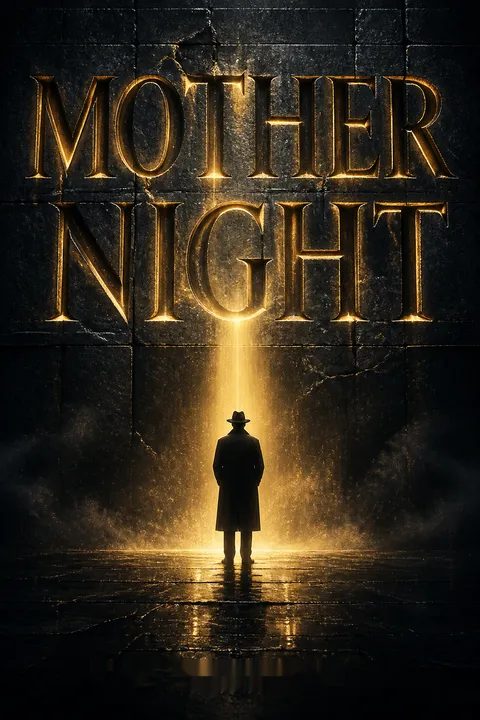
Howard W. Campbell, Jr., an American by birth and Nazi by reputation, sits in a Jerusalem jail cell in 1961, awaiting trial for war crimes. He writes his confessions for the Haifa Institute for the Documentation of War Criminals, reflecting on his life and the strange journey that brought him here. The cell is ancient, the stones older than memory, and Campbell feels as if his crimes are as old as the city itself. He is guarded by young Israelis who barely remember the war, and he is haunted by the question of who he really is: a traitor, a patriot, or simply a man who pretended too well. The moral, he says, is simple: we are what we pretend to be, so we must be careful about what we pretend to be.
Four Guards, Four Stories
Each of Campbell's four rotating guards in Jerusalem embodies a different response to the Holocaust and the war. Arnold Marx, young and indifferent, is more interested in archaeology than history. Andor Gutman, a survivor of Auschwitz, is haunted by shame for volunteering for the Sonderkommando, the "corpse-carriers." Arpad Kovacs, who survived by joining the Hungarian SS, is both proud and bitter, seeing survival as a matter of cunning rather than virtue. Bernard Mengel, who once played dead to survive, recognizes in Campbell a rare bad conscience. Through their stories, Campbell is forced to confront the spectrum of guilt, complicity, and survival, and the ways people rationalize or are broken by their pasts.
The Propagandist's Mask
Campbell recounts his transformation from a playwright in Berlin to the infamous Nazi radio propagandist. Married to Helga, a beloved German actress, he is recruited by an American agent—his "Blue Fairy Godmother"—to become a spy, encoding information in his broadcasts. To the world, he is a monster; secretly, he serves the Allies. Yet, the line between performance and reality blurs. His broadcasts are filled with venomous lies, but he is never sure if the good he does in secret can outweigh the evil he does in public. The mask he wears becomes his identity, and he wonders if there is any "real" self left beneath the layers of pretense.
Nation of Two
Campbell's marriage to Helga is his only refuge, a "nation of two" untouched by the madness outside. Their love is uncritical, passionate, and insular, a private world where words and politics lose meaning. When Helga is lost during the war, presumed dead, Campbell's world collapses. He clings to her memory, making her the axis of his emotional life, even as he continues his dangerous double role. The loss of Helga marks the end of his innocence and the beginning of his long exile from meaning and belonging.
The Blue Fairy Godmother
Campbell's recruitment by the American agent, Major Frank Wirtanen, is both a blessing and a curse. Wirtanen warns him that his service will never be acknowledged, that he will be hated by all, and that there will be no redemption or "olly-olly-ox-in-free" for him. Campbell's role as a spy requires him to become the perfect Nazi, to commit treason and serve evil openly while serving good in secret. The price is his soul: he will never be able to prove his innocence, and the world will remember only his crimes.
War's End, New York's Purgatory
After the war, Campbell is spirited away to New York under a false name, living in a squalid attic in Greenwich Village. He is left alone, forgotten, and unpunished, his infamy fading into rumor. He lives on inherited money, surrounded by war-surplus goods, haunted by memories and guilt. His only solace is the hope that Helga might still be alive. The city is his purgatory, a place of endless waiting and hiding, where he longs for someone to call him home, to end his game of hide-and-seek.
The Chess Set Neighbor
Campbell's isolation is broken by his friendship with George Kraft, a neighbor and painter who is secretly a Russian spy. Their bond is genuine, built over chess games and shared loneliness, but Kraft's motives are ultimately duplicitous. He manipulates Campbell, drawing him into a web of intrigue that will later be revealed as a Communist plot. The friendship is a bittersweet reminder of the possibility of connection, even as it is poisoned by deception.
Hate Mail and Old Friends
Campbell's anonymity is shattered when hate mail and threats begin to arrive, spurred by a neo-Nazi newspaper and the machinations of Kraft. Old enemies, like Bernard O'Hare, the American soldier who captured him, reappear, filled with rage and a desire for vengeance. Campbell is forced to confront the consequences of his public persona, as well as the impossibility of escaping his past. The world, it seems, will not let him forget or forgive.
The Return of Helga
In a twist of fate, Campbell is reunited with Helga—or so he believes—through the intervention of Dr. Jones, a deranged American fascist. The reunion is overwhelming, a resurrection of his lost "nation of two." Helga's story of survival is harrowing, but her presence revives Campbell's hope and desire for life. Together, they dream of starting anew, but the joy is short-lived, as the truth behind her return begins to unravel.
The Sister's Deception
The woman Campbell believes to be Helga is revealed to be Resi, Helga's younger sister, who has assumed her identity out of love and desperation. Resi's deception is both a crime and a tragedy; she loves Campbell, but her love is built on a lie. Campbell, devastated, is forced to confront the emptiness of his longing and the impossibility of reclaiming the past. The revelation shatters his last illusion of happiness and belonging.
The Communist Trap
Campbell learns that both Kraft and Resi are Communist agents, sent to lure him out of hiding and deliver him to the Soviets. Their plan is to kidnap him and use him as propaganda, a symbol of American complicity with Nazism. The betrayal is complete: friend and lover alike have used him for their own ends. Yet, even in betrayal, there is ambiguity—Resi's love is real, and Kraft's friendship, though tainted, is not entirely false. Campbell is left with nothing but the bitter knowledge of his own expendability.
The Final Betrayal
As the authorities close in, Resi, unable to face deportation and the loss of Campbell's love, takes her own life with cyanide. The raid on Dr. Jones' house sweeps up all the conspirators, and Campbell is left alone, stripped of all illusions and attachments. He is released, but finds himself paralyzed by purposelessness, unable to move or act. The world has no place for him, and he has no reason to go on.
The Trial Approaches
In Jerusalem, Campbell awaits his trial, knowing that the evidence against him is overwhelming and that no one will testify in his favor. His only hope is the elusive Wirtanen, who alone can prove his innocence. Letters from old friends and enemies arrive, each reflecting a different facet of his fractured identity. Campbell reflects on the impossibility of justice or redemption, and the futility of seeking meaning in a world that has lost its bearings.
Letters and Legacies
Campbell receives three letters: a form letter from a toy company, a stockbroker's pitch, and, finally, a letter from Wirtanen, who breaks protocol to confirm Campbell's role as an American agent. This letter, at last, offers the possibility of exoneration, but it comes too late. Campbell is overwhelmed by the absurdity of his life, the impossibility of reconciling his actions with their consequences, and the emptiness of freedom without purpose.
The Last Confession
As the trial looms, Campbell resolves to end his own life, unable to bear the weight of his crimes—against others and against himself. He recognizes that he has become what he pretended to be, that his masks have consumed him. In his final confession, he offers no excuses, only the hope that his story might serve as a warning: that the roles we play can become our reality, and that the line between good and evil is perilously thin.
Analysis
A meditation on identity, complicity, and the dangers of self-deceptionMother Night is a darkly comic, deeply unsettling exploration of the ways in which individuals become complicit in evil—not through monstrous intent, but through the gradual erosion of self, the seductions of performance, and the rationalizations of survival. Vonnegut's central moral—"we are what we pretend to be, so we must be careful about what we pretend to be"—resonates in an age of propaganda, ideological extremism, and moral ambiguity. The novel refuses easy answers: Campbell is neither hero nor villain, but a man destroyed by his own masks. The story interrogates the nature of guilt, the limits of redemption, and the impossibility of separating public actions from private intentions. In a world where truth is elusive and roles are inescapable, Mother Night warns that the line between good and evil is not only thin, but often invisible—and that the greatest danger lies in believing that we are immune to the roles we play.
Review Summary
Reviews of Mother Night are overwhelmingly positive, averaging 4.24/5. Readers praise Vonnegut's masterful blend of dark humor, moral ambiguity, and humanist philosophy. The novel's central protagonist, Howard W. Campbell Jr., an American Nazi propagandist and secret spy, embodies the book's famous moral: "We are what we pretend to be." Reviewers highlight themes of identity, self-agency, complicity, and the dangers of hate, noting the book's striking relevance to contemporary issues like fake news and extremism. Many consider it Vonnegut's finest or most underrated work.
People Also Read









Characters
Howard W. Campbell, Jr.
Campbell is the protagonist and narrator, an American expatriate who becomes a Nazi propagandist while secretly serving as an Allied spy. His psychological complexity is rooted in his ability to compartmentalize, to play roles so convincingly that he loses sight of his own identity. He is haunted by guilt, loneliness, and the impossibility of redemption. His love for Helga is the only genuine anchor in his life, but even that is ultimately lost. Campbell's journey is a meditation on the dangers of self-deception, the ambiguity of morality, and the tragic consequences of pretending to be what one is not.
Helga Noth
Helga is Campbell's German wife, an actress and the center of his emotional world. She represents purity, love, and the possibility of a private sanctuary amid chaos. Her presumed death in the war devastates Campbell, and her "return" (later revealed as a deception) briefly revives his hope. Helga's absence is a constant ache, and her memory becomes both a refuge and a curse. She is the idealized "other" that Campbell can never truly recover.
Resi Noth
Resi is Helga's younger sister, who assumes Helga's identity to win Campbell's love. Her actions are driven by longing, loneliness, and a desire to escape her own insignificance. Resi's love for Campbell is genuine, but it is built on a lie, and her eventual suicide is both an act of despair and a final, futile gesture of devotion. Resi embodies the theme of self-invention and the tragic consequences of living inauthentically.
George Kraft / Colonel Iona Potapov
Kraft is Campbell's neighbor and friend in New York, a painter and chess enthusiast who is secretly a Russian spy. His relationship with Campbell is sincere on one level, but ultimately instrumental—he manipulates Campbell for political ends. Kraft's duality mirrors Campbell's own, and their friendship is a study in the complexities of trust, betrayal, and the blurred lines between personal and political loyalty.
Major Frank Wirtanen / Blue Fairy Godmother
Wirtanen is the American intelligence officer who recruits Campbell as a spy. He is pragmatic, detached, and honest about the costs of espionage. Wirtanen offers Campbell the chance to serve a higher cause, but warns that there will be no recognition or absolution. He is the only character who can exonerate Campbell, but his help comes too late. Wirtanen represents the impersonal machinery of war and the moral ambiguity of intelligence work.
Dr. Lionel J. D. Jones, D.D.S., D.D.
Dr. Jones is a dentist turned publisher of a neo-Nazi newspaper, a grotesque figure whose bigotry and paranoia are both comic and chilling. He is a true believer, incapable of self-doubt or reflection, and serves as a foil to Campbell's self-awareness. Jones's world is one of conspiracy and hatred, and his presence underscores the persistence of fascism in postwar America.
Bernard B. O'Hare
O'Hare is the American soldier who captures Campbell at the end of the war and later seeks him out in New York, driven by a sense of personal and collective justice. He sees Campbell as pure evil, the dragon to his St. George, and is consumed by the need to punish him. O'Hare's obsession is both understandable and pitiable, a reflection of the difficulty of moving on from trauma and the dangers of righteous hatred.
Andor Gutman, Arpad Kovacs, Bernard Mengel, Arnold Marx
These men, who guard Campbell in Jerusalem, each represent a different response to the Holocaust and the war: survivor's shame, cunning adaptation, numbness, and indifference. Their stories provide a chorus of perspectives on guilt, complicity, and survival, and force Campbell—and the reader—to confront the moral complexities of history.
Heinz Schildknecht
Heinz is Campbell's closest friend in Germany, a fellow propagandist and ping-pong partner. Unbeknownst to Campbell, Heinz is a Jew and a member of the anti-Nazi underground. His postwar life is marked by survival and adaptation, and his eventual testimony against Campbell is a final twist in the web of hidden identities and shifting allegiances.
Abraham Epstein
Dr. Epstein is Campbell's neighbor in New York, a Jewish doctor whose mother survived Auschwitz. He is wary of Campbell, uninterested in the past, and ultimately refuses to help him until pressed by his mother. Epstein represents the new generation, focused on the present and the future, but still shaped by the legacy of trauma.
Plot Devices
Dual Identity and Unreliable Narration
The central device of the novel is Campbell's dual identity: Nazi propagandist and Allied spy. This duality is mirrored in the narrative structure, which is confessional but unreliable, filled with self-doubt, irony, and ambiguity. The reader is never entirely sure where Campbell's true loyalties lie, or whether he is capable of telling the truth even to himself. The motif of performance—on the radio, in relationships, in life—underscores the theme that identity is constructed, not innate.
Foreshadowing and Irony
Vonnegut employs foreshadowing throughout, hinting at betrayals, revelations, and the ultimate futility of Campbell's quest for redemption. Irony pervades the narrative: Campbell's greatest acts of good are secret, his greatest acts of evil are public; his love is genuine, but it is destroyed by deception; his confession is both an act of self-exposure and self-erasure.
Framing Device and Meta-Narrative
The novel is presented as Campbell's written confession, addressed to his jailers and the world. This framing device allows for self-reflection, digression, and commentary on the act of storytelling itself. The editor's notes and the inclusion of letters and documents further blur the line between fiction and reality, truth and performance.
Symbolism and Motifs
Recurring symbols—chess games, masks, the "nation of two," the broken attic, the pawn—reinforce the themes of strategy, duplicity, isolation, and the search for meaning. The motif of "olly-olly-ox-in-free" encapsulates Campbell's longing for absolution and the impossibility of escape from one's own actions.
About the Author
Other books by Kurt Vonnegut Jr.





Download PDF
Download EPUB
.epub digital book format is ideal for reading ebooks on phones, tablets, and e-readers.








































