
Plot Summary
Storm-Born on Tintagel Cliffs
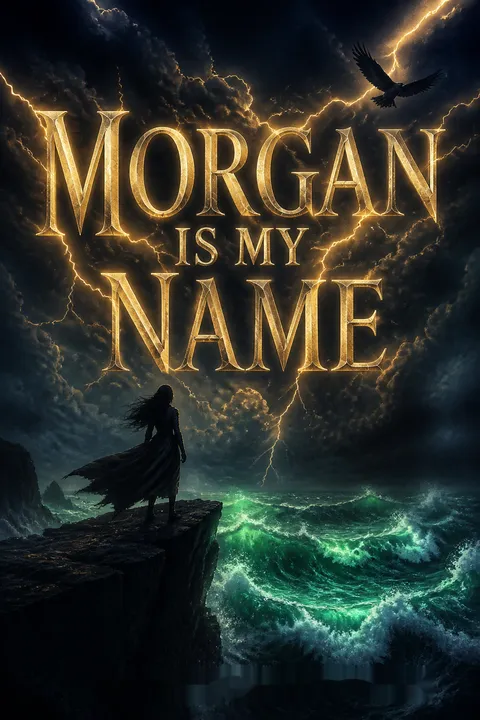
Morgan is born during a violent tempest at Tintagel, her mother Igraine convinced the sea itself delivered her. The stormy birth marks Morgan as different, her name meaning "sea-born." Growing up with her sisters Morgause and Elaine, Morgan is spirited, clever, and fiercely emotional, often at odds with her siblings and the expectations of her noble family. Her father, Gorlois, Duke of Cornwall, dotes on her, teaching her falconry and the value of freedom and survival. The family's happiness is shadowed by political unrest, but Morgan's early years are filled with warmth, learning, and the wild beauty of Cornwall's cliffs—a foundation for her resilience and longing for autonomy.
War, Sorcery, and Betrayal
The peace of Tintagel is destroyed when Uther Pendragon, the High King, covets both Cornwall and Igraine. War erupts, and Morgan overhears her parents' desperate plans to resist. Gorlois is killed in battle, but his "ghost" returns to Igraine—revealed to be Uther in disguise, aided by the sorcerer Merlin. The deception is devastating: Uther's lust and Merlin's magic force Igraine into marriage, and Morgan's childhood is shattered by loss, confusion, and the realization that power is wielded through violence and trickery. The trauma of her father's death and Uther's usurpation plants the seeds of Morgan's lifelong distrust of kings and sorcerers.
Uther's Conquest and Deceit
Uther claims Tintagel and Igraine, marrying her under threat. Morgan and her sisters are made princesses, but Morgan refuses to submit, publicly defying Uther and suffering his wrath. The new royal household is cold and dangerous, with Merlin's presence a constant threat. Morgan's grief for her father is compounded by her mother's withdrawal and Uther's brutality. She finds solace in learning and in the memory of her father's lessons, but the castle is now a place of fear. The birth of a new child—Arthur—under mysterious circumstances, and the disappearance of the infant, deepen Morgan's sense of injustice and her hunger for truth.
A New Queen, A Lost Father
Morgan is denied formal learning by Uther, but the chaplain, Father Felix, secretly tutors her in Latin, history, and science. She becomes fiercely intelligent, absorbing knowledge as a means of survival and resistance. Her sisters are married off for political gain, and Morgan is left increasingly isolated. She discovers a passion for healing and the natural world, finding power in knowledge forbidden to women. The memory of her father's falcon and the lessons of freedom and survival remain her guiding lights, even as Uther's rule grows more oppressive and her mother's spirit fades.
The Birth of Arthur
Igraine gives birth to a son, but the child is declared stillborn and whisked away by Merlin and a mysterious red-haired girl, Ninianne. Morgan suspects deception, witnessing the child's removal and the unnatural mist that accompanies Merlin. The loss is a wound for Igraine, who is forced to accept Uther's version of events. Morgan's sense of injustice deepens, and she becomes obsessed with uncovering the truth behind her brother's fate. The episode cements her distrust of Merlin and her understanding that women's lives are shaped—and often destroyed—by the ambitions of powerful men.
Lessons in Shadows
Morgan's secret education flourishes under Father Felix, who encourages her to pursue knowledge in defiance of Uther's edicts. She becomes adept in languages, science, and especially healing, finding in books a world where women can wield power. Her studies are a form of rebellion, and she dreams of using her skills to help others and to protect herself. The discovery of a medical text, the Ars Physica, becomes a turning point, fueling her ambition to master the mysteries of the body and the forces that govern life and death.
Sisters, Squires, and First Love
As her sisters are married off, Morgan is left alone at Tintagel, restless and yearning for connection. She meets Accolon, a squire from Gaul, whose skill and charm captivate her. Their friendship grows into a secret, passionate love, conducted in stolen moments and hidden places. Accolon becomes both confidant and co-conspirator, sharing Morgan's hunger for knowledge and freedom. Their love is a rebellion against the constraints of their world, but it is also fraught with danger, as discovery would mean ruin for both.
The Gaul and the Chess Set
Morgan and Accolon's relationship deepens, symbolized by a chess set he gifts her—a token of their intellectual and emotional bond. Their love is passionate but precarious, threatened by the ever-watchful eyes of the court and the violence of Uther's rule. When their affair is discovered, Morgan is beaten and Accolon is forced to flee. The loss is devastating, and Morgan is left to face the consequences alone. The chess set becomes a relic of lost love and a reminder of the risks women take for agency and desire.
Defiance, Punishment, and Exile
Morgan's refusal to submit to Uther's authority culminates in her public defiance and subsequent exile to a nunnery. Her mother, powerless to protect her, urges her to survive by submission, but Morgan's spirit remains unbroken. The journey to St. Brigid's Abbey is both a punishment and a liberation, offering escape from Uther but also severing her from home and family. The trauma of exile is tempered by the hope of finding purpose and community among women, and by the knowledge that survival is itself an act of resistance.
Sanctuary at St. Brigid's
At St. Brigid's, Morgan finds a haven among women scholars, healers, and outcasts. She befriends Alys, a fellow student, and together they pursue the arts of healing and scholarship. The abbey is a place of relative freedom, where Morgan's intellect and skills are valued. She excels in her studies, mastering the laying on of hands and the secrets of the body. The community of women offers solidarity and support, but also new challenges, as Morgan's ambition and curiosity push the boundaries of what is permitted.
Healing Hands, Forbidden Knowledge
Morgan's healing abilities grow, astonishing her teachers and peers. She discovers she can channel a mysterious force, healing wounds and curing illness with her touch. The abbey's prioress is both awed and alarmed, warning Morgan of the dangers of necromancy and the suspicion that follows women with unusual gifts. Morgan's powers are both a blessing and a curse, offering hope but also attracting fear and envy. The tension between faith and forbidden knowledge becomes a central struggle, as Morgan seeks to understand the true nature of her abilities.
The Black Book's Temptation
Morgan discovers a hidden black book of sorcery, filled with incantations and forbidden lore. Driven by desperation during a plague, she uses its spells to heal herself and her beloved friend Alys, risking her soul and her place at the abbey. The power is intoxicating, but the cost is high: suspicion, fear, and the threat of expulsion. Morgan is forced to choose between safety and the pursuit of knowledge, between the rules of the abbey and the needs of those she loves. The black book becomes a symbol of the double-edged nature of power for women.
Plague, Sacrifice, and Survival
A deadly illness sweeps the abbey, and Morgan's skills are put to the ultimate test. When Alys falls gravely ill, Morgan defies the prioress and uses the black book's magic to save her, risking everything. The act cements their bond and proves the depth of Morgan's love and courage. The experience is transformative, teaching Morgan that true power lies in sacrifice and the willingness to break rules for the sake of others. The cost is exile from the abbey's safety, but also the forging of an unbreakable sisterhood.
Summoned Back to Tintagel
Morgan is summoned back to Tintagel by Uther's decree, ostensibly to sign away her lands. She is escorted by Accolon, now a knight, and their reunion rekindles old feelings. Tintagel is both familiar and changed, haunted by memories and the ghosts of lost love. Morgan's mother is distant, and the court is rife with intrigue. The return is bittersweet, offering the hope of reconciliation but also the threat of renewed oppression. Morgan must navigate the treacherous waters of power, love, and loyalty, as old wounds are reopened and new dangers emerge.
The Return of Accolon
Morgan and Accolon's love is reignited, but the obstacles are greater than ever. Their secret meetings are fraught with risk, and the threat of discovery looms. The political machinations of the court intensify, with Morgan caught between her desire for freedom and the demands of duty. Accolon's loyalty is tested, and Morgan must decide whether to pursue love at any cost or to accept the limitations imposed by her world. The chess set reappears as a symbol of their enduring connection and the sacrifices required for agency.
Love, Loss, and Royal Schemes
Morgan's hopes for happiness are dashed when Accolon is forced to leave, and she is maneuvered into marriage with King Urien of Gore. The union is a political alliance, devoid of love, and Morgan is thrust into a new world of power and expectation. She finds herself isolated, her skills and ambitions stifled by a husband who values her only as a vessel for heirs. The pain of lost love and the constraints of queenship force Morgan to redefine herself, seeking purpose in secret work and the bonds of sisterhood.
Marriage, Power, and Disillusion
As Queen of Gore, Morgan faces the realities of royal life: endless duties, court intrigue, and the relentless pressure to produce an heir. Her husband's infidelity and the duplicity of those around her deepen her sense of alienation. She finds solace in her friendship with Alys and in her secret healing work among the women of the court and village. The birth of her son Yvain brings joy but also new challenges, as Morgan struggles to protect him and herself from Urien's control. The limits of endurance are tested, and Morgan's resolve is hardened by betrayal and disappointment.
The Queen's Secret Work
Morgan and Alys devote themselves to healing and the study of women's bodies, compiling a manuscript that will become their legacy. They treat the sick in secret, defying Urien's prohibitions and the expectations of their roles. The work is dangerous but vital, offering hope and empowerment to women otherwise ignored or oppressed. Morgan's skills grow, and she becomes a figure of quiet power, respected and feared in equal measure. The manuscript is a testament to the resilience and ingenuity of women, and to the possibility of change even within the strictures of patriarchy.
Betrayal, Fire, and Escape
Urien's violence escalates, culminating in a confrontation where Morgan, pushed to the brink, unleashes her magical power and burns him. The act is both liberation and damnation, forcing Morgan to flee with Alys, Tressa, and her son. With the help of loyal allies, they escape Gore and seek refuge in Camelot. The journey is perilous, but Morgan's resolve is unbreakable. She is transformed by the experience, embracing her identity as a woman of power, a healer, and a survivor. The fire that once threatened to consume her becomes the force that sets her free.
Camelot's Dawn, Morgan's Rebirth
Morgan arrives at Camelot, welcomed by her brother Arthur, now High King. The city is a beacon of hope and possibility, a place where Morgan can finally live on her own terms. She is reunited with her mother and sisters, forging new bonds and healing old wounds. The legacy of trauma and betrayal is not erased, but Morgan is no longer defined by it. She claims her place as a woman of power, wisdom, and agency, ready to shape her own destiny and to help build a world where women's voices and gifts are honored. The story ends not with an ending, but with a beginning—a promise of freedom, healing, and the enduring strength of women.
Analysis
A modern feminist reclamation of myth and agencyMorgan Is My Name is a powerful reimagining of the Arthurian legend, centering the voice and experience of Morgan le Fay—a figure long maligned and misunderstood. Sophie Keetch's novel is both a gripping narrative and a meditation on the costs and possibilities of female agency in a patriarchal world. Through Morgan's journey, the book interrogates the structures that constrain women—violence, marriage, motherhood, and the policing of knowledge—while celebrating the resilience, intelligence, and solidarity that allow them to survive and transform their fates. The story is unflinching in its depiction of trauma, but it is also deeply hopeful, insisting that healing, love, and freedom are possible even in the darkest of circumstances. The lessons are clear: power is not given, but claimed; knowledge is both weapon and shield; and the bonds between women are the foundation of resistance and renewal. In the end, Morgan's story is not one of villainy, but of survival, self-creation, and the enduring quest for a life lived on one's own terms.
Review Summary
Morgan Is My Name receives mostly positive reviews, averaging 4.15/5 stars. Readers praise Sophie Keetch's beautiful, atmospheric prose and Morgan's compelling character development as a fierce, rebellious woman navigating a patriarchal world. Many enjoyed the feminist retelling angle and strong female friendships, particularly between Morgan and Alys. Common criticisms include slow pacing, one-dimensional male characters, and underdeveloped magic. The audiobook narration by Vanessa Kirby was widely praised. Most readers are eager for the next installment in the trilogy.
People Also Read

Characters
Morgan (Morgan le Fay)
Morgan is the storm-born daughter of Igraine and Gorlois, marked from birth as different—passionate, intelligent, and rebellious. Her journey is one of survival and self-creation in a world ruled by men's violence and ambition. Traumatized by her father's death and her mother's forced marriage to Uther, Morgan channels her pain into learning, healing, and eventually magic. Her relationships—with her sisters, her mother, Accolon, and Alys—are complex, shaped by love, rivalry, and the longing for agency. Morgan's psychological arc is one of transformation: from wounded child to powerful woman, from victim to healer, from exile to queen. Her defiance is both her shield and her weapon, and her story is a reclamation of voice and destiny.
Igraine
Igraine is the beautiful, tragic mother of Morgan, Morgause, Elaine, and Arthur. Forced into marriage with Uther after Gorlois's death, she endures violence, loss, and the theft of her son. Her strength is quiet, her sacrifices immense—she hides her pain to protect her children, submitting outwardly while resisting inwardly. Igraine's relationship with Morgan is fraught but loving, marked by mutual misunderstanding and eventual reconciliation. Her psychological complexity lies in her ability to endure, to survive by submission, and to find moments of agency within constraint. In the end, she seeks her own freedom, passing on the hope of a different life to her daughter.
Uther Pendragon
Uther is the embodiment of patriarchal power—ruthless, ambitious, and violent. His desire for Igraine leads to war, sorcery, and the destruction of Morgan's family. Uther's rule is marked by brutality and the subjugation of women, and his legacy is one of trauma and loss. He is both a personal and symbolic antagonist, representing the forces that shape and constrain women's lives. His psychological makeup is driven by entitlement, insecurity, and the need to dominate. Uther's death is not a reckoning, but a release for those he oppressed.
Merlin
Merlin is the enigmatic sorcerer who aids Uther and later Arthur, wielding magic with ambiguous motives. He is both a threat and a potential teacher to Morgan, recognizing her power and seeking to shape it. Merlin's relationship to the women of the story is fraught—he is both fascinated by and fearful of female power. Psychologically, he is driven by a desire for control, knowledge, and legacy, but is ultimately isolated by his own machinations. His presence is a constant reminder of the dangers and possibilities of forbidden knowledge.
Accolon
Accolon is the Gaulish squire who becomes Morgan's first and greatest love. Their relationship is passionate, intellectual, and doomed by the constraints of their world. Accolon is both confidant and co-conspirator, sharing Morgan's hunger for freedom and knowledge. His eventual departure is a wound that shapes Morgan's understanding of love, loyalty, and the cost of agency. Psychologically, Accolon is torn between desire and duty, courage and fear, and his choices reflect the limitations placed on both men and women by the structures of power.
Alys
Alys is Morgan's closest friend and ally at St. Brigid's and beyond. Intelligent, compassionate, and quietly rebellious, Alys becomes Morgan's partner in healing and in the creation of their manuscript. Their bond is one of mutual support, love, and shared purpose—a model of female solidarity. Alys's relationship with Tressa and her loyalty to Morgan exemplify the power of chosen family and the importance of women's communities. Psychologically, Alys is steady, wise, and nurturing, providing the grounding that allows Morgan to flourish.
Morgause
Morgause, Morgan's elder sister, is beautiful, cunning, and fiercely ambitious. Married off for political gain, she becomes a queen in her own right, navigating the dangers of court life with skill and pragmatism. Her relationship with Morgan is competitive but ultimately supportive, marked by shared trauma and the recognition of their common struggles. Morgause's psychological complexity lies in her ability to adapt, to wield power within the limits imposed on her, and to survive by any means necessary.
Elaine
Elaine, the middle sister, is sensible, calm, and less overtly rebellious than Morgan or Morgause. Her marriage to Neutres of Garlot is unexpectedly happy, and she finds contentment in family and peace. Elaine's relationship with Morgan is one of mutual respect and affection, providing a model of a different kind of strength—the ability to find happiness within constraint. Psychologically, Elaine is adaptive, resilient, and quietly influential.
King Urien
Urien is Morgan's husband, King of Gore—a man of charm, pride, and ultimately, weakness. His initial affection for Morgan gives way to disappointment, infidelity, and violence as she fails to conform to his expectations. Urien's psychological arc is one of decline, as his need for control and validation leads to self-destruction. His betrayal and abuse force Morgan to claim her power and to break free, making him both antagonist and catalyst for her transformation.
Tressa
Tressa is a village girl who becomes Alys's beloved and a steadfast member of Morgan's chosen family. Her journey from servant to healer and partner exemplifies the possibilities of solidarity and love across boundaries. Tressa's survival and happiness are hard-won, and her presence is a reminder of the importance of community, care, and the healing power of love.
Plot Devices
Duality of Power and Powerlessness
The narrative structure is built on the tension between power and powerlessness, with Morgan's arc moving from enforced submission to self-actualization. The story uses foreshadowing—Morgan's stormy birth, her affinity for the sea, her early lessons in survival—to signal her eventual emergence as a woman of power. The motif of learning—both forbidden and sanctioned—serves as a plot device, with books, healing, and magic representing both danger and possibility. The chess set is a recurring symbol of strategy, agency, and the risks of love. The use of letters, secret meetings, and hidden manuscripts underscores the theme of women's knowledge as both subversive and transformative.
Magic as Metaphor and Reality
Magic in the novel operates on both literal and symbolic levels. Morgan's healing abilities and eventual mastery of fire are both real and metaphoric, representing the power women can wield when they claim their gifts. The black book, Merlin's candles, and the laying on of hands are plot devices that explore the boundaries between faith, science, and sorcery. The narrative structure uses these elements to question who gets to define what is "natural" or "unnatural," and to highlight the dangers and rewards of seeking knowledge outside prescribed limits.
Female Solidarity and Chosen Family
The plot is driven by the formation and dissolution of female communities—sisters, abbey scholars, healers, and lovers. These relationships provide both refuge and challenge, offering models of solidarity, mentorship, and love that contrast with the violence and betrayal of patriarchal power. The manuscript Morgan and Alys create is both a literal and symbolic legacy, a testament to the enduring strength and ingenuity of women. The narrative structure uses these communities to explore themes of loyalty, sacrifice, and the possibility of change.
Betrayal, Trauma, and Rebirth
The story is structured around cycles of betrayal and rebirth: the loss of Morgan's father, the theft of her brother, the exile from home, the loss and return of love, the betrayal by Urien, and the final escape to Camelot. Each trauma is both an ending and a beginning, forcing Morgan to adapt, to claim new forms of power, and to redefine herself. The motif of fire—destructive and purifying—serves as both plot device and symbol of transformation. The ending is not closure, but the opening of a new chapter, signaling the ongoing nature of women's struggles and triumphs.
Download PDF
Download EPUB
.epub digital book format is ideal for reading ebooks on phones, tablets, and e-readers.








































