
Plot Summary
Moon Landing, Earthly Descent
In the summer of 1969, as men walk on the moon, Marco Stanley Fogg's life is unraveling. He is a Columbia student, orphaned young, and now, after the death of his beloved Uncle Victor, he is left alone in New York City. The moon landing, a symbol of human achievement, contrasts sharply with Marco's own descent into poverty and despair. He is haunted by the absence of family, the mystery of his father, and the weight of his uncle's legacy—1,492 books that become both his furniture and his inheritance. As the world celebrates a new era, Marco's own future seems to vanish, and he is drawn into a spiral of isolation, hunger, and existential uncertainty.
Orphaned and Unmoored
Marco's childhood is marked by loss: his mother dies in a traffic accident, and his father is a blank, a story never told. Raised by his eccentric Uncle Victor, Marco learns to find meaning in names, stories, and games of imagination. Victor's love is unconventional but deep, and he gifts Marco his library, believing in the power of words to shape a life. Yet, as Marco grows, he becomes increasingly aware of his own fragility and the precariousness of his place in the world. The deaths and departures that punctuate his youth leave him unmoored, searching for connection and a sense of belonging.
Uncle Victor's Legacy
Victor's death is a turning point, both emotionally and materially. The books he leaves behind become Marco's only wealth, but also a physical and psychological weight. Marco reads through the boxes obsessively, selling them off to survive, watching his world shrink with each transaction. The books are a link to Victor, a way to mourn, but also a measure of Marco's disintegration. As his resources dwindle, Marco's apartment empties, mirroring his own sense of erasure. The act of reading becomes both a lifeline and a slow surrender to oblivion.
Descent into Hunger
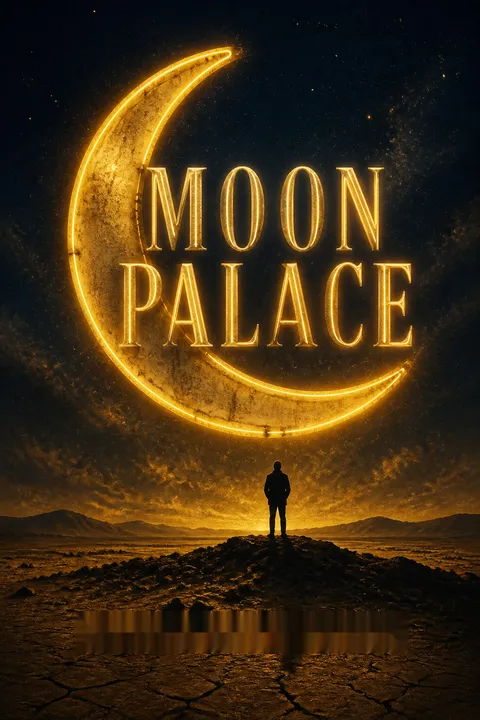
Refusing help or charity, Marco lets himself fall into destitution. He lives on eggs and bread, sells his last possessions, and finally loses his apartment. Pride and despair intertwine, turning his life into a nihilistic experiment. He becomes a ghost in his own city, hallucinating from hunger, losing track of time and self. The moon, ever-present in the sky and in the neon sign of the Moon Palace restaurant, becomes a symbol of distance, longing, and the unreachable. Marco's descent is both physical and metaphysical—a test of endurance and a confrontation with the void.
Kitty Wu's Rescue
On the brink of death, Marco is saved by a chance meeting with Kitty Wu, a young Chinese-American dancer. Their connection is immediate and mysterious, born of coincidence and mutual recognition. Kitty, moved by compassion and perhaps something deeper, seeks Marco out, feeds him, and, with the help of his friend Zimmer, nurses him back to health. Love and friendship become acts of grace, interrupting Marco's fall and offering him a second chance. The experience of being rescued teaches Marco the meaning of love as a force that can stop a man from falling—a lesson that will echo throughout his life.
Homeless in Central Park
Marco's time living in Central Park is a crucible. He learns to survive on scraps, to navigate the dangers and indignities of homelessness, and to find moments of beauty and connection even in the midst of deprivation. The park becomes a sanctuary, a place where the boundaries between inner and outer worlds blur. Marco's ordeal strips him down to his essence, forcing him to confront his own limits and the randomness of fate. The kindness of strangers, the cruelty of others, and the indifference of the city all become part of his education. In the end, it is the intervention of Kitty and Zimmer that pulls him back from the brink.
Return to Life
Nursed back to health by Zimmer and Kitty, Marco begins to rebuild his life. He finds work, reconnects with the world, and falls in love with Kitty. Their relationship is passionate and transformative, offering Marco a sense of belonging and hope. Yet, the scars of his ordeal remain, and the question of his origins continues to haunt him. The generosity of friends, the pleasures of ordinary life, and the possibility of happiness are all hard-won. Marco's journey is far from over, but for the first time, he feels the stirrings of purpose and the promise of a future.
The Enigmatic Mr. Effing
Marco becomes the companion to Thomas Effing, a cantankerous, blind old man with a mysterious past. Effing is both tormentor and mentor, challenging Marco to see the world anew and to confront uncomfortable truths. Through their daily routines—reading, walking, and endless conversation—Effing gradually reveals his story: once a celebrated painter named Julian Barber, he faked his own death, lived as a hermit in the Utah desert, and reinvented himself in Europe. Effing's tale is one of adventure, guilt, and self-invention, mirroring Marco's own search for identity. The relationship between the two men becomes a crucible for revelation and transformation.
The Cave and the Past
Effing's story unfolds as a parable of the American experience: exploration, violence, reinvention, and the burden of the past. His time in the desert, the murder of outlaws, and the discovery of hidden treasure are recounted with both bravado and remorse. The cave becomes a symbol of both sanctuary and entombment—a place where Effing buries his old self and is reborn. As Marco listens, he is drawn into the mythic dimensions of Effing's life, recognizing echoes of his own struggles. The act of storytelling becomes a way to make sense of chaos, to find meaning in suffering, and to pass on a legacy.
Inheritance and Revelation
Effing's death sets off a chain of revelations. Marco is tasked with delivering Effing's self-written obituary and inheritance to a man named Solomon Barber—Effing's son, and, as it turns out, Marco's own father. The discovery is both shocking and inevitable, the culmination of a long search for origins. Marco meets Barber, a brilliant but obese and lonely historian, and together they piece together the tangled threads of their family history. The inheritance is not just money, but a story—a way of understanding who they are and how they are connected. The past, long buried, comes to light, offering both pain and the possibility of reconciliation.
Love, Loss, and Chinatown
With his inheritance, Marco builds a new life with Kitty in Chinatown. Their happiness is intense but fragile, threatened by the unexpected news of Kitty's pregnancy. The couple is torn apart by conflicting desires—Kitty's need for autonomy and Marco's longing for family. The decision to have an abortion shatters their relationship, and Marco, unable to cope with the loss, leaves. The paradise they created together dissolves, and Marco is once again adrift. The episode is a meditation on love, choice, and the irreversibility of certain actions. The city, once a place of possibility, becomes a landscape of regret and longing.
The Father's Secret
Marco finds refuge with Barber, and together they confront the legacy of their fathers and the weight of history. Barber's own life is a story of exile, disappointment, and resilience—a man marked by his body, his intellect, and his longing for connection. The two men plan a journey to the West, seeking the cave of Effing's past, but tragedy intervenes. Barber's accidental death in a cemetery, falling into an open grave, is both absurd and deeply symbolic—a final, literal descent into the past. Marco is left to mourn, to reflect, and to carry forward the stories of those who came before him.
The Search for the Cave
Alone, Marco sets out for the West, retracing the steps of Effing and Barber, searching for the cave that holds the secrets of their lives. The journey is both literal and metaphorical—a quest for meaning, closure, and self-understanding. The landscape is vast, indifferent, and ultimately impenetrable. The cave, when he finally learns of its fate, is lost beneath the waters of a man-made lake—a symbol of the erasure and transformation that define American history. The search ends not with discovery, but with acceptance of loss and the recognition that some mysteries remain unsolved.
Walking Westward
Stripped of everything—money, love, family—Marco walks westward, crossing the desert on foot. The journey is an ordeal, a test of endurance and will. Along the way, he encounters kindness and cruelty, moments of grace and despair. The act of walking becomes a form of purification, a way to shed the past and prepare for whatever comes next. When he finally reaches the Pacific, he stands at the edge of the continent, looking out at the moon rising over the ocean. The journey has not brought answers, but it has brought a kind of peace—a sense that life, for all its losses, is still possible.
Endings and New Moons
The novel ends with Marco at the threshold of a new life. He has lost much—family, love, illusions—but he has also gained a deeper understanding of himself and his place in the world. The moon, which has haunted him throughout his journey, now becomes a symbol of renewal and possibility. The past cannot be changed, but it can be understood, and in that understanding lies the hope of beginning again. Marco's story is unfinished, open-ended, like the moon's endless cycle of waxing and waning. The future, once unimaginable, is now a blank page, waiting to be written.
Analysis
Moon Palace is a novel about origins, loss, and the search for meaning in a world marked by randomness and rupture. Through Marco's journey—from orphaned student to homeless wanderer, from lover to caretaker, from seeker to inheritor—Paul Auster explores the ways in which identity is shaped by absence, coincidence, and the stories we tell ourselves. The novel interrogates the American myth of self-invention, exposing its costs and illusions, while also affirming the possibility of renewal and connection. The moon, with its cycles of darkness and light, serves as a central symbol of longing, transformation, and the unknowable. Auster's narrative structure, with its nested stories and echoes across generations, suggests that understanding oneself is always a process of assembling fragments and embracing uncertainty. The novel's lessons are both existential and ethical: that love, friendship, and storytelling are acts of grace in the face of loss; that the past cannot be undone, but it can be understood; and that, even at the edge of despair, the possibility of beginning again remains. Moon Palace is ultimately a meditation on the human condition—our hunger for meaning, our vulnerability to chance, and our enduring capacity for hope.
Review Summary
Moon Palace by Paul Auster receives mixed reviews averaging 3.98/5 stars. Readers praise Auster's storytelling ability, poetic prose, and masterful narration. The novel follows M.S. Fogg's journey through loss, poverty, and identity discovery, involving three generations connected through chance encounters. Many appreciate the philosophical depth, symbolism (especially the moon), and exploration of American mythology. However, critics cite excessive coincidences, implausible plot twists, weak characterization, one-dimensional dialogue, and problematic portrayals (particularly Kitty Wu). Some found it pretentious or overly elaborate. Despite flaws, many consider it captivating, emotionally resonant, and quintessentially Auster.
People Also Read
Characters
Marco Stanley Fogg
Marco is the novel's protagonist, a young man adrift after the deaths of his mother and uncle. His journey is one of loss, survival, and self-discovery, marked by periods of destitution, love, and existential searching. Marco's relationships—with Uncle Victor, Kitty Wu, Thomas Effing, and Solomon Barber—shape his understanding of himself and the world. He is introspective, sensitive, and often paralyzed by doubt, but also capable of resilience and transformation. Marco's quest for identity is both literal and metaphorical, as he seeks to uncover the secrets of his origins and to find meaning in a world that often seems indifferent or hostile. His development is a movement from isolation to connection, from despair to acceptance.
Uncle Victor Fogg
Victor is Marco's uncle and surrogate father, a failed musician with a generous heart and a love of books. He provides Marco with a sense of belonging and identity, inventing stories and games to help his nephew cope with loss. Victor's death is a devastating blow, leaving Marco alone and unmoored. The library he bequeaths to Marco becomes both a lifeline and a burden, a symbol of inheritance and the weight of the past. Victor's influence endures throughout the novel, shaping Marco's imagination and his approach to life's challenges. His memory is a source of comfort and a reminder of the power of love and storytelling.
Kitty Wu
Kitty is a Chinese-American dancer who enters Marco's life at his lowest point and helps save him from starvation and despair. She is independent, compassionate, and fiercely intelligent, with a complex past of her own. Kitty's relationship with Marco is passionate and transformative, offering him a sense of connection and hope. Yet, their love is tested by conflicting desires and the pressures of circumstance, culminating in the painful decision to end a pregnancy. Kitty's strength and vulnerability make her one of the novel's most compelling characters, embodying both the possibility and the limits of love.
Thomas Effing (Julian Barber)
Effing is a blind, cantankerous old man with a mysterious past. Once a celebrated painter named Julian Barber, he faked his own death, lived as a hermit in the Utah desert, and reinvented himself in Europe. Effing is both a tormentor and a mentor to Marco, challenging him to see the world anew and to confront uncomfortable truths. His story is one of adventure, guilt, and self-invention, mirroring Marco's own search for identity. Effing's confession and eventual death set off a chain of revelations that reshape Marco's understanding of himself and his family.
Solomon Barber
Barber is Effing's son and, as it turns out, Marco's father. He is a brilliant but lonely academic, marked by his size, his intellect, and his longing for connection. Barber's life is a story of exile, disappointment, and resilience—a man who has been shaped by loss and by the secrets of his origins. His relationship with Marco is both poignant and tragic, offering the possibility of reconciliation and understanding, but ending in accidental death. Barber's story is a meditation on the burdens of inheritance, the search for meaning, and the redemptive power of storytelling.
David Zimmer
Zimmer is Marco's college roommate and steadfast friend, a poet and scholar who provides support and stability during Marco's darkest times. He is intelligent, compassionate, and often serves as a sounding board for Marco's ideas and anxieties. Zimmer's own struggles with love and ambition mirror Marco's, and their friendship is a source of mutual growth and understanding. Zimmer's presence in the novel underscores the importance of friendship and the ways in which human connection can offer solace and guidance.
Mrs. Rita Hume
Mrs. Hume is Effing's nurse and housekeeper, a practical and compassionate woman who manages the chaos of Effing's household with patience and humor. She serves as a stabilizing force for both Effing and Marco, offering wisdom, comfort, and a sense of normalcy. Her devotion to Effing is both professional and personal, and her presence is a reminder of the quiet heroism of everyday kindness. Mrs. Hume's role in the novel highlights the importance of care, loyalty, and the dignity of service.
Charlie Bacon
Charlie is Mrs. Hume's brother, a former bomber pilot traumatized by his experiences in World War II and the atomic age. He is eccentric, obsessed with hidden dangers, and serves as a symbol of the destructive forces that haunt the modern world. Charlie's presence at Effing's funeral and his conversations about bombs and secrets add a layer of historical and existential anxiety to the novel. He represents the ways in which the past continues to shape and unsettle the present.
Jack Scoresby
Scoresby is the guide who leads Effing and his companion into the Utah desert, ultimately abandoning them and setting in motion the events that lead to Effing's rebirth as a hermit. He is a figure of treachery and survival, embodying the dangers and moral ambiguities of the frontier. Scoresby's actions force Effing to confront his own limits and to reinvent himself in the face of loss and violence.
George Ugly Mouth
George is the Indian who visits Effing during his time in the cave, a figure of both comic relief and pathos. His innocence and acceptance of Effing's disguise highlight the themes of identity, deception, and the longing for connection. George's presence in the novel serves as a reminder of the complexities of cultural encounter and the ways in which loneliness can be both alleviated and deepened by the presence of others.
Plot Devices
Fractured Narrative and Interwoven Stories
Moon Palace employs a layered, non-linear narrative structure, with stories nested within stories and timelines that loop back on themselves. Marco's present is constantly interrupted by the past—his own, Effing's, and Barber's—creating a tapestry of interwoven lives and destinies. The use of first-person narration, confessions, and embedded documents (letters, obituaries, manuscripts) blurs the boundaries between fact and fiction, memory and invention. This structure mirrors the novel's themes of identity, inheritance, and the search for meaning, suggesting that understanding oneself is always a process of assembling fragments and uncovering hidden links.
Motifs of the Moon, Travel, and Exploration
The moon is a recurring symbol throughout the novel, representing distance, mystery, and the cycles of loss and renewal. The motif of travel—across America, into the desert, through the city—serves as both a literal and metaphorical journey of self-discovery. References to explorers, maps, and the American West evoke the mythic dimensions of the search for identity and the confrontation with the unknown. The interplay between the cosmic (moon landings, astronomy) and the mundane (poverty, hunger) underscores the tension between aspiration and reality.
Coincidence, Fate, and the Uncanny
The novel is filled with coincidences, chance encounters, and moments of synchronicity that shape the characters' lives. These events raise questions about fate, free will, and the meaning of randomness. The recurrence of names, places, and symbols (the Moon Palace sign, the cave, the inheritance) creates a sense of the uncanny, as if the characters are caught in patterns beyond their understanding. The use of foreshadowing and echoes between generations reinforces the idea that history repeats itself, and that the past is never truly past.
Storytelling as Survival and Inheritance
Storytelling is both a theme and a device in Moon Palace. Characters tell stories to survive, to mourn, to confess, and to connect. The act of narrating—whether through oral confession, written memoir, or imaginative invention—is a way of imposing order on chaos and transmitting meaning across generations. The novel itself becomes a kind of manuscript, a record of lives lived and lost, and a testament to the power of words to shape reality. The interplay between truth and fiction, memory and myth, underscores the fragility and necessity of narrative.
About the Author


Download PDF
Download EPUB
.epub digital book format is ideal for reading ebooks on phones, tablets, and e-readers.








































