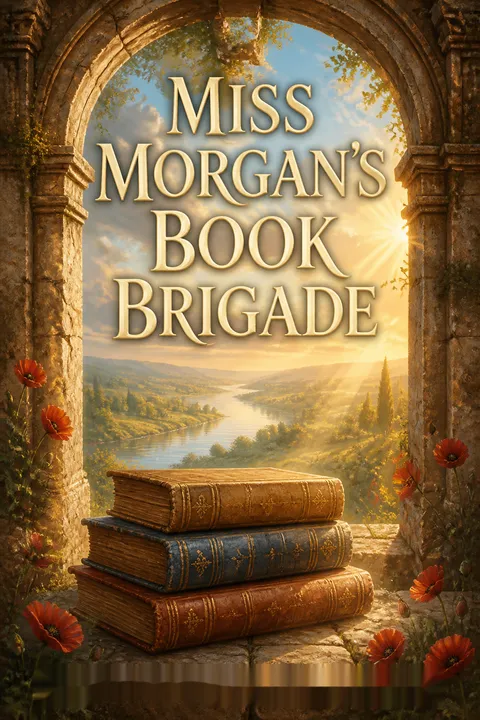

Plot Summary
Prologue: Threads of Memory
In New York, an elderly woman stands before her closet, fingers tracing the hem of a blue uniform from the American Committee for Devastated France. Each relic—witch's hat, unworn wedding gown, blood-stained cuff—evokes a lifetime of stories. The uniform, still elegant, carries the weight of courage, loss, and hope from the Great War. As she dons it, she feels the past pressing close, memories of love and sacrifice mingling with the fabric. Tonight, she heads to the New York Public Library, her old sanctuary, ready to finally share the stories that shaped her. The past is not gone; it lives in the threads we carry, waiting for the moment to be told.
Arrival in Ruins
In January 1918, Jessie "Kit" Carson, a children's librarian from New York, journeys through the war-ravaged north of France. The landscape is a wasteland—bombed villages, barbed wire, and silent fields. She is met by Lewis, a spirited American "chauffeuse," and together they witness the scars of occupation and the resilience of those who remain. Kit's mission: to build a children's library in Blérancourt, a village reduced to rubble. She meets Marcelle, a sharp-tongued local girl, and the formidable Anne Morgan and Dr. Anne Murray Dike, leaders of the American relief effort. Amid ruins, Kit feels both out of place and called to serve, determined to prove her worth in a world where books are as vital as bread.
Bonds Forged in War
Kit is quickly immersed in the daily life of the "Cards"—the women of the American Committee for Devastated France. She finds camaraderie with Breckie, a nurse with a tragic past, and Cookie, the practical cook. The Cards are a mix of wealthy volunteers and salaried workers, united by a desire to help. Kit's first days are a blur of home visits, medical emergencies, and the sobering reality of war's aftermath. She witnesses the suffering of families like the Moreaus and the Hugos, and learns that small acts—sharing books, offering comfort—can be lifelines. Through shared hardship, the Cards become a chosen family, their bonds forged in the crucible of war.
Books Amidst Bombs
The Blérancourt library is a ruin, its books waterlogged and torn. Kit, with Marcelle's eager help, salvages what she can, repairing a precious local history for the reclusive Sidonie Devereux. Story hour is born in the club-house, offering children a rare escape from trauma. Kit's belief in the power of books is tested and affirmed as she sees the joy and solace they bring to children like Marcelle and Benoit. The library becomes a symbol of resilience—a place where imagination can flourish even as bombs fall. Kit's work is not just about books, but about restoring dignity, connection, and hope to a broken community.
Story Hour's First Light
The first story hour is a modest affair, with only a handful of children and mothers attending. Kit reads Tom Sawyer in French, her nerves soothed by the children's rapt attention and laughter. The event is a small triumph, a spark of normalcy and joy in a landscape of loss. As word spreads, more families come, drawn by the promise of warmth, tea, and tales. The library's shelves, though sparse, become a treasure trove. Kit sees firsthand how stories help children process grief and fear, and how mothers, too, find comfort in community. The act of reading aloud becomes an act of resistance against despair.
Healing and Hardship
Kit accompanies Breckie on home visits, witnessing the daily struggles of villagers—illness, hunger, and the ever-present threat of violence. She learns the importance of listening, of meeting people where they are. The Cards face their own challenges: class tensions, homesickness, and the pressure to prove themselves. Kit's relationship with her demanding former boss haunts her, but she finds strength in the support of her new friends. The war's toll is relentless, but so is the determination to help. Through acts of care—medical, practical, and emotional—the Cards and villagers begin to heal, one day at a time.
The Library Reborn
With the help of villagers and the master carpenter, Kit oversees the rebuilding of the library. The process is slow—materials are scarce, and the needs are endless—but the community rallies. The new library is designed to welcome all: children's tables, open stacks, and a cozy nook by the hearth. Kit trains Marcelle, Sidonie, and others in the Dewey Decimal system, creating a new generation of librarians. The grand opening is a celebration of survival and hope, attended by politicians, journalists, and townsfolk. The library stands as a testament to what can be accomplished through collective effort and the belief that knowledge is for everyone.
The Red Zone's Shadows
Kit and Marcelle venture into the Red Zone, a landscape still littered with mines and haunted by violence, to rescue two orphaned sisters. The mission is perilous, underscoring the constant risk faced by civilians and relief workers alike. Later, a harrowing encounter with a deranged German POW leaves Kit nearly strangled and Marcelle forced to kill in self-defense. The trauma lingers, but so does the resolve to continue their work. The Red Zone becomes a symbol of the war's lingering wounds—physical and psychological—and the courage required to confront them.
Letters Across Oceans
Throughout her time in France, Kit writes letters to her sister Mabel and her mother, sharing her experiences and seeking comfort. She falls in love with Tom, an American mechanic, their relationship blossoming through stolen moments and heartfelt correspondence. Letters become lifelines, bridging the distance between continents and hearts. When Tom is killed in action and Kit's mother dies of pneumonia, grief threatens to overwhelm her. Yet, the act of writing—of telling and retelling her story—helps Kit process her pain and find meaning in her sacrifices.
Love and Loss
Kit's romance with Tom offers a rare respite from war, a glimpse of happiness amid chaos. Their love is tender, passionate, and ultimately tragic. Tom's death is a devastating blow, compounded by the loss of Cookie to the Spanish flu and Kit's mother back home. Each loss is a reminder of the fragility of life and the cost of service. Yet, Kit endures, supported by her friends and the knowledge that her work matters. Love, in all its forms—romantic, familial, platonic—proves both a source of vulnerability and the wellspring of strength.
The Great Evacuation
In March 1918, a renewed German offensive forces the Cards to evacuate Blérancourt and surrounding villages. The operation is frantic and dangerous, with bombs falling and refugees flooding the roads. Kit and Marcelle risk their lives to rescue the orphaned sisters from the Red Zone. The Cards coordinate trains, trucks, and canteens, ensuring that nearly every civilian escapes to safety. The evacuation is a testament to their organizational skill, bravery, and deep commitment to the people they serve. In the aftermath, the Cards are scattered, but their bonds endure.
Remembrance and Research
In 1987 New York, Wendy Peterson, a young library worker, discovers the forgotten story of the Cards while digitizing archives. With the help of her colleague Roberto, she pieces together Kit's journey, inspired by the courage and camaraderie of these women. Wendy's own struggles—with self-doubt, trauma, and the search for belonging—mirror Kit's. As she delves deeper, Wendy finds connections between past and present, realizing that the work of remembrance is itself an act of service. The past is not dead; it shapes and sustains those who seek to understand it.
The Power of Community
The Cards' greatest achievement is not just the rebuilding of libraries or the distribution of aid, but the creation of a community that transcends class, nationality, and trauma. Kit mentors Marcelle, who becomes the first Frenchwoman to study librarianship in New York. Sidonie, once a recluse, finds new purpose as a librarian. The villagers, once isolated by grief and suspicion, come together to celebrate, mourn, and rebuild. In the present, Wendy learns to open herself to friendship and love, inspired by the example of the Cards. Community is both the means and the end of their work.
The Spanish Flu Strikes
Just as the war ends, the Spanish flu sweeps through Blérancourt, claiming the life of Cookie and threatening others. The Cards, exhausted by years of crisis, are forced to confront a new kind of loss—one that cannot be fought with courage or organization alone. The pandemic exposes the limits of their power and the randomness of fate. Yet, even in mourning, they find ways to honor the dead and support the living. The flu becomes a final test of resilience, underscoring the fragility and preciousness of every life.
The War's End
News of the armistice arrives with disbelief and joy. The villagers and Cards celebrate, but the scars of war remain. Kit faces a new challenge: her former boss arrives from New York, offering both praise and the prospect of returning home. Kit realizes she has outgrown her old life and chooses to stay in France, continuing her work in Paris. The end of the war is not an end to struggle, but a chance to redefine purpose and identity. The library, once a dream, is now a living legacy.
New Beginnings in Paris
Kit moves to Paris to design a model library in Belleville, bringing open stacks and children's sections to a city resistant to change. She trains a new generation of librarians, including Marcelle, and helps lay the foundation for a library school for women. The work is challenging—bureaucracy, class prejudice, and lingering trauma—but Kit's vision prevails. The Belleville library becomes a beacon of inclusion and learning. Kit's story, once nearly lost, is preserved by those she mentored and inspired. The quiet revolution she leads transforms not just libraries, but lives.
The Price of Recognition
Despite her achievements, Kit is denied a promised bonus by CARD's leadership, a painful reminder of class divisions and the undervaluing of women's work. She grapples with feelings of bitterness and questions the meaning of her sacrifices. Through a dream of her mother and the support of friends, Kit comes to accept that recognition is not always given, but the impact of her work endures. She chooses to focus on what she has built—communities, libraries, and futures—rather than what she has lost. Her legacy is measured not in accolades, but in lives changed.
Legacy and Living History
In the present, Wendy's research culminates in a public lecture with Marcelle, now elderly but still vibrant. The story of the Cards is finally told, their names and deeds brought into the light. Wendy, transformed by her journey, finds love and purpose, determined to carry forward the lessons of the past. The novel closes with a meditation on the power of stories to heal, connect, and inspire. The work of the Cards—once nearly forgotten—lives on in libraries, in communities, and in the hearts of those who remember.
Analysis
A testament to the enduring power of stories and communityMiss Morgan's Book Brigade is both a historical novel and a meditation on the quiet revolutions wrought by women in times of crisis. Through the intertwined journeys of Kit and Wendy, the book explores how ordinary people—armed with compassion, determination, and a belief in the transformative power of books—can rebuild not just buildings, but lives and futures. The novel foregrounds the often-overlooked labor of women, the complexities of class and recognition, and the necessity of friendship and mentorship. It challenges the myth of solitary heroism, insisting instead on the primacy of collective action and mutual support. In an age of renewed threats to libraries, democracy, and truth, the story resonates as a call to remember, to connect, and to act. The lessons are clear: stories matter, kindness endures, and the work of building community is never finished.
Review Summary
Miss Morgan's Book Brigade by Janet Skeslien Charles is a well-researched historical fiction novel featuring dual timelines: 1918 France, where librarian Jessie Carson establishes children's libraries through CARD (American Committee for Devastated France), and 1987 New York, where librarian Wendy Peterson researches Carson's story. Most reviewers praised the strong female characters, historical detail, and celebration of libraries' power. Common criticisms included underdeveloped romance plots, elementary writing style, and preference for the 1918 timeline over 1987. Readers appreciated learning about this overlooked aspect of WWI history, though some found the dual timeline unnecessary.
People Also Read






Characters
Jessie "Kit" Carson
Kit is a children's librarian from Pennsylvania, driven by a deep belief in the transformative power of books. Practical, introspective, and quietly courageous, she volunteers for the American Committee for Devastated France, leaving behind family and security. Kit's journey is one of self-discovery: she moves from self-doubt and the shadow of a critical boss to confident leadership, building libraries and communities in the midst of war. Her relationships—with villagers, fellow Cards, and her lover Tom—reveal her empathy and resilience. Kit's legacy is not just in bricks and books, but in the lives she touches and the women she mentors.
Anne Morgan
The daughter of financier J.P. Morgan, Anne uses her wealth and influence to champion women's rights and humanitarian causes. She is both formidable and compassionate, unafraid to challenge social norms or bureaucratic obstacles. Anne's partnership with Dr. Anne Murray Dike is both professional and deeply personal, their bond a source of strength for the entire CARD operation. Though sometimes distant, Anne recognizes and nurtures talent in others, including Kit. Her leadership style is pragmatic, strategic, and quietly revolutionary, leaving a lasting mark on both France and the women she leads.
Dr. Anne Murray Dike
As CARD's president, Dr. Dike is a force of nature—intelligent, exacting, and sometimes brusque. Her medical background and administrative rigor are essential to the organization's success, but her perfectionism can create tension. She is both a gatekeeper and a guide, pushing Kit and others to excel while sometimes undervaluing their contributions. Her relationship with Anne Morgan is central, blending affection, rivalry, and shared purpose. Dr. Dike embodies the challenges faced by women in leadership, navigating expectations, loyalty, and the burden of responsibility.
Mary "Breckie" Breckinridge
Breckie is a nurse with a tragic past—two marriages, the loss of a child, and a deep well of empathy. She becomes Kit's confidante and emotional anchor, offering wisdom and warmth. Breckie's resilience is hard-won, her humor and kindness a balm for those around her. She later founds the Frontier Nursing Service in Kentucky, continuing her legacy of service. Breckie's journey illustrates the healing power of purpose and the importance of chosen family.
Kate "Lewis" Lewis
Lewis is a vivacious, wealthy American who defies her upbringing to serve as a driver and mechanic in France. Her humor and optimism mask deeper insecurities and grief, particularly over her father's death. Lewis's friendship with Kit and Marcelle is transformative, breaking down barriers of class and expectation. She is both a mentor and a student, learning from the villagers and her fellow Cards. Lewis's arc is one of growth, from sheltered debutante to capable, compassionate leader.
Marcelle Moreau
Marcelle is a sharp-witted, resilient French teenager who becomes Kit's protégé. Orphaned by war and burdened with caring for her siblings, Marcelle finds solace and purpose in books. Her journey from skeptical outsider to pioneering librarian mirrors the broader transformation of her community. Marcelle's courage is tested in the Red Zone, and her trauma is real, but she emerges as a leader in her own right, eventually studying librarianship in New York. She embodies the next generation, carrying forward the lessons of the Cards.
Sidonie Devereux
Sidonie is a widow shattered by the loss of her husband and child. Initially isolated and bitter, she is drawn back into community through Kit's persistent kindness and the restoration of her husband's book. Sidonie's arc is one of gradual healing—she becomes a librarian, mentor, and friend, finding new meaning in service. Her story highlights the power of empathy, the necessity of mourning, and the possibility of renewal.
Wendy Peterson
Wendy is a young library worker in 1987 New York, struggling with self-doubt, trauma, and the search for belonging. Her discovery of the Cards' story becomes a catalyst for personal growth, inspiring her to pursue friendship, love, and purpose. Wendy's research is both an act of remembrance and a journey of healing, as she learns to trust herself and others. Her relationship with Roberto and her mentorship by Marcelle connect her to a lineage of women who changed the world through quiet, persistent action.
Roberto
Roberto is Wendy's witty, compassionate coworker and eventual romantic partner. His encouragement and belief in Wendy's talent help her overcome self-doubt and pursue her goals. Roberto's own struggles—with professional setbacks and the search for meaning—mirror Wendy's, making their relationship one of mutual support and growth. He represents the importance of allies and the transformative power of kindness.
Cookie (Marie Jones)
Cookie is the backbone of the Cards' daily life, providing nourishment, humor, and practical wisdom. Her working-class background sets her apart from many of the Cards, but her competence and generosity earn her respect. Cookie's death from the Spanish flu is a profound loss, a reminder of the countless unsung women whose labor sustains communities. Her legacy lives on in the rituals and recipes she leaves behind.
Plot Devices
Dual Timeline Structure
The novel alternates between Kit's experiences in World War I France and Wendy's research in 1987 New York. This structure allows for reflection, contrast, and the gradual revelation of legacy. Wendy's journey mirrors Kit's, creating emotional echoes and highlighting the enduring relevance of the Cards' work. The dual timeline also serves as a commentary on memory, history, and the act of storytelling itself.
Epistolary Elements
Letters—between Kit and her family, between lovers, and in archival documents—are central to the narrative. They convey intimacy, longing, and the limitations of communication. Letters also serve as historical artifacts, connecting characters across generations and providing insight into inner lives. The act of writing becomes both a means of survival and a tool for remembrance.
Found Documents and Archival Research
Wendy's investigation into the Cards' history is driven by the discovery of bulletins, diaries, and photographs. These artifacts ground the story in historical reality and create a sense of detective work. The process of piecing together the past mirrors the work of healing and understanding, both for individuals and communities.
Symbolism of Books and Libraries
Throughout the novel, books represent hope, escape, and connection. The rebuilding of the library is both literal and metaphorical—a restoration of community, dignity, and possibility. Story hour, bookmobiles, and open stacks are acts of quiet revolution, challenging class, gender, and cultural barriers. The library becomes a microcosm of the world the Cards hope to build.
Trauma and Healing
The novel does not shy away from the psychological toll of war, loss, and violence. Characters grapple with grief, guilt, and the struggle to find meaning after trauma. Healing is depicted as a communal process, requiring time, empathy, and the willingness to confront pain. The narrative structure itself—moving between past and present—mirrors the ongoing work of integrating loss and forging new beginnings.
Foreshadowing and Recurrence
The novel employs foreshadowing through dreams, memories, and repeated motifs (the handkerchief, the uniform, the act of reading aloud). These elements create a sense of continuity and inevitability, reinforcing the idea that history is both cyclical and cumulative. The past is never truly past; it shapes and is shaped by those who remember.
Download PDF
Download EPUB
.epub digital book format is ideal for reading ebooks on phones, tablets, and e-readers.








































