
Key Takeaways
1. The Universe is Interconnected: Our Minds are Nonlocal
The idea that our "separation is an illusion" is not new— it has been a core premise of wisdom teachings for centuries, even before the time of Buddha, 2,500 years ago.
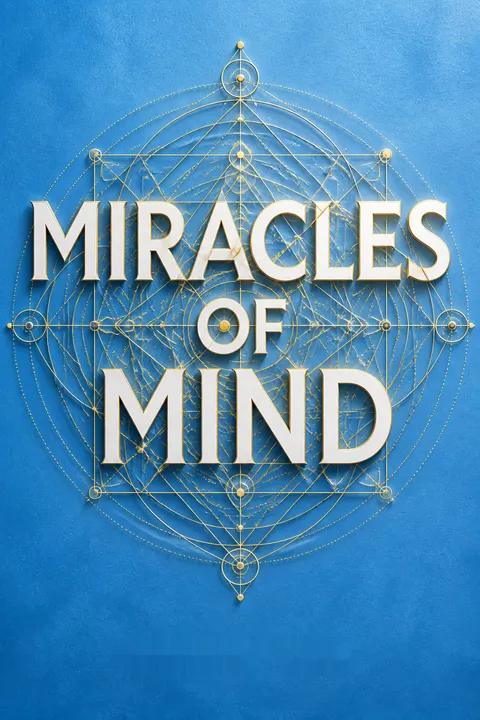
Beyond physical limits. The central premise of "Miracles of Mind" is that human consciousness, or the "nonlocal mind," is not confined to the brain or body, nor limited by space and time. This profound interconnectedness, long understood by mystics and spiritual traditions, is now being validated by scientific inquiry. It suggests that our individual minds are part of a larger, universal consciousness, a "community of spirit."
Direct knowing. This nonlocal mind allows for various forms of extrasensory perception (ESP), which the authors define as "direct knowing." Unlike ordinary sensory perception, ESP provides access to information that seems unobtainable through conventional means. This inherent human capacity, often dismissed as illusion or superstition, is presented as a fundamental aspect of our nature, waiting to be explored and understood.
A new paradigm. The recognition of the nonlocal mind marks a shift in understanding, moving beyond the traditional view of the mind as solely a product of the brain. This expanded perspective challenges established scientific dogma and opens the door to a more holistic understanding of reality, where consciousness plays a causal role in shaping our experiences and interactions with the world.
2. Remote Viewing: Scientific Proof of Transcendent Perception
Using the standards applied to any other area of science, it is concluded that psychic functioning has been well established.
CIA-funded evidence. Pioneering physicist Russell Targ co-founded the Stanford Research Institute (SRI) remote-viewing (RV) program, which conducted rigorous, government-sponsored experiments for decades. These declassified CIA experiments, initially code-named "Grill Flame," provided unequivocal proof of psychic abilities, demonstrating that individuals could accurately describe distant locations and activities, even those thousands of miles away and hidden from ordinary perception.
Astonishing accuracy. One of the most compelling examples involved Pat Price, a former police commissioner, who was given only the latitude and longitude of a secret Soviet atomic-bomb laboratory in Semipalatinsk, Siberia. Price not only described and sketched the plant with incredible precision, including previously unknown external structures later confirmed by satellite photography, but also detailed an indoor assembly process for a 60-foot metal sphere, which was verified years later when the structure was moved outside. This demonstrated:
- Accuracy across vast distances (10,000 miles).
- Perception of hidden, classified information.
- Ability to perceive details unknown to the "sender."
Beyond distance and shielding. The SRI experiments consistently showed that RV accuracy and resolution were not diminished by distance (up to 10,000 miles) or electrical shielding (Faraday cages, submerged submarines). This strongly suggests that psi signals are not transmitted via electromagnetic fields, but rather through a non-local mechanism, where information is always present and available to consciousness.
3. Precognition: Experiencing the Future Before It Happens
The dream is a forecast of events to come about in the future, unless you do something to change them, based upon this new information.
Time as an illusion. The book challenges the linear perception of time, suggesting that our consciousness can access information about future events. Precognitive dreams are presented as a common example, often characterized by unusual clarity and bizarre content, distinct from wish fulfillment or anxiety. These dreams are seen as being "caused" by the future experience itself, a concept known as retro-causality.
Forecasting and intervention. A key insight is that precognitive information acts as a forecast, not an unchangeable prophecy. If one receives precognitive data, they can use that information to alter the future. For instance, a CIA contract monitor dreamed of a fiery plane crash and, acting on this, changed his travel plans, thus avoiding being on the actual plane that crashed later that day. This demonstrates:
- The future can influence the past (retro-causality).
- Precognitive information empowers individuals to make different choices.
- The "intervention paradox" is resolved: the forecast describes a probable future that would happen without intervention.
Laboratory validation. Decades of research, including a meta-analysis of 309 precognition experiments, have provided overwhelming statistical evidence for foreknowledge of the future. Experiments at Princeton University, for example, showed that viewers could accurately describe events hours, days, or even weeks in the future, with odds against chance of 1 in 100 billion. This robust data confirms that our relationship with the dimension of time is profoundly misunderstood.
4. Spiritual Healing: A Mind-to-Mind Connection Beyond Physicality
Healing occurs through a joined state of consciousness.
Beyond energy transfer. Spiritual healing, as practiced by co-author Jane Katra, is presented not as an energy transfer from healer to patient, but as a profound mind-to-mind attunement. It involves the healer surrendering their individual will and ego, becoming a channel for a universal, nonlocal consciousness (often referred to as God or Infinite Mind) to express itself. This process facilitates the patient's innate self-healing capabilities.
The role of intention and surrender. The effectiveness of spiritual healing hinges on the healer's impersonal, non-emotional, caring intention and a willingness to be an instrument of help. This state of "letting" rather than "doing" promotes coherence and harmony within the patient. It contrasts with "psychic healing" or "energy healing," which often involve the healer actively directing or manipulating energy with specific outcomes in mind.
Distant healing evidence. The book provides compelling anecdotes and research supporting distant healing. Jane's experience of healing her brother's heart condition from a thousand miles away, and the documented cases of distant prayer affecting cardiac and AIDS patients in hospitals, suggest that physical proximity is not a prerequisite for healing. This reinforces the nonlocal nature of consciousness, where healing information can be accessed and shared across vast distances.
5. The Healer's Journey: From Skepticism to Profound Experience
I believe that the pain and isolation I had experienced in the Philippines were, for me, essential precursors to the illumined vision of life, which has brought healing and meaning to me.
An unexpected calling. Jane Katra's personal journey into healing began with a debilitating migraine in the Philippines, leading to a desperate prayer and a profound, life-changing dream. Despite her scientific background and initial skepticism, the dream provided explicit instructions on how she would heal others, foretelling future encounters and events. This experience, initially perceived as madness, became an undeniable "calling."
Learning through direct experience. Jane's early healing experiences, such as alleviating her boyfriend's hammer-smashed thumb and treating children at a camp, built her confidence. She discovered that the healing "energy" didn't originate from her but flowed through her when she acted as a channel. She learned that:
- The patient's openness and receptivity are crucial.
- Pain and crisis can break down psychological barriers.
- The process is a collaboration, not something "done to" someone.
Beyond physical touch. A pivotal realization came when Jane discovered that physical touch or proximity was not necessary for healing. While treating a teenage girl with a broken pelvis, she found she could maintain the healing connection from across the room, even while sitting on the floor. This confirmed the mind-to-mind nature of the interaction, where her mental state directly influenced the patient's pain relief, even when her own thoughts wandered.
6. Cultivating Healing: Intent, Surrender, and Removing Barriers
Your task is not to seek for love, but merely to seek and find all of the barriers within yourself that you have built against it.
Mindset for spiritual healing. Spiritual healing is described as a "way of being" rather than a "way of doing." It requires a specific mindset characterized by:
- Impersonal, caring intention: A willingness to help without egoic attachment to the outcome.
- Surrender of individual will: Allowing a greater, universal consciousness to work through the healer.
- Non-judgment: Accepting the process without imposing personal beliefs or expectations.
The role of meditation and presence. Quieting the mind through meditation is crucial for both the healer and the patient. This practice helps to:
- Create an "opening" for expanded consciousness.
- Cultivate a peaceful, timeless state of awareness.
- Promote confidence in achieving this state during healing sessions.
- Remove mental "noise" (memory, imagination, analysis) that blocks psi signals.
Removing barriers to connection. Healing is facilitated by removing psychological barriers such as fear, resentment, guilt, and self-consciousness. These barriers maintain a sense of psychic separateness, impeding the mind-to-mind connection essential for spiritual healing. Practices like Attitudinal Healing, which focuses on changing one's perceptions and attitudes, are presented as effective tools for dissolving these internal obstacles and fostering a state of love and interconnectedness.
7. Bridging Science and Spirituality: Ancient Wisdom Meets Modern Physics
The world is more like a great thought than a great machine.
Challenging classical physics. The book argues that modern physics, particularly quantum theory, is increasingly aligning with ancient spiritual wisdom regarding the nature of reality. Concepts like "nonlocal reality" and "quantum interconnectedness" from physicists like David Bohm resonate with the perennial philosophy's assertion that separation is an illusion and consciousness is fundamental. This challenges the classical Newtonian view of a mechanistic, separate universe.
Holographic universe model. David Bohm's holographic model of the universe provides a compelling framework for understanding psi. In a hologram, every tiny piece contains a complete picture of the whole. Similarly, Bohm suggests that:
- The entire universe is enfolded in everything, and each thing is enfolded in the whole.
- Each region of space-time contains information about every other point.
- This information is directly accessible to consciousness.
This model explains how remote viewers can access distant information, as it's always present and available within their own "small piece of the space-time hologram."
Consciousness as fundamental. The convergence of scientific data and mystical experience points to consciousness as the fundamental building block of the universe. This perspective suggests that our psychic abilities are not supernatural, but rather natural manifestations of our nonlocal mind, revealing a deeper, unified reality. The authors believe that understanding this interconnectedness is crucial for both scientific advancement and spiritual growth.
8. Ethical Use of Psi: A Call for Compassion and Responsibility
The true value of a human being is determined primarily by the measure and the sense in which he has attained liberation from the self.
Sacred gift or expanded function? The book explores the ethical implications of psychic abilities, questioning whether they are sacred or merely an expanded human function. While ancient traditions like Buddhism caution against seeking psychic powers as they can be a "stumbling block to enlightenment," the authors suggest that psi, like any other human sense, can be a "doorway to sacred experience" depending on how it's used.
Purpose beyond ego. The true purpose of psychic experiences, according to the authors, is not for personal gain (like spying or stock market forecasting) but to reveal our nonlocal mind and connections to a "community of spirit." When used with selfless intent, compassion, and a desire to serve, these abilities can foster unity consciousness and spiritual growth. This aligns with the teachings of figures like Joel Goldsmith, who emphasized that spiritual healing is about "soul expansion" and "spiritual regeneration."
Responsibility and interdependence. The Dalai Lama's call for a "new spirituality" based on the "connectedness and interdependence of all life" resonates deeply with the book's message. By cultivating peaceful-mindedness and compassion, and by recognizing our shared awareness, we can use our understanding of nonlocal consciousness as a "weapon" for survival and peace. The authors hope their work inspires readers to remove societal and personal barriers to psi, embracing their innate abilities to foster a more compassionate world.
Review Summary
Reviews of Miracles of Mind are generally positive, averaging 4.09 out of 5. Readers praise the book's unique academic approach to topics like remote viewing, psychic healing, and nonlocal consciousness, with some comparing it favorably to Dean Radin's work. It is commended for presenting empirical, falsifiable data rather than serving as a teaching manual. Some criticism includes dry prose, minor repetition from Targ's earlier works, and debate over its classification as science.
People Also Read

About the Author

Download PDF
Download EPUB
.epub digital book format is ideal for reading ebooks on phones, tablets, and e-readers.








































