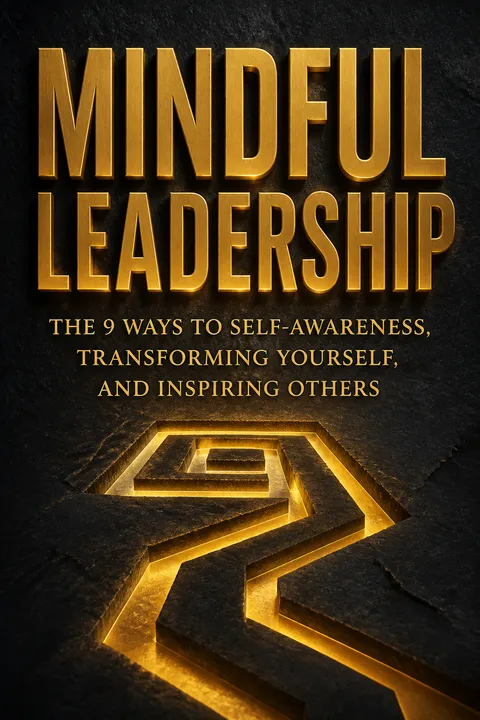
Key Takeaways
1. Leadership begins with self-leadership and the skill of mindfulness
A leader is anyone who is in a position to influence another person.
Redefining the leader. Leadership is not a formal title or a corporate hierarchy; it is an active, daily influence on others. Whether you are a CEO, a parent, or a community volunteer, your ability to guide others depends entirely on how effectively you lead yourself. Mindfulness—the simple act of noticing things exactly as they are without judgment—serves as the foundational operating system for this self-mastery.
The power of presence. Operating mindfully allows you to step off the emotional roller coaster of business cycles and personal crises. Instead of reacting impulsively to market shifts or interpersonal conflicts, you learn to respond from a place of deep stability. This shift from reactive defense to proactive presence transforms your leadership style from a fragile facade into an authentic, grounded force.
Core benefits of mindfulness:
- Dramatically improved focus, concentration, and time management.
- Enhanced emotional regulation and stress reduction.
- Better strategic decision-making under intense pressure.
- Stronger, more collaborative, and highly effective team dynamics.
2. Train your brain to cultivate concentration, clarity, and equanimity
The brain is capable of being trained and physically modified in ways few people had imagined.
Neuroplasticity in action. Modern neuroscience confirms that the human brain is highly elastic and can be physically reshaped through mental training. Just as physical exercise builds muscular strength and endurance, regular mindfulness meditation alters the neural circuitry of the brain to enhance cognitive processing. This mental training expands your baseline capacity for focus, memory, and emotional resilience at any age.
The core pillars. Mindful leadership relies on four key mental capacities that are systematically developed through meditation: concentration, clarity, equanimity, and purification. Concentration keeps your undivided attention on your chosen target, while clarity provides an unclouded view of your internal and external realities. Equanimity allows you to accept the present moment without resistance, and purification systematically dissolves your deeply ingrained negative habits.
The compounding returns:
- Increased thickness in brain regions controlling attention.
- A wider cognitive gap between stimulus and response.
- Reduced mind-wandering, which typically consumes up to 50% of our day.
- Faster recovery times after unexpected workplace interruptions.
3. Master internal awareness to untangle thoughts from physical emotions
Pain is one thing and resistance to pain is something else, and when the two come together you have an experience of suffering.
The internal landscape. Our subjective experience is constantly shaped by the interaction of the thinking mind and the feeling body. The thinking mind operates through mental images and internal talk, while the feeling body manifests as physical sensations tied to our emotions. When these two forces reinforce each other without our conscious awareness, they can easily spiral into anxiety, panic, and impulsive decision-making.
Divide and conquer. The formal technique of Internal Awareness trains you to untangle these mental and physical strands. By observing your thoughts and physical sensations as separate, passing phenomena, you strip them of their power to hijack your behavior. This practice allows you to experience difficult emotions fully without letting them dictate your professional actions or cloud your strategic judgment.
The suffering equation:
- Pain is an inevitable part of life and business, but suffering is entirely optional.
- Suffering is mathematically defined as pain multiplied by resistance ($Suffering = Pain \times Resistance$).
- Eliminating resistance through equanimity completely dissolves psychological suffering.
- Tracking physical sensations prevents emotional triggers from driving impulsive business moves.
4. Ground yourself in the present using external sensory awareness
The task is simple: when you walk, walk; when you drive, drive; when having a conversation with someone, do nothing but speak or listen...
The myth of multitasking. In our fast-paced corporate culture, multitasking is often celebrated as a badge of honor, but scientific research proves it is highly inefficient. The human brain is structurally incapable of focusing on two cognitively demanding tasks simultaneously; attempting to do so merely fractures your attention and increases error rates. True productivity comes from single-tasking with absolute, undivided presence.
Sensory grounding techniques. The practice of External Awareness anchors your wandering mind in the physical reality of the present moment. By systematically focusing on your immediate physical touch, sights, and sounds, you quiet the "monkey mind" that constantly swings between past regrets and future anxieties. This sensory grounding acts as a cognitive reset, allowing you to return to your work with renewed focus and sharp clarity.
Practical grounding strategies:
- Connect with the physical sensation of your feet touching the floor during tense meetings.
- Softly gaze at a single object to stabilize visual attention.
- Listen to ambient sounds without analyzing or labeling them.
- Use red lights or phone rings as physical cues to take a conscious breath.
5. Conquer the five mental hindrances that sabotage leadership success
Unchecked hindrances tend to move you away from focus, clarity, and equanimity.
Identifying the enemies. Five primary mental hindrances systematically cloud a leader's judgment and erode organizational health: attachment, aversion, ignorance/delusion, envy, and pride. Attachment fixates on specific outcomes or status, while aversion breeds a paralyzing fear of loss that leads to defensive, risk-averse decisions. Ignorance and delusion cause leaders to ignore market realities, while envy and pride foster toxic competition and make leaders uncoachable.
The purification process. Recognizing these hindrances within yourself is the first step toward neutralizing their destructive influence. Through mindfulness, you can observe these patterns as they arise in your body and mind without judging or acting on them. Over time, this non-reactive observation purifies these deep-seated habits, freeing up massive amounts of mental energy that were previously wasted on ego preservation.
The five toxic patterns:
- Attachment: Clinging to outdated strategies or personal status.
- Aversion: Withholding bad news or avoiding difficult conversations.
- Ignorance/Delusion: Relying on personal biases instead of objective data.
- Envy/Jealousy: Constantly comparing compensation or market share with competitors.
- Pride: Refusing to accept constructive feedback or admit mistakes.
6. Discover your true life purpose to lead from authenticity
Until you know who and what you are, you'll experience a general malaise, a sense of incompleteness.
Moving beyond roles. Many leaders mistakenly define their identity and purpose through their professional roles, titles, or material achievements. This role-based identity is highly fragile; if the role is lost or challenged, the leader's self-worth collapses, leading to anxiety and a desperate search for external validation. True purpose is discovered by looking inward to understand who you are beneath these temporary corporate masks.
The service orientation. As your self-awareness deepens through mindfulness, you naturally realize that your ultimate purpose is to be of service to others. This service-oriented mindset is not about subservience; it is about leveraging your leadership position to empower and elevate everyone you influence. Leading from this authentic core makes your decisions consistent, transparent, and deeply inspiring to your stakeholders.
Steps to discover purpose:
- Analyze your happiest life moments to identify your core, energizing skills.
- Examine your unhappiest times to uncover environments and behaviors to avoid.
- Identify and purify the mental hindrances that drive your career choices.
- Craft a clear, simple personal vision statement to act as your strategic compass.
7. Communicate mindfully through presence, active listening, and intentional speech
Being a mindful listener simply means that when you are in a position to listen, you are completely listening to and observing the speaker...
The art of listening. Mindful communication is one of the most powerful tools a leader can possess to eliminate organizational misunderstandings and build trust. Mindful listening requires you to give your absolute, undivided attention to the speaker, ignoring internal distractions and the urge to formulate your next response. By observing both verbal content and subtle non-verbal cues, you develop a keen intuition that reveals what is left unsaid.
Intentional and precise speech. Mindful speech means saying exactly what is necessary with absolute honesty, clarity, and kindness. It requires you to monitor the tone and impact of your own voice in real-time, ensuring your communication remains free of defensiveness or ego. This disciplined approach to speaking eliminates rambling, reduces meeting times, and ensures your team receives clear, actionable direction.
Mindful communication rules:
- Put away all digital distractions, such as phones and laptops, during conversations.
- Listen to the tone, inflection, and body language of the speaker.
- Monitor your own voice to ensure it remains calm, sincere, and on-message.
- Embrace silence comfortably to allow deeper insights to surface.
8. Cultivate deep calm and equanimity to make rational, stress-free decisions
It is not circumstances that create happiness; rather, your happiness is created by accepting your circumstances.
The physiology of calm. A leader's stress is highly contagious and can quickly paralyze an entire organization, driving anxiety and poor performance. Cultivating the "relaxation response" allows you to create physical and mental calm at will, even in the midst of a corporate crisis. By deliberately relaxing your body, you signal your brain that you are safe, breaking the destructive fight-or-flight cycle that impairs rational thinking.
The power of the gap. Equanimity is the ultimate secret weapon of a mindful leader, providing the mental stability needed to face volatile markets and unexpected setbacks. It allows you to accept reality exactly as it is in the present moment, without wasting precious energy fighting what you cannot change. This radical acceptance widens the cognitive gap between stimulus and response, giving you the freedom to choose the most strategic path forward.
Calmness in action:
- Periodically scan your body throughout the day to release hidden physical tension.
- Use deep, even breathing to instantly lower your heart rate and blood pressure.
- Accept market volatility and regulatory changes with a matter-of-fact attitude.
- Focus your energy entirely on variables you can control rather than those you cannot.
9. Lead with compassion, positivity, and impeccable integrity
True compassion is deep caring without attachment.
Compassion as strength. Far from being a corporate weakness, true compassion is a profound leadership strength that drives sustainable organizational performance. It involves caring deeply about the well-being and development of your people while remaining completely unattached to personal ego or specific outcomes. This balanced approach allows you to deliver tough, honest feedback and make difficult business decisions without causing unnecessary psychological harm.
Impeccable and positive action. Being impeccable means doing your absolute best under any given set of circumstances, while maintaining complete alignment between your words and deeds. It requires you to use your leadership power with deep humility, acting as a responsible steward of your organization's resources and people. By combining this integrity with a positive, can-do attitude, you naturally inspire your team to reach their highest potential.
The impeccable leader's toolkit:
- Practice self-compassion first to prevent professional burnout and sustain high performance.
- Perform random and deliberate acts of kindness to build a trusting culture.
- Take absolute responsibility for your mistakes and forgive yourself and others.
- Maintain a daily practice of gratitude to foster optimism and resilience.
Download PDF
Download EPUB
.epub digital book format is ideal for reading ebooks on phones, tablets, and e-readers.








































