Key Takeaways
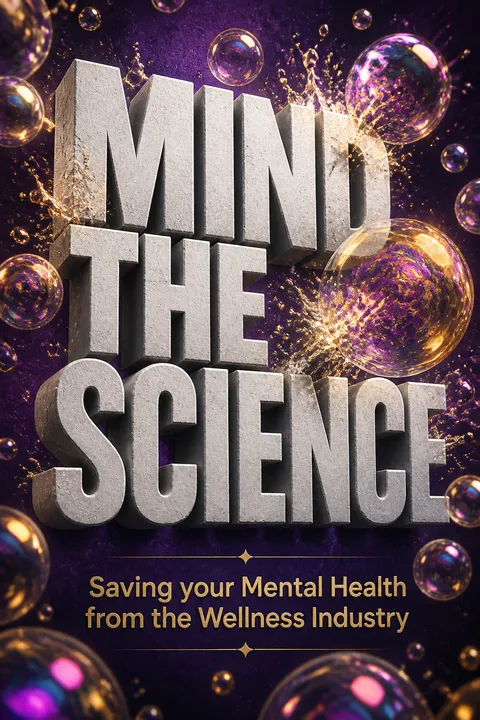
1. Your mental health is precious, but the wellness industry has commodified it into a multi-trillion-dollar con game.
That cheapened, commodified version of mental health is a wolf in sheep’s clothing. It’s sexy. It’s alluring. And it’s a sham.
Commodification of suffering. The modern wellness industry exploits our deepest vulnerabilities by turning mental health into a purchasable commodity. We are bombarded with promises of 30-day diet plans, unproven supplements, and spiritual retreats that promise to cure complex psychological conditions. This predatory marketing cheapens the reality of mental illness, transforming genuine psychic pain into a lucrative business opportunity.
The wellness illusion. This multi-trillion-dollar economy thrives on selling false hope and unscientific panaceas. It creates a dangerous parallel universe where clinical expertise is bypassed in favor of charismatic influencers and celebrity endorsements. The consequences of this unregulated market are far from harmless, often resulting in:
- Financial exploitation of vulnerable individuals.
- Direct physical harm from unregulated products.
- Delays in seeking genuine, evidence-based medical care.
A predatory landscape. We must recognize that the wellness industry operates largely outside the boundaries of scientific scrutiny and regulatory oversight. By preying on the systemic gaps in mainstream healthcare, these grifters position themselves as compassionate alternatives. In reality, they lead patients down a yellow brick road paved with pseudoscience, leaving their actual mental health in jeopardy.
2. Science and mental health literacy are your ultimate shields against predatory health practices.
This book rests on the premise that the scientific method is the best tool we have to guide decisions about our mental health needs.
Empowerment through literacy. Becoming literate in science and mental health does not require an advanced academic degree. Instead, it involves understanding how scientific knowledge is produced, evaluated, and updated. By developing these skills, we can make informed decisions and protect ourselves from the deceptive allure of snake oil salesmen.
The hierarchy of evidence. A crucial component of science literacy is understanding that not all evidence is created equal. While personal anecdotes are emotionally compelling, they represent the lowest tier of scientific validity. To evaluate health claims objectively, we must look to:
- Randomized controlled trials (RCTs) that minimize bias.
- Systematic reviews and meta-analyses of high-quality data.
- The established scientific consensus of global experts.
Overcoming the post hoc fallacy. Our brains are naturally wired to find patterns, often leading us to believe that because one event followed another, the first must have caused the second. This illusion of causality is the primary currency of alternative medicine, which relies heavily on patient testimonials. True mental health literacy teaches us to pause, override our intuitive shortcuts, and demand rigorous scientific proof.
3. The anti-psychiatry movement has devolved from a historical corrective into a dangerous source of medical misinformation.
While modern psychiatry adapted and survived by aligning itself with the scientific spirit, modern anti-psychiatry—a disorganized movement existing largely outside of the medical world—became a pseudoscientific smorgasbord of misinformation.
A lost corrective. Historically, the anti-psychiatry movement served as a necessary pushback against inhumane asylum conditions and arbitrary diagnostic practices. This friction successfully propelled psychiatric reform, leading to deinstitutionalization and the adoption of the biopsychosocial model. However, the modern iteration of this movement has abandoned scientific critique in favor of ideological extremism.
The danger of pill-shaming. Modern anti-psychiatry activists, including celebrity Scientologists and online influencers, actively discourage people from seeking life-saving psychiatric care. They weaponize fear-mongering rhetoric, labeling psychiatric medications as "neurotoxins" and dismissing severe mental illnesses as mere myths. This ideological crusade results in:
- Severe self-stigma and internalized shame among patients.
- Inpatients refusing necessary, evidence-based pharmacotherapy.
- Increased risk of suicide and untreated psychotic episodes.
Grasping at strawmen. Anti-psychiatry propaganda frequently relies on distorting psychiatric practices to make them easier to attack. For example, they obsessively debunk the outdated "chemical imbalance" theory of depression, falsely claiming that because this oversimplified model is wrong, antidepressants are useless. By attacking these cartoonish depictions, they undermine public trust in a highly regulated medical specialty.
4. Alternative medicine uses linguistic rebranding like "integrative" and "functional" to sneak pseudoscience into mainstream care.
Alternative medicine is a con game. Its various iterations—CAM, integrative medicine, and functional medicine—are marketing terms designed to confuse patients, promote pseudoscience, and sow distrust in mainstream medicine.
The rebranding strategy. Over the decades, alternative medicine has repeatedly changed its name to evade scientific skepticism and gain unearned legitimacy. What was once called "fringe" or "unconventional" medicine became "complementary and alternative medicine" (CAM), then "integrative medicine," and finally "functional medicine." This linguistic sleight of hand is designed to make unproven practices appear compatible with mainstream healthcare.
The two-hats fallacy. Many licensed healthcare professionals attempt to wear two hats, offering evidence-based treatments alongside pseudoscientific ones like Reiki or homeopathy. This is an ethical and legal violation of informed consent, as clinicians cannot switch off their scientific obligations. To practice ethically, a professional must:
- Rely solely on treatments backed by plausible scientific evidence.
- Be transparent about the lack of efficacy in alternative therapies.
- Prioritize patient safety over lucrative, unproven trends.
Exploiting the system. The wellness industry capitalizes on the systemic failures of mainstream medicine, such as short appointment times and long waitlists. Alternative practitioners offer the warm, attentive care that patients crave, but they package this empathy with scientifically implausible treatments. We must separate the genuine art of clinical healing from the pseudoscientific "lemons" sold alongside it.
5. Pseudoscience can be identified by a distinct cluster of red flags and manipulative tropes.
The label itself matters much less than the reasons why something might be considered pseudoscientific.
Spotting the red flags. Because there is no single line dividing science from pseudoscience, we must learn to recognize a constellation of warning signs. When a health claim exhibits multiple red flags, the likelihood that it is a scam increases dramatically. These indicators serve as our psychological canaries in the coal mine, alerting us to potential deception.
Key warning signs. To protect ourselves, we must remain vigilant against specific patterns of behavior and communication. These red flags are common across all pseudoscientific disciplines:
- Overuse of ad hoc hypotheses to explain away negative findings.
- Absence of self-correction and stagnation of theories over time.
- Evasion of peer review and reliance on self-publishing.
- Reversed burden of proof, demanding that skeptics prove them wrong.
- Absence of boundary conditions, claiming the treatment works for everything.
Alternative medicine tropes. In addition to these red flags, alternative medicine relies on a set of recurring, overused tropes to market its products. These include claims that their treatments "address the root cause," "are natural," and "are being suppressed by the medical establishment." Recognizing these tropes allows us to quickly identify when we are being targeted with propaganda.
6. Cognitive biases, motivated reasoning, and "pseudo-profound bullshit" make even the most intelligent people vulnerable to grift.
You could have 10 scientific doctorate degrees and a Nobel Prize and still be duped by fraudulent claims and make poor health decisions.
The vulnerability of intelligence. Having a high IQ or advanced scientific training does not make someone immune to falling for fake science news. This phenomenon, known as "Nobel disease," is illustrated by brilliant scientists who go on to champion bizarre, unscientific theories. Our vulnerability to grift is driven by deep-seated psychological mechanisms rather than a lack of raw intelligence.
Thinking in shortcuts. The human brain naturally relies on cognitive shortcuts, or heuristics, to navigate a complex world. While these shortcuts are highly efficient, they also introduce significant biases into our thinking. Some of the most common cognitive errors include:
- Confirmation bias, where we only seek out information that supports our beliefs.
- The bias blind spot, which makes us blind to our own cognitive errors.
- Illusory pattern perception, which causes us to see order and meaning in random noise.
The allure of bullshit. We are highly susceptible to "pseudo-profound bullshit"—statements that sound incredibly deep but are completely vacant of meaning. This susceptibility is heightened when we rely on intuitive, emotional thinking rather than slow, analytical reflection. When wellness gurus wrap their claims in vague, spiritual language, they directly target our desire for control and predictability.
7. Bogus assessments and fake diagnoses exploit real symptoms with scientifically implausible labels.
The malpractice and tragedy of being given a fake diagnosis lies in the misdiagnosis of real, medically unexplained symptoms.
Inaccurate assessment tools. Many popular psychological tests used in clinical and corporate settings lack scientific validity and reliability. The Myers-Briggs Type Indicator (MBTI) and the Rorschach inkblot test are classic examples of tools that fail to provide accurate clinical profiles. Relying on these flawed assessments can lead to misdiagnosis, inappropriate treatment, and a distorted understanding of one's mental health.
The danger of fake diagnoses. Alternative practitioners frequently invent scientifically implausible diagnoses to explain away real, distressing symptoms like chronic fatigue or brain fog. Conditions like "adrenal fatigue," "leaky brain syndrome," and "chronic Lyme disease" are not recognized by the broader medical community. These labels are highly problematic because they:
- Prevent patients from discovering the true, treatable causes of their symptoms.
- Lead to expensive, unnecessary, and potentially dangerous treatments.
- Exploit the patient's desperation for a simple, clear-cut answer.
SPECT scans and overdiagnosis. Some clinics use expensive neuroimaging techniques, like SPECT scans, to diagnose psychiatric conditions under the guise of advanced science. However, major psychiatric organizations agree that neuroimaging cannot yet be used to diagnose individual mental disorders. This practice represents a highly lucrative form of over-testing that serves business interests rather than patient care.
8. Real mental health is about thriving through adversity, supported by evidence-based treatments and common therapeutic factors.
Mental health doesn’t involve the aim of eradicating uncomfortable emotions and life stressors. Rather, mental health involves practicing healthy ways to roll with, and grow from, life’s punches.
Redefining mental health. True mental health is not the complete absence of negative emotions or the constant experience of joy. Instead, it is a dynamic state of functioning that allows us to cope with adversity, maintain satisfying relationships, and live with purpose. We can experience positive mental health even while managing a diagnosed mental illness, provided we have the right tools.
Evidence-based treatments. When seeking professional help, we must look to psychotherapies and medications that have survived rigorous scientific testing. Cognitive-behavioral therapy (CBT) and psychodynamic therapy are two highly supported approaches that help us challenge unhelpful patterns of thinking and behaving. These treatments are most effective when tailored to the individual's unique needs, rather than rigidly applied from a manual.
The power of common factors. Beyond specific therapeutic techniques, the success of any psychological treatment relies heavily on common therapeutic factors. The most powerful of these is the therapeutic relationship—a unique, safe, and collaborative bond between clinician and patient. Other crucial common factors include:
- Fostering hope, motivation, and positive expectations.
- Expressing genuine empathy and nonjudgmental acceptance.
- Encouraging corrective experiences and new ways of behaving.
9. Reclaim your mind by actively vetting practitioners and demanding scientific accountability.
We cannot rely merely on care providers and regulatory bodies to protect our mental health. The onus is also on us to empower ourselves with knowledge...
Active self-advocacy. In a landscape saturated with mental health misinformation, we must become active defenders of our own well-being. We cannot assume that every self-proclaimed "therapist" or "coach" is qualified, ethical, or licensed. Reclaiming our minds requires us to tame our search engines, look past flashy marketing, and demand scientific accountability from those we hire.
Vetting your practitioner. Before committing to any mental health professional, it is essential to conduct thorough research into their credentials and methods. Do not hesitate to ask direct, clarifying questions during your initial consultation. A qualified, evidence-based practitioner will welcome your inquiries and answer them transparently. Key questions to ask include:
- Are you licensed by a recognized, legally protected regulatory body?
- What specific evidence-based treatments do you specialize in?
- What is your perspective on the integration of psychotherapy and medication?
A call to action. Protecting public health from the ravages of pseudoscience is a collective responsibility. We must speak out against mental health illiteracy, support organizations that advocate for scientific integrity, and refuse to tolerate predatory practices. By prioritizing good science and demanding ethical care, we can save our mental health from the exploitative grip of the wellness industry.








































