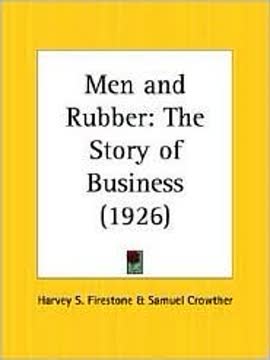
Key Takeaways
1. Prioritize Deep, Sustained Thinking Over Constant Activity
“There is no expedient to which a man will not go to avoid the real labour of thinking.”
The thinking challenge. Harvey Firestone, echoing Thomas Edison, highlights that the most arduous task in business is not merely being busy, but engaging in deep, sustained thought. Executives often get caught in a whirlwind of daily details, leaving no time for critical, end-to-end thinking. This avoidance of true intellectual labor can lead to superficial solutions and missed opportunities.
Strategic delegation. While details are the fabric of business, a supreme leader must delegate execution to free up time for strategic planning and observation. Henry Ford, for instance, knew every necessary detail of his vast industries but assigned no executive duties to himself, allowing him to think and plan slowly and thoroughly. This deliberate approach ensures that when decisions are made, they are well-considered and can be executed with remarkable rapidity.
Avoiding substitutes for thought. Many attempt to bypass genuine thinking by relying on ready-made systems, endless discussions, or committees. While committees can clear thoughts, they often become elaborate means of self-deception, mistaking talk for actual thought. True management is founded on thought, not just optimism, enthusiasm, or records, which are merely lubricants or guides, not the driving power.
2. Cultivate Financial Strength Through Surplus and Prudent Borrowing
“A man with a surplus can control circumstances, but a man without a surplus is controlled by them and often he has no opportunity to exercise judgement.”
The power of surplus. Firestone learned from his father, Benjamin Firestone, the invaluable lesson of always having a financial surplus. This surplus provides the freedom to exercise sound judgment, rather than being forced into decisions by financial pressure. A new business, while initially lacking capital, must prioritize accumulating a surplus from profits, not from funds meant for improvement or expansion.
Conservative borrowing principles. While borrowing is often necessary for growth, it must be done conservatively and for the right purposes. Firestone emphasizes that bank money should not be used for capital investments, as buildings and machinery cannot pay for themselves in short terms. Instead, bank credit should be reserved for busy seasons, with the goal of liquidating all loans annually.
Learning from crisis. The financial crisis of 1920, where Firestone owed banks nearly $44 million and rubber prices crashed, served as a harsh but invaluable lesson. It forced the company to re-appraise values, cut unnecessary expenses, and return to fundamental thinking. This experience hardened the business, proving that true strength comes from learning economy and rigorously measuring the value of men and materials.
3. Anchor Success in Unwavering Quality and Genuine Service
“Good management—that is, management with real thought behind it—does not bother trying to make its way by trickery, for it knows that fundamental honesty is the keystone of the arch of business.”
Honesty as a foundation. Firestone firmly believed that fundamental honesty is the keystone of business. Success is not built on trickery or merely matching competitors, but on genuinely benefiting others and providing superior service. A business exists to supply a human need or want, and if this core reason is absent, it is destined for an early demise.
Quality over price wars. When faced with competitors offering lower prices, Firestone refused to compromise on quality. He understood that the public is willing to pay for quality, and if a product is truly better, it will sell. Cutting quality, even to meet lower prices, is a path to eventual failure, as no one can long succeed by selling what they know to be an inferior product.
Service as the ultimate sale. True salesmanship isn't about persuading someone to buy something they don't want; it's about establishing a continuing relationship where the seller genuinely helps the buyer. This means understanding the prospect's exact needs and offering a product that best fulfills them, backed by thorough knowledge and belief in the product's value.
4. Embrace Continuous Adaptation and Radical Simplification
“There is always a better way of doing everything than the way which is standard at the moment.”
Questioning tradition. Firestone constantly challenged established practices, asking two fundamental questions: "Is it necessary?" and "Can it be simplified?" This relentless inquiry led to significant efficiencies, such as eliminating the traditional "aging" process for rubber, saving millions, and drastically reducing manufacturing turnover.
Innovation through necessity. Often, being an "outsider" or facing constraints can force innovation. Firestone was compelled to develop straight-side pneumatic tires and enter the rim business because he was denied access to existing patent monopolies. These forced adaptations ultimately led to superior products and methods that became industry standards.
Process improvement examples:
- Machine building: Transitioned from hand-built tires to machines, increasing production from 7-8 tires/day to 40 carcasses/day per man, then to 1 tire/minute with four men.
- Compounding: Upgraded mills from 48 to 84 inches, allowing one man to mix 300 pounds instead of 75 pounds in the same time.
- Calendering: Increased calender speed tenfold, doubling production with half the machines.
- Conveyor systems: Eliminated wasteful storage and double handling by integrating conveyors from raw material to finished product.
- Stripping: Replaced manual crowbar stripping with an "almost human machine," increasing output from 300 to 1400 tires in eight hours.
5. Invest in People and Foster a Culture of Mutual Growth
“The biggest thing an employer can do is to help his men to help themselves.”
Beyond a "human machine." Firestone rejected the notion of treating laborers as mere human machines. He believed in providing the best possible working conditions, paying higher wages, and offering rewards beyond what competitors provided. Crucially, he insisted that foremen treat their men as human beings, fostering respect and morale.
Developing talent. Recognizing that a growing company couldn't rely solely on personal acquaintance, Firestone implemented structured programs for employee development. This included:
- Job analysis: Placing men in roles suited to their strengths.
- Training departments: Ensuring a steady supply of skilled tire builders.
- "Breaking in" new hires: Providing guidance and support to integrate new employees.
- Educational programs: Offering classes for college graduates, salesmen, apprentices, and foreigners, including scholarships and night school opportunities.
Employee ownership and welfare. Firestone believed in aligning employee interests with the company's success. He made stock ownership compulsory for employees, allowing them to pay through weekly deductions. The company also invested in community infrastructure, building Firestone Park with homes, a clubhouse, athletic fields, and a bank, demonstrating a commitment to the overall well-being of its workforce.
6. Streamline Sales by Focusing on Product Value and Education
“Salesmanship has to establish a continuing relation in which the seller helps the buyer.”
Rejecting "hurrah" selling. Firestone learned that elaborate sales conventions, campaigns, and contests, while seemingly exciting, were ultimately wasteful and ineffective. They created artificial sales spurts, led to irregular production, and overstocked dealers. True selling starts in the factory with a quality product that can be sold consistently on its merit.
Selling on service and knowledge. The core of effective sales, according to Firestone, is to understand the customer's needs and provide the right product with thorough knowledge. Salesmen must be experts in their product, able to explain its benefits and proper use. This approach builds permanent relationships and trust, rather than relying on persuasion or "asking for alms."
Education for sales excellence. To ensure salesmen possessed this crucial product knowledge, Firestone established a rigorous training course at the Akron factory. Salesmen-pupils learned every detail of tire making and service, including repairs and proper application. This investment in education significantly improved sales performance and reduced turnover, proving that a trained, confident salesman is a valuable asset.
7. Maintain Singular Leadership and Eliminate Bureaucracy
“A company must have one head and only one, and he must be the real executive head.”
The perils of over-organization. Firestone candidly admits to falling prey to "chart fever" during prosperous times, leading to an overly complex, departmentalized sales organization with too many managers and endless reports. This bureaucracy stifled action, encouraged "office politics," and obscured accountability, as people became more focused on process than results.
De-organization for efficiency. The financial crisis of 1920 forced a radical "de-organization." Firestone abolished unnecessary departments, eliminated hundreds of forms, and drastically cut office and statistical staff. The principle became: if information isn't essential for doing business, it's eliminated. This returned the company to a lean, direct, and personal operational model.
Direct, personal contact. The simplified structure emphasized direct, personal contact over formal communication. Instead of memoranda, Firestone preferred telephone calls or face-to-face discussions. Branch managers submitted concise monthly reports and letters, allowing Firestone to grasp the business's pulse quickly and maintain personal oversight without being bogged down in details.
8. Transform Adversity into Opportunity Through Decisive Action
“Situations are only as impossible as one makes them.”
Crisis as a catalyst. The post-WWI boom and subsequent crash of 1920 presented Firestone with the greatest challenge of his career. Faced with $43 million in debt, stalled sales, and demoralized staff, he saw not an impossible situation, but an opportunity for radical change. This crisis forced the company to learn economy and re-evaluate every aspect of its operations.
Bold, decisive leadership. Firestone took direct control of sales, making the dramatic decision to cut all tire prices by 25% when competitors were holding firm. This bold move, though initially met with resistance from his managers, created a "fire sale" that cleared inventory and generated $18 million in sales in two months, significantly reducing the company's debt.
Resilience and recovery. The period of adversity, though difficult, ultimately forged a stronger, sounder business. By relentlessly focusing on economies, pressing sales and quality, and maintaining an honest assessment of their position, Firestone Tire & Rubber Company paid off all bank indebtedness by October 1924, emerging from the fire and water of crisis in a far better condition than before.
9. Secure Your Supply Chain to Control Your Destiny
“No man can be said to control his business unless also he can control his sources.”
Vulnerability of foreign dependence. Firestone recognized the critical vulnerability of the American automobile and tire industries due to their absolute dependence on foreign rubber, primarily controlled by Great Britain. With 85% of the world's automobiles and 75% of its rubber consumption, the U.S. was at the mercy of foreign price manipulation and potential shortages.
The cost of dependence. Fluctuating rubber prices, from 15 cents to $1.23 a pound, cost American owners millions annually. The British-Dutch control over plantation rubber, coupled with restrictive production schemes, highlighted the urgent need for domestic or controlled foreign sources. Firestone saw this as a national security issue, not just a business problem.
Proactive sourcing strategy. Despite initial lack of support, Firestone initiated his own investigation into rubber sources. He leased a million acres in Liberia, West Africa, aiming to produce 200,000 tons annually, roughly half of America's needs. This long-term vision to control raw material sources was a cardinal point in his manufacturing theory, ensuring stability and independence from market fluctuations.
10. Learn from Others, But Ultimately Forge Your Own Path
“Go it alone. Do not fail to try because someone has already tried and failed.”
Wisdom from great minds. Firestone's camping trips with Thomas Edison, Henry Ford, and John Burroughs provided invaluable insights. He observed their philosophies on business, waste, power, and service. Key takeaways from these interactions included the importance of owning one's business, maintaining cash reserves, and a relentless focus on public welfare.
Independent spirit. Despite learning from these giants, Firestone emphasized the principle of "Go it alone." He believed that true success comes from trusting one's own judgment and not being deterred by past failures of others. This independent spirit was evident in his willingness to challenge monopolies and pursue unconventional paths.
The service instinct. Firestone noted that neither Edison nor Ford were "traders" in the conventional sense; their primary drive was the "service instinct." This resonated with Firestone's own philosophy: money is merely a tool to achieve larger and better service. This shared dedication to benefiting humanity, rather than just accumulating wealth, was a common thread among these remarkable individuals.
People Also Read




 Immersive