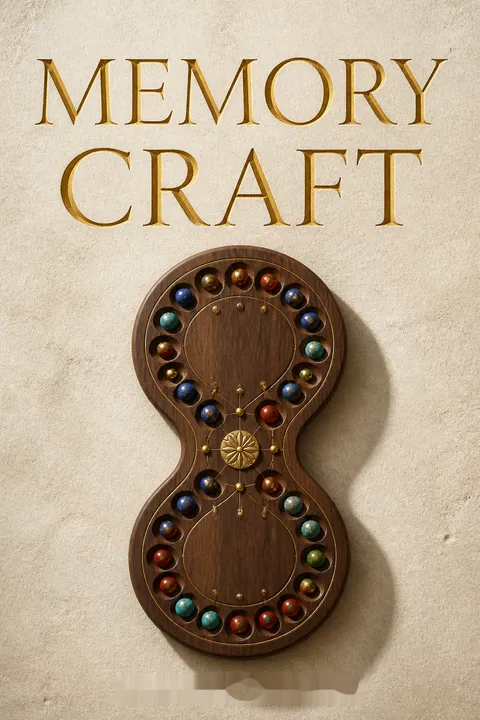

Key Takeaways
1. Memory is a Skill, Not a Fixed Trait, Accessible to All
‘It is not age that makes the difference, but how you challenge and stretch your brain every day.’
Personal transformation. The author, Dr. Lynne Kelly, began her journey with an "appallingly bad memory," a fact she now considers a blessing as it led her to explore ancient memory techniques. Her personal experience, from struggling with basic recall to becoming a Senior Memory Champion in her sixties, powerfully demonstrates that memory is a skill that can be trained and improved, regardless of natural ability or age. This journey debunks the common misconception that memory is a static, innate talent.
Neuroscience confirms. Modern neuroscience research, particularly on brain plasticity and synaptic strengthening, supports the idea that the brain can adapt and grow throughout life. Studies by K. Anders Ericsson and Martin Dresler on memory champions found no inherent structural differences in their brains compared to control groups; instead, their superior memory performance was directly linked to extensive training and the conscious application of memory techniques. This scientific backing reinforces the message that exceptional memorizers are made, not born.
Practice makes perfect. The key to unlocking memory potential lies in consistent practice and engagement with specific techniques. Just as physical muscles need exercise, the brain benefits from cognitive workouts. The author's journey, from struggling with French to memorizing thousands of bird species and historical dates, highlights that dedication to memory training can lead to remarkable improvements, making learning more efficient and enjoyable for anyone willing to put in the effort.
2. Harness Imagination and Emotion for Unforgettable Memories
The wilder, the more colourful and active, the more grotesque, vulgar or erotic the images and stories you create are, the more memorable they will be.
Vivid imagery. The foundation of effective memory techniques lies in transforming abstract information into vivid, imaginative, and emotionally charged images. Medieval memory arts, like visual alphabets and bestiaries, emphasized creating dynamic, even shocking, mental pictures to make information stick. This approach leverages the brain's natural inclination to remember things that are unusual, humorous, or emotionally resonant, making recall much faster and more reliable than rote memorization.
Personalized associations. The power of these images is amplified when they are personally constructed. The author's experience with a medieval bestiary for names, where "Mi" became a millipede and "Ju" a juggler, illustrates how individual associations, no matter how quirky, are far more effective than borrowed ones. This personal engagement ensures that the images are deeply meaningful and therefore more memorable, fostering a creative and playful approach to learning.
Emotional impact. Emotion acts as a powerful glue for memory. Whether it's the humor of a cat taking a toilet break on a newspaper in a visual alphabet, or the strong feelings evoked by historical events, emotional responses enhance memory encoding. This principle is evident in indigenous cultures' use of dramatic stories and ceremonies, and it's why the author encourages making images "raunchier, funnier, stinkier" – anything to stir the emotions and make the memory indelible.
3. Memory Palaces: The Universal, Most Powerful Memory Tool
Memory is hugely enhanced by associating information with physical locations such as your home, neighbourhood or any other familiar place.
Ancient and universal. The "method of loci," or memory palace, is recognized as the most powerful memory technique, used by ancient Greek orators, medieval scholars, and contemporary memory champions alike. This technique involves visualizing a familiar physical space—like your home, a street, or a school—and associating items to be remembered with specific locations along a mental journey through that space. Its universality across diverse cultures, from Australian Aboriginal songlines to Incan ceques, suggests it aligns with fundamental brain functions.
Neuroscientific basis. The effectiveness of memory palaces is rooted in neuroscience. The hippocampus, the brain's "main seat of memory," is particularly active in processing spatial information. By deliberately linking new knowledge to established spatial memories, we engage these robust neural pathways, strengthening the encoding of information. This "temporal snapshot" of information and place makes memories more potent and durable, allowing for rapid recall and complex layering of data.
Practical application. Creating a memory palace is straightforward. Start with a familiar route, like a walk through your home, and assign distinct locations. The author's "Countries Journey" and "History Journey" demonstrate how to populate these palaces with information, from global populations to historical timelines. Marking every fifth location (e.g., a window or a corner) helps maintain order and prevents omissions, making the mental walk-through systematic and reliable for retrieving vast amounts of structured information.
4. Indigenous Cultures Offer a Holistic Blueprint for Memory Mastery
Indigenous learning is not divided into discrete silos separating science from history, spirituality from navigation. It is all enmeshed in an intellectual whole.
Integrated knowledge systems. Indigenous cultures worldwide, such as the Navajo, Hanunóo, Matsés, and Australian Aboriginal peoples, developed sophisticated memory systems that integrated all aspects of their knowledge—science, history, spirituality, and practical skills—into a cohesive whole. This holistic approach, often encoded in mythology, stories, songs, and dances, contrasts sharply with Western compartmentalization of knowledge, offering a model for deeper, more interconnected learning.
The power of performance. Song, dance, and dramatic storytelling are central to indigenous memory. Music, described as "the enhancement of speech in an emotionally charged framework," makes information far more memorable than prose, while dance adds a kinesthetic dimension. The author's experience with reworded French songs and bird dances illustrates how incorporating these elements can transform mundane learning into an engaging, multi-sensory experience, making recall effortless and enjoyable.
Ancestral characters and landscape. Indigenous memory systems often feature a pantheon of "ancestors" or "Old People" (like the Pueblo kachina or Māori whakapapa) who act as protagonists in stories that encode vast amounts of information. These characters, combined with landscape-based memory palaces (songlines), create a rich, living encyclopedia. This approach emphasizes that knowledge is not just facts but a dynamic narrative, deeply rooted in place and personal connection, fostering a profound understanding rather than mere recall.
5. Portable Memory Aids Transform Abstract Knowledge into Tangible Stories
Using that incredible imagination of yours, almost any physical object can become a memory aid as long as it has a sequence and variety.
Tangible mnemonic devices. Beyond vast landscape memory palaces, indigenous cultures utilize a diverse array of portable objects as mnemonic devices, transforming abstract knowledge into tangible, memorable forms. These include the Luba people's lukasa (decorated memory boards), Iroquois and Māori genealogy staves, Incan khipu (knotted cords), and even the human body itself. These objects provide tactile and visual cues that anchor complex information, making it accessible and durable.
Personalized creation. The author's experiments with creating her own lukasa for bird species or a spider memory board illustrate the power of personal construction. By selecting and arranging beads, shells, or carvings, the act of creation itself deeply embeds the information. Each unique feature of the object—its color, shape, texture, or position—becomes a hook for a specific piece of data, making the memory aid highly personalized and effective.
Multi-sensory engagement. These portable aids engage multiple senses, enhancing memory. Touching the beads of a lukasa, tracing the knots of a khipu, or feeling the contours of a carved stave adds a kinesthetic dimension to recall. The author's use of her hands for astronomy or a necklace for Shakespeare's plays demonstrates how everyday objects can be transformed into powerful, discreet memory tools, allowing for constant, subtle review and reinforcement of knowledge.
6. Art and Writing: Ancient Allies in the Craft of Memory
Writing was considered an aid to memory, but most certainly not a substitute for it.
Intertwined evolution. The history of writing is deeply intertwined with memory techniques, not a replacement for them. From early pictographs and undeciphered scripts like the Phaistos Disc to the sophisticated Chinese characters, art and symbols have long served as mnemonic devices. The author's lukasa for the "story of writing" illustrates this continuum, showing how visual representations evolved alongside, and often enhanced, the development of written language.
Mandalas and narrative scrolls. Tibetan mandalas, with their intricate geometric patterns, function as memory palaces for spiritual and philosophical concepts, demonstrating how art can structure complex ideas. Similarly, Chinese, Japanese, and even European narrative scrolls (like the Bayeux Tapestry) use sequential imagery to tell stories, making historical narratives or complex processes (like the author's timekeeping scroll) highly memorable through visual progression.
Medieval manuscript lessons. Medieval scribes and scholars, despite the advent of writing, continued to prioritize memory. They designed manuscripts with elaborate decorations, colored initials, drolleries, and grid layouts to make each page a unique "memory space." This practice highlights that even with written text, visual distinctiveness, emotional engagement, and systematic organization on the page significantly boost recall, offering valuable lessons for modern note-taking and study.
7. Characters and Stories (Rapscallions) Bring Abstract Concepts to Life
If you deploy lively characters to act out that knowledge you’ll need far fewer repetitions to retain the knowledge, and you’ll retain it for longer.
Personalized protagonists. The concept of "rapscallions"—vivid, often humorous or grotesque, characters—is a powerful mnemonic strategy derived from indigenous "ancestors" or "mythological beings." These personalized protagonists, whether based on family, pets, historical figures, or pure imagination, act out stories that encode abstract information, making it far more memorable and emotionally engaging than dry facts.
The Dominic System. This principle extends to memorizing numbers through the Dominic System, where each number pair (00-99) is assigned a unique character. By combining these characters with actions and objects (PAO system), abstract digits are transformed into dynamic, often absurd, stories within a memory palace. For example, Rosalind Franklin's birth year (1920) becomes a vivid scene of a singing nun wearing dark glasses, making the date unforgettable.
Educational application. Rapscallions can revolutionize learning across disciplines. In science, electrons can be dancing students attacked by "thugs" (resistors), while in language, teddy bears (Fleur and Le Petit Professeur) help remember noun genders. For mathematics, rapscallions can act out multiplication tables, turning rote memorization into creative storytelling. This method makes learning fun, personal, and deeply embedded, fostering engagement and understanding.
8. Memory Training Enhances Learning Across All Disciplines and Ages
Memorisation is a way to enhance what we already do in education and in life.
Beyond rote learning. Memory training, distinct from rote learning, provides a foundational knowledge base upon which higher-order thinking skills like creativity, analysis, and critical thinking can build. It's not about mindless repetition but about understanding and structuring information in memorable ways. This approach is crucial for professions requiring extensive knowledge, from medicine and law to performing arts, where instant recall is essential.
Modality shifts in education. Effective learning involves "modality shifts"—transforming information from one mode (e.g., written text) into another (e.g., art, story, song, or a memory palace). This process forces deeper engagement with the material. Examples include:
- Creating a "History Trail" in school grounds, linking local, national, and global events to physical locations.
- Using a single memory palace for diverse subjects like the periodic table and visual arts principles, making each location multi-layered.
- Composing songs for scientific definitions (e.g., "force") or mathematical tables, making abstract concepts concrete and memorable.
Musicians and muscle memory. Musicians and actors demonstrate how consistent practice builds "muscle memory," allowing complex performances to become automatic. This principle applies to any skill: mastering the basics through memory techniques frees up cognitive resources for creative expression and nuanced interpretation. The rhythmic, multi-sensory engagement of learning music, dance, or scripts offers a powerful model for embedding knowledge in any field.
9. Lifelong Memory Crafting is a Powerful Defense Against Cognitive Decline
I am convinced that we are very much poorer for not using our memories effectively anymore. Could this be a contributing factor to the prevalence of dementia and the general acceptance that memory fades with age?
Challenging inevitability. While memory loss is common with age, it is not inevitable. Dementia, a neurodegenerative disease, is distinct from normal age-related memory lapses. The author posits that the societal reliance on external memory aids (like Google) and the acceptance of memory decline may contribute to reduced cognitive activity, potentially impacting brain plasticity and increasing vulnerability to dementia.
Cognitive reserve and memory palaces. Research suggests that intense cognitive activity, such as memory training, can build "cognitive reserve," potentially delaying the onset or reducing the impact of dementia. Studies have shown that using memory palaces can lead to a measurable thickening of brain areas in the cerebral cortex, demonstrating brain plasticity in older adults. This indicates that actively engaging in memory techniques can help maintain cognitive function.
Identity and personalized memory aids. Dementia often leads to a distressing loss of identity. Personalized memory aids, like the Native American "winter counts" (a visual record of one's life events), offer a powerful tool for retaining a sense of self. These portable, emotionally resonant objects, filled with personal stories and shared memories, can serve as prompts for patients and caregivers, fostering connection and potentially mitigating the emotional impact of memory loss. Music therapy also shows promise, as the brain's response to music may be less affected by dementia.
10. Memory Sports: Pushing the Boundaries of Human Memory and Concentration
I find competing in memory sports a way of combating self-doubt. Just when I fear my working memory is perhaps not as sharp as when I was younger, I am reassured by achieving even better results as I get older.
Competitive training. Memory competitions, though seemingly focused on "useless" information like shuffled cards or random numbers, serve as an intense training ground for memory techniques and concentration. The author's personal journey into competitive memory, winning Senior Memory Champion titles in her sixties, demonstrates that these challenges are achievable and highly beneficial for mental agility at any age.
Advanced techniques. Competitors utilize sophisticated systems like the Person-Action-Object (PAO) system, which transforms abstract data (e.g., three playing cards or six digits) into vivid, often bizarre, stories placed in memory palaces. This rapid, on-the-fly image creation pushes the limits of imagination and mental speed. The "ghosts" of previous training sessions highlight the need for multiple, pristine memory palaces to avoid interference during high-stakes recall.
Beyond the score. While the goal in competition is speed and accuracy, the benefits extend far beyond winning. Training for memory sports significantly improves concentration, focus, and mental discipline. The author's experience with earmuffs, pre-training dance rituals, and temperature control illustrates how creating specific routines can prime the brain for intense cognitive tasks, proving that consistent effort can lead to remarkable improvements in mental performance and confidence.
Review Summary
Memory Craft receives predominantly positive reviews, averaging 4.22/5. Readers praise its comprehensive exploration of memory techniques rooted in indigenous and historical cultures, particularly appreciating the blend of practical methods with anthropological context. Many highlight the Memory Palace technique and the book's inspiring approach to lifelong learning. Critics note it reads more like a memoir than a practical guide, with some finding it overly personal and lacking step-by-step instruction. Despite this, most recommend it for those interested in memory improvement, education, or cultural history.
People Also Read

Download PDF
Download EPUB
.epub digital book format is ideal for reading ebooks on phones, tablets, and e-readers.








































