
Key Takeaways
1. Western Ecology's Flaws: The "Eden" Illusion and Its Failures
For all those Saturdays, I struggle to think of a single site where the flag of our environmental victory remains planted.
Disillusionment with "Eden Ecology." The author, a Western-trained ecologist, experienced profound professional disillusionment as many ecological restoration projects failed, leading to "environmental do-gooder angst." This frustration stemmed from a realization that the prevailing "Eden ecology" — rooted in Judeo-Christian beliefs of human dominion and a quest to restore a "perfect" pre-human state — was fundamentally flawed. This approach often blamed humans for environmental imbalance and sought to "fix" nature from an external, detached perspective.
Cookie-cutter solutions. Modern ecology, influenced by this Eden narrative, often applies standardized, "cookie-cutter" solutions without considering context or the dynamic nature of ecosystems. Projects focused on removing "invasive" species and planting "native" ones frequently failed, with desired native plant communities vanishing within weeks or months. The author recounts a project where hundreds of conifers planted on an old landfill died, highlighting the futility of efforts disconnected from deeper ecological understanding.
Ignoring deeper truths. This "environmental apology tour" often serves to alleviate human guilt rather than genuinely heal the land. The author observed that colleagues often ignored field observations that challenged established scientific dogma, dismissing alternative perspectives as "too controversial" or lacking "enough letters after your name." This resistance to diverse viewpoints, even when empirical data contradicted prevailing theories, hindered progress and perpetuated ineffective practices.
2. The Indigenous Worldview: Relationality as the Core of Existence
Our very existence is inside the ecosystem as an equal relation, meaning we are just as important as the grasshoppers, worms, birds, and soils are.
Inherent interconnectedness. The Indigenous worldview is fundamentally relational, seeing all beings—humans, plants, animals, land, and water—as interconnected and equal parts of the ecosystem. This contrasts sharply with the Western scientific view that often positions humans as external observers or managers of nature. The author's personal journey of cultural reclamation revealed that her "taking work too personally" was not a flaw, but an expression of her Indigenous self, inseparable from her work.
Beyond "ways of knowing." Indigenous knowledge is not merely a different "way of knowing" but a different "way of understanding," offering a more complete picture when combined with Western science. This understanding is dynamic, rooted in continuous observation and lived experience, and is not confined to historical accounts. It challenges the colonial narrative that often relegates Indigenous knowledge to the past, emphasizing its generative power in the modern context.
Challenging dichotomies. This relational lens rejects the rigid dichotomies of "native species good, invasive species bad" that dominate Western ecology. Instead, it encourages evaluating species based on their specific relationships and contributions within a given place, acknowledging that even "invasive" species can offer benefits or reveal ecological truths. This fluidity allows for adaptation and respect for all life, moving beyond static notions of ecological purity.
3. Indigenous Research: A Ceremony of Respect, Relationality, and Reciprocity
Without ensuring that all three principles remain connected in this way throughout a research process, we lose the ability to claim to have conducted research from our Indigenous worldview.
The Three Rs as Borromean rings. Indigenous research methodology is guided by three interconnected principles: Respect, Relationality, and Reciprocity. Like Borromean rings, if any one principle is removed, the entire structure collapses, emphasizing their mutual dependence and strength in unity. This framework ensures that research is not extractive but deeply ethical and community-centered.
Respect for all knowledge. Research rooted in respect means that all forms of knowledge are valued equally, whether it's a story, a vision, oral history, archaeological records, or scientific data. The community is positioned as "co-researcher," actively shaping the research questions, methodologies, and outcomes. This approach challenges the Western scientific hierarchy that often prioritizes empirical evidence over cultural knowledge.
Ceremony and accountability. Relationality transforms research into a ceremony, where data collection is a series of meaningful interactions. Reciprocity ensures that the research contributes positively to the community's well-being, with a clear desired benefit. This commitment to community and purpose makes the work "good," moving beyond the facade of objectivity and embracing the personal motivations that drive researchers.
4. Unravelling Protectionism: Embracing the "Time of the Eagle" in Science
I once had a mentor try to talk me out of my current research project because “that Indigenous stuff would undermine [my] credibility as a scientist.”
Resistance to new paradigms. The scientific community often exhibits a "protectionist culture" that resists alternative perspectives, even when existing theories prove insufficient. The author experienced this firsthand, with her Indigenous approach being dismissed as a threat to her scientific credibility. This fear of challenging prevailing consensus stifles innovation and discourages "outside-the-box" thinking, creating a risk-averse academic environment.
The "expert's folly." While expertise is valuable, it can lead to a "prepared mind" that struggles to see problems from new vantage points. The author's journey highlighted the need for a "beginner's mind" — an attitude of openness and lack of preconceptions — even at advanced levels of study. This doesn't mean discarding experience but temporarily setting it aside to allow for new insights and breakthroughs.
Making space for plurality. Overcoming this resistance requires the dominant worldview to yield space for multiple perspectives. The author's "cultural-clash-parenting experiment" with her husband demonstrated that when differing worldviews are given equal platforms, children develop more open, accepting, and fluid understandings. This analogy underscores the need for mutual respect, appreciation, and humility to build bridges between Western science and Indigenous worldviews, fostering a "scientific time of the eagle" where all researchers can contribute freely.
5. Ceremony in the Weeds: Personal Transformation Through Relationality
I am typically all about an agenda, action items, and timelines. There must be a purpose, an objective, to everything I do, fuelled by a nagging urgency, with efficiency being the ultimate prize. No more.
Spiritual preparatory work. Transitioning to an Indigenous worldview requires deep spiritual work, not just an intellectual shift. This involves freeing oneself from colonial perceptions and embracing a spirituality grounded in gratitude for all relations, honouring ancestors, and accepting the "not knowing." The author's "Ceremony in the Weeds" was a personal, intentional process to dismantle her ingrained "good plant/bad plant" dichotomy.
Challenging ingrained biases. The author's journey involved confronting her own conditioning, such as her initial discomfort with harvesting "weeds" for medicinal teas, despite knowing their benefits. She apologized to the plants for her past vilification, recognizing that she had been "successfully conditioned to view these plants negatively as enemies." This personal act of reconciliation with plants like dandelion, plantain, and comfrey transformed her perception.
Lessons from unexpected teachers. Even the most "invasive" plants, like knotweed (which ironically offered a potential Lyme disease treatment) and Himalayan blackberry, became teachers. The author observed pollinators thriving on blackberry and a bear feeding on it, leading her to question her rigid stance. This ceremony taught her that "sometimes the information that you have from one way of seeing should be sufficient to inform your approach," emphasizing the wisdom of knowing when to change lenses and value all types of knowledge.
6. The Language of Land Healers: Shifting from Transaction to Reciprocity
The language of the application of modern Eden ecology is transactional and the language of an Indigenous ecology is reciprocal.
Words shape perception. Language holds immense power to shape perceptions, thinking, and actions. The author realized that the transactional language of modern Eden ecology — focused on "restoration," "management," and "stakeholders" — perpetuated an impersonal, business-like relationship with the land. This language often obscured the deeper, reciprocal connections essential for genuine healing.
From "restoration" to "healing." The author advocates replacing "ecological restoration" with "land healing" or "water healing." "Healing" implies a caring, reciprocal act that doesn't impose a static "return to a former state" but offers flexibility to respond to the dynamic needs of relations. This shift immediately transforms the work from fixing an object to helping a relation, fostering a sense of kindness and responsibility.
New terminology for a new ecology. Other proposed shifts include:
- Land Healers/Water Healers: Replacing "volunteers" or "stewards" to command respect for those caring for the planet.
- Relationally Preferred Species: Replacing "native/invasive" to move beyond vilification and consider a species' contribution to desired balance.
- Legacy Areas/State: Replacing "natural areas/state" to honor the true history of Indigenous shaping of landscapes.
- Human Relations/Partners/Balancers: Replacing "stakeholders" to foster equality and acknowledge inherent relationships.
This new language aims to unite people through shared values, making land healing deeply personal and effective.
7. Humans as Balancers: Reclaiming Our Essential Role in Ecosystems
The humans would be the mechanism to help keep balance in the animal kingdom, which would be maintained through their mutual reliance and respect.
Creator's original intent. The Kwakwa̱ka̱’wakw story of creation reveals that humans were specifically created by the Transformer to be the "balancers" of the ecosystem. This role involved harvesting animals and plants to maintain balance within the animal kingdom, fostering mutual reliance and respect. This understanding fundamentally shifts the human role from external "fixer" to an integral, responsible leader within the ecosystem.
Dispelling the "hunter-gatherer" myth. Colonial narratives often misrepresent Indigenous Peoples as mere "hunter-gatherers," overlooking their sophisticated, intensive land management practices. Pre-contact populations, sometimes numbering in the thousands per village, required extensive food systems. Archaeological evidence and oral histories reveal "forest gardens," clam gardens, and purposeful shaping of landscapes for food, medicine, and technology, demonstrating advanced agricultural and aquacultural practices.
Legacy balance and its loss. The "legacy balance" refers to the state of ecosystems prior to contact, shaped by thousands of years of Indigenous stewardship. The arrival of settlers and the imposition of resource economies disrupted this balance, leading to the current ecological crises. Reclaiming the role of balancer means understanding this history and actively shaping ecosystems to support all relations, acknowledging that tough decisions about which species to prioritize will be necessary in a changing climate.
8. Webwork: A Circular, Relational Approach to Land Healing Decisions
Love settles within the circle, embracing it and thereby lasting forever, turning within itself.
Beyond linear frameworks. Traditional land management often relies on linear "frameworks" that are incongruent with a relational worldview. The author proposes "webwork" – a verb-based guiding process grounded in circular symbology, reflecting the cyclical nature of life and the interconnectedness of all beings. This process aims to guide those in a circle, united by shared values, to create relational webs for healing.
Unleashing relational thinking. Webwork begins by fostering relational thinking, encouraging participants to visualize connections in familiar places. This practice helps people "see" their surroundings anew, recognizing the intricate web of relationships. It then moves to practicing relational terminology, replacing colonial terms with those that reflect Indigenous ecology, leading to meaningful shifts in thought and discussion.
Weaving the webs. The core of webwork involves acknowledging all relations (plants, animals, soil, humans) as living and equal, using "Indigenized nouns" (e.g., "salmoning" instead of "salmon"). Participants physically weave a web with yarn as they name relations and their connections to the place being healed. This tangible demonstration illuminates mutual dependence and guides the crucial question: "What is the desired balance for healing the land in this place?"
9. Reciprocity in a Modern World: Reconnecting People and Land
We are a society that has become only users of the environment, even if we see ourselves as “environmentally conscious.”
Detachment from land. Modern capitalist society has fostered a profound detachment between humans and the land. Most people, even those who are environmentally conscious, are "users" rather than active stewards, relying on a few paid professionals or a handful of volunteers for land care. This creates a facade of environmental action without widespread personal reciprocity, leading to insufficient efforts in the face of ecological crises.
Beyond awareness to action. Environmental awareness campaigns often fall short because they don't provide clear pathways for personal action or integrate land care into daily life. The author's observations of park visitors and her own experiences with limited volunteer engagement highlight this gap. To truly heal the planet, society needs to move beyond passive awareness and demand systemic changes that enable active, reciprocal relationships with land and water.
Reimagining stewardship. Reciprocity with the land can be reimagined for the modern world. This involves creating societal infrastructure that integrates land stewardship into daily routines, such as:
- Land-based learning for children, teaching plant uses and fostering connection.
- Community food hubs that link land healing efforts with local food security.
- Recreational activities (e.g., mountain biking) that include mandatory land healing components.
- Redefining "self-care" to include "land care," recognizing the mutual benefits for human and planetary well-being.
This transformation requires collective responsibility and a shift from expecting others to act to actively engaging in land healing.
10. Ye'yumnuts: An Ancestral Teacher for Holistic Land Healing
You are walking on sacred and hallowed ground to our people and you come on here and bring in whatever it is. You gotta remember that not even a foot and a half deep, someone’s soul is sleeping there.
A sacred ancestral site. Ye'yumnuts, an ancient Cowichan village and burial site, served as the author's primary teacher, offering profound lessons in Indigenous ecology. Its history, spanning over 1,300 years of human presence, reveals a rich legacy of purposeful land shaping and deep connection. The site's eventual near-destruction by colonial development and the arduous fight for its protection underscore the ongoing impacts of colonialism and the sacredness of Indigenous lands.
The lesson of permission. Ye'yumnuts provided the author with the "lesson of permission" – the freedom to shed her Western scientific reflexes and embrace a relational way of seeing. A spiritual encounter with Sisuital, the two-headed serpent, served as a powerful intervention, forcing her to stop judging the landscape and instead "listen" to its relations. This allowed her to approach the site not as a "landscape" to be fixed, but as a being made of many relations.
Mutual reliance and holistic healing. The site taught the importance of mutual reliance, demonstrating that both conserved areas and neglected lands suffer without human relationship. Land healing at Ye'yumnuts extended beyond ecological restoration to include cultural connection, historical acknowledgment, and community well-being. Ancestors' needs, cultural learning, and food security became integral to the planting plans, illustrating that "healing community and healing the land go together."
11. Storytelling: Weaving a Mosaic of Knowledges for the Future
To ask “What is your story?” is to honour the past by acknowledging its truth and learning from it.
Beyond blending knowledges. The author initially struggled to "blend" or "braid" diverse knowledges, realizing that such attempts often diminished their individual integrity. A dream revealed that knowledges are like brilliant, distinct colors on a painter's palette, meant to be assembled into a mosaic, not blended into a uniform hue. Each knowledge system—Western scientific, Indigenous, local—contributes its unique "beads" to form a beautiful, holistic picture of land healing.
Storytelling as relational data analysis. The author's children, visiting Ye'yumnuts, spontaneously began "re-storying" the site, envisioning its future as a place of cultural learning, food growing, and community gathering. This experience revealed that storytelling is not just for teaching but for "figuring things out" and for relational data analysis. Asking "What is your story?" of the land, soil, plants, and animals honors their past, acknowledges their present, and guides the collective authorship of their future.
Authoring the future. This approach shifts the focus from merely restoring a past state to actively authoring a future story for the land, one that reflects community values and needs. This narrative, captured in a mosaic image, becomes an act of cultural witnessing and a guide for purposeful action. It compels accountability, ensuring that land healing projects are deeply tied to cultural learning, food security, and community well-being, recognizing that "healing ourselves is not separate from healing the lands and waters."
12. The Frog's Call: A Collective Journey Towards Ecological Reconciliation
It is critical that you recognize that your completion of this journey is not a free pass to take what you have learned and skip past us.
The frog's symbolism. The frog, symbolizing the ability to traverse two worlds (water and land) and embodying adaptability and knowledge, represents the author's journey to become a "relational scientist." Her personal experience of nurturing Pacific chorus frog eggs in her pool, from tadpoles to tiny frogs, mirrored her own growth in understanding and her role in helping others connect with nature. The frogs' amplified croaking became a call to action, a message of resilience and the need for collective healing.
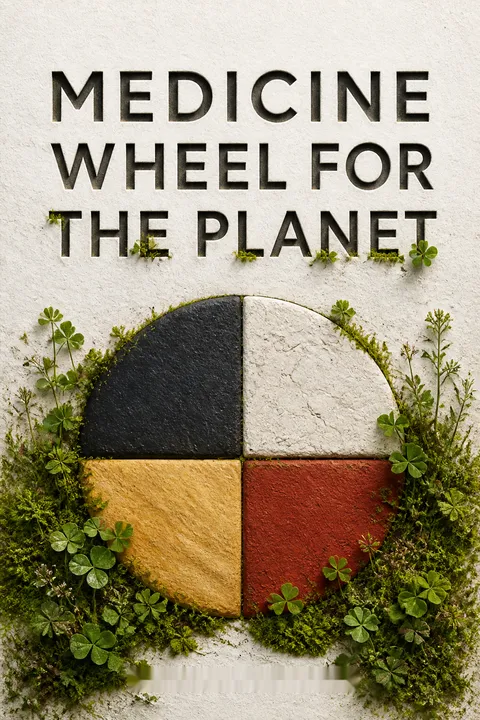
Reclaiming balance. The medicine wheel guides this journey, emphasizing balance in all directions—wisdom, spirituality, transformation, and empowerment. It reveals an Indigenous science that has always existed, one that Western science, in its detachment, has lost balance with. Embracing the spiritual and emotional aspects of science, acknowledging the "whys" and the doubts, is crucial for restoring this balance and making science more holistic and effective.
A call for respectful partnership. The author extends an invitation to allies to join this journey, but with a critical caveat: "Nothing about us [Indigenous Peoples] without us [Indigenous Peoples]" and "Nothing about us [Indigenous Peoples] that isn’t led by us [Indigenous Peoples]." This is not a free pass for non-Indigenous individuals to appropriate knowledge but a call to work respectfully, make space for Indigenous leadership, and collectively take responsibility for healing the planet and ourselves.
People Also Read
Download PDF
Download EPUB
.epub digital book format is ideal for reading ebooks on phones, tablets, and e-readers.








































