
Key Takeaways
1. The Genesis of Resistance: A Young Man's Political Awakening
I myself was fundamentally changed by his statesmanlike words and his burning personality. I vowed there and then that I would struggle with him for justice and freedom for our country and I dedicated myself to follow him in his crusade to remove the sufferings and humiliations of our people.
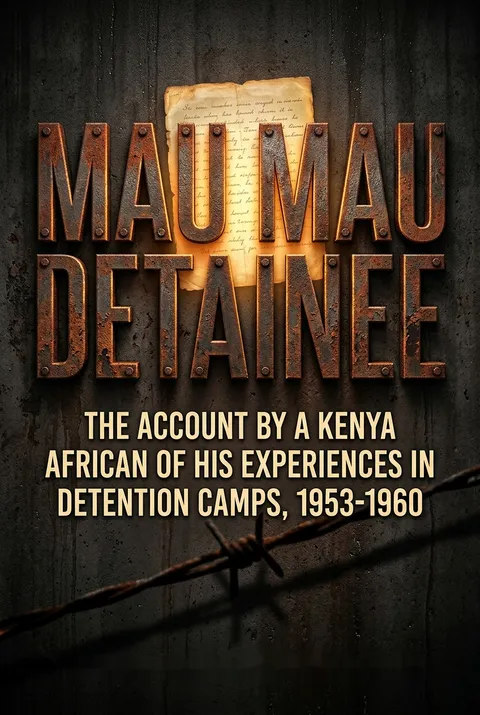
Early life's influence. Born in 1929, Josiah Mwangi Kariuki's early life as a "squatter" on a European farm in Kenya's Rift Valley exposed him to the stark economic disparities and feudal-like relationships imposed by colonial rule. Despite the hardships, his mother's determination for his education, even at great personal cost, instilled in him a deep value for knowledge and self-improvement. This foundation shaped his perspective on the injustices faced by his people.
Kenyatta's magnetic appeal. A pivotal moment came in 1946 when Kariuki, then a schoolboy, heard Jomo Kenyatta speak at Njoro. Kenyatta's powerful message, delivered in a blend of Kikuyu and Swahili, articulated the grievances of Africans regarding land, political representation, and the color bar, while advocating for unity and self-governance. This encounter ignited Kariuki's lifelong commitment to the struggle for Kenya's independence.
Growing political awareness. As he pursued further education in Uganda, Kariuki remained acutely aware of the escalating tensions in Kenya, fueled by land shortages, lack of opportunities, and administrative harshness. He recognized the impending "tragic disaster" if the British continued to deny African aspirations. His return to Kenya in October 1952, coinciding with the declaration of the State of Emergency, marked his entry into active political resistance.
2. The Oath of Unity: A Bond Against Oppression
The Oath of Unity (given the mysterious and sinister name of ‘Mau Mau’ by a cunning propaganda machine) had the same background. It was intended to unite not only the Kikuyu, Embu and Meru but all the other Kenya tribes.
Unifying a desperate people. The Mau Mau oath, which Kariuki took twice, was a spontaneous movement born out of the Kikuyu people's desperation and a desire to retain self-respect against European domination. It was a simple oath of unity and brotherhood, aimed at binding various tribes in the fight for land and independence, contrary to the "cunning propaganda machine" that portrayed it as sinister and primitive.
Refuting false narratives. Kariuki explicitly refutes the "dogmatic statements" and "misleading" information, including the Corfield Report, that linked Mau Mau directly to the Kikuyu Central Association (K.C.A.) or exaggerated its atrocities. He clarifies that the oath was not sophisticated or elaborate, and initially "wholly unobjectionable," evolving in response to the government's brutal repression rather than being inherently violent.
The Batuni Oath's purpose. The second, or Batuni, oath, which Kariuki also took, was a stronger commitment for those expected to provide active service to the movement. It involved vows of loyalty, secrecy, and readiness to fight for the land, even against family members if they were deemed enemies. This oath solidified the resolve of individuals like Kariuki, transforming their personal commitment into a collective, disciplined resistance.
3. Detention Camps: A System of Dehumanization
So horrible were the stories rife about this camp while I was in Nakuru that I decided it was my duty to save as many of our people as possible from being sent there.
Initial shock and brutality. Kariuki's journey through fourteen detention camps, starting with Kowop, revealed a systematic policy of dehumanization. Upon arrival at Langata, detainees were subjected to indiscriminate beatings, forced to utter demeaning phrases about Kenyatta, and denied basic necessities. This "shock treatment" was designed to break their spirit and force compliance.
Physical and psychological torment. The camps employed various forms of torture and degradation. At Kwa Nyangwethu, castration was rumored, and women were subjected to invasive procedures to extract confessions. In Manyani, detainees were forced to jump like "Kamba dancers" during inspections to dislodge hidden money, and solitary confinement in "Shimo" (holes) was used as punishment. The constant threat of violence and the arbitrary nature of punishment created an atmosphere of pervasive fear.
Deliberate degradation. The "dip" at Manyani, where detainees were immersed in Jeyes Fluid, and the forced shaving of heads at Othaya, were not merely hygienic measures but deliberate acts to strip individuals of their dignity and cultural identity. These practices, combined with reduced rations and forced labor, aimed to break the detainees' will and force them into "confession."
4. Resilience and Resistance: Organizing Within the Wire
In Lodwar we created the best organization among the detainees of any camp I was in.
Maintaining internal governance. Despite the harsh conditions, detainees consistently organized themselves, forming committees and establishing internal rules to maintain order, morale, and a sense of community. At Kowop, a committee led by Gad Kamau Gathumbi enforced regulations, including fines for fighting and protecting the sole female detainee. This self-governance provided a crucial counter-structure to the colonial administration.
Education and communication networks. Education was a powerful tool for resistance. Kariuki, being educated, taught English and politics, and translated newspapers for fellow detainees. News services like "Manyani Times" (verified news) and "Waya Times" (rumors and morale boosters) kept spirits alive and informed detainees about the outside world, often smuggled through sympathetic warders.
Collective defiance and solidarity. Detainees often engaged in collective acts of defiance, such as refusing to work or going on hunger strikes, knowing the severe repercussions. Their unity was their strength, as seen in the "Battle of Saiyusi" where they fought back against warders. Leaders like Kariuki, Robinson Mwangi, and Joseph Kirira worked tirelessly to preserve nationalist ideals and support their comrades, even when it meant personal suffering.
5. The "Pipeline" Fallacy: Confession Under Torture
Brutality had so distorted the meaning of truth that it now meant ‘saying what those people want to hear with as few lies as possible’.
The flawed "rehabilitation" system. The British government's "pipeline" system, designed to "rehabilitate" detainees through confession and hard work, fundamentally misunderstood the nature of African nationalism. It assumed that "Mau Mau" was a curable pathology rather than a deep-seated political aspiration. The system's failure led to increased violence as officials tried to force confessions.
Forced confessions and their futility. Confessions extracted under torture were meaningless, as detainees would "confess a whole pack of lies, embroidered with pieces of truth" simply to survive. Kariuki himself did this after a brutal beating at Athi River. This demonstrated the system's inherent flaw: it produced false compliance, not genuine ideological change, and only hardened the resolve of true nationalists.
The "hard-core" vs. "surrenderers." The system created a divide between "hard-core" detainees, who resisted to the end, and "surrenderers," who confessed for easier treatment or release. Kariuki notes that while "surrenderers" might appear cheerful, the "hard-core" were "happier and at greater peace with their souls," knowing they remained true to their principles. This internal moral victory underscored the failure of the rehabilitation policy.
6. The Unseen War: Women, Loyalists, and Civilian Suffering
First, there is no doubt that ninety per cent, of the women of the Kikuyu tribe supported the fight for Freedom and Independence with their minds, their bodies and their souls.
Women's unwavering support. Kikuyu women played a crucial, often overlooked, role in the struggle. They secretly fed and cared for forest fighters, while outwardly complying with government orders to dig ditches or build Home Guard posts. This dual role, driven by deep patriotism and family ties, demonstrated their profound commitment to the cause, despite facing severe punishment if discovered.
The complex role of loyalists. The Emergency exacerbated internal divisions, turning the conflict into a civil war. Loyalists, often chiefs, wealthy traders, or those with vested interests in British rule, collaborated with the government. However, many Home Guards ("Kamatimu") secretly sympathized with the movement, and some even helped protect civilians from security forces.
Widespread civilian suffering. The government's counter-insurgency tactics, including twenty-three-hour curfews, destruction of crops, and movement restrictions, led to widespread famine and death in the Reserves. Kariuki's own mother and other family members died due to these conditions. This immense civilian suffering, often ignored or downplayed by official narratives, fueled the deep-seated resentment against colonial rule.
7. The Lifeline of Information: News and Letters from Within
It must seem strange to an outsider that while the warders would sell tobacco and newspapers today, tomorrow they would meticulously search our quarters on the orders of their superiors for the same tobacco and triumphantly haul us up for punishment if they discovered anything.
The vital role of contraband. In the isolated world of detention camps, access to outside information was a lifeline. Detainees relied on smuggled newspapers and radio broadcasts, often obtained through bribed warders, to stay informed about political developments and the progress of the independence struggle. This clandestine flow of information was crucial for maintaining morale and a sense of connection to the broader movement.
Internal news services. Within the camps, detainees developed sophisticated internal news services like the "Manyani Times" (verified news) and "Waya Times" (rumors and light relief). These oral bulletins, shared across compounds, provided a sense of collective identity and allowed for the dissemination of political ideas, even if some items were "gross wishful thinking."
Letters as weapons. Kariuki frequently wrote letters of complaint to various authorities, including the Colonial Secretary and Members of Parliament in England, detailing the brutalities and injustices in the camps. These letters, often smuggled out at great personal risk, served as a powerful tool for external advocacy, forcing investigations and sometimes leading to improvements in conditions, despite the severe punishments he received for writing them.
8. Profound Personal Sacrifice: The Cost of Freedom
The news of her death gave me greater pain than all the beatings and torture that I had been subjected to in all the camps put together.
The ultimate personal loss. Kariuki's discovery of his mother's death while he was in detention, after eight years of separation, was the most devastating blow he endured. Her death, caused by the harsh conditions of the Emergency, particularly the curfews and famine, symbolized the immense personal cost of the struggle for freedom. This loss surpassed the physical pain of all his beatings and torture.
Mother's enduring influence. His mother, Mary Wanjiku, had been a constant source of encouragement for his education and a symbol of resilience, even enduring imprisonment for brewing Nubian gin to support her family. Her last wish, to see him married, remained unfulfilled, adding to his profound sorrow. This deep bond, rooted in Kikuyu tradition where "The mother of a man is like a second God," highlighted the sanctity of family ties shattered by the conflict.
Sacrifice for a greater cause. Despite his overwhelming grief, Kariuki maintained his resolve, telling his family not to cry for him, as detention was a necessary sacrifice for the country's freedom. His personal suffering became intertwined with the collective suffering of his people, reinforcing his dedication to the cause and his determination to see Kenya liberated.
9. From Resistance to Political Action: Building a New Kenya
The great thing was to celebrate my freedom today and to prepare to fight on for my country’s freedom tomorrow.
Transition to constitutional struggle. Upon his release in 1958, Kariuki immediately recognized the need to channel the "steam" of nationalist sentiment into a legitimate political party. Despite being under a restriction order and facing constant surveillance, he saw that the time for armed resistance was ending and the path to independence lay in organized political action.
Founding the Nyeri Democratic Party. Defying government restrictions, Kariuki actively worked to establish the Nyeri Democratic Party (N.D.P.), collaborating with other emerging leaders. He traveled to Nairobi, meeting with prominent politicians like Tom Mboya and Dr. Kiano, to draft a constitution and secure registration. This initiative aimed to provide a constitutional and democratic outlet for the people's demands, preventing further disorganized unrest.
Uniting under K.A.N.U. Recognizing the need for a Colony-wide organization, Kariuki played a key role in disbanding various district groups and forming the Nyeri branch of the Kenya African National Union (K.A.N.U.). He became its organizing secretary, spearheading a massive membership drive that quickly enrolled 35,000 members. This demonstrated the people's eagerness for political participation and their trust in leaders who had suffered for their cause.
10. Kenyatta: The Indomitable Symbol of Unity
He is our chosen leader and he alone will lead us out of the past, out of the deep pits of dark memories to the bright future of our country.
Unwavering loyalty. Throughout his detention and subsequent political activism, Kariuki's faith in Jomo Kenyatta remained absolute. Despite Kenyatta's imprisonment and the government's attempts to discredit him, he was revered as "Mzee" (old man) and the undisputed national leader. Kariuki's personal visit to Kenyatta in Maralal after his own release underscored this deep respect and loyalty.
Beyond tribalism and politics. Kariuki articulates Kenyatta's unique position as a unifying figure who transcended tribal, racial, and political divides. He saw Kenyatta as "greater than any Kikuyu," "greater than any Kenyan," and "the greatest African of them all," embodying a vision of a unified, independent Africa free from hatred and malice. This perspective challenged the colonial narrative that sought to portray Kenyatta as a tribalist.
The architect of the future. For Kariuki and many others, Kenyatta was not just a past leader but the essential guide for Kenya's future. His release was seen as the key to unlocking the nation's potential, leading it "out of the deep pits of dark memories to the bright future." This unwavering belief in Kenyatta's leadership was a powerful force that sustained the nationalist movement through its darkest hours.
11. A Vision for the Future: Forgiveness and National Unity
There will be no spirit of revenge to destroy our new Kenya.
Rejecting vengeance. Despite enduring years of brutal detention, torture, and the loss of family members, Kariuki consistently advocated for forgiveness and reconciliation. He and other detainees decided that there would be "no revenge on these Home Guards" who had collaborated with the government, recognizing that such actions would only perpetuate hatred and hinder the building of a new nation.
Lessons from suffering. The experiences in detention, though horrific, forged a deep understanding of the need for unity and tolerance. Kariuki's proverb, "Ndurumi irima tiyo ndari kuo" (That which digs the hole does not spend the night there), conveyed the idea that while some struggled hardest, the fruits of independence should be shared by all, without further conflict.
Building a unified nation. Kariuki's vision for an independent Kenya was one built on cooperation, restraint, and a shared future, free from the divisions of the past. His efforts to unite former detainees and loyalists under the K.A.N.U. banner, and his personal interactions with former tormentors, demonstrated a profound commitment to national healing and the creation of a truly inclusive society.
Download PDF
Download EPUB
.epub digital book format is ideal for reading ebooks on phones, tablets, and e-readers.








































