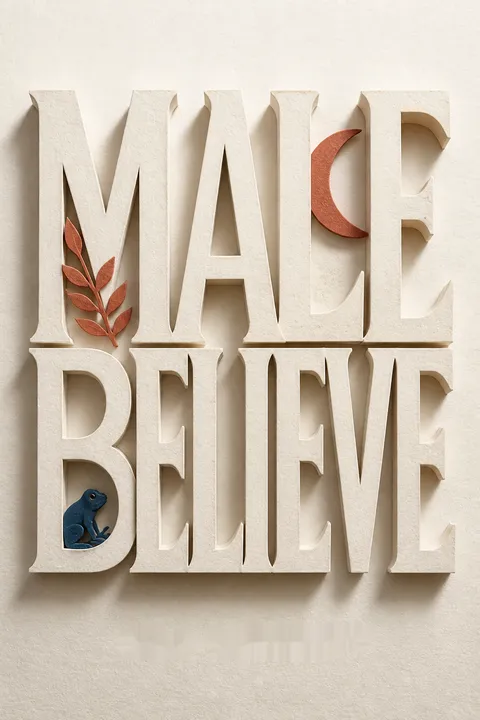

Key Takeaways
1. Children's Literature Deserves Serious Adult Respect
If you don’t think children’s books are real books, on some level you don’t think children are real people.
Undervalued art form. Children's literature, despite being widely read, deeply loved, and highly profitable, receives almost no serious critical attention from adults. Authors of children's books are often asked if they plan to write a "real book," a dismissive attitude that undervalues a centuries-old literary tradition. This perspective overlooks the profound impact these stories have on hundreds of millions of children.
Adult control. The entire ecosystem of children's publishing—from writing and editing to reviewing and shelving—is controlled by adults. Children, lacking income and autonomy, have little direct influence on what books are produced or made available to them. This adult-centric system often leads to books that cater more to adult expectations and anxieties than to children's actual interests and imaginative needs.
Pediatrician analogy. Just as we demand specialized excellence from pediatricians who care for children's bodies, we should expect the same high standards from authors who attend to children's souls. Dismissing children's books as "cute" or "lesser" is akin to calling pediatrics "cute medicine," failing to recognize the unique expertise and profound responsibility involved in creating art for young, developing minds.
2. A Children's Book is Simply a Book Written for Children
A children’s book is a book written for children.
Expansive definition. For too long, adults have imposed narrow, prescriptive definitions on children's books, insisting they must teach lessons, feature role models, use simple words, or have happy endings. This restrictive view stifles creativity and limits the potential of the art form. The author proposes a simple, yet radical, definition: a children's book is merely a book intended for a child audience.
Beyond genre. Children's books are not a single genre but a collection of forms, encompassing everything from board books and picture books to comics and novels. Within these forms, all genres—fantasy, sci-fi, realistic fiction—can thrive. This broad scope allows for a rich, varied literature that reflects the diverse lives and experiences of children, rather than forcing them into a homogenous mold.
Reflecting reality. When children's literature fails to be expansive, it risks alienating young readers or making them feel ashamed of their own complex emotions like fear, jealousy, or anger, which adults often exclude from their stories. An inclusive definition ensures that children can find their full selves reflected in the books they read, fostering connection and understanding rather than dismissal.
3. Didacticism is the Enemy of Art in Children's Books
Didacticism, always the enemy of good storytelling, is rampant in children’s books, thanks to our long-standing insistence on stories that teach kids lessons.
Lessons over stories. The pervasive belief that children's books must teach a clear lesson often transforms narratives into mere delivery systems for unobjectionable messages like "Be kind!" or "Be yourself!" While these sentiments are lovely, they make for poor stories, flattening characters and warping plots to serve a predetermined moral. This "kindness industrial complex" prioritizes instruction over genuine literary experience.
Counterproductive outcomes. When literature becomes overly didactic, it risks becoming flat, homogenous, and boring, ironically undermining the very values it seeks to promote. Telling kids "It's cool to be unique!" repeatedly in similar-sounding books is neither cool nor unique. Instead of slogans, children need a rich, polyphonic literature that presents a variety of perspectives and experiences, allowing them to discover meaning for themselves.
Meaning vs. moral. Good fiction invites readers to collaboratively create meaning, bringing their own intelligence and experience to the artwork. A moral, by contrast, is an immutable lesson intentionally encoded by the author. Stories excel at ambiguity, complexity, and paradox, offering irreducible truths that cannot be condensed into a single sentence. The children's writer's duty is to tell these complex truths, not to repeat bromides.
4. The "Cool Aunt" Approach: Treat Children as Equals
The cool aunt treats you like you are a person, someone with thoughts and feelings and opinions all your own, a person worthy of her respect.
Three Aunts Theory. The author introduces an analogy to categorize children's books: the condescending "First Aunt" (garish, hollow, frantically positive), the didactic "Second Aunt" (stern, preachy, boring), and the "Cool Aunt" (respectful, interested, truthful). Good children's books embody the "Cool Aunt" approach, engaging children as intelligent individuals rather than talking down to them.
Mutual interest. A truly good children's book is meaningful to both the reader and the writer. If an author stoops to write about "kid stuff" without genuine investment, the book will be shiny but hollow. Conversely, if a book is interesting only to the author and not to children, it will be boring. The best stories foster a mutual conversation, leaving space for the child to interpret and have their own opinions.
Dignity and compassion. Children's experiences, even seemingly trivial ones like a toddler's tantrum over wanting to be both inside and outside, reflect fundamental human sorrows and paradoxes. By treating these experiences with dignity and compassion, children's writers can tap into the essence of human experience. This approach respects children as human beings now, with rich interior lives, rather than just future adults.
5. Children Are Ideal Readers for Complex Art
What if children are a great audience for art?
Unblunted sensitivities. Children possess a keenness and awareness that often gets blunted or displaced in adulthood. They are sensitive to the sheer elements of language—rhythm, images, and abstract sounds—making them an ideal audience for ambitious and experimental literature. Margaret Wise Brown, author of Goodnight Moon, recognized this, comparing a five-year-old's playful audience to that of James Joyce or Virginia Woolf.
Open-minded engagement. Unlike many adults who might push away difficult or unconventional art, children are perceptive, flexible, and open-minded. They read without tightly held notions of what a story "should" be, bravely working to comprehend the new. This willingness to engage deeply with stories that demand active participation makes them uniquely suited to literary fiction.
"Proudly unfinished." Childhood is a continuous series of experiments, where kids constantly learn new rules and adapt to new situations. This "unfinished" state makes them receptive to stories that challenge certainties and enlarge their sense of the possible. They are not afraid to encounter art that makes demands on their thought, feeling, and imagination.
6. Championing "Good Books for Bad Children"
I had to get back to my desk to publish some more good books for bad children.
Ursula Nordstrom's vision. The legendary editor Ursula Nordstrom famously described her job as making "good books for bad children," a philosophy that championed unconventional, offbeat, imaginative, beautiful, and real books. She fought against "mediocre ladies in influential positions" who preferred familiar, unchallenging stories, believing children deserved more than bland, unimaginative fare.
Beyond the "classics" shelf. Nordstrom's fight led to a golden age of American children's literature, publishing canonical works like Charlotte's Web and Where the Wild Things Are. These books, often strange and experimental, continue to be bestsellers today, demonstrating that ambitious art can also be widely popular. Their success is partly due to being shelved alongside contemporary, commercial titles, making them approachable rather than intimidating.
A continuous fight. The battle to publish unusual and imaginative books for children is ongoing. Nordstrom's legacy reminds us that it takes courage and conviction to prioritize genuine artistic merit and children's true interests over commercial pressures or adult didacticism. Her work proved that children are capable of appreciating profound and complex stories, even if adults initially struggle to understand them.
7. "Make Believe" is the Foundation of Fiction
The writer says, “I am going to tell you a lie.” And the reader says, “Okay, I will believe it.”
The reader's bargain. Fiction operates on a fundamental contract: the writer offers a lie, and the reader willingly agrees to believe it. Children intuitively grasp this "willing suspension of disbelief," which they simply call "make-believe." This wholehearted pretending allows them to speak new worlds into existence, transforming identities, objects, and reality itself through shared agreement.
Adult make-believe. While often associated with childhood play, adults also engage in make-believe, whether visiting Sherlock Holmes's fictional address or following Leopold Bloom's path in Dublin. We know these things aren't "real," yet our feelings for characters and our immersion in story worlds are profoundly genuine. This shared human capacity for belief in fiction is simply more pronounced and uninhibited in children.
Fiction as a game. Every story is a game with its own unique rules, whether animals can talk, magic exists, or historical events are altered. Readers must learn and agree to these rules to play. Children, constantly navigating new social protocols and unspoken systems in their daily lives, are exceptionally adept at quickly discerning and adapting to these narrative frameworks, making them skilled players in the game of fiction.
8. Stories are Secret Doors to New Realities
Every story is a secret door, an invitation to imagine another world and, by believing so, make it real.
Portals to possibility. The author's childhood fascination with secret doors in books like Alice's Adventures in Wonderland and The Lion, the Witch and the Wardrobe highlights fiction's power as a portal. Stories offer gateways to other worlds, expanding our sense of what is possible and allowing us to transcend the limitations of our immediate reality. This imaginative journey is a core delight of reading.
Straddling the threshold. Children are uniquely capable of existing in the liminal space between reality and make-believe, straddling the threshold of a secret door with one foot in each world. This comfort with uncertainty, porousness, and ambiguity allows them to encounter the new without the resistance often found in adults. They are "proudly unfinished," eager to comprehend and adapt.
Enlarging the possible. When we "lose ourselves in a good book," we shed our preconceived notions and surrender our certainties, allowing the story to shock us into a new understanding. This gloriously unsettled moment enlarges our sense of the possible, fostering change and growth. Stories, like secret doors, invite us to imagine, believe, and in doing so, make new realities real within ourselves.
9. Adults Must Relearn Reading from Children
The genius of children is a challenge to all grown-ups, if we can humble ourselves, to let kids teach us how to read: to marvel at the possibilities of language, to blur the boundaries of ourselves, and to be changed for a moment or forever.
Kids as teachers. Children, with their curiosity, sensitivity, and imagination, are not just ideal readers but also ideal teachers of how to read. They approach stories with an openness and wonder that many adults have lost. By observing how children engage with literature, adults can rediscover the joy of marveling at language, embracing ambiguity, and allowing stories to profoundly change them.
Unfinished growth. The adult tendency to push away difficult art or cling to a sense of "mastery" stems from a desire for stability, a belief that we are "finished growing." Children, however, are "proudly unfinished," constantly learning and adapting. Embracing this unfinished state allows us to remain open to the transformative power of literature, just as children do.
A call to action. The author's experience with students applauding his commitment to making good books for kids underscores a vital truth: children want and deserve excellent stories, and it is up to adults to provide them. By taking children seriously as readers and valuing their literature, we not only enrich their lives but also reawaken our own capacity for wonder and make-believe.
Review Summary
Most reviewers enthusiastically praise Make Believe, calling it a witty, important defense of children's literature. Librarians, educators, and book lovers feel validated by Barnett's argument that children deserve quality stories free from moralizing. Highlights include his analysis of Goodnight Moon and his "aunt metaphor." A few critics note he can be elitist in his literary tastes, overlooks diversity issues in children's publishing's "golden age," and missed opportunities to address book banning and literacy challenges. Overall, readers find it charming, funny, and thought-provoking despite its brevity.
People Also Read
Download PDF
Download EPUB
.epub digital book format is ideal for reading ebooks on phones, tablets, and e-readers.








































