
Plot Summary
Summer in the Laundromat
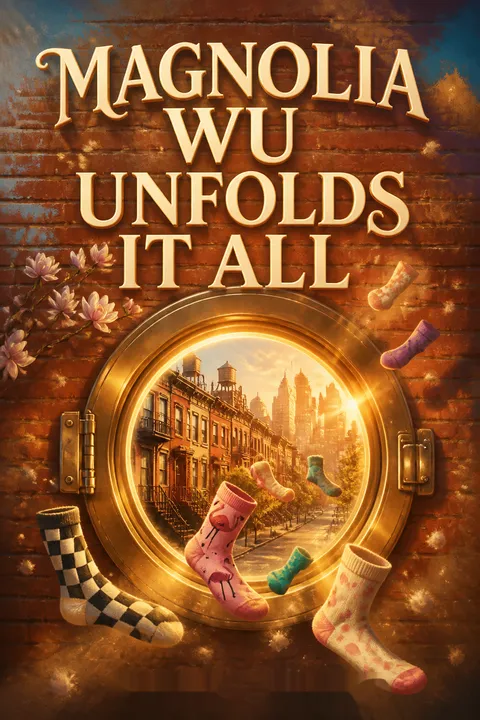
Nine-year-old Magnolia Wu spends her summer inside Bing Qi Ling Bubbles Laundromat, her parents' bustling business in New York City. The city is sweltering, and Magnolia feels isolated—her only friend has moved away, and her days are filled with chores and the hum of machines. She finds solace in small rituals: collecting lost socks, imagining their stories, and caring for Mister Pants, the family's adopted dog. Magnolia's world is both vibrant and lonely, colored by her parents' hard work and her own longing for adventure and connection. The laundromat is a microcosm of the city's diversity, but Magnolia feels like an outsider, yearning for something more than the endless cycle of washing and folding.
Birthday Without Balloons
Magnolia's tenth birthday arrives with little fanfare—no party, no friends, just her parents' practical gifts and a bowl of red bean ice cream. Her parents, loving but busy, try to make the day special, but Magnolia can't shake her sense of isolation. She's self-conscious about the laundromat, especially when classmates visit, and feels the sting of being different. The arrival of her mother's friend Ms. Lam and her daughter Iris, a recent transplant from California, brings hope and anxiety. Magnolia dreads forced friendships, but Iris's quiet presence and curiosity about the laundromat spark something new. The day ends with Magnolia feeling both exposed and seen, the possibility of friendship flickering to life.
Iris Arrives, Friendship Begins
Iris is homesick for California, unimpressed by New York's chaos and grime. Magnolia, fiercely loyal to her city, is initially defensive, but a shared moment with Mister Pants softens the tension. Magnolia gives Iris a tour of the laundromat, revealing her secret treasures and the lost sock board. Iris's empathy and willingness to play along—wrapping themselves in sheets, exploring the sock mysteries—help Magnolia open up. Their budding friendship is tested when a rude customer berates Magnolia's mother, shaming their business and culture. The incident leaves Magnolia shaken, but Iris's quiet support plants the seed for a partnership: together, they'll solve the mystery of the lost socks and, perhaps, find their place in the city.
The Sock Board Falls
The angry customer's tirade leaves Magnolia's mother apologetic and Magnolia herself humiliated. The sock board, her pride and joy, is dismissed as "disgusting," and Magnolia's faith in her small acts of hope is shattered. She throws the board away, feeling foolish for believing in its magic. Yet, Iris's reaction is different—she sees the value in Magnolia's idea and refuses to let one person's cruelty define their worth. The girls' shared experience of witnessing their mothers endure prejudice becomes a quiet bond. Iris proposes they take action: instead of waiting for sock owners to return, they'll become detectives, returning each sock and exploring the city together. Magnolia, for the first time, feels empowered to shape her own story.
Becoming Sock Detectives
Magnolia and Iris form the NYC Sock Detective team, using "stream of consciousness" to connect socks to their owners. Their first case—a black-and-white-checkered sock—leads them through the city's vibrant streets, teaching Iris to find beauty in small details and Magnolia to lead with confidence. Along the way, they encounter familiar faces: Carl the chess player, Lisa the crossword-loving subway agent, and Luis, Magnolia's old friend and secret crush. Each encounter reveals hidden layers in the people around them, and the girls learn that everyone carries stories and struggles. Their detective work becomes a way to connect, heal, and claim their place in the city's tapestry.
The Checkered Sock Quest
The checkered sock's journey takes the girls from Washington Square Park to the subway and finally to HAIR barbershop, where Luis works. Each stop is a lesson in observation, empathy, and the power of asking for help. Luis's story—learning to sweep floors before cutting hair, listening as an act of care—mirrors Magnolia's own journey of growing up and finding value in small roles. The girls' persistence pays off, and the sock is returned, but the real reward is the sense of belonging and accomplishment. Magnolia realizes that her city is full of allies and that her actions, however small, can ripple outward.
Pancakes, Pink Yarn, and Alan
A pink knitted sock leads Magnolia and Iris to Constellation Diner and then to Knitty Bitty, a yarn shop. The search uncovers a secret: Magnolia's cousin Alan, once her childhood playmate and now a serious student, is the sock's creator. Alan has hidden his passion for knitting, fearing judgment from his practical mother. The revelation rekindles their bond and shows Magnolia that people are more complex than they appear. Alan's creativity, stifled by expectations, finds validation in Magnolia and Iris's support. The sock quest becomes a celebration of hidden talents and the courage to be oneself, even when family and culture push in other directions.
Flamingos and Hidden Hurts
The next sock, adorned with flamingos, leads the girls to Rosa's plant shop and Zito's pizza place, where Magnolia learns new stories about her parents' past. A run-in with Aspen, a school bully, triggers old wounds, but a scavenger hunt he orchestrates reveals his own pain: a difficult home life and a longing for acceptance. Aspen's story, symbolized by his attachment to flamingos—creatures that become what they eat—teaches Magnolia about the power of words and the importance of not internalizing others' cruelty. The sock returns become acts of healing, not just for the owners but for the detectives themselves, as they learn to see past surfaces and offer compassion.
Ice Cream, Jealousy, and Fights
Returning an ice cream sock to Jessica, a wealthy and seemingly perfect classmate, stirs up jealousy and insecurity in both Magnolia and Iris. Magnolia is dazzled by Jessica's glamorous life, while Iris feels threatened and excluded. A misunderstanding escalates into a fight, and Iris storms off, leaving Magnolia to question her own worth as a friend. The city feels lonelier than ever, and Magnolia's confidence in her detective mission falters. The episode exposes the fragility of new friendships and the ways in which envy and misunderstanding can wound, but it also sets the stage for growth and reconciliation.
The Polka Dot Revelation
Alone, Magnolia tries to continue the sock quest but finds herself adrift without Iris. A lost knapsack and a chance encounter with Mr. Yoon, the doorman, offer unexpected comfort. Mr. Yoon's story about endings and the meaning of the period on his polka-dotted sock helps Magnolia see that sadness is a sign of caring, and that not all endings are final—some are just pauses. The city, once overwhelming, becomes a place of quiet wisdom and gentle guidance. Magnolia begins to understand that relationships, like socks, can be mended, and that vulnerability is a strength, not a weakness.
Apologies and Cat-Litter Beaches
Determined to repair her friendship, Magnolia enlists her mother's help to create a "California beach" in the laundromat supply closet, using cat litter for sand and homemade touches for comfort. The act is both an apology and an embrace, showing Iris that she is wanted and welcome. Magnolia and her mother share a rare moment of emotional honesty, acknowledging the pain of prejudice and the importance of sticking together. The beach becomes a sanctuary, a place where Iris can share her own story of leaving an abusive father and finding her voice through a red sock puppet. The girls' reconciliation is tender and hard-won, rooted in empathy and shared vulnerability.
Iris's Story, Magnolia's Growth
In the safety of their makeshift beach, Iris reveals the trauma of her past and the role of Mr. Ketchup, her sock puppet, in helping her speak when she was too afraid. Magnolia listens, offering gratitude and affirmation. The exchange deepens their bond and marks a turning point in Magnolia's understanding of friendship, family, and self-worth. Magnolia learns that everyone carries hidden pain and that true friendship is built on listening, acceptance, and the willingness to stand by each other through storms. The girls emerge stronger, ready to face the world together.
The Final Sock Mystery
The final sock, plain and unremarkable, stumps the detectives until Jessica joins the team and a series of clues lead them to the school janitor, Mr. Ishioka. The sock, part of his secret floor-polishing routine, becomes a symbol of the unseen labor and hidden joys that sustain the community. The case brings together Magnolia, Iris, Jessica, Luis, and even Aspen, forming a new circle of friends. The group's laughter and camaraderie spill into the city streets, and Magnolia realizes that her once-lonely summer has blossomed into a season of connection and belonging.
Janitor's Secret Dance
Mr. Ishioka's joyful demonstration of his sock-skating technique in the school gym is a moment of pure delight. The children cheer, recognizing the magic in everyday acts and the importance of those who care for their spaces. The janitor's story, like so many others Magnolia has uncovered, is a reminder that everyone has hidden talents and dreams. The sock detectives' journey ends not with a grand revelation, but with a celebration of community, kindness, and the small miracles that make life beautiful.
New Beginnings, Old Roots
As summer ends, Magnolia reflects on the transformations she and those around her have undergone. Alan embraces his identity as a designer, Iris finds a home in New York, and Magnolia's parents share more of their own histories and dreams. The city, once intimidating, now feels like a patchwork of stories and relationships, each thread connecting Magnolia to something larger than herself. The lost socks, once symbols of absence, have become tokens of discovery and hope. Magnolia understands that home is not a place, but a web of people, memories, and acts of care.
Home in the City
Magnolia stands outside the laundromat, watching the city's lights flicker on. She sees her mother tending to Mister Pants, her friends scattered across the neighborhood, and feels the weight of her own story settling comfortably around her. The summer has taught her that everyone is more than they appear, that kindness can heal old wounds, and that even the smallest acts—returning a lost sock, listening to a friend—can change a life. Magnolia steps inside, ready for whatever comes next, knowing she is no longer alone.
Analysis
A celebration of belonging, resilience, and everyday magicMagnolia Wu Unfolds It All is a luminous, emotionally rich exploration of what it means to find home in a world that often feels hostile or indifferent. Through the lens of a child's summer in a New York laundromat, Chanel Miller weaves a tapestry of immigrant experience, intergenerational struggle, and the quiet heroism of ordinary people. The novel's central metaphor—the search for lost socks—becomes a vehicle for examining loss, hope, and the power of small acts to create connection and meaning. Miller's storytelling is both whimsical and profound, balancing humor with heartbreak, and offering readers a model of curiosity, empathy, and agency. The book's lessons are timely and timeless: that everyone carries hidden stories; that kindness and listening can heal old wounds; and that true belonging is built, not found, through acts of care, courage, and imagination. In a world marked by division and uncertainty, Magnolia's journey is a reminder that we are all, in some way, searching for our missing pieces—and that together, we can make each other whole.
Review Summary
Magnolia Wu Unfolds It All receives widespread praise as a charming middle grade debut by Chanel Miller. Readers appreciate the wholesome story about Magnolia, who lives in her family's New York laundromat and embarks on a detective adventure to return lost socks to their owners. Reviewers highlight Miller's beautiful black-and-white illustrations, the book's whimsical humor, and its sensitive handling of serious topics including friendship, racism, and anti-Asian discrimination. Many readers report being moved to tears by the story's emotional depth and kindness, wishing they'd had such a book in their childhood.
Characters
Magnolia Wu
Magnolia is a sensitive, imaginative ten-year-old who feels invisible in the bustle of New York City. Her parents' laundromat is both her cage and her kingdom, a place of routine and secret wonder. Magnolia's longing for connection is palpable—she collects lost socks, invents stories, and yearns for friendship. Her journey is one of self-discovery: learning to speak up, to lead, and to trust others. Through her partnership with Iris, Magnolia confronts her insecurities, navigates jealousy, and learns the value of vulnerability. By summer's end, she has transformed from a passive observer into an active participant in her own life, finding belonging in her family, her friends, and herself.
Iris Lam
Iris arrives in New York grieving the loss of her California home and the trauma of an unstable father. She is cautious, observant, and initially withdrawn, but her empathy and curiosity draw her to Magnolia. Iris's intelligence and creativity shine in her detective work, and her willingness to share her own pain helps Magnolia open up. Iris's journey is one of healing—learning to trust, to express herself, and to claim her place in a new city. Her story, symbolized by the red sock puppet Mr. Ketchup, is a testament to resilience and the power of being heard. Iris becomes Magnolia's anchor, her "bamboo stick," and together they build a new sense of home.
Mrs. Wu
Magnolia's mother is a pillar of the family, working long hours in the laundromat and carrying the weight of immigrant expectations. She is practical, resourceful, and sometimes emotionally distant, but her love for Magnolia is fierce and unwavering. Mrs. Wu's own history—her adventurous youth, her sacrifices, her moments of vulnerability—emerges gradually, revealing a woman shaped by hardship and hope. Her relationship with Magnolia is tested by misunderstandings and unspoken pain, but ultimately deepens through honest conversation and shared acts of care. Mrs. Wu embodies the complexities of motherhood, cultural identity, and the quiet heroism of everyday life.
Mr. Wu
Magnolia's father is a steady, loving presence, known for his kindness and small acts of magic—like sewing "gills" onto a child's stuffed animal to ease their fears. He is less vocal than Mrs. Wu but deeply attentive, nurturing both his family and the community around him. Mr. Wu's past as a gardener and his adaptability in the face of hardship reflect the immigrant experience of reinvention. He supports Magnolia's adventures, encourages her creativity, and models the importance of listening and caring for others. His warmth and humor are a quiet foundation for the family's resilience.
Alan
Once Magnolia's childhood playmate, Alan has become distant, focused on academic achievement to please his mother. Beneath his serious exterior lies a passionate designer, secretly knitting socks and dreaming of fashion runways. Alan's struggle is one of self-acceptance—balancing family expectations with his true interests. His reconnection with Magnolia and Iris helps him embrace his creativity and find validation outside traditional measures of success. Alan's journey is a reminder that talents can be hidden in plain sight and that support from loved ones can unlock new possibilities.
Luis
Luis is a familiar face from Magnolia's past, now working at his father's barbershop. He is kind, confident, and quietly supportive, offering Magnolia both friendship and the flutter of first crushes. Luis's story—learning the value of small roles, listening to others, and honoring family traditions—mirrors Magnolia's own growth. He becomes part of the sock detective team, helping to solve mysteries and build community. Luis's presence is a source of comfort and encouragement, reminding Magnolia that she is seen and valued.
Jessica
Jessica is the school's soccer star and the daughter of a wealthy businesswoman. Her glamorous life masks a deep loneliness and a longing for genuine connection. Jessica's openness about her struggles—her absent mother, the pressures of perfection—challenges Magnolia's assumptions and helps bridge social divides. She joins the sock detective team, contributing her own insights and humor. Jessica's journey is one of vulnerability and self-discovery, showing that everyone, no matter how privileged, needs friendship and understanding.
Aspen
Aspen is Magnolia's tormentor at school, quick with nicknames and insults. Beneath his bravado lies a boy struggling with a harsh home life and a desperate need to protect himself from vulnerability. Aspen's attachment to flamingos—a symbol of transformation—reflects his desire to resist internalizing his father's cruelty. His eventual confession to Magnolia reveals his longing for kindness and his capacity for change. Aspen's story is a powerful reminder that hurt people often hurt others, and that empathy can break cycles of pain.
Mr. Ishioka
The school janitor, Mr. Ishioka, is a background figure whose true talents are revealed through the final sock mystery. His nightly sock-skating routine is a metaphor for the hidden joys and labors that sustain a community. Mr. Ishioka's warmth, humor, and pride in his work inspire the children to see value in every role. He represents the countless individuals whose quiet contributions make the world better, and his story is a celebration of dignity, creativity, and the magic in the mundane.
Iris's Mother (Ms. Lam)
Ms. Lam is an aerobics instructor and Iris's mother, recently relocated from California. She is bold, supportive, and fiercely protective of her daughter. Ms. Lam's own experiences with prejudice and reinvention mirror those of Magnolia's family, and her friendship with Mrs. Wu is a source of comfort and solidarity. She encourages Iris to be brave, to speak up, and to find her place in the world. Ms. Lam's presence is a reminder of the power of community and the importance of standing together in the face of adversity.
Plot Devices
The Lost Sock Board
The board of lost socks in the laundromat is both a literal and metaphorical device, representing the small mysteries and overlooked stories that fill everyday life. Initially a passive collection, it becomes the catalyst for Magnolia and Iris's transformation—from observers to actors, from lonely children to community builders. Each sock is a narrative thread, leading the girls into the lives of others and teaching them empathy, resilience, and the value of persistence. The board's journey—from pride to shame to redemption—mirrors Magnolia's own arc of self-acceptance and empowerment.
Stream of Consciousness Detective Work
The girls' method of solving sock mysteries—letting their minds wander freely from pattern to person—celebrates creativity, intuition, and the power of associative thinking. This device allows the narrative to explore the city's diversity, uncover hidden connections, and validate different kinds of intelligence. It also models a way of engaging with the world that is open, playful, and empathetic, encouraging readers to look beyond the obvious and to trust their own insights.
Parallel Storylines and Mirrored Experiences
The novel weaves together the stories of multiple characters—Magnolia, Iris, Alan, Aspen, Jessica—each grappling with belonging, identity, and hidden pain. Their experiences mirror and inform one another, creating a tapestry of interconnected lives. The use of parallel storylines deepens the emotional resonance of the narrative, showing that everyone, regardless of background, faces challenges and needs support. This device fosters empathy and underscores the universality of the search for home and acceptance.
Symbolic Objects and Settings
Socks, ice cream, pancakes, plants, and even cat litter become symbols of larger themes: loss and recovery, comfort and creativity, growth and adaptation. Settings like the laundromat, the supply closet beach, and the school gym are transformed by the characters' imagination and care, turning mundane spaces into sites of healing and celebration. These objects and places ground the story in sensory detail while inviting readers to find magic in the ordinary.
Community as Narrative Structure
The novel's structure is episodic, with each sock mystery introducing new characters and deepening existing relationships. The narrative resists a single protagonist's journey in favor of a collective coming-of-age, where growth is achieved through collaboration, listening, and mutual support. This device reflects the realities of immigrant and urban life, where survival and joy depend on networks of care and solidarity.
Download PDF
Download EPUB
.epub digital book format is ideal for reading ebooks on phones, tablets, and e-readers.








































