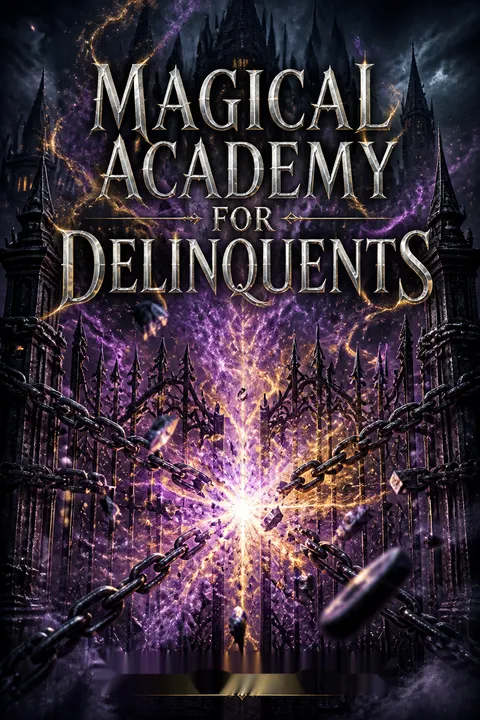

Plot Summary
Prologue: Rebellion with a Cause
Hayley Dunemark's introduction is both a confession and a declaration: she wants to be sent to the infamous Academie Metamorphose not to rehabilitate but to assemble the perfect crew for the greatest magical heist ever attempted. Goaded by personal loss—her brother's transformation into a monstrous vampire and the disappearance of her father's soul—she's spent years sabotaging her own privileged life, playing the troublemaker to get herself cast down to where the worst magical delinquents are warehoused. Every expulsion is a calculated step; every snarky act is preparation for a larger rebellion, with pain and revenge as much her fuel as her cleverness. The stakes, we learn, are both familial and existential. The rules are clear: in this world, magic's highest risks yield its darkest dangers, and only those willing to lose everything can hope to win.
Expulsion, Strategy, and Scars
Hayley's last expulsion from a prestigious magical academy is loud, crude, and perfectly staged to ensure no avenue of return. For a moment, she faces bitter regret and the corrosive effect of old wounds—her reputation, fractured friendships, and the unhealed scars from both parental neglect and violence at home. Yet with each confrontation (from scornful classmates to her manipulative stepfather Claude), Hayley reveals the resilience and sharp-edged humor that shield her crumbling interior. Her alliance with Tia—her connection to the forbidden reform school—is full of half-truths and desperate hope. Strategic sacrifice defines Hayley: she's willing to lose her comfort, burn every bridge, and wear the "victim" mask to trick a system that only understands signals of status and trauma, setting the stage for her descent into the criminal underground.
Ghosts and Goals
In the lonely luxury of a town car, Hayley is joined by her father's ghost—a relic of her rare Darklight power and a companion in both plotting and grief. Their weekly spectral encounters are peppered with both bitter humor and heartbreak, his fade into forgetfulness mirrored by her struggle to remember what's worth fighting for. He provides vital intel about the Pinnacle's deadly security, the vault's defenses, and the cures lost to bureaucracy and ambition. Their exchanges, full of familial affection and mutual guilt, deepen Hayley's sense that reclaiming her brother's humanity is less about heroism than atonement—for failures past and present. The supernatural here is intimate, a shared secret and agony.
Assembling a Dangerous Crew
The need for specialized magical crimes means Hayley scans prospect after prospect: she needs a force, a tock, a detonator, and a master of illusion—each with just the right mix of power, criminality, and abandonment issues. Her focus lands on Grayson Mars, brooding billionaire's son with air magic; Malcolm Bier, infamous anarchist and spellwriting prodigy; and Zavier, a witty, sticky-fingered time manipulator. Loyalty is as rare as skill, and her seduction—emotional as much as physical—of these broken boys is itself a form of spellwork. Each recruitment is a reminder: criminality, here, is the only honest answer to a world that abuses its most vulnerable. Rivalry flares into chemistry, and alliances are formed on the fulcrum of trauma, rebellion, and desire.
Love, Motives, and Masks
Hayley's relationships with her crew spill over standard romantic and sexual boundaries, forming a tightly wound web of competing affections, betrayals, and hard-won empathy. Whether via banter with Zavier, sharp-witted dominance games with Malcolm, or the unresolved longing for Evan (her childhood love turned rival), the emotional stakes only increase. Each intimacy is a risk—potential leverage but also genuine connection that makes the coming heist less clinical and more dangerous. The masks required for crime, magic, and survival finally crack in these moments. It is love, not anger, that makes her most unpredictable.
Crossing Lines and Losing Faith
Claude's cruelty, long a background threat, erupts into explicit violence and manipulation. This domestic terror casts Hayley's whole mission into starker context: every magical heist and rebellious act is not just a bid for power or justice but a desperate attempt to rewrite a brutalized sense of self, to channel suffering into action. The untrustworthy family, the betrayal by those meant to protect, and the absence of forgiveness become psychological obstacles as much as any magical barrier. As Hayley crosses ever-greater lines in pursuit of her goals, she must decide which parts of herself are expendable—and which are necessary to, ultimately, save what's left of her family.
Dead Ends and Broken Things
The would-be crew's efforts to find the final member—"the Tock"—and the repeated setbacks in magical recruitment crash against a wall of failure, exhaustion, and institutional indifference. The world outside the academy is no sanctuary: bureaucracy, normalized cruelty, and the practical cruelty of "reform" schools leave little hope. Even close friendships risk collapse under the pressure of secrecy and disappointment. The reader is asked to linger in the uncertainty of the plan, sharing in Hayley's bitterness at every rebuke, making each small victory feel hard-won and dearly bought.
Academy for the Damned
Within Academie Metamorphose, Hayley immediately encounters its brutal culture: predation, magical hazing, and a pecking order enforced by teachers as much as delinquents. Every class is a crucible for dominance, every rule another puzzle to subvert. Fights are resolved through magical violence, with punishments more traumatic than corrective. Hayley carves out her place by confronting both bullies and professors, using both her wit and her rare power—but not without cost. The academy is a microcosm of the magical world's refusal to care for its broken children, except as tools or threats.
Hazing Rituals and Power Plays
Rivalries, magical pranks, and escalating hazing shape Hayley and Grayson's relationship, blending humiliation with mutual respect and flirtation. Each trick, punishment, or escalation becomes both a test and a twisted form of communication. Allies are made and lost in the hurricane of insults and challenges. Even as Hayley pushes against the system, she must learn its rules: that power is its own language, and humility is always exploited. The battle for supremacy is as much internal (facing one's own weaknesses) as it is external.
Tutors, Tests, and Hidden Wounds
Under the guise of mandatory "tutoring," Hayley deepens her connection to both Malcolm and her own vulnerabilities, risking exposure in every encounter. Spell games become metaphors for psychological struggle; every failed lie in these contestations chips away at her self-image, forcing honesty and growth. The process is painful: victory does not feel like triumph, but rather, a step closer to losing the protection of self-deception. The barriers between academic discipline, criminal expertise, and personal truth are obliterated in these scenes.
Family, Trauma, and Ultimatums
A forced return to her mother's home exposes the continuing aftershocks of loss: her father's absence looms, her mother's addiction and helplessness are laid bare, and Claude's escalating violence leaves physical and emotional scars. Hayley's choices are reduced to impossible alternatives: betray her own values and future, or lose the last ties to family. The familial relationships here are more dangerous than any outside adversary, teaching that sometimes a person's greatest enemy is the hand that claims to care for them. There is no easy reconciliation, only a series of half-hearted truces and renewed vows to do whatever it takes.
Tia, Transfer, and the Institute
With Tia's reluctant help, Hayley gets into the academy she needs, but at the cost of trust and greater isolation. A visit to her brother in the Institute for the Vampirically Insane is shattering—vampirism is not an abstract threat, but a daily horror and degradation for its victims and their families. Every kindness, such as donating blood, barely mitigates the monstrous reality: those society cannot cure, it cages and forgets. The pain of this visit sets a fire under the heist, reminding all involved that this mission, for Hayley, isn't abstract—it's redemption or death, for Matthew and herself.
Dreams of Rescue
Memories of a once-happy family contrast cruelly with the present, and Hayley's desire for rescue—for herself, her brother, her friends—is as much about restoring hope as changing fate. Old games, childhood dares, and the music of loss run through her dreams and waking life. Forgiveness seems impossible, but the quest for it drives her onward. Dreams, more than any ambition, are what separate living from merely surviving.
The Counselors' Truths
In sessions with her unconventional counselor Doctor Potts, Hayley is forced not just to perform introspection, but to confront the legacy of magical accidents, survivor's guilt, and institutional complicity. Potts herself is a scarred survivor, a mirror of what might become of even the bravest. Therapy is not a cure, but a cruel reminder that some wounds don't heal—they transform. The mechanisms of healing and magic are exposed as similar: both are dangerous, uncertain, and always leave a mark.
The Plan Unfolds
As the heist plan grows in scope and complexity, so do doubts. Every magical safeguard is both an obstacle and a trigger for old anxieties—Hayley cannot entirely trust her own allies or the information painstakingly gathered from her father's fading ghost. Personal alliances are tested: rivalries flare, romance creates schisms, and jealousies overtake reason. Each success makes betrayal more dangerous, and the specter of discovery more pressing. The closer they get to the heart of the Pinnacle, the more fragile their unity becomes.
Rivals and New Alliances
As Hayley's feud with Grayson turns from antagonism into partnership, and with renewed ties to Zavier and Malcolm, the core team's chemistry takes all the volatility of love and transposes it to criminality. The difference between friend, rival, and lover blurs, just as their objectives—personal, criminal, heroic—align and sometimes clash. Success comes at the cost of trust and almost any boundary, and Hayley must render herself as vulnerable to them as she is to her family, risking everything on the hope they will not betray her in the end.
Pulling Strings and Broken Trust
To get what she needs, Hayley plays on the emotions, traumas, and ambitions of her targets, only to realize each ploy cuts her off from genuine connection. Each time she leverages pain—her own or others'—she risks making herself unrecognizable, both to friends and herself. Even as she wins allies, the sense of being truly understood becomes elusive, and every act of manipulation is haunted by the threat of consequence and exposure.
Underground, Undergrounder
The weeks leading up to the heist are a blur of practice, failure, and enforced camaraderie. Every power is stretched to its limit; every member is forced to rely on, and thus expose, their worst vulnerabilities. The "practice" heists, fumbled excuses, and forced trust are full of darkly comic reversals—stink bombs, magical sex-phermones, and Tocks who toy with time keep the tension strung tight. Perfection remains out of reach, but the stakes are too high for delay. The only thing scarier than moving forward is stalling out.
Vulnerabilities Exposed
As intimacy among the crew deepens—romantic, sexual, and familial—resentments and fears quake beneath the surface. The pressure of impending disaster means every word, every betrayal, is magnified. In rare moments of peace, Hayley begins to acknowledge the weakness at the root of her drive: a terror that loss, once begun, is permanent—that you only get one shot at redemption. The heist is not just about saving Matthew; it is about saving herself from the abyss.
Disguises, Delusion, and Darkness
The night of the ball, every disguise—literal or emotional—must be both flawless and flexible. Hayley's public humiliation, staged for strategic effect, is as dangerous as any magical duel. As the crew slips into shadows, each is tested: will their role hold, or will their secret self ruin everything? The blend of farce and fear, particularly as personal anger subsumes Hayley's composure, gives the proceedings an air of tragic inevitability.
Vaults, Lies, and Loyalty
The heist itself is as much a psychological trial as a logistical one. The descent into the Pinnacle's bowels, bypassing lethal magical traps, is mirrored by Hayley's descent into doubt—about herself, her crew, and her mission. The final challenge—a "Good Intentions" amulet that exposes one's real motivations—threatens to bar Hayley at the threshold, showing just how inseparable hope and lies have become. In the last, most crucial moment, she must accept help and let someone else reach for what she wants most, an act of both trust and relinquishment.
The Ball: Chasing Shadows
Amid the pomp of the Unnatural Ball, the social elite chase pleasure, power, and control—unaware of the chaos creeping under their feet. Hayley and her crew slip from role to role, navigating shifting alliances both in and out of disguise. Glamour serves murder as much as celebration; every mask, every waltz, is a distraction fraught with danger. When old rivals and resentments threaten to boil over, Hayley's careful stage management risks unraveling—reminding the reader that every heist is a mask dance, and every mask a risk.
Into the Fire: The Heist
The crew's master plan is set into motion. The ancient, labyrinthine defenses of the Pinnacle are as daunting as expected, and every checkpoint can spell disaster. Each member, forced to push their magic to its limit, faces a personal crisis: loyalty, fear, and exhaustion all threaten to topple them. The final moments before the vault crackle with tension and possibility—the room, the serum, the proof that hope was not a lie. But as they finally claim victory, betrayal looms, the personal villain appears, and the price of the dream asserts itself.
Hope or Ruin
Having battered through impossible odds, the crew finally lays hands on the cure, the symbol of every hope and a monument to their suffering. But the moment is short-lived: Claude, the architect of so much pain, steps out from the shadows. The promise of healing is met by the specter of ultimate betrayal. Trust, vulnerability, and ambition—all that has been gained—must now weather the eruption of old violence. The story ends on a precipice: the possibility of healing, or the certainty of ruin.
Analysis
A modern fable of trauma, agency, and chosen family"Magical Academy for Delinquents" reimagines the familiar structure of the magical school and heist genres to ask searing questions about power, accountability, and healing. At its heart, the novel is a portrait of broken young people weaponizing their wounds, channeling suffering into action that is both self-destructive and redemptive. By foregrounding Hayley's pain—her self-sabotage, her desperate manipulations, and her struggle not to become what she hates—the book dramatizes the cost of real agency. Friendship, loyalty, and even love are not freely given—they are earned, and always at risk. In a world where institutions (family, government, education) are revealed as complicit in cruelty, only the deliberate gathering of the marginalized—the "delinquents"—offers a hope of righting old wrongs. Yet, as the narrative makes painfully clear, victory is always partial. The dreams that sustain us are not always fulfilled, and the line between justice and vengeance is razor thin. The final cliffhanger—a successful heist interrupted by the embodiment of old evil—reminds us that no victory is secure, and that true healing demands ongoing courage, chosen kin, and a willingness to face the darkest parts of ourselves.
People Also Read





Characters
Hayley Dunemark
Hayley is a paradox: caustically witty and armor-plated in public, she is inwardly fracturing under the weight of grief, guilt, and the violence of those meant to love her. Her rare Darklight power lets her see the literal ghosts of her past, reminding her that loss and hope are always intertwined. Everything she does—from sabotaging her privileges to risking her neck on the world's most dangerous heist—is driven by her inability to let go of her brother or herself. She masks her vulnerabilities with bravado, sarcasm, and calculated cruelty, but each hard-won connection she forms threatens to break her open. Hayley's relationships are messy, interlaced with desire and trauma, but it is her willingness to repeatedly risk heartbreak—romantic and otherwise—that makes her both powerful and deeply fragile.
Grayson Mars
Grayson is the billionaire's son living in the shadow of greatness, his Force magic both a weapon against his enemies and a shackle binding him to expectation. His stoic exterior hides not just anger, but the urge to matter on his own terms. He is drawn to Hayley as a true rival, someone who will neither pity nor pedestal him. Their magical duels are an elaborate form of courtship, and his pride is as likely to sabotage as to save him. Torn between inherited privilege and the urge to upend the system, Grayson is always on the edge of loyalty and self-destruction—his journey is about learning trust, teamwork, and that being needed isn't quite the same as being loved.
Malcolm Bier
Malcolm is a human riddle: at once calculating and passionate, self-contained, yet longing for emotional honesty. His spellwriting genius is mirrored by his obsession with rules—whether breaking them or living by them, as the moment demands. He responds fiercely to honesty, punishing lies and half-truths with indifference or coldness. Though he flees attention, he craves recognition from those whose opinion matters. Malcolm is at his most formidable—and most exposed—when maneuvered into spaces where logic and desire collide. He is the crew's architect and their conscience, and his evolving connection to Hayley is a slow unmasking of both their hearts.
Zavier Kieltyka
Zavier uses humor and banter to mask the wounds of betrayal—by systems, by friends, sometimes even by himself. His Tock (time manipulation) powers allow him to mug fate and authority alike; his hands are sticky, his tongue quicker. Underneath is a young man who just wants to be wanted for reasons other than utility. Zavier's apparent recklessness hides a capacity for rare loyalty and love—he is, ironically, the glue for the group, keeping them from fracturing through laughter and honest admissions of insecurity. His turn from "dirty friend" to someone who asks for real commitment is among the story's most quietly affecting arcs.
Evan Weston
Once Hayley's brother's best friend (and her childhood crush), Evan is marked by survivor's guilt and a desperate drive to make amends. His shifter magic is both a badge of shame and a source of protective strength. Though rejected and resented, he sticks close, shouldering blame that was always collective. His perseverance in the face of Hayley's anger, and his willingness to remain until trust is re-earned, is heroic; eventually their reconciliation is as much about forgiving themselves as each other. Evan's arc is a meditation on loyalty, love denied, and the impossibility of complete absolution.
Matthew Dunemark
Though now a vampire—a fate worse than death in this world—Matthew remains the emotional core of Hayley's quest. Once a brilliant, life-loving brother, now monstrous and caged, he is both proof of the system's cruelty and the hope that drives the heist. Every blood donation, every memory, and every plan is in service to the tiny chance of reclaiming a real life for Matthew. Though he appears infrequently, his absence haunts every choice Hayley makes.
Claude King
The specter behind Hayley's suffering, Claude is both actively violent and institutionally untouchable. His abuse, manipulation, and secrets are the engine for much of the trauma in Hayley's life, and his final appearance as the true villain behind her father's murder gives him a mythic scale. Claude is not a caricature; his capacity for social manipulation, violence couched in respectability, and ingenious cruelty maps directly onto the systems and families he represents. He is the story's dark mirror for Hayley's crusade—proof that power unmoored from empathy is always monstrous.
Tia
Tia is Hayley's childhood friend—the person she turns to for practical help navigating institutions and for reminders of innocence. Her skepticism, generosity, and unwillingness to be manipulated are a vital counterpoint to Hayley's spiraling plans. Though she only knows part of the truth, she nonetheless provides crucial help and, in the end, is owed as great a debt as any criminal ally.
Dr. Meg Potts
Scarred physically and emotionally, Potts understands the cost of magical ambition and the limitations of therapy. Her role as counselor is both a source of (sometimes unintentional) comic relief and a means for Hayley to face the unvarnished truth about power, shame, and recovery. Potts shares her own wounds, letting Hayley feel less isolated, and her guidance—pragmatic and unsentimental—helps galvanize the plan's final shape.
Ginny Stone / Emelia
Appearing first as a potential ally and friend, Ginny/Emelia is later revealed as a top-level Darklight, Claude's covert spy and lover, and a key factor in the Pinnacle's unassailable defences. Her deception stings, and her duplicity is a reminder that, in the world of magical politics, no one is exactly what they seem. She is, fittingly, both target and echo of Hayley's own use of masks.
Plot Devices
Crime as Redemption
The central narrative arc utilizes the heist trope not simply for action but as a structure for psychodrama. Every step of the plan is both logistical challenge and psychological reckoning—forgiveness for oneself can only be earned by breaking and remaking the systems that produced the original trauma. The heist is, in effect, a ritual of atonement acted out on a mythic scale.
Ensemble Cast, Rotating POV
Though glued together by Hayley's consciousness, the story is structured through shifting alliances, rivalries, and desires among an ensemble crew. Each major character is both sidekick and possible saboteur. These interwoven dynamics feed a narrative of continual negotiation, where fluid chemistry replaces any single romantic or criminal endgame.
Magical Realism and Literalization
Trauma and longing aren't just feelings; they rupture the magical world: Hayley's power over light and darkness is as much symbolism as utility. Illusion, transformation, and spectral communication are literal extensions of psychological trial; the magic system is not just a set of mechanics but a metaphor for the fragility and fluidity of selfhood.
Foreshadowing, Suspense, and Twist
Early hints of Claude's all-encompassing evil, the true power of Ginny Stone, and the ambiguity of the serum's existence all prime the reader for a climax where trust must be risked, and faith is its own gamble. The final pages turn a victory into cliffhanger—stealing the serum is both triumph and trap, and the enemy Hayley most dreads is already in the room.
Narrative Structure and Voice
The story is driven by Hayley's distinct, tenacious, and self-critical voice, blending pop cultural reference, memoir, and magical procedural. Jokes, non-sequiturs, and asides both offer respite and deepen the emotional resonance of traumatic events. The overall shape is that of a spiral: progress, setback, new truths, all feeding into deeper confrontation—with self and with system.
Pinnacle Series Series



Download PDF
Download EPUB
.epub digital book format is ideal for reading ebooks on phones, tablets, and e-readers.








































