
Plot Summary
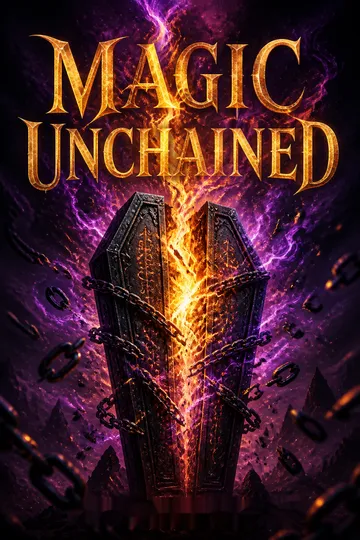
Death's Door, Hell's Coffin
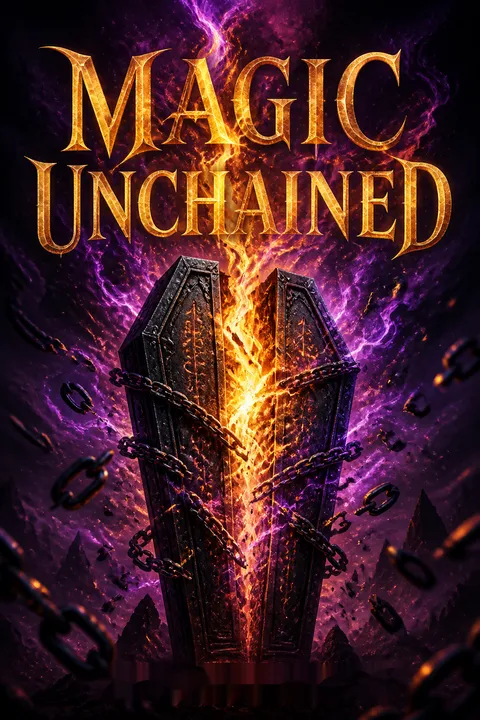
Marigold, once a fierce half-blood, awakens in agony, trapped in an iron coffin deep in Hell. She's been tortured, dissected, and magically bound by Lucifer and Ares, her power suppressed and her body scarred. Loki, the demon prince and her cousin, visits, revealing she's survived months of torment. He claims to be her only hope, but his motives are ambiguous—he wants to "reform" her for his father and the war god. Marigold's memories are fractured, her longing for her demigod mates a source of pain and strength. Despite her helplessness, she vows to endure, plotting revenge against her captors and refusing to break, even as despair and isolation threaten to consume her.
Torture, Survival, and Schemes
Loki alternates between tormentor and reluctant protector, explaining how Marigold's mind shielded her from the worst of her torture. He details the sadistic experiments performed by Lucifer and Ares, their failure to extract her power, and his own role in negotiating her custody. Marigold, stripped of hope for rescue, focuses on survival and vengeance. She tests her magical bonds, finding only a spark of power left. Loki's ambiguous affection and threats keep her on edge, but she refuses to trust him. Her memories of her mates—Axel, Zak, Paxton, and Héctor—haunt her, fueling both her pain and her determination to escape and destroy her enemies.
Memories of Love and Loss
Imprisoned and alone, Marigold's mind drifts to memories of her demigod lovers. Each mate—Axel's passion, Zak's devotion, Paxton's loyalty, Héctor's depth—represents a lost piece of herself. In a rare dream, Héctor visits her, offering comfort and hope, urging her to hold on. Their dream encounter is both erotic and healing, his blood purging the venom from her system and reigniting her magic. Yet, the dream is shattered by her captors' return, and Marigold is thrust back into pain and frustration. The dream's lingering warmth steels her resolve, reminding her of what she fights for, even as she faces renewed torment.
Bargains with Demons
Ares, the God of War, offers Marigold a twisted bargain: serve him as consort and weapon, or suffer further torment. Marigold feigns submission, then lashes out with her rekindled magic, briefly wounding Ares before her power is sealed again. Loki intervenes, confronting Ares and asserting his claim over Marigold. The two immortals spar with words and threats, revealing the precarious balance of power in Hell. Loki spirits Marigold away to his castle, introducing her to his inner circle of dukes. Marigold, battered but unbroken, prepares for the next phase of her ordeal—survival in Hell's brutal hierarchy and the trials to come.
Demigods in Mourning
On Earth, Marigold's demigod mates—Axel, Zak, Paxton, and Héctor—believe her dead, consumed by guilt and rage. Each mourns in his own way, blaming himself and the others for failing to protect her. Their grief nearly tears them apart, but a glimmer of hope emerges when they learn Marigold may still live, held captive in Hell. United by love and vengeance, they forge a desperate alliance with Loki's spymaster, Pythius, and plot a dangerous incursion into Hell. The elemental Septum's sacrifice grants them the power to cross realms, and the demigods swear to rescue their mate, no matter the cost.
The Prince's Game
Loki brings Marigold to his fortress, introducing her to his dukes—Asmodeus and Leviathan—and subjecting her to tests of strength and will. The castle is a den of violence and seduction, but Marigold refuses to be cowed or seduced. She spars with the dukes, earning their grudging respect, and navigates the treacherous politics of Hell's elite. Loki's intentions remain murky: he claims to want her as an ally, a weapon, and perhaps more. Marigold, ever defiant, leverages his ambitions for her own survival, determined to use him as much as he uses her, all while plotting her eventual escape.
Hell's Castle and Dukes
Within Loki's castle, Marigold faces constant challenges from the demon dukes and the ever-present threat of betrayal. She must prove herself in combat, earning a place at Loki's table and the wary respect of his inner circle. The dukes, powerful and predatory, test her limits, but Marigold's wit and ferocity keep her alive. She navigates the complex web of alliances and rivalries, refusing to be anyone's pawn. Loki, both captor and reluctant protector, pushes her toward the upcoming trials, insisting she must embrace her demonic heritage to survive. Marigold steels herself for the bloodshed to come.
Blood Trials and Carnage
Marigold is thrust into Hell's Academy trials—a brutal arena where hundreds are culled to a handful of survivors. Demons, witches, and mages battle to the death, and Marigold becomes the prime target. Drawing on Loki's blood and her own buried power, she unleashes her inner monster, slaughtering foes with ruthless efficiency. Her hellfire and combat prowess earn her the fear and awe of all, and the mark of the Queen of Hell appears on her skin. In a defiant act, she attacks Lucifer and Ares in the royal balcony, openly challenging their rule. Though wounded, she survives, her legend growing.
War on Earth, War in Hell
On Earth, the demigods wage war against Ares, now revealed as a traitor. The world is fractured, with mortals and Dominions divided. The demigods, desperate to reach Marigold, ally with Loki's spymaster and plot a covert incursion into Hell. They learn that Marigold is the Living Flame, a prophesied weapon capable of unmaking gods. Their love and determination drive them to risk everything, even as they struggle with guilt, jealousy, and the scars of loss. The stage is set for a convergence of powers—Earth's fate, Marigold's destiny, and the balance of the cosmos hang in the balance.
Dreaming of Reunion
Through the Dreaming, Marigold and her demigods find each other across realms. Their reunion is passionate and bittersweet, a brief respite from suffering. They reaffirm their love, share their pain, and plot to reunite in reality. The dreamscape becomes a sanctuary where Marigold feeds on their energy, regaining strength and hope. Yet, the connection is fragile, threatened by the magic binding her to Hell. Each encounter in the Dreaming deepens their bond and reminds Marigold of her purpose: to survive, to fight, and to return to those who love her, no matter the odds.
Beautiful Monster, Broken Bonds
Marigold's time in Hell forges her into something new—a beautiful monster, hardened by violence and loss. She survives the Academy's trials, forms uneasy alliances with half-bloods and witches, and becomes a reluctant leader. Yet, isolation and the relentless brutality threaten to erode her humanity. Memories of her mates fade, hope dims, and she teeters on the edge of becoming the weapon her enemies desire. In her darkest hour, a dream of her mother, Lilith, rekindles her strength. Lilith urges her to embrace her power, revealing secrets of her heritage and the true nature of her enemies' ambitions.
Lessons in Hell's Academy
Navigating Hell's Academy, Marigold faces constant threats from pureblood demons, instructors, and rival students. She forms a tenuous alliance with Lisa, a powerful witch, and claims a haunted dorm guarded by her hellhound, Angel. Together, they fend off incubi and other dangers, forging a bond of mutual survival. Marigold's reputation grows as she protects half-bloods and mages, challenging the Academy's brutal hierarchy. She learns to draw power from Hell itself, mastering new abilities and preparing for the inevitable confrontation with Lucifer and Ares. Each day is a battle, but Marigold refuses to break, determined to outlast her enemies.
The Queen's Daughter
In a pivotal dream, Marigold meets her mother, Lilith, the true Queen of Hell. Lilith reveals the history of her fall, her betrayal by Lucifer, and the prophecy surrounding Marigold's birth. She urges Marigold to embrace her unique power—outside the laws of gods and mortals—and to use her heritage to unmake her enemies. Lilith teaches her to feed on Hell's core energy, restoring her strength and memories. Armed with new knowledge and purpose, Marigold prepares to ignite the Living Flame, the only force capable of defeating Lucifer and Ares. Her mother's legacy becomes both a burden and a beacon.
Battle for Survival
Marigold's demigods, guided by love and the Dreaming, infiltrate Hell and reunite with her. Their passionate reunion is cut short as Lucifer and Ares attack, triggering a cataclysmic battle. Allies and enemies clash—demigods, dukes, witches, and half-bloods against the forces of Hell. Marigold, drawing on the combined power of her mates, finally ignites the Living Flame. The battle is fierce and costly; sacrifices are made, and old wounds reopened. In a desperate gambit, Marigold lures Lucifer and Ares into the Seventh Hell, using illusion and cunning to trap them in the Void, fulfilling her mother's plan.
Demigods' Descent
With Lucifer and Ares banished to the Void, Marigold is left stranded, her victory bittersweet. Her demigods, refusing to abandon her, follow her into the Void, risking everything for love. Héctor sacrifices his immortality to save Zak, demonstrating the depth of their bond. Together, they face new dangers in the Valley of Monsters, pursued by ancient beasts. Marigold's hellhound, Angel, remains by her side, a symbol of loyalty and survival. Though battered and changed, the group is united, ready to face whatever comes next. Their journey is far from over, but hope endures.
Allies and Enemies
In Hell's Academy, Marigold's circle of allies grows—witches, half-bloods, and even some instructors rally to her cause. Yet, betrayal lurks everywhere, and trust is a rare commodity. Vi/Esme, her former guardian, reveals herself as a master of illusion and a key player in Loki's schemes. Marigold learns to wield glamour, adding deception to her arsenal. As graduation approaches, the threat of being claimed by Lucifer and Ares looms. Marigold prepares her friends for the coming storm, ensuring their safety and plotting her final moves. Every alliance is a gamble, every enemy a potential downfall.
Mother's Legacy
Lilith's influence shapes Marigold's destiny. Through dreams and memories, Marigold learns to harness the forbidden powers of her lineage—demonic, Titan, and something beyond. She discovers the leyline to the Void and the secrets of her birth. Lilith's lessons in autonomy and rebellion empower Marigold to defy the roles others would force upon her. The legacy of the Queen of Hell is both a weapon and a warning: power must be claimed, not given. Marigold embraces her identity, not as a pawn or weapon, but as a force capable of rewriting fate itself.
The Living Flame Ignites
In a final act of cunning and courage, Marigold uses illusion and the Living Flame to trap Lucifer and Ares in the Void. Loki, now King of Hell, honors his promise to protect Marigold's friends. Marigold, her mates, and Angel find themselves in a new realm, pursued by monsters but united in love and purpose. Héctor's sacrifice underscores the cost of victory, but hope remains. Marigold's journey is far from over—the battle for freedom, love, and self-determination continues. She is no longer just a survivor; she is the unchained flame, ready to unmake worlds and forge her own destiny.
Analysis
Magic Unchained is a dark, sensual, and emotionally charged fantasy that explores the forging of identity through trauma, love, and rebellion. At its core, the novel is about refusing to be defined by others—whether gods, demons, or fate itself. Marigold's journey from captive to conqueror is a testament to resilience and the power of chosen family. The narrative interrogates the nature of power—how it is wielded, stolen, and reclaimed—and the costs of survival in a world built on violence and betrayal. Through its use of parallel realms, magical bonds, and psychological transformation, the story challenges traditional notions of heroism and femininity, offering a heroine who is both monstrous and beautiful, vulnerable and indomitable. The lessons are clear: true strength lies in embracing all facets of oneself, forging alliances without losing autonomy, and daring to rewrite the rules of destiny. In a modern context, Magic Unchained resonates as a tale of empowerment, healing, and the relentless pursuit of freedom, love, and self-determination.
Review Summary
Reviews for Magic Unchained are mixed, averaging 4.15/5 stars. Readers appreciate the action, steamy scenes, and intriguing overall plot, particularly praising Marigold's time in Hell and her dynamic with Loki. However, common criticisms include excessive repetition, slow pacing, an unlikable and impulsive heroine, lack of character development, annoying pet names, and inconsistent plot details. Many readers feel the series is unnecessarily stretched, suggesting it could have been condensed. Despite frustrations, most committed readers plan to finish the series.
People Also Read

Characters
Marigold / Celeste
Marigold, also known as Celeste, is the daughter of Lilith and a Titan, making her a unique hybrid with the potential to unmake gods. Her journey is one of transformation—from hunted half-blood to the Living Flame, a weapon and a woman forged in suffering. Psychologically, she is marked by trauma, resilience, and a refusal to break, even as isolation and violence threaten her humanity. Her relationships with her demigod mates are both her greatest strength and vulnerability, anchoring her to hope and love. Marigold's arc is about reclaiming agency, embracing her monstrous and beautiful sides, and choosing her own fate.
Loki
Loki, the half-demon prince and Marigold's cousin, is a master of manipulation, seduction, and survival. Scarred by his father's cruelty, he oscillates between tormentor and protector, driven by ambition and a buried longing for connection. His relationship with Marigold is complex—part rivalry, part kinship, part unspoken affection. Loki's psychological depth lies in his struggle between inherited darkness and the remnants of his humanity. He seeks power but is haunted by loyalty to Lilith and a desire to be more than his father's tool. Ultimately, he becomes a reluctant ally, helping Marigold unseat Lucifer.
Héctor
Héctor, the Demigod of Death, is stoic, protective, and deeply wounded by loss. His bond with Marigold is profound, rooted in shared trauma and mutual healing. Héctor's psychological complexity emerges in his willingness to sacrifice everything—including his immortality—for love. He is both a leader and a loner, haunted by the weight of his power and the fear of losing those he loves. His journey is one of redemption, learning to trust, and ultimately choosing vulnerability over isolation.
Axel
Axel, the Demigod of War, is brash, impulsive, and fiercely loyal. His initial arrogance masks deep insecurities and a desperate need for connection. Axel's relationship with Marigold is marked by intense passion, jealousy, and eventual growth. He struggles with feelings of inadequacy, especially compared to his cousins, but his love for Marigold drives him to mature and fight for her. Axel embodies the tension between violence and tenderness, learning to channel his rage into protection rather than destruction.
Zak
Zak, the Demigod of Sky, is reserved, observant, and quietly devoted. He is the emotional anchor of the group, offering stability and wisdom. Zak's love for Marigold is steady and deep, often expressed through actions rather than words. Psychologically, he grapples with the burden of leadership and the fear of failing those he loves. His journey is about embracing vulnerability and allowing himself to be seen and needed.
Paxton
Paxton, the Demigod of Sea, is complex—both straightforward and deeply conflicted. Once an outsider among the demigods, he earns Marigold's trust through sacrifice and steadfastness. His arc is one of atonement, seeking forgiveness for past mistakes and proving his worth. Paxton's loyalty is unwavering, and his love for Marigold is both possessive and selfless. He represents the power of redemption and the importance of chosen family.
Lilith
Lilith, Marigold's mother, is the original Queen of Hell—a being of immense power, cunning, and rebellion. Betrayed by Lucifer, she becomes both a cautionary tale and a guiding force for Marigold. Lilith's psychological depth lies in her duality: nurturing and ruthless, loving and vengeful. She teaches Marigold to embrace her power, defy destiny, and rewrite the rules. Lilith's legacy is both a burden and a gift, shaping Marigold's path.
Lucifer
Lucifer, the Lord of Hell, is the ultimate antagonist—charismatic, cruel, and obsessed with power. His relationship with Lilith and Marigold is fraught with betrayal, longing, and rivalry. Psychologically, he is driven by envy, pride, and a desperate need for control. His inability to love without possession leads to his downfall. Lucifer embodies the dangers of unchecked ambition and the tragedy of lost love.
Ares
Ares, once a hero, becomes a villain—driven by ambition, jealousy, and a need to dominate. His betrayal of Earth and the demigods is rooted in deep-seated insecurity and a hunger for validation. Ares's psychological complexity lies in his dual role as both tormentor and victim, shaped by a history of neglect and rivalry. His obsession with Marigold is both personal and symbolic—a desire to possess what he cannot control.
Loki's Dukes (Asmodeus, Leviathan, Pythius)
Loki's dukes—Asmodeus (vengeance), Leviathan (envy), and Pythius (deception)—are powerful half-demons who serve as both obstacles and allies to Marigold. Each represents a facet of Hell's brutality and cunning. Their interactions with Marigold test her strength, wit, and adaptability. Psychologically, they are shaped by loyalty to Loki, ambition, and the constant struggle for survival in Hell's hierarchy. They challenge Marigold to embrace her power and navigate the complexities of alliance and rivalry.
Plot Devices
Dual Realms and Dreamscapes
The narrative structure hinges on the interplay between Earth, Hell, and the Dreaming—a liminal space where Marigold and her mates can reunite across realms. This device allows for emotional connection, exposition, and the transfer of power, even when characters are physically separated. The Dreaming serves as both sanctuary and battleground, blurring the lines between reality and illusion. The use of parallel realms heightens the stakes, as actions in one world reverberate in another, and escape is never simple.
Magical Bonds and Power Suppression
Marigold's journey is shaped by magical constraints—spells that suppress her power, blood bonds that tie her to her mates, and the prophesied Living Flame that can only be ignited through union. These devices create tension, drive character decisions, and structure the plot's progression. The gradual breaking of bonds mirrors Marigold's psychological liberation, while the activation of the Living Flame serves as the story's climax, uniting love, power, and destiny.
Shifting Alliances and Betrayals
The story thrives on shifting alliances—demigods, demons, witches, and mortals form and break pacts in pursuit of survival and power. Betrayal is a constant threat, with characters' true motives often concealed. This device keeps the narrative unpredictable, forcing Marigold to adapt and question whom she can trust. The ultimate betrayals—Ares's treachery, Lucifer's manipulation, and even Loki's ambiguous loyalty—underscore the theme that power corrupts and trust is hard-won.
Foreshadowing and Prophecy
Prophecy and foreshadowing permeate the narrative, from the legend of the Living Flame to Lilith's warnings and the elemental's cryptic guidance. These devices create a sense of inevitability while allowing for subversion—Marigold's choices matter, even as she fulfills ancient predictions. The tension between fate and free will is a central theme, explored through dreams, visions, and the unfolding of long-laid plans.
Psychological Transformation
Marigold's psychological journey is mirrored in the plot's structure—each trial, betrayal, and loss strips away her old self, forcing her to confront her fears and embrace her monstrous and heroic aspects. The narrative uses internal and external conflict to drive character growth, culminating in Marigold's acceptance of her power and agency. The transformation from victim to victor is both literal and symbolic, anchoring the story's emotional arc.
Half-Blood Academy Series


Download PDF
Download EPUB
.epub digital book format is ideal for reading ebooks on phones, tablets, and e-readers.








































