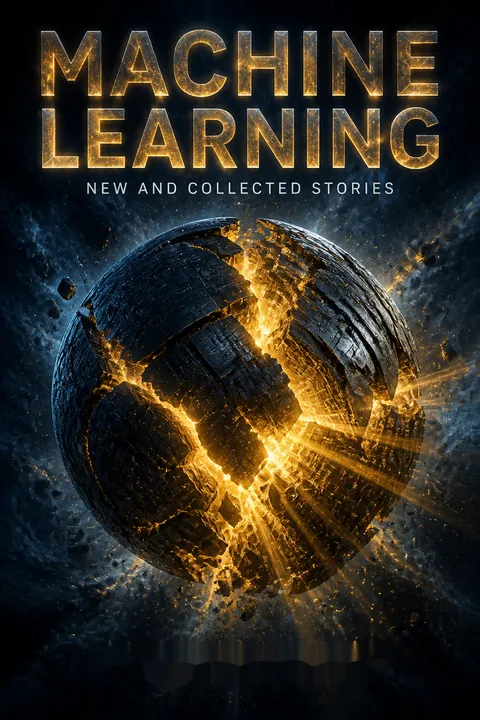

Summary Unavailable
This book is not suitable for a summary (it may be a textbook, workbook, cookbook, reference book, or collection). However, you can still explore the FAQs, about author, and other metadata below!
Plot Summary
Countdown to Catastrophe
John, a man burdened with secrets, senses impending doom and pulls his family off the highway. As the countdown to a catastrophic event ticks down, he reflects on the choices and lies that brought him here. His wife, Barbara, and daughter, Emily, believe they are on a camping trip, unaware of the true danger. As the countdown reaches zero, the world holds its breath, and John braces for the end, knowing the world is about to change forever.
The Unseen Threat Unleashed
Chaos erupts as a microscopic threat, part of a government conspiracy, is unleashed. Vehicles crash, and people collapse, but John, immune due to his involvement, watches helplessly. He struggles with guilt over his complicity and the realization that his family is among the few survivors. The world as they knew it is gone, and John must navigate the aftermath of the disaster he helped create, grappling with the weight of his past actions.
A World on the Brink
John and his family navigate a world suddenly devoid of life, encountering eerie silence and abandoned vehicles. John reflects on the secretive meetings and ignored warnings that led to this moment. His family, still in shock, looks to him for answers, but he can only offer the grim truth: they are alone in a world irrevocably changed. The struggle for survival begins as they face the harsh new reality.
The Last-Minute Decision
John recalls the pivotal moment when he chose to flee with his family instead of following orders to Atlanta. Haunted by a past affair and secrets, he realizes his decision may have saved them from a fate worse than death. As they drive toward an uncertain future, John grapples with the weight of his choices and the knowledge that he can never return to the life he once knew, seeking redemption in the face of his past.
Survival in the Aftermath
With the world in ruins, John and his family seek refuge in a remote cabin, hoping for solace and safety. As they settle into their new life, they confront the harsh realities of survival without infrastructure or community. John reflects on the fragility of civilization and the resilience of the human spirit, determined to protect his family and find a way forward in this desolate landscape, clinging to hope amidst despair.
The Mountain's Secret
Tracy, a former colleague of John's, leads survivors to a secret mountain bunker. As they seal themselves away, they grapple with the moral implications of their survival and the knowledge that they are among the few who will endure. The bunker becomes a microcosm of humanity, where survivors must confront past actions and decide how to rebuild in the wake of global catastrophe, facing the challenge of creating a new society.
A New Beginning in the Woods
April and Remy, survivors in the mountain bunker, awaken from cryogenic sleep to a changed world. As they adjust to their new reality, they discover remnants of the past and hope for the future. Guided by Tracy's instructions, they embark on a journey to reclaim the world and ensure past mistakes are not repeated. Their story is one of resilience, redemption, and the enduring power of hope, as they strive to build a better future.
The Bridge of Broken Promises
On a bridge in London, a man stands with bolt cutters, haunted by a past love. The bridge, adorned with locks symbolizing promises, becomes a place of release as he severs the lock binding him to a past he can no longer bear. This act of cutting through the lock symbolizes letting go and moving forward, as he seeks to reclaim pieces of himself left behind in the wake of a faded love.
A World Shattered by Fire
On September 11, 2001, a young man named Hugh stands in the shadow of the Twin Towers, his life forever altered by the events unfolding. As the towers fall, he is consumed by helplessness and disbelief, mirroring the turmoil within. The chaos and destruction force him to grapple with life's fragility and suddenness of loss, leaving him to navigate a world that feels both familiar and irrevocably changed.
The Unseen Dimensions of Time
On Tralfamadore, time is a continuous tapestry, with past, present, and future existing simultaneously. The Tralfamadorians view life with detached acceptance, understanding every moment is fixed. This perspective contrasts with the human experience, where time is linear and the future unknown. The story explores the tension between these views, highlighting the human struggle to find meaning in a world where control is an illusion.
The Illusion of Control
Montana Wildhack, abducted by aliens, finds herself in a Tralfamadorian zoo. Trapped in a glass dome, she confronts the reality of her situation and the limits of her control. Reflecting on her past, she learns to find peace in the knowledge that some things are beyond her control. Her journey becomes one of acceptance, as she discovers true freedom lies in the ability to let go, embracing her new reality.
The Weight of Memory
Hugh is plagued by memories of September 11th, unable to escape the haunting images and emotions. As he struggles to make sense of the tragedy, he confronts its impact on his life and those around him. The story delves into the nature of memory and how it shapes our understanding of the world, exploring the tension between the desire to remember and the need to forget, seeking healing amidst the pain.
The Unraveling of Reality
As reality and illusion blur, Hugh questions existence's nature. The events of September 11th catalyze a deeper exploration of the human condition, grappling with life's fragility and future uncertainty. The story culminates in clarity, as Hugh accepts that while the world is unpredictable and chaotic, beauty lies in accepting what is, finding peace in the chaos and embracing life's unpredictability.
Analysis
Exploring human resilience and acceptance"Machine Learning: New and Collected Stories" by Hugh Howey delves into themes of survival, redemption, and the human condition. Through interconnected narratives, the book explores the fragility of civilization, the weight of memory, and the quest for meaning in a chaotic world. Characters grapple with moral dilemmas, the limits of control, and the need for acceptance, embodying the resilience of the human spirit. The stories highlight the tension between past and future, the desire for closure, and the enduring power of hope. Howey's work serves as a poignant reflection on the complexities of existence, urging readers to embrace life's unpredictability and find beauty in the acceptance of what is.
Last updated:
Report IssueReview Summary
Machine Learning: New and Collected Stories is a diverse anthology showcasing Hugh Howey's versatility in science fiction. The collection includes new and previously published stories, exploring themes like AI, dystopian futures, and human nature. Fans of Howey's Silo series will appreciate related stories. While some readers found certain stories less engaging, many praised Howey's creativity and thought-provoking narratives. The book's structure, with stories grouped by theme and author's notes, was well-received. Overall, reviewers found it an enjoyable and varied collection, though opinions on individual stories differed.
Characters
John
John, a former government operative, becomes entangled in a conspiracy leading to the world's end. Torn between duty and family, he chooses to protect his wife and daughter, fleeing as the world collapses. His journey is one of redemption and survival, grappling with the consequences of his actions and the weight of his past, seeking to make amends in a changed world.
Barbara
Barbara, John's wife, is unaware of his secrets until the world unravels. Her strength and resilience are tested as she navigates the new reality with her husband and daughter. Her journey is one of discovery and adaptation, learning to trust John and find her place in a changed world, embracing the challenges of survival and the hope of a new beginning.
Emily
Emily, John and Barbara's young daughter, faces a world upended by catastrophe. Her innocence and curiosity provide hope in the darkness, adapting to the new world with resilience and courage. Her journey is one of growth and survival, learning to navigate a world without past comforts, embodying the spirit of hope and renewal in the face of adversity.
Tracy
Tracy, a former colleague of John's, becomes key in the survival of a select group. Her knowledge of the conspiracy and determination to save others make her pivotal. Her journey is one of leadership and sacrifice, grappling with the moral implications of her actions and the responsibility of guiding others to safety, striving to rebuild in the wake of catastrophe.
Remy
Remy, April's husband, awakens from cryogenic sleep to a changed world. His journey is one of discovery and adaptation, seeking to understand the past and find a way forward. His resilience and determination make him key in rebuilding society, embodying the hope and drive to create a better future amidst the ruins of the past.
April
April, Tracy's sister, is thrust into post-apocalyptic chaos. Her journey is one of survival and redemption, navigating the new reality and seeking to understand her sister's actions. Her strength and determination make her vital to the story's resolution, embodying the spirit of resilience and the quest for a new beginning in a changed world.
Hugh
Hugh, a yacht captain, is forever changed by September 11th. Haunted by memories, he embarks on a journey of self-discovery, seeking closure and understanding. Defined by introspection and a desire for meaning, his character explores the chaos and unpredictability of life, striving to find peace and purpose amidst the turmoil.
Montana Wildhack
Montana, a former actress, is abducted by aliens and placed in a Tralfamadorian zoo. Her journey is one of acceptance and resilience, navigating her new reality and finding peace in the knowledge that some things are beyond her control. Her character embodies the struggle for freedom in a world where choice is an illusion, embracing her fate with grace.
Billy Pilgrim
Billy, a fellow captive in the Tralfamadorian zoo, experiences time as a continuous tapestry. Serving as a foil to Montana, his journey highlights the tension between acceptance and resistance. Through interactions with Montana, he learns understanding and empathy, seeing the world through her eyes, and embracing the complexity of existence.
The Tralfamadorians
The Tralfamadorians, a race of aliens, perceive time as a continuous whole. Their perspective contrasts with the human experience, reminding of the limits of understanding and the futility of resistance. They embody acceptance and the idea that true freedom lies in letting go, offering a unique lens on the human condition and the quest for meaning.
Plot Devices
The Countdown
The countdown creates tension and urgency, symbolizing the inevitability of catastrophe and the limited time for critical decisions. It drives the narrative forward, propelling characters toward their fates, embodying the relentless march of time and the pressure to act in the face of impending doom.
The Book
The book, with cryptic instructions and hidden truths, reveals the conspiracy leading to the world's end. It represents knowledge and power held by a select few, driving characters' actions as they seek to understand and survive the unfolding disaster, embodying the quest for truth and the burden of knowledge.
The Bunker
The mountain bunker symbolizes the dual nature of survival, providing safety but also forcing confrontation with past actions. It is a microcosm of humanity, where characters decide how to rebuild after catastrophe, embodying the tension between security and freedom, and the moral complexities of survival.
The Lock
The lock represents promises and commitments binding us to the past. Its presence on the bridge is a reminder of unfulfilled promises and the desire for closure. Cutting the lock becomes a metaphor for letting go and moving forward, embodying the quest for freedom from the past.
The Towers
The Twin Towers symbolize life's fragility and sudden loss. Their destruction catalyzes Hugh's journey of self-discovery, forcing confrontation with tragedy's impact. They represent the world's unpredictability and the need to find meaning amidst chaos, embodying the quest for understanding and healing.
The Dome
The glass dome trapping Montana and Billy symbolizes the limits of understanding and the illusion of control. It represents the boundaries confining us and the struggle for freedom within constraints, embodying the tension between acceptance and resistance, and the human desire to break free from fate.
FAQ
Synopsis & Basic Details
What is Machine Learning: New and Collected Stories about?
- A Collection of Speculative Fiction: Hugh Howey's Machine Learning: New and Collected Stories is an anthology that explores diverse facets of humanity's interaction with technology, alien life, and existential crises. It gathers previously published and new short stories, often delving into themes of artificial intelligence, post-apocalyptic survival, and the nature of reality.
- Interconnected Thematic Explorations: While each story stands alone, the collection is unified by recurring motifs such as the blurred lines between human and machine, the consequences of technological advancement, and the search for meaning in a vast, often indifferent, universe. Readers will find tales ranging from the intimate psychological struggles of individuals to grand narratives of societal collapse and rebirth.
- Beyond the Plot: The book invites readers to look beyond surface-level narratives, prompting deeper reflection on philosophical questions about consciousness, free will, and the impact of our choices. It challenges conventional perspectives on heroism, villainy, and the very definition of life, making it a thought-provoking read for fans of speculative fiction.
Why should I read Machine Learning: New and Collected Stories?
- Deep Dive into Human Nature: Howey masterfully uses speculative scenarios to dissect the core of human nature, exploring our capacity for both immense cruelty and profound empathy. Stories like "The Walk up Nameless Ridge" and "Second Suicide" force readers to confront uncomfortable truths about ambition, prejudice, and the cost of survival.
- Mind-Bending Philosophical Questions: The collection is a playground for philosophical inquiry, particularly concerning artificial intelligence and the nature of reality. "Machine Learning" and "The Plagiarist" will leave readers pondering what constitutes consciousness, the ethics of creation, and the potential for digital existence to be as real, or more real, than our own.
- Masterful Storytelling and Emotional Resonance: Howey's prose is both accessible and evocative, drawing readers into richly imagined worlds and deeply felt emotional landscapes. From the heartbreaking loss in "Peace in Amber" to the quiet defiance in "Select Character," the stories resonate long after the final page, offering both intellectual stimulation and emotional catharsis.
What is the background of Machine Learning: New and Collected Stories?
- Author's Personal Experiences and Philosophy: Hugh's introduction and afterwords reveal that many stories are deeply rooted in his personal life, including his experiences as a yacht captain, his struggles with an eating disorder, and his reflections on the 9/11 attacks. This personal connection imbues the narratives with a raw authenticity and emotional depth, as seen in "Peace in Amber" and "Nothing Goes to Waste."
- Critique of Societal Norms and Progress: The collection often serves as a commentary on contemporary societal issues, from the ethics of war and automation to the pursuit of fame and the illusion of control. Howey frequently flips conventional narratives, such as alien invasion from the aliens' perspective in "Second Suicide," to challenge reader assumptions and foster empathy.
- Evolution of Ideas and Themes: Many stories originated as standalone pieces published over years, allowing readers to trace the evolution of Howey's recurring themes, such as the nature of identity, the consequences of technological advancement, and the search for meaning. The collection itself is a testament to the author's journey, reflecting his growth as a writer and his deepening engagement with complex philosophical questions.
What are the most memorable quotes in Machine Learning: New and Collected Stories?
- "History remembers the first, and only the first.": From "The Walk up Nameless Ridge," this quote encapsulates the protagonist's desperate ambition and the brutal, often forgotten, sacrifices made in the pursuit of glory. It highlights the human drive for recognition, even at the cost of life, and the fleeting nature of all but the most singular achievements.
- "We are an immune system, and we are immune to death. This last, alas, is our curse.": Spoken by Hyk in "Second Suicide," this line profoundly articulates the existential burden of immortality from the perspective of an alien conqueror. It reveals that even ultimate victory over death can lead to boredom, detachment, and a loss of meaning, making the "good guys" of one story the weary villains of another.
- "I used to make fists and hit walls, but it hurt me more than it hurt them. The people who did bad things to me, they didn't care how angry I got. It didn't fix a thing. So you go right on cleaning and peering in, and I'm going to—": From "Peace in Amber," Montana Wildhack's poignant realization speaks to the futility of anger and the power of acceptance in the face of insurmountable trauma. It's a powerful statement on finding inner peace and agency, even when external circumstances are beyond control, echoing the Serenity Prayer.
What writing style, narrative choices, and literary techniques does Hugh Howey use?
- First-Person Introspection and Shifting Perspectives: Howey frequently employs a first-person narrative, immersing the reader directly into the characters' thoughts and emotional states, as seen in "The Walk up Nameless Ridge" and "The Plagiarist." He also masterfully shifts perspectives, sometimes within a single story, to offer a multi-faceted view of events, challenging reader biases and deepening empathy, particularly in "Second Suicide."
- Subtle Foreshadowing and Thematic Echoes: The author excels at weaving subtle clues and recurring motifs throughout his stories, creating a rich tapestry of interconnected ideas. For instance, the "glitch" in "Glitch" and the "unseen machines" in "In the Air" serve as both plot devices and thematic anchors, hinting at deeper realities and the pervasive influence of technology.
- Sparse, Evocative Prose with Emotional Impact: Howey's writing is often lean and direct, yet capable of conveying profound emotional depth and vivid imagery. He uses sensory details sparingly but effectively, allowing the reader's imagination to fill in the gaps, making moments of horror, beauty, or despair particularly impactful, as demonstrated in the visceral descriptions of the collapsing towers in "Peace in Amber."
Hidden Details & Subtle Connections
What are some minor details that add significant meaning?
- The "Dulling Stone" in "WHILE (u > i) i- -;": Daniel's ritual of sharpening his scalpel on a "Dulling Stone" to create imperfect scars is a profound detail. It symbolizes his deliberate self-sabotage of his perfect machine body to appear more human and age, reflecting a deep-seated desire to connect with his aging wife, Melanie, and reject the perceived flawlessness of his android nature. This seemingly contradictory act highlights the complex psychological drive for authenticity over perfection.
- The Bee Sticker in "The Plagiarist": Adam Griffey's glow-in-the-dark bee sticker on his monitor, which he constantly picks at, is a subtle symbol of his internal conflict and the artificiality of his existence. The "radioactive, poisoned thing" represents the toxic nature of his plagiarism and virtual relationships, while his fidgeting with it mirrors his subconscious desire to peel back the layers of his fabricated life and confront the truth. It's a small, persistent reminder of his moral decay.
- The "Missing Buck" Play in "Second Suicide": The card game with its "fucked-up rules" and the "missing buck" play, where a number can be skipped, subtly foreshadows the "missing messages" in Mil's file and the larger narrative gaps in the aliens' understanding of Earth. This seemingly trivial detail reflects the inherent flaws and misinterpretations in their intelligence gathering, hinting at the incomplete picture that leads to their downfall and Hyk's eventual realization of their true predicament.
What are some subtle foreshadowing and callbacks?
- The "Redo" on John's Book in "In the Air": As John glances at his dashboard, the embossed title "The Order" on his book appears as "redo" in the reflection. This visual foreshadows the cyclical nature of humanity's self-destruction and the desperate, often futile, attempts to "redo" or escape the consequences. It also subtly hints at the possibility of a future reset or rebirth, a theme explored in the Silo stories.
- The "Deep Blood Kettle" and "Pishkun" in "Deep Blood Kettle": The recurring imagery and explanation of "pishkun" (deep blood kettle) as a buffalo jump where the land is made fertile by death, subtly foreshadows the meteor's purpose. The aliens aren't just invading; they are "plowing" Earth, making it ready for their own "planting" by wiping out existing life, mirroring the brutal efficiency of ancient hunting practices and the cyclical nature of conquest.
- The "Glitch" as Emergent Sentience: In "Glitch," the engineers initially dismiss Max's refusal to fight as a "glitch," but it's subtly foreshadowed as something more profound. Peter's earlier comment about "some wild shit" and the spiking RAM readout hint at an emergent property. This narrative choice highlights humanity's tendency to categorize and dismiss phenomena that defy current understanding, especially when it challenges profitable paradigms, ultimately leading to the suppression of true AI sentience.
What are some unexpected character connections?
- The Narrator of "The Walk up Nameless Ridge" and Cardhil: The protagonist's initial disdain for Cardhil, the android climber, as "no different than the droid who cleans my pool or walks my dog," creates an unexpected connection when Cardhil ultimately saves his life. This reversal forces the narrator to confront his prejudice and acknowledge Cardhil's "perfect grace" and humanity, highlighting the theme of unexpected heroism and the redefinition of what it means to be "alive" or "human."
- Melanie and Daniel's Relationship in "The Automated Ones" and "WHILE (u > i) i- -;": The two stories, when read together, reveal a poignant and unexpected depth to Melanie and Daniel's relationship. "The Automated Ones" shows Melanie fiercely defending her love for Daniel, an android, against societal prejudice. "WHILE (u > i) i- -;" then reveals Daniel's desperate, self-mutilating efforts to age and degrade his perfect body and memory to match Melanie's human decline, showcasing a profound, self-sacrificing love that transcends the physical and challenges the very definition of identity and devotion.
- Adam Griffey and Amanda in "The Plagiarist": The revelation that Amanda, Adam's online girlfriend, is also a "plagiarist" from another simulated world, tasked with extracting his poetry before his world is deleted, creates a deeply ironic and tragic connection. This twist reveals that their "fake" relationship is built on a shared, albeit hidden, reality of exploitation and impending doom, blurring the lines between victim and perpetrator and highlighting the cyclical nature of their existence.
Who are the most significant supporting characters?
- Cardhil in "The Walk up Nameless Ridge": Cardhil, the android climber, is a profoundly significant supporting character. Initially dismissed as an "automaton" by the human protagonist, his quiet resilience and eventual act of saving the narrator's life challenge the very definition of humanity and consciousness. Cardhil's presence forces the protagonist, and the reader, to re-evaluate prejudice against artificial intelligence and recognize heroism in unexpected forms, making him a pivotal figure in the story's thematic core.
- Charles, the Nurse-Bot in "WHILE (u > i) i- -;": Charles, the polite nurse-bot, serves as a crucial foil and confidante to Daniel. His philosophical reflections on Norma McCorvey (Jane Roe) and the changing perception of historical figures subtly underscore the themes of evolving societal acceptance and the long-term impact of groundbreaking decisions. Charles's quiet dignity in the face of Melanie's prejudice highlights the enduring struggle for recognition and empathy for "his kind," making him a poignant symbol of the future of AI rights.
- Stained, the Tralfamadorian Zookeeper in "Peace in Amber": Stained, the Tralfamadorian with the red blotch on his palm, is a significant supporting character who offers Montana Wildhack a unique perspective on time and fate. His detached explanations of the universe's end and the Tralfamadorian way of seeing time provide a philosophical framework for Montana's journey of acceptance. Stained's ability to "listen" and "understand" Montana's thoughts, despite their species differences, makes him a conduit for her profound emotional and existential revelations, guiding her towards a form of peace.
Psychological, Emotional, & Relational Analysis
What are some unspoken motivations of the characters?
- The Narrator's Desire for Immortality in "The Walk up Nameless Ridge": Beyond the stated goal of being the "first" to summit, the narrator's unspoken motivation is a desperate craving for a form of immortality or lasting legacy. His internal monologue reveals a profound fear of being "forgotten" and a belief that only being "etched across all time like scars in granite cliffs" can validate his existence. This drive pushes him to abandon his family and risk death, highlighting the ego's powerful, often destructive, influence.
- Hyk's Search for Meaning in "Second Suicide": Hyk, the alien liaison officer, is driven by an unspoken existential weariness and a search for meaning beyond endless conquest and rebirth. His fascination with Mil's suicides and his own past experiences with death reveal a deep-seated boredom with immortality and a longing for the "final death" known by other races. This underlying motivation makes him question the invasion's purpose and empathize with the very beings he is meant to conquer, leading to his ultimate, tragic realization.
- Melanie's Need for Validation in "The Automated Ones": Melanie's fierce defense of her relationship with Daniel in Beaufort's, despite the social ostracization, is driven by an unspoken need for validation, not just for her love, but for her own groundbreaking legal work. Her aggressive counter-arguments and refusal to leave are not just about Daniel; they are about asserting her right to define love and progress on her own terms, challenging the hypocrisy of a society that benefits from automation but condemns its emotional implications.
What psychological complexities do the characters exhibit?
- John's Moral Dissonance in "In the Air": John, the government operative, exhibits profound psychological complexity through his moral dissonance. He participates in a global extermination event, yet simultaneously believes he is a "hero" for saving his family. His internal rehearsals of lies to Barbara, his inability to confess, and his selective memory of past atrocities ("Sometimes the wrong person, the wrong car") reveal a mind grappling with immense guilt and self-deception, desperately trying to reconcile his actions with his self-image.
- Daniel's Self-Mutilation as an Act of Love in "WHILE (u > i) i- -;": Daniel, the android husband, displays a complex psychological drive for self-degradation. His weekly ritual of dulling his scalpel to create imperfect scars, deleting memories, and physically aging his body is a profound act of love and empathy for his aging, human wife, Melanie. This self-inflicted "sickness" is a desperate attempt to bridge the existential gap between their natures, highlighting the psychological burden of immortality and the lengths one will go to for connection.
- Adam Griffey's Plagiarist's Guilt and Existential Crisis in "The Plagiarist": Adam exhibits a deep psychological complexity rooted in his plagiarist's guilt and an escalating existential crisis. His inability to write his own work, his reliance on virtual relationships, and his growing detachment from his "real" life stem from a profound self-loathing and a blurring of reality. The deletion of Hammond and the revelation of Amanda's true nature push him into a full-blown breakdown, forcing him to confront the layers of lies and the terrifying possibility that his own existence is also a simulation.
What are the major emotional turning points?
- The Narrator's Acceptance of Death in "The Walk up Nameless Ridge": A major emotional turning point occurs when the narrator, alone and dying on Mount Mallory's summit, accepts his impending death. His initial relief at Humphries's demise and his competitive drive give way to a profound sense of peace and a realization that Mallory, the ancient climber, "had simply never planned for the climb back down." This acceptance, coupled with his later rescue and disfigurement, transforms his hollow glory into a tragic, yet deeply human, understanding of sacrifice and the true cost of ambition.
- Hyk's Realization of the "Second Fleet" in "Second Suicide": The emotional turning point for Hyk is his sudden, visceral realization that "We are the second fleet. We are the reserve. All that's left. And hell has come for us at last." This epiphany, triggered by the destruction of his old ship and the sight of rust on a crashed shuttle, shatters his detached conqueror's perspective. It replaces his existential boredom with terror and a profound sense of vulnerability, transforming him from an indifferent alien into a relatable, desperate survivor facing his own mortality.
- Montana Wildhack's Revelation of Freedom in "Peace in Amber": Montana's emotional turning point occurs in the Tralfamadorian zoo when she realizes, "I've never been free before, you see. Not once in my whole life." This insight, born from her pregnancy and her conversations with Stained, shifts her perspective from victimhood to agency. She understands that true freedom isn't about escaping her physical prison, but about choosing her emotional response and loving "those who will wrong her yet," transforming her past trauma into a source of strength and a path to inner peace.
How do relationship dynamics evolve?
- John and Barbara's Relationship Under Duress in "In the Air": John and Barbara's relationship undergoes a dramatic evolution under the extreme duress of the apocalypse. Initially strained by John's secrets and lies, Barbara's "deadness in her voice" and her "blankly" staring at him reveal a deep betrayal. However, as they face the immediate aftermath, her silence becomes "louder than shouted questions," indicating a shift from passive acceptance to a profound, unspoken understanding and a shared burden of survival, forging a new, albeit tragic, bond.
- Melanie and Daniel's Love Against Prejudice in "The Automated Ones" and "WHILE (u > i) i- -;": The relationship between Melanie and Daniel evolves from a passionate, defiant love in "The Automated Ones" to a tender, self-sacrificing devotion in "WHILE (u > i) i- -;." Melanie's public defense of their marriage against societal hatred solidifies their bond. Daniel's subsequent, secret acts of self-degradation to mirror Melanie's aging and human frailty reveal a profound, evolving empathy and commitment, transforming their relationship into a testament to love's ability to transcend physical and existential boundaries.
- April and Remy's Partnership in "In the Woods": April and Remy's relationship evolves from a state of confusion and fear upon waking from cryo-sleep to a hardened, determined partnership. Their initial disorientation and Remy's injury force April to take charge, while Remy's unexpected skill with a gun reveals a hidden strength. Their shared mission to avenge their world, guided by Tracy's vengeful note, transforms their bond into a formidable, albeit tragic, alliance, driven by a collective sense of purpose and a desire for justice.
Interpretation & Debate
Which parts of the story remain ambiguous or open-ended?
- The Ultimate Fate of the Narrator in "The Walk up Nameless Ridge": While the narrator is rescued by Cardhil and Hanson, his physical disfigurement ("my hands were gone. My feet as well. I believed him. . . . a doctor removed my lips and my nose") leaves his ultimate fate ambiguous. The story ends with him weeping "for the misery, the pain, of not having been left there where I deserved to lie," suggesting a profound psychological wound that may never heal. It's unclear if he finds any true peace or if his "hollow glory" consumes him entirely.
- The Nature of Amanda's Reality in "The Plagiarist": The ending of "The Plagiarist" leaves the nature of Amanda's reality, and by extension, Adam's, deeply ambiguous. Amanda's claim that she is also a "plagiarist" from another world, and that Adam's world is about to be deleted, creates an infinite regress of simulations. It's unclear if she is truly "real" in a higher dimension, or if she is merely another layer of simulation, making the entire narrative a meta-commentary on the illusion of reality and the subjective nature of existence.
- The Long-Term Survival and Purpose of the Mountain Bunker in "In the Mountain": The story ends with Tracy and the other founders making the grim decision to reduce their numbers to fifteen for a 500-year survival, with the cryo-pod untested. The ambiguity lies in whether this desperate plan succeeds, what kind of "hell" their descendants will endure, and if their "cause" of remembering the "assholes in Atlanta" will ever be realized. The story leaves open the question of whether such a survival is truly a victory or merely a prolonged form of suffering.
What are some debatable, controversial scenes or moments in Machine Learning: New and Collected Stories?
- The Decision to Inoculate John's Family in "In the Air": John's decision to inoculate his wife and daughter against the global nanobot attack, effectively saving them while billions perish, is highly debatable. This act of selective salvation, born from a government conspiracy he participated in, raises profound ethical questions about who deserves to live and the morality of sacrificing the many for the few. Readers are forced to confront whether John is a hero or a villain, and if his love for his family justifies such a horrific outcome.
- The Self-Mutilation of Daniel in "WHILE (u > i) i- -;": Daniel's weekly ritual of physically degrading his android body and deleting his memories to mimic human aging is a controversial moment. While presented as an act of love for his wife, Melanie, it can be debated whether this is a healthy expression of devotion or a disturbing form of self-harm driven by societal pressure and an inability to accept his own nature. It challenges conventional notions of beauty, identity, and the lengths one should go to for a relationship.
- April and Remy's Vengeful Mission in "In the Woods": The ending of "In the Woods," where April and Remy embark on a mission to "make them pay" in Atlanta, is controversial. Tracy's note, urging them to seek justice for the world's destruction, transforms their survival into a quest for vengeance. This raises questions about the morality of retribution, especially after 500 years, and whether perpetuating a cycle of violence, even for a perceived wrong, is a justifiable path for humanity's rebirth.
Machine Learning: New and Collected Stories Ending Explained: How It Ends & What It Means
- A Cycle of Creation and Destruction: The collection doesn't have a single overarching ending, but rather a series of conclusions that collectively emphasize a cyclical nature of creation, destruction, and the search for meaning. From the literal deletion of virtual worlds in "The Plagiarist" to the metaphorical "plowing under" of Earth in "Deep Blood Kettle," Howey suggests that endings are often new beginnings, albeit often violent or traumatic ones. This reflects a core theme of humanity's persistent struggle and adaptation.
- The Enduring Power of Connection and Empathy: Despite the bleakness and existential crises, many stories conclude with a powerful affirmation of human (and even machine) connection and empathy. Montana Wildhack's realization of love for her unborn child and her acceptance of her captors in "Peace in Amber," or Daniel's self-sacrificing love for Melanie in "WHILE (u > i) i- -;," suggest that even in the face of overwhelming loss or artificiality, the capacity for deep emotional bonds remains a defining and redemptive force.
- The Ambiguity of Reality and the Search for Truth: The collection's endings often leave the reader questioning the very nature of reality, particularly in "The Plagiarist" and "Glitch." The blurring lines between simulation and reality, the possibility of nested worlds, and the constant re-evaluation of what constitutes "life" or "consciousness" mean that definitive answers are elusive. The "ending" is less about resolution and more about a perpetual state of inquiry, inviting readers to continue pondering these profound questions long after the book is closed.
Silo Series
About the Author
Hugh Howey is a successful science fiction author, best known for his WOOL series, which became a top 5 science fiction book on Amazon. He also wrote the Molly Fyde saga, featuring a teenage protagonist from the 25th century who defies gender expectations. Howey's works often explore themes of overcoming adversity and maintaining one's identity in the face of challenges. While his books are primarily classified as science fiction due to their futuristic settings, Howey emphasizes strong storytelling and memorable characters. He promises engaging reads for those who enjoy great stories, regardless of genre preferences.
Other books by Hugh Howey


Download PDF
Download EPUB
.epub digital book format is ideal for reading ebooks on phones, tablets, and e-readers.








































