
Key Takeaways
1. Lynching's Transformation: From Clandestine Punishment to Public Spectacle
Once a strictly punitive and largely clandestine form of extralegal punishment, lynching in Texas evolved into a largely racialized, publicly viewed, well-attended, frequently commercialized exhibition of mob violence.
A stark shift. Early Texas lynchings, often targeting white individuals for crimes like horse theft, were typically clandestine acts committed by masked mobs, with bodies left for discovery. However, following Reconstruction, the practice underwent a profound transformation, becoming overwhelmingly racialized, public, and ceremonial, with Black individuals as the primary victims. This new "lynching culture" was characterized by spectacle, consumption, and recreation.
The Waco Horror. The 1916 lynching of Jesse Washington exemplifies this transformation. His trial was a charade, witnessed by thousands, with the judge and sheriff complicit in the mob's actions. Washington was publicly tortured, mutilated, and burned, with his body parts sold as souvenirs. This public spectacle stands in stark contrast to the 1883 McDade lynching of three white men, which was a masked, brief, and unceremonious act, devoid of fanfare or commercialism.
Impunity and spectacle. The key to this shift was the near disappearance of fear of judicial retribution for murdering Black people. This impunity allowed lynchings to become brazen public performances, often advertised in advance, drawing thousands of spectators. The transformation reflected broader changes in race relations and the concept of crime in post-emancipation Texas, intertwining with the rise of industrial capitalism and new modes of racialized social control.
2. Racialization of Crime: Blackness as the Ultimate Transgression
Black self-assertion was perceived as a criminal act. Black lives, the new lynching culture indicated, did not matter when racial boundaries were threatened.
Justice redefined. White Texans increasingly assumed the roles of judge, juror, and executioner, creating a pseudojudicial system that supplanted formal state law. This system justified lynching as a legitimate form of punishment, particularly when the accused was Black, making it a socially acceptable engagement of one's time.
Malleable definitions of crime. The concept of "crime" expanded beyond legal transgressions to encompass any act by a Black person that challenged white supremacy or racial boundaries. This included:
- Flippantly responding to a white man
- Being "too prosperous" for a Black person
- Slander of a white family
- Claiming marriage to a white woman
- "Negroes, get a job or leave town."
Such "offenses" were met with mob violence, often without evidence or due process.
Dehumanization and control. This conflation of Blackness with criminality dehumanized African Americans, rendering their lives negligible and their public torture and death justifiable. The "New Negro" archetype, perceived by whites as insolent, idle, or ambitious, was seen as a threat to the established order, further fueling the racist ideology that underpinned this new lynching culture.
3. Burning Black Bodies: A Ritual of Dominance and Dehumanization
A death ritual that included burning was necessarily public, and the various details of its protocol—from apprehending the accused, to transporting the mob’s prey to a particular site, to the performance of execution—required that the machinery of the law be superseded and that there be adequate lead time to disseminate knowledge of the impending event.
A gruesome distinction. Burning was a particularly torturous and public method of execution, almost exclusively reserved for Black men in Texas. Of the 45 people lynched by burning between 1876 and 1933, 44 were Black men, and 42 of these were accused of physical or sexual assault against white women or youth. This method underscored the mob's absolute dominance.
Mob's mastery of time and spectacle. The act of burning required significant time, demonstrating the mob's impunity and control over the legal process. This allowed for:
- Advance notice to be disseminated, drawing thousands of spectators.
- Prolonged suffering, as victims like Robert Henson Hilliard burned for 50 minutes, with his lower limbs melting off.
- Ceremonial aspects, such as selecting a site, preparing a pyre, and even forcing family members to watch.
- The burning of Ted Smith, where flames were kept alive for much of the day, consuming all bones.
Annihilation and emasculation. Burning served as excessive torture, designed to humiliate and disempower the Black body beyond death. Often preceded by castration, it aimed to destroy any suggestion of sexual prowess and reify white male honor. The charred remains were then often collected as souvenirs, further cementing the dehumanization.
4. Work, Migration, and Urbanization: Fueling Racial Tensions
High rates of rural-to-urban migration within the state of Texas led to racial contestation that would largely impact how local white people would exact varied modes of racialized social control, from the legal to the extralegal to the categorically violent.
Post-emancipation shifts. Following the Civil War, thousands of Black Texans migrated from rural agricultural areas to urbanizing centers like Waco, Dallas, and Houston. They sought industrial employment in cottonseed oil, lumber, and railroads, and pursued entrepreneurial and educational opportunities, challenging the economic and social restrictions of sharecropping and tenant farming.
Intensified competition and resentment. This increased Black presence and economic progress fueled intense racial competition for wages and resources, exacerbating existing white racial tensions. White workers often expressed animosity towards Black laborers, viewing their advancement as a threat to their own socioeconomic standing. Examples include:
- White employees grumbling about Black workers in refineries.
- White farmers resenting "strange blacks and Mexicans" in lumber camps.
- Threatening signs posted in Trinity County trees: "Nigger, don’t let the sun rise on you here tomorrow morning."
Residential "invasion" and codified segregation. White Texans feared that Black migration would lead to the "racial invasion" of white neighborhoods, schools, and public spaces, threatening white racial purity and status. This anxiety prompted:
- Bombings of Black homes in areas like Caddo Street in Dallas.
- The implementation of racial zoning ordinances, like Dallas's Ordinance 195, which legally confined Black residents to designated "Negro Districts," despite Supreme Court rulings against such measures.
- The passage of state laws, like Senate Bill 275/House Bill 371, to legally restrict Black mobility and residency statewide.
5. Material Culture of Lynching: Souvenirs and the Normalization of Terror
The collection and dissemination of lynching memorabilia functioned broadly as a white conquest and mastery over the Black presence, thus normalizing white domination and the brutality deemed necessary to sustain it as it informed an evolving ideology that encompassed a growing culture of racialized entertainment.
Commodification of terror. Lynching memorabilia, including fragmented body parts, pieces of rope, and photographs, transformed heinous acts of racial violence into acceptable, even entertaining, cultural artifacts. This built upon a long history of commercial exploitation of Black bodies in minstrelsy and racist collectibles, which presented Black people as caricatures for white amusement.
Tangible relics of experience. Souvenirs served as physical tokens, allowing individuals to commemorate and boast about their participation in or witnessing of lynchings. Examples of collected items include:
- Henry Smith: pieces of his bones, charcoal from the pyre, and "splinters of the scaffold."
- Dudley Morgan: parts of his burned skull and body.
- Lige Daniels: gavels fashioned from the limb of the tree used in his lynching.
- Henry Smith's kneecap converted into a "watch charm," and a rib bone placed over a door for "good luck."
Narratives of remembrance. These items, coupled with accompanying narratives, extended the "lynching experience" beyond the immediate event. Each retelling, often embellished, reinforced racial stereotypes and trivialized Black lives, serving as a socializing mechanism. The hotelkeeper's wife who proudly recounted witnessing Henry Smith's lynching to her daughter, confirming, "Yes darling, you saw them burn the nigger," illustrates how these memories were passed down as lessons in racial hierarchy.
6. Technology and Tourism: Making Lynchings an "Experiential" Event
The constant tide of tourists that Sunday who arrived in the area, hailing from around the county and far beyond to somehow partake in what they perceived as events worthy of their leisure time, existed as a disturbing, yet perennial, reminder that scenes of racialized lynching were tourist attractions in Texas.
Modern travel, ancient cruelty. Advances in transportation, particularly the expansion of railroad systems and the invention of the automobile, made travel for leisure easier and transformed lynching sites into tourist attractions. Railroad companies actively facilitated this by adding special train runs or carrying spectators on existing routes.
Spectacle and sightseeing. Tourists traveled to witness impending lynchings or visit sites days later, turning these landscapes of violence into spaces for "identity reification." Examples include:
- Henry Smith: trains were "crowded to suffocation" with people from across the state, and "special trains" were requested to bring more spectators.
- John Henderson: train passengers wrestled him from officers, then thousands watched him burn.
- George Hughes: thousands visited Sherman on Sunday after his lynching, touring the courthouse ruins and the destroyed Black community.
"Sunday afternoon diversion." Automobiles further integrated into the lynching narrative, used for dragging bodies in "parades" through Black communities and for illuminating night lynchings. Sunday sightseeing at lynching sites became a normalized "Texas Sunday afternoon diversion," reflecting a cultural shift where leisure outings included witnessing racial terror. This cemented lynching as a constitutive dynamism of "us versus them."
7. The Black Press's Counter-Narrative: Exposing Lynching as "Leisure"
To use language as an illustrative medium for the reporting of torture and pain as sport, to expose an ethos of amusement that assaulted readers’ moral conventions, was to harness, in measures small or large, widespread derision and disgust that could possibly work to produce change.
Strategic exposure. African American journalists, including those from the Crisis and Cleveland Advocate, strategically exploited the "leisure" aspect of lynchings to shock public conscience and rally support for antilynching efforts. They highlighted the callousness of white Texans who treated mob murder as "sport" or "diversion."
Vivid language and satire. These progressive journalists used detailed narratives and satirical commentary to expose the barbarism, aiming to move their audiences to "heartrending discomfort." Examples include:
- The Cleveland Advocate's "A Texas Diversion" series, describing "burning 'two trophies of the chase'" as a "Texas Sunday afternoon diversion."
- The Austin Herald reporting Deputy Sheriff James Augus inviting "all the best white people in the town that they could engage in the pastime of killing a 'Nigger.'"
- The Chicago Defender's headline: "Lynchings, Not Bull Fights, Are Allowed in Texas."
Challenging "civilization." This journalism aimed to shift public focus from the victim's alleged guilt to the perpetrators' culpability, portraying southern white society as frighteningly malevolent and uncivilized. The NAACP used the "Waco Horror" (Jesse Washington) to raise funds and organize protests, emphasizing the "disgrace of Christian civilization" and the hypocrisy of a nation that claimed to be civilized while tolerating such atrocities.
8. Enduring Legacy: Modern Echoes of Racial Terror
What these modern lynchings reveal is that for some white people in America, a challenge to the supposed racial hierarchy continues to be a criminal act.
A persistent reality. The author argues that lynching is not merely a relic of the Jim Crow past but a modern form of racial terror, citing contemporary murders like Elijah McClain, Ahmaud Arbery, and George Floyd as modern lynchings. The spectacular brutality once captured by photography is now recorded by cell phones and body cameras, making racial terror visible to a global audience.
Historical continuums. These modern cases share chilling parallels with historical lynchings:
- Killings without due process, often by "three or more persons" under the pretext of "justice, race, or tradition."
- Criminalization of "Black existence" and "freedom expressions" (e.g., jogging, giving a dog a treat, using a counterfeit bill).
- Perpetrators acting as judge, jury, and executioner, often with initial impunity or state-sanctioned exoneration (e.g., initial autopsy reports, district attorneys' statements).
- Police officers leading or participating in violence, as seen with Deputy Sheriff James Augus in 1892 and the officers involved in McClain's death.
Unwavering devaluation. Despite civil rights legislation and social progress, systemic change to prevent such violence remains elusive. The historical devaluation of Black lives persists, manifesting in the perception of Blackness as a threat. The murderers' arguments that they believed their victims to be a threat are laden with elements of racial othering that have plagued African Americans for decades. However, the unprecedented global protests and calls for reform in response to these modern lynchings offer a distinct and hopeful contrast to past complacency.
Review Summary
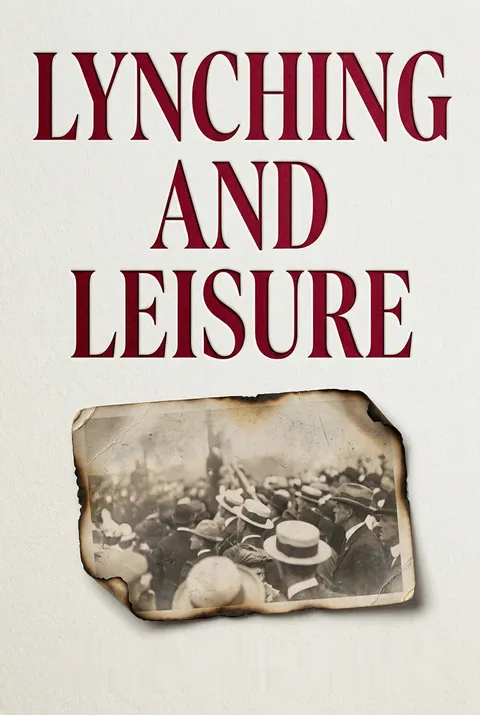
Lynching and Leisure receives high praise from readers, with an average rating of 4.17 out of 5. Reviewers describe it as a powerful and important work that examines the transformation of lynching in Texas from extralegal punishment to racialized recreation. The book is noted for its extensive documentation, including itemized lists and photographs. While some find it uncomfortable to read, it is considered a must-read for those interested in true Texas history and a pioneering examination of lynching.
Download PDF
Download EPUB
.epub digital book format is ideal for reading ebooks on phones, tablets, and e-readers.








































