
Plot Summary
Born in Blood
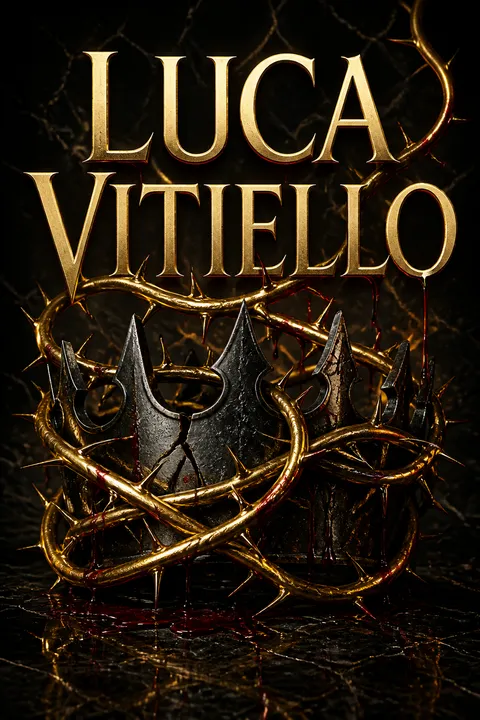
Luca Vitiello is born into a world where cruelty is inherited, not learned. From his earliest memories, he is shaped by his father's brutality and the suffocating expectations of the mafia. The Vitiello name is synonymous with power and fear, and Luca is raised to embody both. His mother's tragic suicide, witnessed by a young Luca, cements his understanding that love is weakness and violence is survival. The blood on his hands is not just from enemies, but from the wounds inflicted by his own family. This legacy of pain and dominance becomes the foundation of Luca's identity, setting him on a path where compassion is a liability and power is everything.
Childhood Shadows
Luca's childhood is marked by relentless abuse and the constant threat of violence. His only solace is his younger brother, Matteo, with whom he forms an unbreakable bond. Together, they navigate the unpredictable moods of their father and the dangers lurking within their own home. The loss of their mother leaves a void filled only by the promise of vengeance and the determination to protect each other. Luca learns early that trust is rare and that even family can be enemies. The lessons of pain and survival become ingrained, shaping him into the ruthless heir the Famiglia demands.
Made Man's Oath
At eleven, Luca is forced to kill for the first time, cementing his place in the mafia's hierarchy. The ritual is both a test and a curse, binding him to the Famiglia with an oath sworn in blood. The act is not just about proving loyalty—it is about erasing innocence. Luca's initiation is a public spectacle, a demonstration of his father's power and his own capacity for violence. The tattoo over his heart becomes a permanent reminder that his life is no longer his own. From this moment, Luca is no longer a boy; he is a Made Man, expected to kill, maim, and rule without mercy.
Lessons in Cruelty
As a teenager, Luca is thrust into the adult world of the mafia, where sex is a weapon and betrayal is commonplace. His father orchestrates his first sexual experiences, teaching him that intimacy is about dominance, not affection. Luca's relationships with women are transactional, devoid of tenderness. The constant threat of assassination from within his own family keeps him vigilant. When his cousin betrays him, Luca's response is swift and brutal, earning him the nickname "The Vise." Each act of violence further distances him from any remnants of vulnerability, reinforcing the monster he is expected to be.
The Vise Awakens
Luca's reputation as "The Vise" is solidified when he crushes his cousin's throat during an attempted coup. The act is both a warning and a declaration: Luca is not to be underestimated. The violence is personal, a response to betrayal from within, and it sends shockwaves through the Famiglia. Even as he revels in the power, Luca is haunted by the knowledge that trust is a luxury he cannot afford. His relationship with Matteo deepens, as they become each other's only true allies in a world where everyone else is a potential enemy.
Arranged for Power
The fragile truce between the New York Famiglia and the Chicago Outfit is to be sealed through Luca's marriage to Aria Scuderi, a beautiful but sheltered young woman. The arrangement is purely strategic, designed to consolidate power and prevent war. Luca resents the loss of autonomy but accepts his duty. Meeting Aria for the first time, he is struck by her innocence and vulnerability—a stark contrast to the darkness within himself. The engagement is a public affair, but privately, both are prisoners of their families' ambitions. Luca vows to protect Aria, even as he fears his own capacity for destruction.
Angel in a Cage
Aria's arrival in Luca's world is both a blessing and a curse. She is terrified of him, her fear a mirror to the reputation he has cultivated. Luca is torn between the urge to dominate and the unexpected desire to shield her from harm. Their wedding is a spectacle, a display of power and tradition. The pressure to consummate the marriage and present bloody sheets is immense, but Luca cannot bring himself to force Aria. Instead, he fakes the evidence, choosing her dignity over his own reputation. This act of restraint is the first crack in his monstrous façade, hinting at a depth he has long denied.
Claiming the Bride
The aftermath of the wedding is a test of wills. Luca battles his own desires, determined not to become the monster his father was. Aria's fear and innocence challenge him in ways he never anticipated. Their relationship is a delicate dance between dominance and protection, with Luca struggling to earn her trust. The expectations of the Famiglia weigh heavily, and every interaction is scrutinized for weakness. As they navigate the rituals of married life, Luca finds himself drawn to Aria's light, even as he fears it will expose his darkness. The tension between duty and desire becomes the defining struggle of their union.
Bound by Tradition
Life as a married couple is anything but peaceful. Aria's presence brings both joy and vulnerability, forcing Luca to confront the possibility of love in a world that punishes it. The demands of tradition—bloody sheets, public displays, and constant vigilance—threaten to suffocate any chance of genuine connection. Betrayals from within and attacks from rival factions keep Luca on edge. His protectiveness over Aria grows, but so does the danger she faces as his most valuable possession. The line between protector and jailer blurs, and Luca must decide what he is willing to sacrifice for her safety.
The Monster's Restraint
As Aria begins to trust Luca, external threats and internal demons test their fragile bond. Luca's past lovers, especially the manipulative Grace, sow seeds of doubt and jealousy. When Aria witnesses Luca's infidelity, the pain threatens to destroy the tentative trust they have built. Luca is forced to confront the consequences of his actions and the reality that true power lies not in domination, but in restraint. His willingness to change for Aria becomes both his greatest strength and his most dangerous vulnerability. The monster within is not easily tamed, but for Aria, Luca is willing to try.
Learning to Trust
The journey from fear to trust is slow and fraught with setbacks. Luca and Aria learn to communicate, to share their pain and desires. Their physical relationship evolves from obligation to genuine intimacy, each encounter a step toward healing old wounds. Luca's protectiveness deepens into something resembling love, though he struggles to admit it even to himself. The threat of betrayal remains ever-present, but together they begin to envision a future not defined solely by violence. For the first time, Luca allows himself to hope that he can be more than the monster he was born to be.
Temptation and Betrayal
The peace between the Famiglia and the Outfit is fragile, constantly threatened by internal dissent and external aggression. Luca's uncles and rivals plot against him, while the Bratva escalates their attacks. Aria becomes both a symbol of unity and a target for those who wish to hurt Luca. When she is nearly killed in an attack orchestrated by traitors, Luca's world is thrown into chaos. The realization that love is both his greatest strength and his most dangerous weakness forces him to make impossible choices. Loyalty is tested, and the cost of power becomes painfully clear.
The Price of Loyalty
The assassination of Luca's father marks a turning point. As the new Capo, Luca must assert his authority and root out the traitors within his ranks. The transition is bloody and fraught with danger, as old enemies seize the opportunity to strike. Aria's unwavering support becomes his anchor, but also his Achilles' heel. The responsibilities of leadership weigh heavily, and Luca is forced to confront the reality that true loyalty often demands the ultimate sacrifice. The lines between love and duty, mercy and brutality, blur as Luca fights to secure his legacy and protect those he loves.
Blood and Ascension
With the traitors punished and the Bratva temporarily subdued, Luca consolidates his power as Capo. The cost has been immense—lives lost, innocence shattered, and love tested to its limits. Yet, in the aftermath, Luca finds a measure of redemption in Aria's love. Their relationship, forged in blood and tempered by suffering, becomes a testament to the possibility of light in even the darkest of worlds. Luca's journey from monster to man is incomplete, but with Aria by his side, he dares to hope for something more than survival. Together, they redefine what it means to rule, to love, and to be free.
The Capo's Heart
In the end, Luca's greatest victory is not the throne he claims or the enemies he destroys, but the love he allows himself to feel. Aria becomes his light, his reason to hope, and his greatest risk. Their union, once a tool of power, transforms into a partnership built on trust, sacrifice, and mutual respect. Luca learns that true strength lies not in fear, but in vulnerability. The monster he was born to be is tempered by the man he chooses to become. In a world where love is a liability, Luca and Aria's devotion becomes the ultimate act of defiance—a promise that even in blood, there can be honor, and in darkness, there can be light.
Analysis
Luca Vitiello is a dark, emotionally charged exploration of power, trauma, and the possibility of redemption in a world defined by violence. Through Luca's eyes, the novel interrogates the costs of inherited cruelty and the struggle to break free from generational cycles of abuse. The arranged marriage between Luca and Aria serves as both a symbol of political strategy and a crucible for personal transformation. The story's emotional arc is driven by the tension between duty and desire, fear and trust, brutality and tenderness. Ultimately, the novel suggests that true strength lies not in domination, but in the willingness to be vulnerable—to love, to trust, and to hope for something better. In a world where love is seen as a liability, Luca and Aria's relationship becomes an act of defiance, a testament to the enduring power of compassion even amidst darkness. The lesson is clear: while we may be shaped by our past, we are not doomed to repeat it. Through courage, sacrifice, and the willingness to change, even monsters can find redemption—and even in blood, there can be honor.
Review Summary
Characters
Luca Vitiello
Luca is the product of generational violence, raised by a sadistic father to rule through fear and brutality. His childhood is marked by trauma, loss, and the constant threat of betrayal. The death of his mother and the abuse he endures shape him into a ruthless leader, feared by all. Yet beneath the monstrous exterior lies a man capable of deep loyalty and, eventually, love. Luca's journey is one of self-discovery, as he grapples with the expectations of his role and the possibility of redemption. His relationship with Aria becomes the catalyst for change, forcing him to confront the darkness within and choose what kind of man—and Capo—he will be.
Aria Scuderi
Aria is the eldest daughter of the Chicago Outfit's Consigliere, raised in a gilded cage to be a pawn in her family's power games. Her beauty and purity make her a valuable asset, but also a target. Forced into marriage with Luca, she is initially terrified, but her resilience and compassion gradually win his trust. Aria's journey is one of transformation—from sheltered victim to empowered partner. Her ability to see the good in Luca, even when he cannot see it himself, becomes the foundation of their relationship. Aria's love is both her greatest strength and her greatest vulnerability, as she learns to navigate the dangers of the mafia world.
Matteo Vitiello
Matteo is Luca's younger brother and closest confidant. Their bond is forged in the fires of shared trauma and mutual survival. Matteo is charming, reckless, and deadly with a knife, serving as Luca's enforcer and moral compass. His loyalty to Luca is unwavering, even when it puts him at odds with the rest of the Famiglia. Matteo's own struggles with violence and vulnerability mirror Luca's, and his pursuit of Gianna Scuderi adds complexity to the family dynamics. Matteo's humor and bravado mask a deep-seated need for connection and belonging.
Salvatore Vitiello (Luca's Father)
Salvatore is the embodiment of the old mafia order—cruel, manipulative, and utterly without mercy. His reign is marked by fear and bloodshed, and he takes pleasure in breaking those around him, including his own family. Salvatore's abuse shapes Luca and Matteo, instilling in them the belief that love is weakness and power is everything. His eventual assassination is both a liberation and a challenge, forcing his sons to redefine what it means to lead.
Nina Vitiello
Nina is Salvatore's second wife, chosen for her lack of powerful family ties and subjected to the same abuse as her predecessor. Her relationship with Luca and Matteo is complicated by her own survival instincts and the scars left by years of violence. Nina's story is a cautionary tale of what happens to those who are powerless in the mafia world, and her eventual freedom is bittersweet.
Gianna Scuderi
Gianna is Aria's younger sister, known for her fiery temper and refusal to submit to the expectations of their world. Her defiance brings her into conflict with both her family and the mafia, but also makes her a kindred spirit to Matteo. Gianna's presence challenges the status quo and forces those around her to confront uncomfortable truths about power, autonomy, and love.
Romero
Romero is one of Luca's most trusted men, chosen to protect Aria due to his reliability and restraint. His loyalty is unquestioned, and he serves as a stabilizing force amidst the chaos of mafia life. Romero's quiet strength and sense of duty make him an invaluable ally, and his own journey toward love and belonging parallels that of the main characters.
Cesare
Cesare is responsible for teaching Luca and Matteo the skills they need to survive, both in combat and in the treacherous world of the mafia. His loyalty to the Vitiello brothers is steadfast, and he serves as a bridge between the old ways and the new generation. Cesare's presence is a reminder that even in a world of violence, there can be honor and mentorship.
Grace Parker
Grace is one of Luca's former lovers, representing the dangers of unchecked desire and the consequences of betrayal. Her attempts to undermine Luca and Aria's marriage highlight the fragility of trust and the destructive power of jealousy. Grace's actions serve as a catalyst for Luca's realization of what truly matters.
Rocco Scuderi
Rocco is Aria and Gianna's father, a man who values power and tradition above all else. His willingness to sacrifice his daughters for the sake of alliances underscores the ruthlessness of the mafia world. Rocco's actions force Aria to confront the realities of her upbringing and the limits of familial loyalty.
Plot Devices
Duality of Monster and Man
The narrative structure of Luca Vitiello is built around the duality of its protagonist. Luca is both a monster and a man, shaped by trauma but capable of love. The story uses his internal conflict as a lens through which to examine the costs of power and the possibility of redemption. Foreshadowing is employed through recurring motifs of blood, oaths, and the ever-present threat of betrayal, signaling that violence is both a tool and a curse. The juxtaposition of brutality and tenderness, especially in Luca's relationship with Aria, serves to humanize the monster and question whether true change is possible.
Marriage as Political Alliance
The central plot device is the marriage between Luca and Aria, orchestrated to secure peace between rival mafia factions. This union is both a source of conflict and a catalyst for transformation. The rituals surrounding the marriage—bloody sheets, public displays, and the constant scrutiny of family and enemies—underscore the tension between personal desire and collective duty. The marriage becomes a battleground where love, power, and tradition collide, forcing both characters to redefine their identities and allegiances.
Betrayal and Loyalty
The story is driven by betrayals both large and small, from familial coups to personal infidelities. Loyalty is tested at every turn, and the consequences of misplaced trust are often fatal. The narrative structure uses these betrayals to heighten tension and propel character development, particularly for Luca, whose journey is marked by the gradual realization that true strength lies in vulnerability and connection. The motif of oaths—sworn in blood and broken in secret—serves as a constant reminder of the stakes involved.
Violence as Inheritance
The novel employs violence not just as a plot device, but as a thematic exploration of inheritance and destiny. Luca's actions are shaped by the legacy of his father, and the story interrogates whether it is possible to break free from the cycle of cruelty. The use of flashbacks and foreshadowing deepens the sense of inevitability, while moments of restraint and compassion offer glimpses of hope. The tension between fate and choice is a driving force, culminating in Luca's decision to embrace love as an act of rebellion.
Redemption through Love
At its core, the story is about the possibility of redemption in a world that punishes weakness. Aria's love becomes both Luca's greatest vulnerability and his path to salvation. The narrative structure mirrors this journey, moving from darkness to light, from isolation to connection. The use of intimate, character-driven scenes contrasts with the broader violence of the mafia world, highlighting the stakes of personal transformation. The ending suggests that while the past cannot be erased, the future can be rewritten through acts of courage and compassion.
Born in Blood Mafia Chronicles Series
About the Author


Download PDF
Download EPUB
.epub digital book format is ideal for reading ebooks on phones, tablets, and e-readers.








































