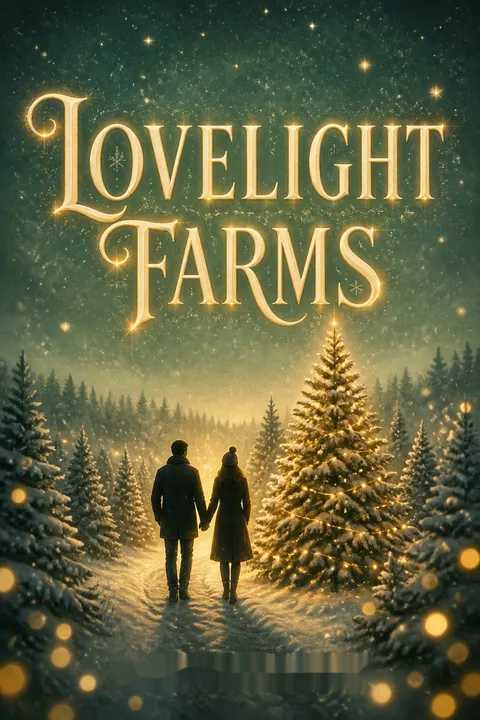

Plot Summary
Dreaming of Holiday Magic
Estelle "Stella" Bloom buys Lovelight Farms, a Christmas tree farm in the small town of Inglewild, hoping to create a magical holiday destination. She dreams of families making memories, couples falling in love, and a place that feels like home. But the reality is far from the Hallmark fantasy: the farm is struggling financially, plagued by bad luck, and Stella is overwhelmed by debt and disappointment. Her optimism is tested as she faces the harsh truth that dreams alone can't save her beloved farm.
Farm in Trouble
Stella's farm is beset by problems: dead trees, missed shipments, and a string of minor disasters. She's barely keeping afloat, hiding the true extent of her financial woes from her friends and employees, Beckett and Layla. The pressure mounts as she realizes she can't fix everything alone. The farm's future is in jeopardy, and Stella is desperate for a solution before she loses everything she's worked for.
The Fake Boyfriend Plan
When Stella learns of a contest run by social media influencer Evelyn St. James—offering a $100,000 prize and massive publicity to the most charming small business—she sees a lifeline. But her application, written in a haze of wine and wishful thinking, claims she co-owns the farm with her boyfriend. Now, with Evelyn coming for an in-person feature, Stella needs a fake boyfriend to sell the story and save the farm.
Luka Steps In
Stella's best friend, Luka Peters, is her obvious choice for the role. Their friendship is deep, comfortable, and full of unspoken longing. Luka, ever supportive, agrees to pretend to be her boyfriend for the week. As he moves in to help, their easy intimacy is put under a magnifying glass, and the lines between real and pretend begin to blur. The town quickly buys into the romance, and Stella and Luka must navigate the charade together.
Small Town, Big Lies
Inglewild is a place where everyone knows everyone's business. As Stella and Luka "go public," the town erupts in support, gossip, and even a betting pool. Their friends and neighbors are delighted, and the ruse becomes more complicated as Stella and Luka must perform their romance not just for Evelyn, but for everyone they know. The act forces them to confront feelings they've both long buried.
Practicing Pretend Love
To make their relationship believable, Stella and Luka practice affection—holding hands, sharing kisses, and spending nights together. What starts as awkward and staged quickly becomes natural, even electric. Both are haunted by what's real and what's not, as old memories and new desires surface. The "practice" becomes a safe space to explore what they've always wanted but never dared to admit.
Tangled Hearts, Real Feelings
As the week unfolds, Stella and Luka's chemistry intensifies. Their physical closeness leads to emotional vulnerability, and both struggle with the fear of losing their friendship if they cross the line. Stella, scarred by abandonment and loss, is terrified to risk the one person who's never left her. Luka, patient and steadfast, tries to show her that some love is worth the leap.
Family, Friends, and Fears
The holiday season brings family drama and old insecurities. Stella's strained relationship with her father and her longing for belonging are contrasted with Luka's warm, chaotic family. Friends Beckett and Layla provide comic relief and tough love, pushing Stella to face her feelings. The farm's found-family dynamic is tested as secrets come to light and loyalties are questioned.
The Contest Arrives
Evelyn St. James arrives, and the farm must shine. Stella, Luka, and their friends pull together to create the holiday magic she's looking for. But the pressure is immense, and the stakes are higher than ever. The fake relationship is scrutinized, and every moment feels like a test. Meanwhile, mysterious sabotage threatens the farm's chances, and Stella's anxiety reaches a breaking point.
Secrets and Sabotage
A string of mishaps—broken cameras, ruined crops, and missing supplies—are revealed to be the work of a jealous local, Mr. Hewett, who wanted the land for his own alpaca farm. The truth comes out after a late-night chase, and the community rallies to support Stella. The crisis forces her to be honest with her friends about the farm's finances and her own vulnerabilities.
Truths Unravel
With the contest underway, Stella's guilt over her fake relationship grows. She confesses the truth to Evelyn, who already knows and disqualifies her from the contest. But Evelyn sees a real story in the love and community at Lovelight Farms. Meanwhile, Stella and Luka's relationship reaches a tipping point: Luka confesses his love, but Stella, afraid, pushes him away, risking everything.
Love, Loss, and Letting Go
Stella is forced to confront her deepest fears—of abandonment, of not being enough, of losing Luka. With the help of her friends, she realizes that love requires honesty and risk. She finally admits her feelings, and in a heartfelt, vulnerable moment, tells Luka she loves him too. Their relationship, once built on pretense, becomes real and unbreakable.
The Real Confession
Stella and Luka come together, not as friends pretending, but as partners choosing each other. They promise to continue—through fear, through change, through everything. The farm, once a symbol of loneliness and struggle, becomes a place of belonging and hope. Their love story, messy and imperfect, is the true magic of Lovelight Farms.
Partners in Everything
With the contest lost but the farm saved by the community's support and the exposure from Evelyn's feature, Stella, Luka, Beckett, and Layla become true partners. They share ownership, responsibility, and dreams for the future. The farm is no longer just Stella's burden, but a shared home for all of them.
Magic in the Snow
The first snow falls, and Stella and Luka share a kiss under the stars, surrounded by the lights and laughter of the farm. Their love, once hidden and denied, is now celebrated. The magic Stella always dreamed of is real—not because of perfect trees or fairy lights, but because of the people she loves and the home they've built together.
The Town Rallies
The people of Inglewild, quirky and meddlesome, prove to be Stella's greatest allies. They forgive her lies, support her through hardship, and celebrate her happiness. Even the saboteur, Mr. Hewett, is given a chance at redemption. The town's spirit is the true heart of Lovelight Farms.
Happily Ever After
Stella and Luka, now openly together, look to the future with hope. The farm is thriving, their friends are family, and love—messy, brave, and real—has found its home. The story ends not with a perfect ending, but with a promise: to continue, to love, and to believe in magic, together.
Analysis
A modern fairy tale about love, vulnerability, and the courage to choose happinessLovelight Farms is more than a holiday romance—it's a story about the messy, brave work of building a life and a home. Through the lens of a fake relationship, the novel explores the fear of abandonment, the longing for belonging, and the risk inherent in loving deeply. Stella's journey is one of self-acceptance: learning that she is worthy of love, not because she is perfect, but because she is real. Luka's steadfast devotion is a model of patient, unconditional love, challenging the idea that romance must be dramatic or grandiose. The book's humor, warmth, and community spirit offer a counterpoint to cynicism, reminding readers that magic is found in everyday acts of care and courage. The ultimate lesson is that love—whether romantic, platonic, or communal—is not about pretending, but about continuing: showing up, telling the truth, and choosing each other, again and again. In a world obsessed with appearances, Lovelight Farms is a celebration of authenticity, second chances, and the quiet, persistent hope that home is something we make together.
Review Summary
Lovelight Farms receives mostly positive reviews, with an average rating of 3.84 out of 5. Readers praise the cozy holiday atmosphere, charming small-town setting, and sweet friends-to-lovers romance between Stella and Luka. Many enjoy the chemistry between the main characters and the festive vibes. Some criticize the slow pacing and predictable plot, while others find the third-act conflict frustrating. Overall, it's considered a heartwarming, if somewhat formulaic, holiday romance that delivers on Christmas spirit and swoony moments.
People Also Read


Characters
Estelle "Stella" Bloom
Stella is the heart of Lovelight Farms—a woman driven by hope, haunted by loss, and desperate to create a place where she belongs. Orphaned young and scarred by abandonment, she pours her energy into the farm, often at the expense of her own well-being. Her greatest fear is losing the people she loves, so she hides her struggles and feelings, even from herself. Stella's journey is one of learning to trust, to ask for help, and to risk her heart. Her relationship with Luka is the axis of her world: he is her best friend, her safe place, and ultimately, her true love.
Luka Peters
Luka is Stella's anchor—loyal, patient, and quietly in love with her for years. A data analyst by trade, he approaches life with logic but loves with his whole heart. Luka is the only person who's never left Stella, and his greatest fear is losing her by pushing too hard. He agrees to the fake boyfriend plan out of love, hoping it will finally give them both the courage to admit the truth. Luka's journey is about vulnerability: letting Stella see his feelings, risking rejection, and choosing to stay, no matter what.
Beckett Porter
Beckett is the farm's head of operations—a man of few words, many tattoos, and a heart of gold. He left a stable job to join Stella's dream, and his loyalty is unwavering. Beckett is uncomfortable with attention but fiercely protective of his friends. His own romantic subplot with Evelyn hints at hidden depths and a longing for connection. Beckett's arc is about partnership: learning to share burdens, accept help, and open up to love.
Layla Dupree
Layla manages the farm's bakehouse, infusing every scene with warmth, humor, and Southern charm. She is Stella's confidante and the voice of tough love, always pushing her to be honest and brave. Layla's own romantic misadventures provide comic relief and contrast to Stella's slow-burn love story. She is the embodiment of found family, always ready with a hug or a slice of pie.
Evelyn St. James
Evelyn is the contest judge whose arrival sets the plot in motion. She is sharp, observant, and more interested in real stories than perfect facades. Evelyn sees through Stella's lie but is drawn to the genuine love and community at the farm. Her presence forces Stella and Luka to confront their feelings and ultimately helps save the farm—not with money, but with truth.
Mr. Hewett
The town librarian and secret antagonist, Mr. Hewett sabotages the farm out of jealousy and regret, wanting the land for his own alpaca farm. His actions cause real harm, but his confession and remorse reveal a man driven by loneliness and lost dreams. His arc is one of forgiveness and the power of second chances.
Sheriff Dane Jones
Dane is the town sheriff and a surrogate father to Stella. He is gruff but deeply caring, always looking out for her and the farm. Dane represents the safety and support of the community, stepping in when things go wrong and offering tough love when needed.
Charlie Milford
Charlie is Stella's half-brother, a source of humor and awkward family dynamics. He is one of the few people who truly sees Stella, supporting her through difficult family gatherings and cheering her on from the sidelines.
Carina Peters
Carina is Luka's Italian mother, a force of nature who welcomes Stella into her family with open arms. She is nurturing, opinionated, and a source of comfort and tradition. Her presence highlights the contrast between Stella's longing for family and the warmth she finds with Luka.
The Town of Inglewild
The town itself is a character—full of busybodies, gossips, and secret matchmakers. Inglewild is both a source of pressure and a wellspring of support, embodying the messy, beautiful reality of community.
Plot Devices
Fake Relationship
The central device is the fake dating trope: Stella and Luka must pretend to be a couple to save the farm. This forces them into close proximity, staged intimacy, and public displays of affection, all of which blur the line between acting and reality. The device is used to explore vulnerability, longing, and the fear of losing a friendship to love. It also provides comic moments and escalating tension as the charade becomes harder to maintain.
Small Town Setting
Inglewild is a classic small town where everyone knows everyone's business. The town's collective investment in Stella and Luka's relationship adds stakes and humor, while also providing a safety net when things go wrong. The setting amplifies the themes of belonging, gossip, and found family.
Sabotage and Mystery
The farm's string of bad luck is revealed to be sabotage by Mr. Hewett, whose own lost dreams parallel Stella's fears. The mystery adds suspense and a sense of urgency, while the resolution underscores the importance of forgiveness and community.
Contest and Deadline
Evelyn's contest provides a clear goal and a deadline, raising the stakes for Stella and the farm. The pressure to perform forces characters to confront their truths and make bold choices. The contest's rules and eventual disqualification highlight the difference between appearances and authenticity.
Found Family
Stella's journey is shaped by the people she chooses as family—Luka, Beckett, Layla, and the town. The theme of found family is woven through every subplot, offering hope and healing in the face of loss and loneliness.
Narrative Structure
The story balances witty banter, physical comedy, and heartfelt confession. The first-person narration immerses the reader in Stella's anxieties and desires, while the supporting cast provides perspective and levity. The structure builds from external conflict (saving the farm) to internal resolution (choosing love).
FAQ
```markdown
Synopsis & Basic Details
What is Lovelight Farms about?
- A Dreamer's Holiday Vision: Lovelight Farms follows Estelle "Stella" Bloom, who pours her heart and life savings into a struggling Christmas tree farm in the quaint town of Inglewild, hoping to create a magical holiday destination and a sense of belonging she's always craved.
- A Desperate Fake Relationship: Facing mounting debts and a string of mysterious misfortunes, Stella applies for a small business contest hosted by a major social media influencer, Evelyn St. James. A white lie on her application—claiming she co-owns the farm with her boyfriend—forces her to enlist her steadfast best friend, Luka Peters, to play the part.
- Love Blooms Amidst Chaos: As Evelyn's visit approaches, Stella and Luka navigate the complexities of their fake relationship, which quickly blurs the lines of their long-standing friendship. Amidst community gossip, farm sabotage, and Stella's deep-seated fears of abandonment, their pretend love story begins to reveal a very real, undeniable connection.
Why should I read Lovelight Farms?
- Heartfelt Exploration of Vulnerability: Readers should dive into Lovelight Farms for its tender portrayal of Stella's journey to overcome deep-seated fears of abandonment and embrace vulnerability, showing that true strength lies in asking for help and risking your heart.
- Charming Small Town Setting: The novel offers a delightful escape into the quirky, supportive, and delightfully meddlesome community of Inglewild, where neighbors become family and everyone is invested in Stella's happiness, providing a warm backdrop to the central romance.
- Slow-Burn Best Friends-to-Lovers: For fans of the best friends-to-lovers trope, Lovelight Farms delivers a masterclass in unspoken longing and simmering chemistry, as Stella and Luka's fake relationship forces them to confront years of buried feelings, culminating in a deeply satisfying emotional payoff.
What is the background of Lovelight Farms?
- A Legacy of Wanderlust: Stella's background is defined by constant movement with her mother, chasing temporary jobs and never truly planting roots. This history fuels her deep desire for a permanent home and a place to belong, making Lovelight Farms more than just a business—it's a personal quest for stability.
- Inglewild's Quirky Charm: The town of Inglewild, once ambitiously branded "Little Florence," provides a unique cultural backdrop. Its small-town intimacy means everyone knows everyone's business, leading to both humorous gossip (like the town betting pool on Stella and Luka) and unwavering community support, shaping the narrative's external pressures and internal comforts.
- The Weight of Unspoken Grief: Stella's mother's death from cancer, occurring just before Luka entered her life, is a foundational trauma. This loss, coupled with her father's abandonment, explains Stella's reluctance to fully commit and her fear of losing those she loves, deeply influencing her psychological complexities and motivations throughout the story.
What are the most memorable quotes in Lovelight Farms?
- "Christmas Eve will find me Where the love-light gleams. I'll be home for Christmas If only in my dreams.": This opening epigraph sets a poignant, hopeful tone, foreshadowing Stella's longing for a magical, loving home and the dream-like quality of her initial vision for Lovelight Farms. It encapsulates the core theme of seeking belonging and warmth during the holidays.
- "Just because you let yourself love someone, doesn't mean they're going to leave.": Layla's profound advice to Stella cuts to the heart of Stella's deepest fear of abandonment, serving as a pivotal moment that challenges Stella's self-protective instincts and encourages her to embrace vulnerability. This quote is central to Stella's emotional growth and the themes in Lovelight Farms regarding trust.
- "No matter where you go, you will always end up at home.": Carina Peters, Luka's mother, shares this Italian proverb, which Luka translates, encapsulating the novel's powerful found family theme and Stella's journey to find her true home not just in a place, but in the people who love her. It signifies the culmination of Stella's search for belonging.
What writing style, narrative choices, and literary techniques does B.K. Borison use?
- First-Person Intimate Narration: Borison employs a first-person perspective from Stella's point of view, immersing readers directly into her anxieties, internal monologues, and emotional turmoil. This choice allows for deep psychological insight into Stella's fears and desires, making her journey of self-discovery particularly resonant.
- Balancing Humor and Heartbreak: The narrative skillfully weaves witty banter, physical comedy (like Stella's clumsy attempts at kissing or Beckett's mud wrestling), and moments of profound vulnerability. This tonal balance prevents the story from becoming overly saccharine or melodramatic, enhancing the emotional impact of Stella's breakthroughs.
- Symbolism and Foreshadowing: Borison subtly uses recurring motifs, such as the pine tree air fresheners Luka leaves for Stella, the twisted trees in the south pasture, and the recurring theme of "continuing" from Luka's father. These elements serve as symbolism in Lovelight Farms, foreshadowing character development and reinforcing central themes of growth, resilience, and enduring love.
Hidden Details & Subtle Connections
What are some minor details that add significant meaning?
- Pine Tree Air Fresheners as Love Tokens: Stella's collection of pine tree air fresheners, "a single pine tree for every time Luka has been home," subtly symbolizes Luka's consistent presence in her life and Stella's quiet hoarding of these small, meaningful gestures. This detail highlights Luka's steadfast devotion and Stella's deep, often unacknowledged, emotional attachment to him, even before their fake relationship.
- The "Little Florence" Branding Failure: The town's failed attempt to brand itself "Little Florence" is a subtle nod to the contrast between idealized visions and grounded reality, mirroring Stella's initial romanticized view of Lovelight Farms versus its challenging reality. It also subtly connects to Luka's Italian heritage and his mother's longing for Italy, adding a layer of intertextual irony.
- Luka's Dad's "Continue" Advice: Luka's fragmented memory of his father's advice, "When that happens, you continue," becomes a profound thematic anchor, especially in the epilogue. This seemingly throwaway line from his past guides Luka's patient approach to life and love, ultimately becoming the philosophy for his and Stella's enduring relationship, emphasizing resilience and commitment.
What are some subtle foreshadowing and callbacks?
- Mr. Hewett's Thoreau Quote: When Stella first bumps into Mr. Hewett, he recites, "'It is better to have your head in the clouds, and know where you are, than to breathe the clearer atmosphere below them, and think you are in paradise.'" This quote subtly foreshadows his own "head in the clouds" dream of an alpaca farm and his misguided actions, contrasting with Stella's eventual grounded understanding of her farm's reality.
- The "Nuclear Wasteland Christmas": Layla's early description of the farm as a "nuclear wasteland Christmas" after Hank's neglect serves as a callback to the farm's initial state, emphasizing Stella's transformative efforts. It highlights the immense work Stella put in, making the eventual community rally and Evelyn's praise ("North Pole had a love child with Hogwarts") even more impactful.
- Luka's "Long Game" Strategy: Luka's internal monologue in the epilogue reveals his "general wear down" plan for Stella, a "long game" of consistent presence and small gestures. This subtly foreshadows his patient approach throughout the book, explaining why he never pushed Stella, and validates his quiet acts of love that Stella initially overlooked, reinforcing his Luka motivations.
What are some unexpected character connections?
- Beckett and Evelyn's Past Encounter: The revelation that Beckett and Evelyn had a "three-time thing" at a Maine conference is an unexpected twist, adding a layer of personal history and awkwardness to Evelyn's visit. This connection not only provides comic relief but also humanizes Evelyn, showing her vulnerability and challenging Stella's initial perception of the influencer.
- Sheriff Dane Jones's Crush on Matty: The gruff Sheriff Dane Jones's secret crush on Matty, the pizza shop owner, is a charming and unexpected subplot. It reveals a softer, more vulnerable side to the protective father figure, mirroring Stella's own journey of opening up to love and highlighting the pervasive theme of romance in Inglewild, even for its most stoic residents.
- Mr. Hewett's Alpaca Dream: The antagonist, Mr. Hewett, is revealed to be driven by a lifelong dream of an alpaca farm, a surprisingly whimsical motivation for his sabotage. This unexpected detail connects him to Stella's own dream-driven nature, creating a parallel between their aspirations and underscoring the novel's theme that even seemingly villainous characters can be motivated by a longing for something special.
Who are the most significant supporting characters?
- Layla Dupree, the Emotional Catalyst: Layla is more than just Stella's baker; she's her emotional compass and truth-teller. Her direct questions ("You have feelings for him, Stella.") and unwavering belief in Stella's capacity for love ("Just because you let yourself love someone, doesn't mean they're going to leave.") are crucial in pushing Stella to confront her feelings for Luka.
- Beckett Porter, the Steadfast Protector: Beckett, the gruff head farmer, embodies unwavering loyalty and quiet support. His willingness to take a pay cut, his fierce protection of Stella (even chasing a saboteur), and his unexpected vulnerability with Evelyn highlight his role as a foundational pillar of Stella's found family and the farm's success.
- Carina Peters, the Matriarchal Anchor: Luka's mother, Carina, provides a warm, chaotic, and deeply loving contrast to Stella's own fractured family history. Her immediate acceptance of Stella as "family" and her subtle wisdom ("Speaking of them keeps their memory alive") offer Stella a glimpse of the belonging she craves, influencing her decision to embrace Luka's family and, eventually, Luka himself.
Psychological, Emotional, & Relational Analysis
What are some unspoken motivations of the characters?
- Stella's Self-Sabotage for Self-Preservation: Stella's deepest unspoken motivation is to protect herself from the pain of abandonment, stemming from her father's absence and her mother's death. This manifests as a reluctance to fully commit to Luka, a fear of acknowledging her true feelings, and a tendency to shoulder burdens alone, believing that if she doesn't rely on others, they can't leave her. Her Stella motivations are rooted in this trauma.
- Luka's Patient, Persistent Love: Luka's unspoken motivation is a long-held, quiet love for Stella, coupled with a profound understanding of her fears. He agrees to the fake relationship not just to help the farm, but as a calculated "long game" to show Stella his unwavering presence and give her a safe space to explore her feelings without pressure, hoping she'll eventually see him as more than just a friend.
- Mr. Hewett's Lonely Longing: Mr. Hewett's sabotage, while destructive, is driven by an unspoken longing for his own dream—an alpaca farm—and a sense of injustice. His actions are a desperate, misguided attempt to reclaim a dream he felt was stolen, revealing a deep-seated loneliness and a desire for purpose that mirrors, in a twisted way, Stella's own aspirations for the farm.
What psychological complexities do the characters exhibit?
- Stella's Avoidant Attachment Style: Stella exhibits classic traits of an avoidant attachment style, stemming from early childhood abandonment and loss. She struggles with intimacy, compartmentalizes her emotions (the "Luka box"), and fears vulnerability, often pushing away those who get too close. Her journey is about learning to trust and allow herself to be truly seen and supported.
- Luka's Empathetic Patience and Hidden Vulnerability: Luka, while outwardly logical and steadfast, carries his own complexities. His deep empathy for Stella's past makes him incredibly patient, but he also hides his own vulnerability and fear of rejection, evident in his "long game" approach and his initial hesitation to confess his love. His Luka motivations are a blend of logic and profound emotional intelligence.
- Beckett's Stoic Sensitivity: Beneath Beckett's gruff exterior and aversion to social interaction lies a deeply sensitive and loyal individual. His discomfort with expressing emotions, coupled with his fierce protectiveness of Stella and his unexpected romantic past with Evelyn, reveals a complex character who struggles to reconcile his internal tenderness with his outward stoicism.
What are the major emotional turning points?
- Stella's Confession to Layla: A significant emotional turning point occurs when Stella finally admits to Layla that she has "big feelings for Luka," even if she immediately tries to rationalize them. This moment marks the first crack in Stella's carefully constructed emotional defenses, signaling her growing awareness of her true desires and the inadequacy of her "friend zone" strategy.
- Luka's Thanksgiving Revelation: Luka's insistence on accompanying Stella to her father's "forced, fake Thanksgiving" is a turning point, as he confronts Stella's unspoken loneliness and her need for family. His anger at her self-imposed isolation ("Why haven't you been spending Thanksgiving with me and my mom?") forces Stella to acknowledge her longing for belonging and accept his unwavering support.
- The "Causal Analysis" Conversation: The playful yet deeply intimate "causal analysis" conversation on the couch, where Luka uses scientific terms to describe their escalating physical and emotional connection, is a major turning point. It allows Stella to explore her desire for Luka in a "safe" intellectual framework, leading to their first truly passionate encounter and shattering her illusion that their connection is merely platonic.
How do relationship dynamics evolve?
- Stella and Luka: From Platonic to Passionate Partnership: Their relationship evolves from a deeply comfortable, almost familial friendship into a passionate, committed partnership. The fake relationship acts as a catalyst, forcing them to confront years of unspoken feelings, culminating in Luka's confession of love and Stella's brave acceptance, transforming their bond into a real, enduring romance.
- Stella and Her Found Family: From Burden to Shared Strength: Stella's dynamic with Beckett and Layla shifts from her carrying the farm's burdens alone to embracing them as true partners. Her confession about the farm's financial struggles, and their subsequent decision to share ownership and responsibility, solidifies their found family bond, demonstrating that shared vulnerability strengthens relationships.
- Stella and Her Father: From Obligation to Self-Respect: Stella's relationship with her father, Brian Milford, evolves from a painful obligation to one where Stella asserts her self-worth. Luka's presence at the awkward Thanksgiving and Stella's growing confidence allow her to see her father's shortcomings more clearly, leading to a healthier detachment and a greater appreciation for the family she chooses.
Interpretation & Debate
Which parts of the story remain ambiguous or open-ended?
- The Future of Mr. Hewett's Alpaca Dream: While Mr. Hewett faces legal and financial consequences, the story leaves the ultimate fate of his alpaca farm dream ambiguous. Readers might debate whether he will ever achieve it, or if his experience at Lovelight Farms will lead him to a different, more ethical path, highlighting the theme of second chances and personal growth.
- The Long-Term Impact of Evelyn's Feature: While Evelyn's feature significantly boosts Lovelight Farms' visibility, the exact long-term financial stability of the farm, beyond the immediate influx of customers, remains somewhat open-ended. The narrative focuses more on the emotional and communal success, leaving the precise business trajectory to the reader's imagination.
- The Nuances of Luka's "Long Game": While the epilogue confirms Luka's "long game" strategy, the extent to which he consciously manipulated the fake relationship to achieve his romantic goals could be debated. Was he truly just waiting for Stella, or did he subtly orchestrate situations to push her towards him? This adds a layer of complexity to his otherwise patient and devoted character.
What are some debatable, controversial scenes or moments in Lovelight Farms?
- Stella's Prolonged Deception to Her Friends: Stella's decision to hide the farm's dire financial situation from Beckett and Layla, her closest friends and business partners, is a debatable moment. While motivated by fear of abandonment and a desire to protect them, it raises questions about trust and the ethics of withholding crucial information from those who have invested their lives in her dream.
- The Ethics of the "Fake Relationship" for the Contest: The central premise of the fake relationship for the contest is inherently debatable. Stella's lie to Evelyn St. James, and the subsequent disqualification, forces readers to consider the line between ambition and integrity, and whether the ends (saving the farm) justify the means (deception).
- Luka's Initial Reaction to Stella's Confession of Love: When Stella finally confesses her love, Luka's immediate, almost angry response ("Fucking finally.") and his subsequent temporary departure could be seen as controversial. While understandable given his years of suppressed feelings and Stella's earlier denial, some readers might debate if his reaction was overly harsh or if it momentarily undermined the vulnerability of Stella's confession.
Lovelight Farms Ending Explained: How It Ends & What It Means
- Love's Triumph Over Fear: The Lovelight Farms ending explained culminates in Stella finally overcoming her deep-seated fears of abandonment and vulnerability, confessing her love for Luka. This signifies her emotional breakthrough, choosing to risk her heart for a real, enduring relationship rather than clinging to the safety of friendship, embodying the novel's core theme of courage in love.
- Found Family as the True Prize: Despite being disqualified from Evelyn's contest, the farm is saved by the community's unwavering support and the exposure from Evelyn's feature. This highlights that the true "prize" is not the money, but the found family Stella has cultivated with
Lovelight Series
About the Author



Download PDF
Download EPUB
.epub digital book format is ideal for reading ebooks on phones, tablets, and e-readers.








































