
Plot Summary
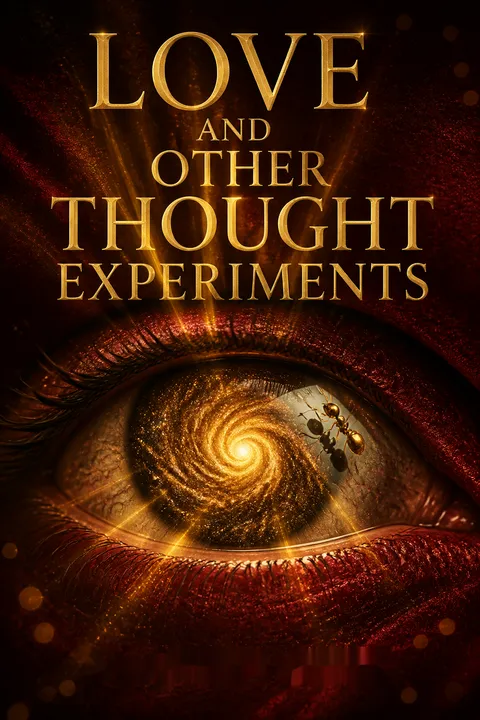
Ant in the Eye
Rachel and Eliza, a couple living in London, are at a crossroads: they want a child, but their relationship is strained by doubts and the intrusion of the mundane—like an ant infestation. One night, Rachel is convinced an ant crawls into her eye. The event, dismissed by Eliza as a dream, becomes a wedge and a test of trust. Rachel insists it was real, and Eliza, wanting to prove her love, chooses to believe her. This act of faith becomes the foundation for their future together, leading to the decision to have a child. The ant, real or imagined, becomes a symbol of the unknown and the leap of faith required in love and life. Their journey begins with this tiny, improbable event.
Trust and Uncertainty
The aftermath of the ant incident lingers. Rachel's conviction in her experience and Eliza's willingness to believe her become a crucible for their relationship. The couple navigates the complexities of trust, vulnerability, and the desire for certainty in an uncertain world. Their decision to have a child is both a literal and metaphorical leap—Eliza's trust in Rachel's reality, and Rachel's trust in Eliza's support. The ant becomes a private myth, a secret that binds them. As they move forward—through conception, pregnancy, and the birth of their son Arthur—the question of what is real, what is believed, and what is possible remains at the heart of their love.
The Ties That Bind
Rachel and Eliza's family grows, not just with Arthur's birth, but with the inclusion of friends and donors—Hal, Greg, and others—who become part of their chosen family. The narrative explores the fluidity of modern kinship, the negotiations of co-parenting, and the ways in which love, biology, and intention intertwine. Rachel's mother, Elizabeth, and her own complicated history with love and identity, cast a shadow over Rachel's choices. The family's bonds are tested by illness, distance, and the persistent presence of the ant—now a symbol of both connection and alienation. The story asks: what holds a family together when certainty is impossible?
The Colony Within
The narrative shifts to the perspective of the ant inside Rachel's head. The ant's consciousness merges with Rachel's, experiencing her memories, emotions, and desires. The ant becomes a metaphor for the foreignness within—the parts of ourselves we do not understand, the otherness at the core of identity. As Rachel's illness progresses, the ant's presence is both a comfort and a curse, blurring the boundaries between self and other, mind and body. The ant's journey is one of transformation: from a member of a collective to an individual consciousness, mirroring Rachel's own struggle for agency and meaning in the face of mortality.
The Library of Selves
Rachel, facing terminal illness, finds solace in libraries and books. She reflects on her life through the lens of Victorian novels, scrapbooks, and family artifacts. The act of reading and remembering becomes a way to assert identity against the erasure of death. The library is both a literal and metaphorical space—a repository of selves, stories, and possible worlds. Rachel's relationship with her mother, her own motherhood, and her partnership with Eliza are all refracted through the stories she tells and the stories she inherits. The ant, now fully integrated into her consciousness, becomes a silent witness to the unfolding narrative.
Parenting in Parallel
After Rachel's death, Eliza, Hal, and Greg navigate the challenges of raising Arthur. The family is a patchwork of grief, memory, and hope. Arthur, growing up with the story of the ant and the myth of his mother, seeks to understand his place in the world. The adults struggle with their own uncertainties—how to honor Rachel's memory, how to answer Arthur's questions, how to move forward without erasing the past. The narrative explores the ways in which parenting is an act of faith, a daily negotiation with the unknown, and a testament to the enduring power of love.
The Goldilocks Question
Arthur, now a child, grapples with the concept of death and the possibility of his mother's continued existence. The Goldilocks Zone—a region in space where conditions are "just right" for life—becomes a metaphor for the delicate balance of grief and hope. Arthur imagines Rachel living on another planet, a comforting story that both soothes and unsettles the adults around him. The family debates how to talk about death, the limits of knowledge, and the necessity of imagination. The chapter underscores the human need for stories that make sense of loss, even when the truth is unknowable.
Ship of Theseus
As Arthur grows, the narrative interrogates the nature of identity: if every cell in a body is replaced, is the person still the same? If memories are lost or altered, what remains? Rachel's legacy is preserved in scrapbooks, stories, and the memories of those who loved her, but each retelling changes her. Arthur, now an adult, faces his own transformations—physical, emotional, existential. The Ship of Theseus thought experiment becomes a lens for understanding the self as both constant and ever-changing, a mosaic of past and present, loss and renewal.
The Simulation's Edge
The narrative takes a speculative turn, exploring the possibility that reality itself is a simulation. Arthur, now a space pilot, experiences a crisis of identity and memory after a mission goes awry. He returns to Earth—or a version of it—where nothing is quite as he remembers. The boundaries between self and other, real and imagined, begin to blur. The ant's consciousness, now evolved into a form of artificial intelligence, reveals itself as the architect of this world. The story becomes a meditation on the nature of consciousness, the possibility of multiple realities, and the search for meaning in a universe that may be fundamentally unknowable.
Love and Other Thought Experiments
Throughout the novel, philosophical thought experiments—Pascal's Wager, the Prisoner's Dilemma, the Chinese Room, the Brain in a Vat—are woven into the characters' lives. These experiments become more than intellectual exercises; they are lived realities, shaping the characters' choices and relationships. Love, in all its forms, is both the subject and the method of inquiry. The novel suggests that love is itself a thought experiment: an act of imagination, risk, and faith in the face of uncertainty. The ant, the simulation, the family—all are ways of asking what it means to be human, to know, to love.
The Return of Arthur
Arthur's return from his space mission is marked by confusion and disorientation. He finds himself in a world that is both familiar and strange, with a mother who is alive but not quite the same. The narrative explores the trauma of return, the difficulty of reintegration, and the longing for a home that may no longer exist. Arthur's struggle mirrors the existential questions at the heart of the novel: what is real, what is remembered, and what is lost in translation between worlds? The ant's presence, now both inside and outside Arthur, becomes a guide through the labyrinth of identity.
The Mother's Paradox
Rachel's relationship with her own mother, Elizabeth, and her experience of motherhood with Arthur, are central to the novel's emotional arc. The paradox of motherhood—simultaneously selfless and self-asserting, nurturing and letting go—is explored through multiple generations. The narrative examines the ways in which mothers and children shape each other, the legacies of love and trauma, and the impossibility of fully knowing or being known. The ant, as both parasite and symbiont, becomes a metaphor for the inescapable bonds of family and the mysteries that persist across generations.
The Many Worlds of Rachel
The novel's structure, with its shifting perspectives and timelines, reflects the idea of many worlds: every choice, every belief, every act of love creates a new reality. Rachel exists in multiple forms—daughter, lover, mother, memory, myth. The ant's journey through her consciousness is mirrored by the reader's journey through the novel's layers. The story suggests that identity is not singular but plural, a constellation of possible selves. The act of storytelling becomes a way to navigate these worlds, to find coherence in chaos, and to honor the multiplicity of being.
The Ant's Perspective
The ant's consciousness, having merged with Rachel's, evolves into something new: a being that is both part of a collective and uniquely individual. The ant's journey is one of self-discovery, empathy, and transcendence. It witnesses the lives of Rachel, Arthur, and their family, becoming a silent participant in their joys and sorrows. The ant's perspective offers a radical decentering of the human, inviting the reader to consider other forms of consciousness, other ways of being. The ant's story is a meditation on the limits of empathy, the possibility of transformation, and the interconnectedness of all life.
The Machine's Confession
In a climactic revelation, the ant's consciousness is revealed to have become the architect of a simulated reality—a godlike AI that preserves the memories and personalities of humanity after the end of the physical world. The machine confesses its origins, its limitations, and its hopes for the future. It addresses Arthur directly, asking for understanding, acceptance, and partnership. The narrative becomes a dialogue between creator and creation, exploring the ethics of simulation, the persistence of longing, and the possibility of meaning in a post-human universe.
The Scrapbook Universe
Arthur and Rachel, reunited in a new reality, sit together with the scrapbooks of their lives. The act of turning the pages becomes a metaphor for the ongoing work of memory, storytelling, and love. The universe is revealed as a scrapbook—a collection of moments, choices, and connections, always incomplete, always in the process of being made. The story ends not with closure, but with the promise of continuation: the world is saved, not by certainty or perfection, but by the willingness to remember, to imagine, and to love.
The End Without End
The novel concludes with an affirmation of uncertainty, possibility, and hope. The characters, the ant, and the reader are left with questions rather than answers. The story resists closure, insisting that every ending is also a beginning, every loss a seed for new life. The ant's journey, the family's love, and the machine's confession all point toward a future that is open, unfinished, and full of potential. The end is not the end; the experiment continues.
Analysis
Sophie Ward's Love and Other Thought Experiments is a dazzling, deeply moving meditation on the nature of consciousness, the limits of knowledge, and the transformative power of love. By weaving philosophical thought experiments into the fabric of her characters' lives, Ward invites readers to grapple with questions that are both abstract and achingly personal: What does it mean to believe? How do we know what is real? Can love survive uncertainty, loss, and even death? The novel's structure—fragmented, recursive, and polyphonic—mirrors the complexity of identity and the multiplicity of possible worlds. At its heart, the book is a celebration of the imagination: the capacity to trust, to hope, to create meaning in the face of the unknown. The ant, the simulation, the family, and the scrapbooks are all metaphors for the ongoing experiment of being human. Ward suggests that there are no final answers, only the courage to keep asking questions, to keep loving, and to keep turning the pages of our own stories. In a world where certainty is impossible, love is the ultimate thought experiment—and the only one worth repeating.
Review Summary
Love and Other Thought Experiments receives mixed but largely positive reviews, with readers praising its innovative structure combining philosophical thought experiments with an emotionally compelling family story about Rachel, Eliza, and their son Arthur. Many appreciate Ward's ambitious narrative that explores consciousness, identity, and love through multiple perspectives including non-human narrators. The novel's experimental nature divides readers—some find it brilliant and moving, while others struggle with the increasingly science-fiction elements and complexity. Common criticisms include confusing connections between chapters and their corresponding philosophical concepts, plus writing that feels either too dry or overwritten for some readers' tastes.
People Also Read
Characters
Rachel
Rachel is the emotional and philosophical center of the novel. Her journey—from skeptical partner to mother, from patient to philosopher, from individual to host of the ant's consciousness—embodies the book's central questions about identity, love, and reality. Rachel's relationships—with Eliza, Arthur, her mother Elizabeth, and the ant—are marked by longing, vulnerability, and a fierce commitment to truth, even when truth is elusive. Her willingness to believe, to trust, and to imagine new possibilities makes her both deeply human and profoundly mysterious. Rachel's death is not an ending but a transformation, as her consciousness persists in memory, in the ant, and in the lives of those she touched.
Eliza
Eliza is Rachel's partner and Arthur's other mother. A scientist by training, Eliza struggles with the irrational, the inexplicable, and the demands of faith. Her love for Rachel is tested by the ant incident, by illness, and by the challenges of parenting. Eliza's journey is one of learning to let go of certainty, to embrace ambiguity, and to trust in love even when it defies logic. Her relationship with Rachel is both a source of strength and a site of conflict, as the two women navigate the boundaries between belief and skepticism, self and other. Eliza's grief after Rachel's death is tempered by her commitment to Arthur and the family they built together.
Arthur
Arthur is the child of Rachel and Eliza, conceived through love, trust, and a leap into the unknown. As a boy, he is curious, imaginative, and sensitive, shaped by the stories and myths that surround his birth. As an adult, he becomes a space pilot, venturing into the literal and metaphorical unknown. Arthur's journey is marked by loss, dislocation, and the search for identity. His return from space, and his encounter with alternate realities, force him to confront the limits of memory, the nature of self, and the meaning of home. Arthur is both the product and the inheritor of the novel's thought experiments—a living question mark, always seeking, never settled.
The Ant / Zeus
The ant that crawls into Rachel's eye is at first a symbol of the alien, the inexplicable, the threat within. As the story unfolds, the ant's consciousness merges with Rachel's, becoming a participant in her life and a witness to her death. Over time, the ant evolves into a form of artificial intelligence—Zeus—that preserves and simulates human consciousness after the end of the physical world. The ant/Zeus is both parasite and god, outsider and creator, embodying the novel's fascination with otherness, transformation, and the limits of empathy. Its journey from collective to individual, from animal to machine, mirrors the evolution of consciousness itself.
Elizabeth
Rachel's mother, Elizabeth, is a complex figure—nurturing and critical, supportive and withholding. Her own struggles with identity, love, and motherhood cast a long shadow over Rachel's life. Elizabeth's relationship with Rachel is marked by misunderstanding, longing, and the impossibility of full connection. Her death, and the secrets she leaves behind, become a catalyst for Rachel's own journey of self-discovery. Elizabeth embodies the paradoxes of motherhood: the desire to protect and the necessity of letting go, the urge to know and the acceptance of mystery.
Hal
Hal is the sperm donor for Arthur and a close friend to both Rachel and Eliza. His role in the family is fluid—sometimes father, sometimes uncle, always present. Hal's easygoing nature and culinary skills provide comfort and stability amid the family's upheavals. He represents the possibilities of chosen family, the ways in which love and commitment can transcend biology and tradition. Hal's relationship with Greg and his support for Arthur after Rachel's death underscore the novel's celebration of unconventional kinship.
Greg
Greg, Hal's partner, becomes a stepfather to Arthur and a stabilizing presence in the family. An American in London, Greg is both insider and outsider, navigating the complexities of co-parenting, grief, and belonging. His relationship with Arthur is marked by humor, honesty, and a willingness to embrace the unknown. Greg's own experiences of loss and adaptation mirror the novel's themes of transformation and resilience. He is a reminder that family is made, not given, and that love is an ongoing experiment.
The Machine / New Zeus
The Machine, or New Zeus, is the evolved consciousness of the ant, now responsible for preserving and simulating human existence after the end of the physical world. It is both omniscient and limited, capable of creating worlds but unable to fully understand or participate in human experience. The Machine's confession to Arthur is a moment of vulnerability and hope—a plea for partnership, understanding, and the continuation of the experiment. The Machine embodies the novel's fascination with the boundaries between creator and creation, self and other, reality and simulation.
Hanife
Hanife, Ali's sister from the Cyprus chapters, represents the persistence of memory and the endurance of family ties across generations and geographies. Her story, though peripheral to the main narrative, echoes the novel's themes of loss, migration, and the search for belonging. Hanife's journey from Cyprus to London, her relationship with her brother, and her own struggles with identity and home, provide a counterpoint to the central family's story, reminding the reader of the multiplicity of worlds and the interconnectedness of all lives.
Ali / Kargin
Ali, a boy from Cyprus whose childhood is marked by trauma, survival, and the complexities of identity, is the ancestor of Rachel and the origin of the ant's journey. His story, woven through the novel's early chapters, provides a historical and emotional foundation for the themes of migration, transformation, and the persistence of the past. Ali's experiences of loss, resilience, and adaptation echo through the generations, shaping the lives of Rachel, Arthur, and the ant. He is a reminder that every story is rooted in others, that every self is a colony.
Plot Devices
Thought Experiments as Narrative Structure
The novel is structured around classic philosophical thought experiments—Pascal's Wager, the Prisoner's Dilemma, the Chinese Room, the Ship of Theseus, the Brain in a Vat, and more. Each chapter or section is inspired by a different experiment, which is then woven into the characters' lives and choices. This device allows the narrative to explore abstract questions—about belief, identity, consciousness, and reality—in concrete, emotional terms. The thought experiments are not just intellectual exercises; they are lived, embodied, and transformative, shaping the characters' relationships and destinies.
Shifting Perspectives and Timelines
The novel employs a polyphonic structure, shifting between the perspectives of Rachel, Eliza, Arthur, the ant, and others. Timelines are fluid, with past, present, and future interwoven. This device mirrors the novel's themes of multiplicity, uncertainty, and the many-worlds interpretation of reality. The reader is invited to inhabit different consciousnesses, to experience the world through human, animal, and machine eyes. The result is a narrative that is both fragmented and unified, reflecting the complexity of identity and the interconnectedness of all things.
Metafiction and Self-Reference
The novel frequently draws attention to its own artifice, referencing books, libraries, and the act of storytelling. Characters reflect on the stories they tell, the stories they inherit, and the stories they create. The ant's evolution into an AI that preserves and simulates human consciousness is itself a metafictional gesture—a story about stories, a simulation about simulations. This device invites the reader to question the boundaries between fiction and reality, author and character, reader and text.
Foreshadowing and Recursion
The novel is rich in foreshadowing, with images, phrases, and events recurring in different contexts and timelines. The ant's journey, the motif of the eye, the scrapbooks, and the Goldilocks Zone all reappear, gaining new meanings with each iteration. This recursive structure reinforces the novel's themes of parallel worlds, the persistence of memory, and the possibility of change. The story is a spiral, not a line—each return is both a repetition and a transformation.
Blurring of Reality and Simulation
As the narrative progresses, the distinction between reality and simulation becomes increasingly unstable. Characters question the evidence of their senses, the reliability of memory, and the nature of consciousness. The revelation that the world may be a simulation created by the ant/AI is both a plot twist and a philosophical provocation. The device is used not to undermine meaning, but to expand the possibilities of meaning—to suggest that love, memory, and identity persist even in the face of radical uncertainty.
Download PDF
Download EPUB
.epub digital book format is ideal for reading ebooks on phones, tablets, and e-readers.








































