



Plot Summary
Prologue
Devon1 reflects on how Maddox Kane2 transformed his life. For years, Maddox2 was his fiercest rival, the one person who matched his energy, pushed every button, and met every challenge with equal force. Their hate-filled feud morphed into something unrecognizable: a relationship built on aggression, tension, and a love neither saw coming.
Moving in together on Lot 62 was its own battlefield. They fought constantly, bruised each other regularly, and somehow figured out how to mesh their volatile personalities into one hot-box of a trailer. Devon1 came to understand that Maddox2 lifted him up as much as he beat him down.
Their love story started bloody the day after Maddox2 made him bleed in a fistfight, then helped heal wounds Devon's father5 inflicted. Even a year later, they still made each other bleed, but the fire behind it had changed. Devon1 knew, with absolute certainty, that Maddox2 was it for him.
Devon's framing of their relationship as a fairytale is deliberately ironic and self-aware. He acknowledges that their dynamic would look like dysfunction to outsiders: the violence, the competition, the inability to express tenderness without aggression. But his narration reveals a deeper truth about trauma-bonded love. Both men came from homes where love was either absent or weaponized. They learned to communicate through physicality because words were unreliable. The prologue establishes the central tension of the entire book: can two people who only know how to fight learn how to build something that lasts? Devon's voice is raw, unpolished, and brutally honest, a perfect introduction to a romance that rejects conventional notions of healthy relationships while still craving the stability and permanence those relationships promise.
Neglect Wears a Hard Hat
Devon1 co-owns a boat repair shop with his brother Nate3 and their friend Xavi,4 and the business has exploded beyond their expectations. He stays late night after night, losing track of time, forgetting to come home to the trailer on Lot 62 where Maddox2 waits. Maddox,2 now working construction, shows up at the shop one morning to express his frustration in the only way that gets Devon's1 attention: a spite-fueled sexual encounter behind the reception desk.
But the pattern continues. Devon1 promises to be home, then breaks those promises. Maddox2 sits alone, feeling like a needy fool, wondering if Devon1 has simply stopped loving him. The distance between them grows wider with each missed dinner and unanswered text.
This section dramatizes a quietly devastating relationship crisis: not a dramatic betrayal but the slow erosion of connection through neglect. Devon's trauma response is illuminating. Having grown up with a father who provided nothing, he overcorrects by trying to provide everything, conflating financial security with emotional safety. He cannot see that in his desperate attempt not to become his father, he is replicating his father's emotional absence. Maddox, meanwhile, has never learned to articulate need without shame. His frustration manifests as anger because vulnerability has been punished his entire life. The tragic irony is that both men love each other desperately but have no models for how to sustain love while surviving under the weight of poverty and inherited dysfunction.
One Night Out, One Night Gone
On a Friday night, Devon1 again fails to come home. Maddox,2 sick of sitting alone, accepts an invitation from coworkers to a tractor pull in Shelton. His phone dies; he sends a text from a borrowed phone that Devon1 dismisses as a wrong number. When Maddox2 finally walks in at 1:30am, Devon1 erupts with accusations, jealousy, and fear.
Maddox,2 exhausted and hurt, points out the hypocrisy: for once, Devon1 had to sit and wonder where his partner was. He leaves to stay at his mother's7 trailer, telling Devon1 not to follow. Devon1 collapses on the floor of Lot 62, hyperventilating, and Nate3 finds him there hours later, talking him through a panic attack and forcing him to confront the truth: he has been failing the person he claims to love most.
The tractor pull incident functions as a crucible: Devon must experience the abandonment he has been inflicting. His immediate spiral, complete with physical panic symptoms, reveals the depth of his attachment and the fragility of his self-worth. He cannot tolerate being the one left behind because it triggers his core wound: the fear that he is fundamentally unlovable and deserves to be discarded. The scene also exposes the power imbalance that had developed. Maddox had been the one waiting, the one accommodating, the one absorbing hurt silently. By finally leaving, even temporarily, he forces a renegotiation of their dynamic. Nate's intervention as the voice of reason highlights how isolation compounds dysfunction; without outside perspective, these two would destroy each other.
The Beach Fight Reckoning
After three miserable days apart, Devon1 comes to Maddox2 at his mother's7 trailer. They fall into bed but agree they need to actually talk. Their chosen venue for conversation is the beach behind Lot 62, where they strip to their boxers and fight. Maddox2 admits he feared Devon1 wanted out of the relationship, that he felt unloved and invisible.
Devon1 confesses he was trying to earn enough money to provide for Maddox,2 to repay him for all the times Maddox2 saved his life, and in the process he neglected the very person he was trying to protect. They wrestle in the sand until the truth exhausts them both. Maddox2 says he does not need providing for; he just needs Devon1 to come home. Devon1 promises to do better.
The beach fight is the book's thesis statement on how these two men communicate. They cannot access vulnerability through words alone; they need the physical container of combat to hold their emotions safely. Fighting creates a structured intimacy where aggression is permitted, control can be surrendered and reclaimed, and truth emerges through exhaustion rather than confession. This is not performative masculinity but a learned survival strategy. Both grew up in environments where softness was punished and strength was currency. By building their relationship's foundation on mutual challenge rather than mutual comfort, they have created a language that works for them, even if it looks broken to outsiders. The tragedy is that life's demands (work, money, survival) threatened to strip away even this hard-won communication method.
Jim Sawyer's Shadow Returns
Devon's father Jim,5 recently released from prison, begins circling. He appears at the shop asking for amends, then corners Devon1 at an abandoned playground with a deal: steal certain shipping documents from Gary10 the park manager's office, and Jim5 will disappear forever, leaving Devon,1 Nate,3 and Maddox2 alone. Jim5 also makes a veiled threat against Maddox.2
Devon1 agrees, but secretly plans to set his father5 up. He will earn Jim's5 trust, learn his plan, and then alert the authorities. He starts tailing Jim5 with Maddox2 reluctantly helping. The secret eats at Devon,1 who knows Maddox2 would tell him this is a mistake, but his protective instinct overrides his judgment. He lies to Maddox2 about his whereabouts and intentions.
Jim Sawyer represents the inescapable gravitational pull of inherited trauma. Devon knows his father is manipulative, knows every promise is a trap, yet he cannot refuse the chance to finally be the protector instead of the protected. His psychology here is complex: guilt over Maddox's past sacrifices drives him toward a sacrificial heroism that replicates the very patterns he claims to reject. He is trying to solve a systemic problem (his father's threat) with individual action, a doomed strategy that Maddox instinctively recognizes. The secrecy introduces the first real fracture in their post-reconciliation relationship. Devon's lie is not about infidelity or falling out of love; it is about his inability to trust Maddox to share the burden, which is its own kind of betrayal.
Caught Red-Handed at Gary's Office
Devon1 breaks into Gary's10 office at the park to steal the shipping documents. Maddox,2 tracking his phone, arrives to find him mid-burglary. Rather than expose Devon,1 Maddox2 intercepts Gary10 in the hallway, stalling him with fabricated questions about Lot 62 while Devon1 slips out. Back at the trailer, the confrontation is brutal.
Maddox2 is furious not about the crime but about the lying, the secrecy, the reckless self-endangerment. Devon1 argues he was protecting Maddox2 by keeping him uninvolved. Maddox's2 response cuts to the heart: losing Devon1 would destroy him more than any threat Jim5 could make. He makes Devon1 sleep on the couch, the silent treatment stretching into a week of cold war.
Maddox's intervention at Gary's office reveals the operational dynamic of their partnership: when crisis hits, they function as a seamless unit even while their personal relationship is fractured. The instinct to protect each other is reflexive and non-negotiable. The subsequent fight exposes the fundamental conflict in their relationship: both men want to be the protector, but only one can occupy that role at a time, and Devon's unilateral decision-making strips Maddox of agency. Maddox's anger masks terror. He has already almost lost Devon to Jim's violence once (in book one), and watching Devon walk willingly back into danger triggers a trauma response. The couch exile is not punishment but self-preservation; Maddox needs distance to process his fear without it erupting into violence he might regret.
A Bullet Finds the Wrong Chest
The day of Jim's5 supposed departure, Devon1 meets him at the dock with the stolen documents and boat money. Jim5 takes both and motors away, laughing. A plainclothes cop named Davis9 emerges from the treeline with his gun drawn, revealing himself as Jim's5 accomplice. He tells Devon1 this is where it ends. Before Davis9 can fire, Maddox2 appears and shoves Devon1 aside.
The bullet tears through Maddox's2 abdomen. Seth,6 Nate,3 and Xavi4 arrive moments later, subduing Davis9 while Devon1 presses his hands to Maddox's2 wound, begging him not to die. Maddox,2 barely conscious, manages to say he told Devon1 so before the ambulance arrives. At the hospital, surgeons repair his damaged kidney and liver. He survives.
The shooting is the book's structural and emotional fulcrum. Everything before it escalates toward this moment; everything after it radiates from its consequences. Maddox's sacrifice is not presented as romantic heroism but as desperate, almost involuntary reflex. He does not think about jumping in front of the bullet; his body acts before his mind can calculate. This is love as pure instinct, stripped of deliberation. For Devon, watching Maddox bleed out because of his own terrible decisions crystallizes every fear he has ever had about himself: that he destroys what he loves, that his attempts to help only make things worse, that he is fundamentally unworthy of the love Maddox keeps offering. The guilt will become the central psychological challenge of the book's second half.
The Hospital Vigil and Vows
Maddox2 spends eight days in the hospital. When he first wakes, groggy from surgery, he asks the nurse to bring him Devon,1 specifically naming him with profanity as Devon effing Sawyer.1 Devon1 enters the room wrecked with guilt, still wearing clothes stained with Maddox's2 blood. Maddox2 pulls him close and tells him to stop.
He refuses to let Devon1 spiral into self-hatred. He jokes about his morphine pump, demands Devon1 stop feeling guilty after one day, and makes it clear he would take the bullet again. Their relationship, tested by neglect and then by lies, emerges from the hospital stronger but weighted with new trauma. Maddox2 comes home to a trailer Devon1 has obsessively sanitized.
The hospital scenes invert the typical caretaker dynamic. Maddox, the wounded one, becomes the emotional caretaker, managing Devon's guilt while navigating his own pain. This role reversal is profoundly characteristic of their relationship: strength is constantly being traded back and forth depending on who has more capacity in a given moment. Maddox's insistence on forgiveness is not easy grace but strategic necessity. He understands that if Devon sinks into permanent guilt, their relationship will become defined by debt and repayment rather than partnership. The morphine pump jokes function as emotional release valves, allowing both men to access levity without denying the gravity of what happened. Maddox is, in his own aggressive way, teaching Devon how to be loved without earning it.
The Lot 62 Ambush
Months later, Maddox2 has healed and returned to work. He and Devon1 spend a weekend at the track, reconnecting and reaffirming their commitment. When they drive back into Garron Park, police cruisers line the streets. Lot 62 is swarming with officers. They have dug up the side yard and the adjacent forest, uncovering crates of cash, weapons, and drugs valued at over six hundred thousand dollars.
Maddox's2 fingerprints are on some of the cash. An officer announces Maddox2 is under arrest for possession and intent to distribute. Devon1 screams that the contraband is his, trying to take the blame. Maddox2 is handcuffed and driven away while Devon1 makes a desperate promise to get him out.
This arrest is Jim's masterstroke of revenge, and its cruelty lies in its precision. He has weaponized the very systems that are supposed to protect people against the vulnerabilities inherent in poverty and criminal records. Maddox's fingerprints on the cash create a seemingly airtight case, and the Sawyers' reputation as troublemakers means no one in authority is inclined to believe them. The scene also dramatizes the class dynamics that have shadowed the entire narrative. The police do not investigate; they assume guilt based on location and association. For Devon, watching Maddox taken away for a crime orchestrated by his own father completes the guilt loop: his attempt to handle Jim alone has now cost Maddox his freedom, not just his health.
Four Months of Visiting Hours
Maddox2 spends four months in county prison awaiting trial. Devon1 visits every other day, watching helplessly as the man he loves loses weight, loses hope, and eventually starts telling Devon1 to move on, to find someone else, to stop wasting his life on a man who might never get out. Devon,1 Nate,3 Xavi,4 and Seth6 work the case relentlessly.
They discover Gary10 provided Jim5 with access to Lot 62 and gave him rent money bearing Maddox's2 fingerprints. They trace the hospital discharge forms Maddox2 signed, realizing Davis9 slipped fake documents into the stack. They break into Davis's9 house to copy his laptop. They present everything to Officer Hanes, the one cop who seemed willing to listen.
The prison arc functions as a test of devotion under the most extreme circumstances. Maddox's suggestion that Devon move on is not a rejection but a sacrifice: he would rather free Devon through heartbreak than chain him to a hopeless situation. This is love as self-immolation, and Devon recognizes it because he has felt the same impulse. The investigation storyline transforms the supporting characters from background figures into active agents. Nate, Xavi, and Seth each contribute their skills, creating a makeshift family united by the goal of freeing Maddox. Their collective effort stands in stark contrast to the isolation that characterized the book's opening chapters, suggesting that the true antidote to inherited trauma is chosen family and mutual investment.
Devon's Dark Night Alone
One night, after months of holding himself together, Devon1 calls Nate3 and admits he is not okay. He wants to drink, wants to numb the pain, wants to escape. Nate3 drives him around for hours, talking him down. But days later, alone in Naomi's7 trailer, Devon1 gives in. He drinks a bottle of whiskey and swallows pills from Naomi's7 stash.
Xavi4 finds him and gets him to the hospital, where his stomach is pumped. When Xavi4 visits Maddox2 and tells him what happened, Maddox2 is devastated but also galvanized. He realizes he cannot give up, cannot push Devon1 away, cannot surrender to the darkness. Devon's1 survival becomes his reason to fight for his own freedom.
Devon's overdose is the book's most explicit engagement with inherited addiction. He has spent the entire narrative trying not to become his father, and in his darkest moment, he reaches for the same coping mechanisms that destroyed both his parents. The scene refuses easy moralizing. Devon's relapse is presented not as weakness but as the inevitable consequence of prolonged stress, isolation, and untreated trauma. What saves him is not willpower but connection: Nate's midnight drive, Xavi's intervention, and ultimately Maddox's refusal to let Devon's mistake define him. The incident also forces Maddox to confront his own despair from a new angle. He has been considering releasing Devon from their relationship as an act of love; Devon's breakdown shows him that separation would be the greater cruelty.
Not Guilty, Twice Over
At trial, the evidence comes together. Gary10 testifies about the setup. The hospital nurse admits she was tricked into giving Maddox2 forms to sign. Hanes presents the data from Davis's9 laptop, showing months of communications planning the frame job. Davis9 himself takes the stand and stumbles through his lies. The ship captain corroborates the conspiracy.
When the jury foreperson reads not guilty on both charges, Maddox's2 legs give out. He crashes to his knees on the courtroom floor, and Devon1 is there instantly, holding him, both of them sobbing. Before Maddox2 even stands up, before the judge dismisses the court, Maddox2 grabs Devon's1 face and demands that Devon1 marry him. Devon1 says yes through tears.
The double not guilty verdict is the narrative's restoration of moral order, but it is a restoration achieved through collective effort rather than individual heroism. Maddox is freed not because of one dramatic revelation but because of months of painstaking work by people who refused to abandon him. The proposal in the courtroom, immediate and unpolished, captures their relationship's essence: they do not wait for perfect moments because their lives have never contained perfect moments. Maddox's need to claim Devon legally, formally, and permanently is a direct response to four months of forced separation. He wants a bond that cannot be severed by corrupt cops, manipulative fathers, or prison bars. The rings he will later find at a flea market, earned through a week of free labor, will make this promise tangible.
The Second First Time
Back at Naomi's7 trailer (Lot 62 remains a crime scene), Maddox2 and Devon1 are awkward with each other. Four months of separation, the trauma of prison, and Devon's1 overdose have changed them. Their first sexual encounter ends with Devon1 coming in his boxers before they even undress, and Maddox2 finds this vulnerability unbearably hot rather than disappointing.
They talk through the night about Maddox's2 darkness in prison and Devon's1 near-destruction on the outside. They agree to never hide their struggles from each other again. Maddox2 starts working at Pete's11 farm, earning the engagement rings through a week of unpaid labor. Devon1 returns to the shop, still anxious about letting Maddox2 out of his sight.
This section explores the aftermath of trauma on intimacy. The awkwardness between them is not a loss of desire but an excess of it, complicated by fear, guilt, and the pressure to make their reunion perfect. Devon's premature orgasm, which could have been humiliating, becomes a moment of connection because Maddox reframes it as proof of how much Devon wants him. The long conversation afterward establishes a new baseline for their communication. They have learned, through brutal experience, that silence and secrecy breed destruction. By articulating their darkness to each other, they neutralize its power. The detail of Maddox earning the rings through manual labor is significant: he is building their future with his hands, transforming his body's strength into a symbol of permanence.
The Fight Night Proposal
At Garron Park's fight night, Maddox2 challenges Devon1 to a match. They trade blows until Devon1 lands a brutal uppercut that puts Maddox2 on the ground. When Maddox2 cannot get up, Devon1 claims victory. Then Maddox,2 still on the sand, drops to one knee. He pulls out the tungsten rings and tells Devon1 he wants to hate him, have him, fight him, and marry him.
The rings are inscribed with half a phrase each: Without light and there is no darkness. Devon1 cries, says yes, and they take bloody, swollen-knuckled selfies as engagement photos. But the moment is shattered when Devon's1 phone rings. It is Jim,5 who has been watching them from a boat offshore, offering ominous congratulations.
The fight night proposal is the most authentic expression of their love possible. Maddox does not choose a romantic restaurant or a sunset beach. He chooses the venue where they have spent years beating each other bloody, because that is where their relationship was forged. The proposal is not a departure from their dynamic but its culmination. The rings' inscription is accidentally perfect: they have always been each other's light and darkness, trading roles depending on who needed saving. Jim's interruption is narratively cruel but thematically essential. It reminds them (and the reader) that external threats do not disappear just because love has been declared. Their happiness will always need to be defended.
An Unholy Alliance Forms
Patrick Harris,8 the loan shark Jim5 originally stole from, arrives with a proposal. He has men tracking Jim5 and can provide real-time surveillance footage. In exchange, when Jim5 inevitably moves to retrieve the contraband from the evidence lockup with Davis's9 help, Harris8 gets the haul. Once he has what he wants, he will give them Jim5 and Davis9 to deal with as they see fit.
The family agrees. Davis9 steals the evidence room key, but before the plan can unfold, Davis9 is found dead in the same park where Devon1 met Jim.5 Harris8 reveals he captured video of Jim5 executing Davis9 point-blank. He gives them the footage, which is enough to put Jim5 away for first-degree murder. But Jim5 is still out there.
The alliance with Harris represents a moral compromise that the characters accept without much hand-wringing, and this tells us something important about their world. In Garron Park, the official systems (police, courts, social services) have repeatedly failed them. Survival has always depended on informal networks, underground economies, and strategic alliances with people whose ethics are flexible. Harris is untrustworthy but useful, and that calculus is familiar. The video of Jim murdering Davis shifts the power dynamic. For the first time, they have incontrovertible proof of Jim's violence, something that cannot be dismissed because of their last names or zip codes. But evidence without apprehension is still just potential, and Jim remains a loaded weapon aimed at their future.
A Mother's Final Gift
Devon's mother Deb,12 whose mind has been ravaged by years of drug use and Jim's5 abuse, has a rare lucid day. The family gathers for an impromptu celebration, a chaotic potluck of freezer-burned food and mismatched dishes. Jim5 crashes the gathering with a gun, demanding the contraband Harris8 stole, threatening to kill Nate3 if they do not comply.
As Jim5 waves the gun erratically, Deb12 reaches into her purse where she has been hiding a firearm all evening. She shoots Jim5 in the chest. He crumples to the deck, dead. Deb's12 eyes go blank immediately; the traumatic event has snapped her back into her non-lucid state. Officer Hanes later suggests having her charged so she can receive proper care in a secure mental health facility.
Deb's shooting of Jim is a narrative thunderbolt that recontextualizes everything. Throughout both books, Deb has been a passive victim, a cautionary tale, a burden her sons carry. In one moment, she becomes the agent of their liberation. Her lucidity was a gift she spent on their freedom, and the cost was her remaining self. The scene explicitly frames this as maternal sacrifice, the final and most dramatic version of the protection she always tried to provide by absorbing Jim's abuse. Hanes's suggestion transforms the aftermath from tragedy into something almost like justice: Deb will finally receive the professional care her sons could never afford, and Jim's death will have the legal cover of self-defense. It is not a happy ending, but it is a functional one.
Under the Half-Dead Oak
Devon1 and Maddox2 marry on Pete's11 farm. Devon1 rejects the pristine willow tree in favor of a gnarled, half-dead oak that looks like it has survived everything the world threw at it. Devon1 wears a shirt that says I'm with stupid; Maddox2 wears one that reads making bad decisions is my superpower. Maddox's2 vow is simple and devastating: he promises to never let Devon1 sit alone in the dark.
Devon,1 voice breaking, promises he is right here and not going anywhere. They kiss before the officiant finishes. Nate3 and Xavi4 reveal their wedding gift: the couple's old dirt bikes, recovered through some arrangement with Harris.8 Devon1 and Maddox2 ride off on them immediately, engines screaming.
The wedding is a masterclass in character-consistent romance. Everything about it rejects conventional wedding aesthetics: the dying tree, the joke t-shirts, the profanity-laced vows, the crow calls replacing wedding music. And yet it is profoundly romantic because it is authentic. The oak tree symbolism is perfect. These two men have been battered by poverty, abuse, incarceration, violence, and their own worst impulses, and they are still standing, still growing, still stubbornly alive. Maddox's vow about not letting Devon sit alone in the dark references his own period of despair in prison, and Devon's promise echoes the tree itself: weathered but unmoved. The dirt bikes as wedding gift bring their story full circle, returning them to the rivalry that started everything, now transformed into shared joy.
Epilogue
One year after the wedding, Devon1 and Maddox2 own a dilapidated beach shack outside Garron. The roof leaks, the water heater is broken, and the septic tank needs pumping, but it is theirs. They have a mortgage, house insurance Maddox2 resents paying, and a puppy coming next week from Pete's11 farm. They bicker constantly about money, cooking, and whose turn it is to fix the sink.
On their anniversary, Maddox2 skips fight night (where Devon1 thought they were going) and instead presents winter coats, boots, and plane tickets to Alaska. He booked them a hotel with a hot tub, exactly like they once fantasized about. Devon1 protests the expense but cannot hide his joy. Maddox2 tells him he will go to bed happy every night for the rest of their lives.
The epilogue delivers on the book's central promise: that two people from nowhere, with nothing, can build something that lasts. The beach shack is a physical manifestation of their relationship. It is broken in ways they are competent to fix, and it requires constant maintenance, just like their dynamic. The Alaska trip represents a hard-won ability to dream beyond survival. For most of the narrative, their aspirations were defensive: stay out of prison, stay alive, stay together. Now they can want things that are purely about joy. Maddox's final line, that Devon will go to bed happy every night, is not a prediction but a vow. It is the culmination of everything they have learned: that happiness is not a permanent state but a daily choice, made through effort, attention, and stubborn, aggressive love.
Analysis
Lot 62 is a novel about survival: not the dramatic, singular survival of a catastrophe, but the grinding, daily survival of poverty, trauma, and inherited dysfunction. Nordika Night refuses to sanitize her characters or their circumstances. Devon1 and Maddox2 are not aspirational figures. They are aggressive, physically violent with each other, bad at emotional communication, and prone to self-destructive decisions. And yet the book argues, with relentless conviction, that people like this deserve love stories too. The central achievement of Lot 62 is its refusal to pathologize its characters' relationship. Their fighting is not presented as abuse to be overcome but as a legitimate language of intimacy, developed in environments where gentleness was punished and strength was the only currency that mattered. The book does not ask its characters to become different people; it asks them to become better versions of who they already are. Maddox2 learns to articulate his needs. Devon1 learns to share his burdens. Neither learns to stop being aggressive, competitive, or physical. That is not the goal. The crime plot, which dominates the second half of the book, functions as an externalization of internal threats. Jim Sawyer5 is the embodiment of inherited trauma, the past that refuses to stay buried. His eventual death at the hands of his wife12 is the book's most radical statement: sometimes the cycle is broken not by healing but by violence, not by forgiveness but by a well-placed bullet from the person who suffered most. The novel extends compassion even to Deb,12 whose act of murder is framed as maternal sacrifice rather than criminality. The epilogue insists on happiness as an ongoing practice, not a destination. The beach shack needs constant repair. The insurance bills provoke arguments. The trip to Alaska is financially irresponsible. But they have built something that belongs to them, and they will keep building it, day by day, fight by fight, for the rest of their lives.
Review Summary
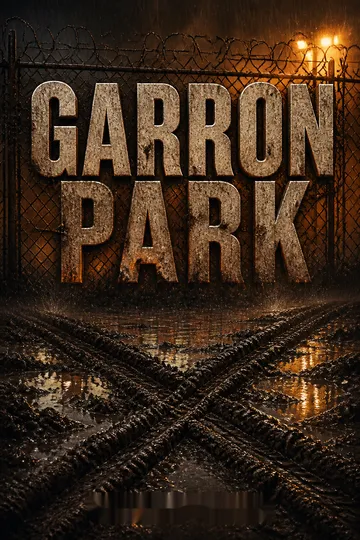
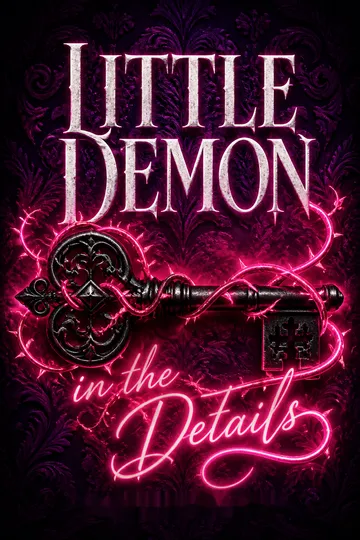
Lot 62 by Nordika Night continues Devon and Maddox's intense love story one year after Garron Park. Readers praised the established couple's aggressive yet romantic dynamic, their deep devotion, and emotional vulnerability. Most loved the angst, passion, and hard-earned HEA, though some found the book overly long with repetitive internal monologues and excessive sex scenes. The sequel explores relationship challenges, insecurities, and threats from Devon's father. Fans appreciated how the couple fights for their love through chaos and trauma, with many rating it higher than the first book.
Characters
Devon Sawyer
Hot-headed protector who can't cookDevon is a mass of contradictions: fiercely loyal but pathologically secretive, desperate to be worthy of love but convinced he is fundamentally unworthy. He grew up with an abusive father5 and an addict mother12, learning early that vulnerability meant injury. His rivalry with Maddox2 defined his adolescence; their romance has defined his adulthood. He co-owns a boat repair shop and takes overwhelming pride in being able to provide, a drive that nearly destroys his relationship. His guilt response is catastrophic: when he fails, he spirals into self-hatred rather than seeking repair. He communicates best through physicality. Fighting, sex, and competitive challenges are his fluency. Under the bravado, he is deeply sentimental, prone to swooning at Maddox's2 rare tenderness, and terrified of losing the one person who has ever made him feel safe. His arc moves from self-destructive independence toward learning to share burdens and accept love he does not feel he has earned.
Maddox Kane
Brooding protector with hidden softnessMaddox is the dark to Devon's1 light, a man who has spent his life being told he is worthless and has built a fortress of anger to survive. He works construction, then farm labor, jobs that exhaust his body but leave his mind free to worry. His love for Devon1 is absolute and consuming, expressed through dominance, possessiveness, and a willingness to take bullets. He struggles to articulate his emotional needs, often defaulting to aggression when he feels vulnerable. His four months in prison darken him considerably; he nearly surrenders to despair before Devon's1 overdose shocks him back to fight. He is unexpectedly romantic in private, the one who proposes, who finds the rings, who plans the trip to Alaska. His character arc involves learning that accepting help is not weakness and that his value to Devon1 is not transactional but intrinsic. He cannot cook either, but unlike Devon1, he tries anyway.
Nate Sawyer
Devon's level-headed brother and business partnerNate is the steady center that Devon1 orbits. He co-owns the shop, shares the same traumatic childhood, but has developed healthier coping mechanisms. He serves as Devon's1 emergency contact, the one who talks him through panic attacks and midnight crises. His relationship with Xavi4 is a simmering subplot: they are best friends who share a girlfriend and increasingly blur the lines between friendship and something more. Nate is pragmatic, sometimes brutally honest, and fiercely protective of both Devon1 and Maddox's2 relationship. He sells his possessions to fund Maddox's2 legal defense without hesitation.
Xavi Kane
Maddox's gossipy, meddling, fiercely loyal brotherXavi is the emotional intelligence of the Kane family. Where Maddox2 broods, Xavi talks. He asks invasive questions about sexuality and relationships because he is genuinely trying to understand his own shifting feelings. His bond with Nate3 predates and parallels Devon1 and Maddox's2 romance, and the book seeds a future storyline about their relationship evolving beyond friendship. He is the first to lash out at Devon1 after Maddox2 is shot, and the first to apologize, recognizing that his anger came from fear. He coordinates much of the behind-the-scenes work during Maddox's2 incarceration and is instrumental in finding Maddox2 the farm job.
Jim Sawyer
Abusive father and relentless antagonistJim is the gravitational center of the book's conflict, a man whose cruelty has shaped every main character's life. Fresh out of prison, he immediately begins manipulating Devon1, exploiting his son's desperate desire to protect his loved ones. His plan is elaborate: a stolen shipping container, a corrupt cop accomplice9, a frame job that sends Maddox2 to prison. He is a study in malignant narcissism, incapable of seeing his sons as anything other than tools or threats. His eventual death at the hands of his wife12, the woman he spent decades abusing, carries a grim poetic justice.
Seth Kane
Recovering addict father seeking redemptionSeth enters the narrative as a question mark: is his sobriety genuine, or is this another manipulation? Over the course of the book, he proves himself. He is ninety days clean when he first reappears, carrying a sobriety chip and an awareness of how little trust he has earned. He helps investigate Jim5, supports Naomi7 through her backslide, and is present when Maddox2 is shot, taking charge of the crisis. His arc from absent, addicted father to reliable presence is one of the book's quiet redemptions. He becomes the new park manager after Gary10 is fired.
Naomi Kane
Maddox's alcoholic mother who tries her bestNaomi loves her sons but has never been capable of consistent care. She works at the hospital as a cleaner, hosts terrible Friday night dinners that everyone attends out of obligation, and backslides into heavy drinking when Maddox2 is imprisoned. Her cooking is legendarily bad, a running joke that masks the genuine effort she puts into maintaining family rituals. She is not a villain, just a woman whose own demons have always limited what she can offer. Her relationship with Seth6 rekindles cautiously, both of them aware that their history is a minefield.
Patrick Harris
Shady loan shark turned uneasy allyHarris operates in the moral gray zone that the official systems have abandoned. He is a criminal, but one with a code, and Jim Sawyer5 violated it. His offer to track Jim5 in exchange for the contraband is self-serving but genuinely helpful. He provides the video evidence of Jim5 murdering Davis9, which becomes the family's most powerful leverage. He represents the book's thesis about informal justice: when the system fails, people find other ways to protect themselves. He exits the narrative having fulfilled his bargain, a reminder that not all alliances need to be permanent to be valuable.
Officer Davis
Corrupt cop and Jim's accompliceDavis is the rot inside the system, a rookie cop with an impeccable record who has been on Jim's5 payroll since before Jim's5 release. He pulls the trigger that nearly kills Maddox2, then spins a self-defense story that the police are inclined to believe because he wears a badge. He later helps frame Maddox2 by slipping fake documents into hospital discharge paperwork. His eventual murder at Jim's5 hands is captured on video by Harris's8 surveillance team.
Gary
Cowardly park manager under Jim's thumbGary manages Garron Park and becomes an unwilling accomplice to Jim's5 scheme after Jim5 threatens his daughter's life. He provides Jim5 with access to Lot 62, supplies rent money with Maddox's2 fingerprints, and stores the shipping documents in his office. He is not evil, just weak, and his cooperation under duress illustrates how Jim5 operates through fear rather than loyalty.
Pete
Gruff farm owner who gives Maddox a chancePete is an old farmer who hires Maddox2 despite knowing about his prison time, solely on Xavi's4 recommendation. He works Maddox2 to exhaustion, feeds him well, and quietly offers his farm as a wedding venue. The tungsten rings Maddox2 uses to propose came from Pete's flea market booth, earned through a week of unpaid labor. He is a man of few words and many actions, a father figure Maddox2 has never had.
Deb Sawyer
Devon's mother, broken but finally freeDeb spent decades absorbing Jim's5 abuse to protect her sons, destroying her own mind with drugs and alcohol in the process. She lives with a caretaker named Mary, rarely lucid, a ghost of the mother she once was. On the one clear day she gets, she attends a family dinner with a gun in her purse, and when Jim5 threatens her sons, she shoots him. Her final act of maternal protection costs her remaining lucidity but purchases her sons' freedom and, through institutionalization, her own long-term care.
Plot Devices
The Shipping Documents and Contraband
MacGuffin driving the crime plotJim Sawyer's5 entire scheme revolves around stolen shipping documents that detail illegal contraband aboard a cargo vessel. He has Devon1 steal these documents from Gary's10 office, then uses them to frame Maddox2. The contraband itself, cash and drugs and weapons worth over six hundred thousand dollars, is buried near Lot 62 while Devon1 and Maddox2 are away. The documents serve multiple narrative functions: they are the bait Jim5 uses to manipulate Devon1, the evidence that frames Maddox2, and ultimately the prize that Patrick Harris8 wants. The contraband's journey from ship to buried cache to evidence lockup to stolen truck drives the entire second half of the plot.
The Tungsten Rings
Symbol of commitment earned through laborMaddox2 finds two tungsten rings in a junk drawer at Pete's11 flea market booth. They are inscribed with halves of a phrase: Without light on one and there is no darkness on the other. He earns them through a week of unpaid farm labor, then proposes with them at fight night. The rings are inexpensive and secondhand, perfectly suited to two men who have never had anything new or fancy. The inscription captures their relationship: they take turns being each other's light in the darkness. The rings appear at the emotional fulcrum of the story, the proposal scene, and become the tangible symbol of their commitment.
Harris's Surveillance Footage
Evidence that turns the tables on JimPatrick Harris8 has men tracking Jim Sawyer5, providing real-time video surveillance. The most critical piece of footage captures Jim5 murdering Officer Davis9, shooting him point-blank in the same park where Jim5 once met Devon1. Harris8 gives the family a copy of this video, backed up in multiple locations. This evidence is more damning than anything the contraband case could produce: first-degree murder carries a life sentence. The footage shifts the power dynamic entirely, giving the family leverage they never had before. It also solves the Davis9 problem permanently.
Deb's Purse Gun
Chekhov's gun that ends the nightmareThroughout the final family dinner, Devon's1 mother Deb12 keeps one hand in her purse, a detail noted but not questioned. When Jim5 crashes the gathering with a gun, threatening to kill Nate3, Deb12 pulls a firearm from that purse and shoots her husband dead. The gun has been there the whole time, an unremarked detail that becomes the mechanism of resolution. It is a classic Chekhov's gun deployed with devastating efficiency: a mother's final act of protection, hidden in plain sight. The gun also enables the bittersweet resolution where Deb12 is institutionalized rather than imprisoned, finally receiving proper care.
The Dirt Bikes
Symbol of rivalry transformed into shared joyDevon1 and Maddox's2 old motocross bikes, lost when they sold everything to pay legal fees, reappear as a wedding gift from Nate3 and Xavi4. The bikes represent the origin of their relationship: they spent years competing on the track, their rivalry fueled by their fathers' hatred. Now the bikes return as a gift, repurposed from weapons of competition into instruments of shared pleasure. Devon1 and Maddox2 ride off on them immediately after the wedding ceremony, choosing adrenaline and competition as their honeymoon activity. The bikes bookend the narrative, appearing in memories of the past and as a promise of future races, future fights, future joy.
Download PDF
Download EPUB
.epub digital book format is ideal for reading ebooks on phones, tablets, and e-readers.








































