
Key Takeaways
1. Losing "Religion" Can Be the Path to Finding Jesus
If we wanted to find Jesus, we would have to lose our religion.
Beyond ritual. The author reflects on his upbringing in low-church Mississippi Baptist traditions, where weekly "altar calls" emphasized a personal relationship with Jesus over mere religious formality. While he later found much to criticize in this revivalism—its transactional nature, sentimentalism, and tendency to ignore social injustices—he acknowledges its core message: that true faith transcends institutional membership or cultural identity. This distinction between "religion" (cold dogma, tribal belonging, moralism) and a living "relationship" with Christ is central to the book's thesis.
A personal crisis. The author's own journey led him to a profound disillusionment with the evangelical establishment, particularly after refusing to endorse Donald Trump and witnessing the cover-up of sexual abuse within the Southern Baptist Convention. This experience, which felt like a "reverse altar call," forced him to question everything he thought he knew about his religious home. He realized he wasn't losing his faith in Jesus, but rather shedding a corrupted "religion" that had become intertwined with political power, tribalism, and hypocrisy.
Born again. The book argues that "losing our religion" is akin to Jesus' command to be "born again." This process involves a definitive, personal decision to follow Christ, unburdened by the cultural accretions and compromises that often define religious institutions. It's a call to rekindle a "first love," recognizing that genuine spiritual renewal often requires letting go of what is familiar and comfortable, allowing disillusionment to clear the way for a deeper, more authentic encounter with the divine.
2. Evangelical Credibility Is Eroding Due to Hypocrisy and Scandal
It was not that she didn’t believe what her church had taught her but that she didn’t believe her church believed what her church had taught her.
A crisis of trust. The author highlights a widespread erosion of credibility within American evangelicalism, leading to a significant rise in "Nones" and "Nonverts"—individuals leaving the church not because they reject Christian teachings, but because they perceive the church itself as hypocritical and morally compromised. This disillusionment stems from:
- Dislike of church positions on social/political issues.
- Distrust of religious leaders.
- Association of "evangelical" with reactionary politics and white racial self-interest.
- A pervasive "general air of scandal," particularly regarding sexual abuse cover-ups.
Decadence and cynicism. When institutions operate with the same power-maintenance and self-protection mechanisms as the secular world, they lose their unique moral authority. The author cites Jacques Barzun's concept of "decadence," where people accept futility and the absurd as normal. This leads to a dangerous cynicism among those who stay, transforming faith into a "pseudo-orthodoxy" detached from living truth, and ultimately risking the loss of one's soul by prioritizing belonging over conscience.
The "blowtorch" effect. The exploitation of trust, built over generations, for malicious or trivial ends is a profound betrayal. The author uses the analogy of Mr. Rogers' alarm at a comedian using his persona to teach children to make a blowtorch. When the church's name is used to cover up atrocities like sexual abuse, or to justify political demagoguery, it "takes the name of the Lord your God in vain" in the most profound sense, destroying its witness and becoming a stumbling block to those seeking genuine faith.
3. Politicization Has Replaced Truth with Tribal Loyalty
Our problem now, though, is that, increasingly, we are called not just to argue about what is true, but to say things that we know to be false, just to prove that we are part of the tribe to which we belong.
Truth as tribal currency. The author observes that in contemporary American culture, "truth" is often treated not as an objective reality, but as a means to demonstrate tribal belonging. This dynamic compels individuals, even within evangelical circles, to affirm statements they know to be false simply to maintain their standing within their chosen group. Critiquing "one's own side" is often perceived as disloyalty, hindering genuine self-reflection and accountability.
The rise of authoritarianism. This eclipse of truth creates an environment where demagogues and authoritarians thrive. The author distinguishes between legitimate authority, rooted in persuasion and allegiance, and authoritarianism, which relies on external force and intimidation. He argues that the draw to authoritarian figures is often not a desire for true authority, but a rejection of it, leading to a "tear down the cathedral" mentality where civility is seen as surrender and empathy as sin. This creates a "post-truth" environment where shared understanding is impossible.
The lizard brain. The author points to the "scandal of the evangelical limbic system," where fear of external threats (neighbors, culture) has replaced a healthy fear of God. Social media algorithms exploit this "reptilian" part of the brain, amplifying anger and fear, which are more likely to spread than affection or curiosity. This leads to religious leaders making alliances out of fear, becoming "court prophets" who prioritize pleasing their constituents or protecting their own positions over speaking truth, ultimately leading to a pervasive, self-deceiving atheism.
4. Identity Has Been Co-opted by Culture Wars and Nationalism
Christian nationalism is a prosperity gospel for nation-states, a liberation theology for white people.
Politics as identity. The book argues that politics has increasingly monopolized identity in America, becoming less about civic problem-solving and more about expressing one's entire self, often anchored in hatred of the "out-party." This phenomenon is exacerbated by a scarcity of "cross-cutters"—individuals whose diverse social identities prevent them from being fully absorbed into partisan tribalism. When religious identity merges with this, the stakes become existential.
Secularized Christianity. The author highlights the emergence of a "secularized Christianity" where Christian symbols, images, and rhetoric are co-opted as ethno-cultural identifiers, detached from theological beliefs, ethics, or institutions. This is evident in movements like Christian nationalism, which uses Christian language to shore up ethnic or national identity, effectively turning Jesus into a political mascot. The Buffalo shooter's manifesto, claiming "Christian values" without belief in God, exemplifies this dangerous dissociation.
Blood-and-soil vs. the blood of Christ. Christian nationalism, in its mild or virulent forms, bargains away the "blood of Christ" for "blood-and-soil" ideologies. This is a "Great Commission in reverse," where nations seek to make disciples of themselves, baptizing national identity in the name of political order. This external conformity cannot regenerate a human heart; it only creates "pretend Christians." The gospel, by contrast, demands personal conversion and union with the crucified and resurrected Christ, who transcends and judges every group, identity, and nationality.
5. Moral Integrity Is Sacrificed for Perceived Power and Success
When a question of morality becomes “But what about the other side?,” it doesn’t matter where one stands on the religious or political or ideological spectrum—one has embraced a moral relativism that would make a postmodernist deconstructionist slink out of his faculty lounge in shame.
Character as compromise. The author recounts the jarring shift in evangelical attitudes towards moral character in public leadership, particularly during the Trump era. The previous insistence that "character matters" gave way to justifications like "locker room talk" and "lesser of two evils," effectively normalizing behavior once deemed disqualifying. This revealed a "revealed preference" where political outcomes or tribal loyalty superseded long-held moral principles, leading to the unsettling conclusion that "Christlikeness is compromise."
The depravity gospel. This moral erosion is fueled by a "depravity gospel," which, instead of leading to repentance, takes reassurance from human sinfulness. The argument "You can't judge me; you're a bad person too!" replaces genuine accountability, leading to a "whataboutism" that justifies immorality to combat perceived greater evils. This mindset, whether adopted with glee or cynical resignation, ultimately leads to nihilism, where conscience means nothing and only power remains.
Shamelessness as strength. In a performative age, brazenness and a lack of shame are often mistaken for strength. The author notes how individuals with "dark triad" traits (narcissism, psychopathy, Machiavellianism) are drawn to power and often succeed because they are willing to transgress norms and endure criticism that would deter others. This creates a cycle where the shameless proliferate, and those with intact consciences retreat, leading to institutions led by individuals who prioritize "winning" over virtue, and followers who come to see character as a weakness.
6. Nostalgia for the Past Hinders Genuine Spiritual Revival
Resurrection by human power rather than divine spirit always produces a monstrosity.
The "again" problem. The author observes that much of the call for "revival" within American evangelicalism is rooted in a dangerous nostalgia—a desire to "take America back" to an idealized, often imaginary, past. This "Make America Great Again" mentality, with its intentionally vague "again," seeks a restoration of past influence and morality, rather than a genuine spiritual renewal. This approach, however, risks creating a "Frankenstein" monster—a "resurrection by human power" that is ultimately lifeless and monstrous, like a zombie story where corruption is animated but still dead.
Decadence and false vitality. This nostalgic longing contributes to a state of "decadence," where the old order is exhausted but prevents anything new from forming. The author points to "revivalism"—the entrepreneurial techniques of past revivals—as a potential substitute for authentic spiritual awakening. Like addicts seeking more and more doses of a stimulant, these efforts can produce temporary excitement but ultimately lead to "disappointment, disgust, remorse, ennui, and even a sense of betrayal," leaving the church worse off.
The "Ajax the Warrior" illusion. Demagogues exploit this longing for significance and a return to an imagined heroic past. The author cites Steve Bannon's observation that online, "Dave from Accounts Payable" can become "Ajax the Warrior," finding community and purpose in weaponized anger and fantasy role-playing. This creates a false sense of "revival" that is rooted in paganism—a quest for heroic significance and power that ultimately leads to real-world violence and a profound disconnection from the true, self-sacrificial nature of Christ.
7. Disillusionment and "Exile" Can Be a Grace for Renewal
If we looked for something that would turn the present world from a place of pilgrimage into a permanent city satisfying the soul of man, we are disillusioned, and not a moment too soon.
Embrace the unveiling. The author, drawing on C.S. Lewis, argues that disillusionment is not a negative outcome but a necessary grace. Crises serve as "unveilings" of awful, pre-existing realities, forcing us to shed illusions about the world and ourselves. This process, though painful, is "not a moment too soon" because it frees us from false hopes in earthly systems and prompts a deeper longing for an alternative—a different sort of kingdom.
The "Nonvert" experience. For those who have been deeply embedded in evangelical culture, the experience of leaving or feeling alienated is akin to being a "Nonvert"—an ex-spouse rather than a non-spouse. This "homelessness" can be disorienting, but it also offers an opportunity to redefine "home" and "belonging." The author's own experience of finding unexpected community and support from those he once dismissed, like Beth Moore, illustrates how old alliances fracture while new, fire-forged friendships emerge.
Pilgrimage, not occupation. The biblical concept of "exile" offers a framework for understanding this disorientation. Peter's address to Christians as "elect exiles of the Dispersion" emphasizes that their true identity is in Christ, not in any earthly nation or culture. This perspective fosters a sense of pilgrimage rather than occupation, meaning the goal is not to remove hostile forces or reclaim lost territory, but to avoid becoming like the "Babylonians" and to cultivate a distinctiveness rooted in God's purpose, even in a "strange land."
8. True Authority Is Rooted in Christ, Not Human Power or Demagoguery
The antidote to authoritarianism is authority itself, rightly defined.
Authority vs. power. The author emphasizes the critical distinction between true authority, which is rooted in persuasion, allegiance, and transcendent truth, and mere power, which relies on external force and intimidation. When legitimate authority breaks down, it creates a vacuum that authoritarians readily fill, promising protection while demanding absolute obedience and suppressing dissent. This dynamic is evident in both political and religious spheres, where leaders leverage fear and tribalism to maintain control.
Sola Scriptura as a check. Evangelicalism's historical commitment to sola Scriptura (Scripture as the final authority) is presented as a vital safeguard against human authoritarianism. This principle means that all human authorities—parents, governments, church leaders—are accountable to a truth outside of themselves. The Bible, as the inspired Word of God, serves as the ultimate norm, allowing believers to "question authority" when it deviates from Christ's teachings, rather than blindly conforming to human dictates.
Inhabiting the Bible. To truly embrace biblical authority, one must move beyond merely quoting verses to "inhabit the Bible"—to immerse oneself in its overarching storyline and allow it to reshape one's affections, imagination, and conscience. This deep engagement with Scripture cultivates a discerning spirit, enabling believers to recognize when the gospel is being used as a "blowtorch" to justify un-Christlike behavior or when human leaders attempt to become a "god" by defining truth and demanding unquestioning loyalty.
9. Conversion Is Personal, Transcending Cultural and Political Identities
The gospel according to Jesus means that there is one God and one mediator between God and men, the man Christ Jesus.
Beyond external conformity. The author argues that Christian nationalism and civil religions represent a "prosperity gospel for nation-states," where external conformity to a "Christian culture" is mistaken for genuine faith. This approach, which submerges personal transformation under social transformation, ultimately makes both impossible. True conversion, as taught by Jesus, is a personal, internal transformation—being "born again" through faith in Christ, not through legal edicts, social pressure, or national identity.
The "blood of Abel" vs. the "blood of Christ." The book contrasts the "blood-and-soil" impulses of nationalistic movements with the atoning "blood of Christ." While the former seeks identity and security in ethnic or national ties, often fueled by resentment and a fear of humiliation, the latter offers forgiveness of sins and new life through personal union with Christ. The way of Cain, driven by rage and a sense of insult, leads to violence, while the way of Abel, though it led to his death, speaks of a faith commended by God.
Mission field, not battlefield. A genuine commitment to personal evangelism serves as a crucial counter-narrative to culture wars. It reminds Christians that their neighbors are a "mission field," not a "battlefield," and that the gospel advances through persuasion, love, and respect, not intimidation or tribal conflict. This focus on bearing witness to the saving power of Christ keeps the ultimate question—"What if I were to die tonight?"—at the forefront, fostering a sense of awe and humility that transcends political and cultural divisions.
10. Repentance and a Clear Conscience Are Essential for Integrity
When our Lord Jesus Christ said, ‘Repent’ (Matt. 4:17), he willed the entire life of believers to be one of repentance.
The burden of conscience. The author asserts that a clear conscience is a vital "way of knowing" that alerts us to a morally structured cosmos and a coming day of accountability. However, in a culture that often dismisses "sin" and "judgment," many struggle with the burden of a guilty conscience, leading to "craziness" and self-deception. The book argues that true peace comes not from silencing conscience, but from an active, lifelong process of repentance—acknowledging sin, seeking mercy, and aligning one's life with the gospel.
Integrity over influence. The temptation to prioritize "short-term success" or "influence" in culture wars often leads to moral compromises. The author warns against the "depravity gospel" that excuses sin by claiming "nobody's perfect" or "all are sinners," thereby nullifying biblical character qualifications for leadership. This mindset, exemplified by figures who claim to be "businessmen, not preachers" to justify immorality, ultimately disconnects personal virtue from institutional goals, leading to a "haggling contest over the price of one's soul."
The Pilate problem. The story of Pontius Pilate, who "washed his hands" of responsibility for Jesus' crucifixion "wishing to satisfy the crowd," serves as a stark warning. Pilate's conscience adjusted to his ambition and desire for security, rather than the other way around. The author urges readers to protect their own consciences from similar pressures, recognizing that any demand for compromise at the cost of integrity is too high a price. A clear conscience, though it may prompt discomfort and redirection, ultimately casts out fear and frees one to live without self-defense.
11. Revival Is God's Work, Not Human Strategy or a Return to the Past
What is not repaired is repeated.
Beyond human strategy. The author expresses reluctance to use the word "revival" due to its common association with a "deus ex machina" plot twist—a sudden, human-engineered turnaround to a nostalgic past. He cites A.W. Tozer's warning that a "widespread revival of the kind of Christianity we know today in America might prove to be a moral tragedy." True revival, as seen in Scripture, is tied to resurrection—a divine act that disrupts the present and creates something new, rather than merely restoring a previous, often idealized, golden age.
The trauma of the church. The church has experienced a "collective trauma" in recent years, and the author emphasizes that "what is not repaired is repeated." Attempting to rush through healing or to simply "get back to normal" without addressing underlying issues will only perpetuate cycles of dysfunction. Genuine renewal requires a slower, more deliberate process of grounding and sorting through what has happened, acknowledging the pain and seeking God's transformative work.
Pillars of fire, not just stone. The book contrasts "Ebenezer" monuments (stable markers of past divine help) with the "pillar of fire and cloud" (a dynamic, moving manifestation of God's presence leading into the unknown). While monuments are important for remembering, true revival requires following the "pillar of fire"—embracing disorientation and trusting God's leading into an uncertain future. This means letting go of the temptation to "pitch the tent in place" and instead embracing the pilgrimage, recognizing that God often tears down existing structures to form a new, unified people, as seen at Babel and Pentecost.
Review Summary
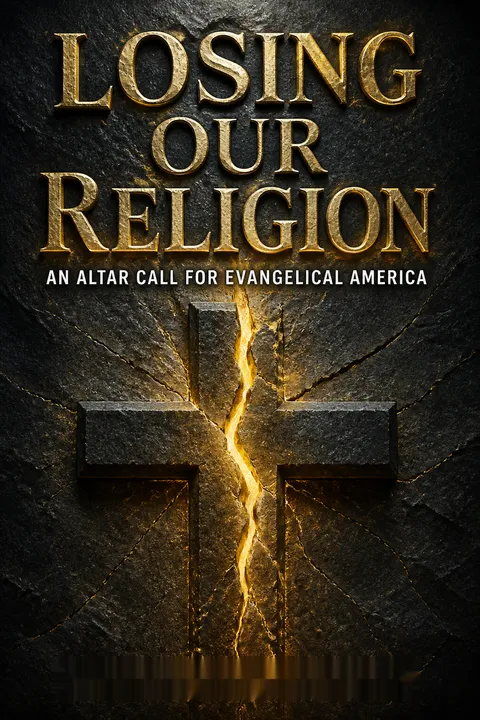
Losing Our Religion by Russell Moore addresses the crisis in American evangelicalism, particularly its entanglement with politics and Trump-era compromises. Reviewers praise Moore's courage in critiquing how evangelicals have prioritized political power over gospel integrity, lost moral credibility, and embraced Christian nationalism. Many found the book convicting yet hopeful, appreciating Moore's call to return to Christ-centered faith rather than tribal allegiances. Some noted dense prose and long sentences, while others found it deeply pastoral and needed for this moment in church history.
People Also Read



Download PDF
Download EPUB
.epub digital book format is ideal for reading ebooks on phones, tablets, and e-readers.








































