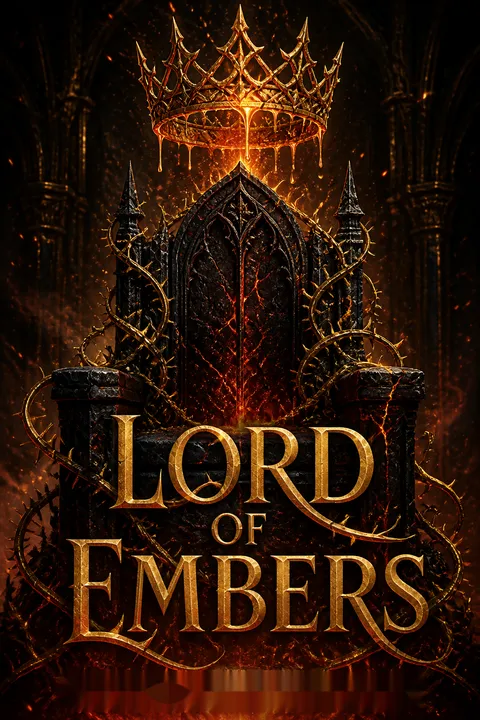

Plot Summary
Exile and Mortal Danger
Rowan, newly revealed as a demon with fire magic, is exiled from the City of Thorns after her true nature is discovered. Struggling to survive in the mortal world, she is haunted by memories of her mother's murder and the trauma of fire. Her powers wane outside the city, leaving her vulnerable. The mundane world feels bleak and isolating, and Rowan's only solace comes from small acts of kindness, like helping her elderly neighbor. But the sense of being watched never leaves her, and the threat of both demon hunters and her former ally, Orion, looms ever closer. Rowan's longing for belonging and answers about her past drive her to risk everything to return to the city and uncover the truth about her family's fate.
Demon Hunters Close In
Rowan's fragile safety shatters when she is ambushed by the Malleus Daemoniorum, a group of demon hunters led by the ruthless Congressman Corwin and his son Jack. They recognize her as something more than mortal and attempt to capture her for interrogation and likely torture. Outnumbered and wounded, Rowan's demon instincts flare, and she is forced to fight for her life. In a desperate act of self-defense, she unleashes her fire magic, killing Corwin and scattering the hunters. The violence leaves her shaken and hunted by both mortal and supernatural forces, and she realizes her only hope for survival is to return to the City of Thorns, even if it means facing Orion's deadly oath.
Fire and Blood Oaths
Gravely injured and pursued by police, Rowan staggers to the city's magical gates. Her succubus nature asserts itself—sex is life, and her powers are tied to desire. As bullets fly, her magical tattoo unlocks the city's gate, and she collapses inside, where the city's magic begins to heal her. The trauma of violence and the necessity of embracing her demon side mark a turning point. Rowan's survival instincts and newfound powers are both a blessing and a curse, as she is forced to confront the reality that she is no longer fully mortal, and that her quest for answers will demand even greater sacrifices.
Return to the City
Rowan sneaks through the city's magical streets, returning to her parents' abandoned mansion. The city is both beautiful and dangerous, filled with memories and secrets. She discovers portraits and clues that reveal her true lineage: her father was Duke Moloch, and her half-brother is the current king, Cambriel. A cryptic nursery rhyme hints at the king's vulnerability—a golden ring that keeps him alive. Rowan's sense of identity is shaken as she realizes her family's history is entwined with the city's darkest secrets, and that her own powers may be the key to changing its fate.
Haunted Ancestry Revealed
Exploring her mother's old rooms, Rowan finds hidden notes and evidence of her parents' rebellion against the king. The arrival of Orion, convinced she is his ancient enemy Mortana, leads to a tense confrontation. Their mutual hatred and attraction simmer as they debate her identity and the nature of their shared mark—the star of Lucifer. Orion's obsession with vengeance and Rowan's desperate need for answers collide, forcing them into a reluctant alliance. The emotional stakes rise as Rowan is forced to question her memories, her morality, and whether she is truly capable of the violence her powers demand.
Enemies and Oaths
Orion's blood oath compels him to kill Rowan, but doubt gnaws at him. They strike a dangerous bargain: if Rowan can help him kill the king, he will try to break the oath. A blood ritual binds them, and both are plunged into visions of past trauma and guilt. The lines between enemy and ally blur as they navigate their shared pain and the possibility of redemption. Rowan's struggle to control her powers and Orion's inability to let go of his hatred set the stage for a journey that will test their limits and force them to confront the darkness within themselves.
Bitter Bargains and Betrayals
Forced to share space and work together, Rowan and Orion's relationship is fraught with mistrust, sexual tension, and old wounds. Rowan's attempts to assert her independence and Orion's need for control lead to constant clashes. Their interactions are laced with barbed insults and moments of vulnerability, revealing the depth of their scars. As they prepare to journey into the underworld to break Orion's oath, both are haunted by the fear that betrayal is inevitable, and that their fates are inextricably linked by forces beyond their understanding.
Nightmares of the Dungeon
Orion's memories of centuries in the dungeon, the loss of his family, and the betrayal by Mortana shape his every action. His identity is forged in suffering and the promise of revenge. The narrative delves into his psychological torment, the loss of hope, and the transformation from victim to avenger. Orion's inability to trust, his obsession with justice, and his fear of vulnerability are laid bare, providing insight into the monster he has become and the possibility that Rowan might be the only one who can reach the remnants of his humanity.
Lust, Survival, and Spies
Rowan's succubus nature becomes both a weapon and a vulnerability as she navigates the city's dangers. The death of Carl, a mortal spy, and the king's growing suspicion force Rowan and Orion to flee. Their escape is marked by moments of raw intimacy and brutal honesty, as they confront the reality that their connection is as much about survival as it is about desire. The threat of exposure and the need to protect those they care about drive them deeper into the city's shadows and toward the underworld.
Flight and Underground Escape
Pursued by the king's army, Rowan and Orion escape through secret tunnels beneath the city. Joined by Rowan's friend Shai, they navigate a labyrinth of danger and memory. The journey is both physical and psychological, as Rowan is forced to confront her fears, her guilt, and the possibility that she is not who she thought she was. The passage through the veil into the underworld marks a point of no return, as they leave behind the world they knew and enter a realm where the past is inescapable and the future uncertain.
Crossing the Veil
The underworld is a place of torment and revelation. Rowan and Orion are separated and subjected to visions of their deepest fears and regrets. Rowan relives her mother's death and her own guilt, while Orion is haunted by the ghosts of those he failed to save. The Dying God, Tammuz, demands confessions as the price for breaking the blood oath. The process is harrowing, stripping away their defenses and forcing them to confront the truth about themselves and each other. The experience leaves them changed, their bond deepened by shared suffering.
Purgatory's Torments
The trials of Purgatory push Rowan to the brink. She is tormented by visions of her own death, the weight of keys symbolizing guilt, and the inescapable cycle of tragedy. Hunger and thirst become metaphors for longing and loss. The ordeal strips her down to her core, revealing the strength and resilience that will be needed for the battles ahead. The experience is both a crucible and a rebirth, preparing her for the challenges of the underworld and the fight for the throne.
The Dying God's Price
Tammuz, the Dying God, demands secrets and confessions as the price for breaking Orion's blood oath. Rowan is forced to relive the night of her mother's death, finally understanding her own role and the true identity of her mother's killer—King Cambriel. Orion confesses his plans for vengeance and domination, revealing the depth of his rage and the danger he poses. The breaking of the oath frees them both, but at the cost of innocence and the certainty that their destinies are now in direct conflict.
Confessions and Severed Bonds
Freed from the blood oath, Rowan and Orion become open rivals for the throne. Their relationship, once marked by reluctant alliance, is now defined by competition and the threat of violence. Rowan's discovery of her true nature as Mortana's ka—a double, not the original—gives her a new sense of purpose and legitimacy. The revelation that Orion is the son of the Dying God, not the former king, further complicates the struggle for power. Both are driven by the need to prove themselves and to shape the city's future according to their own vision.
Hell's Lessons and Hunger
Rowan remains in the underworld, training with Tammuz to become a true demon warrior. She dies and is reborn repeatedly, each time shedding more of her fear and embracing her power. The isolation and brutality of the training forge her into a weapon, capable of facing Orion and Cambriel. The process is both physically and emotionally exhausting, but it instills in her the confidence and skill needed to challenge the city's rulers and claim her place as a contender for the crown.
The Underworld's Truths
As Rowan's training concludes, she learns the full truth of her origins and the nature of the contest for the throne. The Dying God reveals that chaos and competition are necessary for the city's survival, and that Rowan's existence is a deliberate act of defiance against order. Armed with new knowledge and strength, Rowan returns to the world of the living, determined to confront Cambriel and Orion and to seize the power that has always been denied her.
Training with Death
Rowan's final lessons with Tammuz focus on channeling her rage and mastering the art of killing. She learns to fight not just for survival, but for dominance. The memory of her mother's murder and the injustice of her family's fate fuel her determination. When she finally defeats Tammuz in combat, she is declared ready to face the false king and to challenge Orion for the throne. The transformation from victim to warrior is complete, and Rowan emerges as a force to be reckoned with.
The False King's Fall
Rowan storms the Tower of Baal, confronting Cambriel and unleashing her full power. The battle is fierce and chaotic, with Orion arriving to claim the kill and the crown for himself. Rowan's victory is stolen at the last moment, and she is banished from the city by the new king. The triumph is hollow, as Orion's plans for vengeance threaten to plunge the world into chaos. Rowan, armed with the knowledge of trial by combat and the support of her allies, prepares for the next stage of the struggle, determined to reclaim her destiny and save the city from destruction.
Analysis
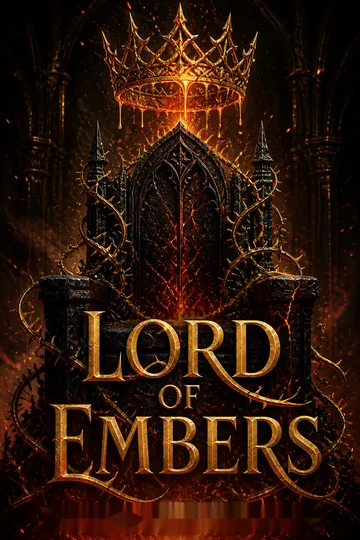
A modern dark fantasy of trauma, power, and self-creationLord of Embers is a story about the search for identity and the struggle to break free from the cycles of violence and trauma that define both individuals and societies. Through Rowan's journey from exile to contender for the throne, the novel explores the psychological costs of survival, the allure and danger of power, and the possibility of transformation. The interplay between memory and identity, the use of doubles and oaths, and the descent into the underworld all serve to interrogate the nature of self and the meaning of destiny. The relationship between Rowan and Orion is a microcosm of the larger conflict: love and hate, trust and betrayal, hope and despair. The novel warns of the dangers of unchecked vengeance and the seductive pull of chaos, while also affirming the resilience of the human (and demon) spirit. Ultimately, Lord of Embers is a meditation on the necessity of confronting the past, embracing one's true nature, and fighting for a future that is not dictated by the sins of those who came before.
Review Summary
Lord of Embers receives mixed reviews with a 3.83 rating. Many readers found it to be filler, lacking the action and plot development of the first book, City of Thorns. Common criticisms include overused miscommunication tropes, rushed pacing, and minimal plot progression. However, fans appreciated Rowan's character development, the tension between protagonists Rowan and Orion, and the introduction of Tammuz. Some readers enjoyed the enemies-to-lovers dynamic and fast-paced reading experience, while others felt disappointed by predictability and lack of emotional depth.
People Also Read
Characters
Rowan
Rowan is the heart of the story—a young woman marked by trauma, loss, and a desperate search for identity. Orphaned by violence and exiled from both the mortal and demon worlds, she is driven by a need to uncover the truth about her mother's death and her own origins. Rowan's journey is one of transformation: from vulnerable outcast to powerful succubus, from self-doubt to fierce determination. Her relationships—with Orion, her best friend Shai, and the memory of her parents—are fraught with longing, betrayal, and the hope for redemption. Psychologically, Rowan is defined by guilt, empathy, and a fear of her own capacity for violence. Her development is a testament to resilience, as she learns to embrace her power, confront her past, and fight for a future where she is no longer a victim but a ruler.
Orion
Orion is a study in contradictions: a beautiful, deadly incubus marked by centuries of suffering and a burning desire for revenge. Imprisoned and betrayed, he emerges from the dungeon obsessed with justice for his murdered family and the destruction of those who wronged him. His relationship with Rowan is a volatile mix of hatred, attraction, and reluctant respect. Orion's psychological landscape is shaped by trauma, the loss of hope, and the fear of vulnerability. He is both a monster and a man, capable of tenderness and brutality. As the story unfolds, Orion's struggle to reconcile his need for vengeance with the possibility of love and redemption becomes central, culminating in his rise to power and the threat he poses to both mortals and demons alike.
The Dying God (Tammuz)
Tammuz is the enigmatic god of the underworld, a being of immense power and inscrutable motives. He serves as both mentor and tormentor to Rowan, guiding her through death and rebirth, and shaping her into a weapon for the coming conflict. Tammuz's philosophy is rooted in chaos, competition, and the belief that only through struggle can true rulers emerge. His relationship to Orion (as father) and to Rowan (as creator and trainer) adds layers of complexity to the narrative. Psychologically, Tammuz is detached, ancient, and driven by a cosmic perspective that values chaos over order, making him both a catalyst for change and a source of existential dread.
Cambriel
Cambriel is the antagonist whose actions set the story in motion. As Rowan's half-brother and the murderer of her parents, he represents the corrupting influence of power and the dangers of illegitimate rule. Cambriel's fear of exposure and his willingness to commit atrocities to maintain his throne make him a formidable foe. Psychologically, he is driven by insecurity, paranoia, and a ruthless pragmatism. His downfall is both a personal and political reckoning, as his secrets are exposed and his reign ends in violence.
Shai
Shai is Rowan's best friend and confidante, providing emotional support and a link to the mortal world. Her presence grounds Rowan, offering moments of humor, warmth, and perspective amid the chaos. Shai's own magical heritage and resourcefulness make her more than a sidekick; she is a survivor in her own right, navigating the dangers of the demon world with courage and wit. Psychologically, Shai is pragmatic, loyal, and adaptable, serving as a mirror to Rowan's struggles and a reminder of what is at stake.
Mortana
Mortana is the specter that haunts both Rowan and Orion—a succubus responsible for the massacre of the Lilu and the source of Orion's torment. Her legacy is one of betrayal, cruelty, and the abuse of power. The revelation that Rowan is Mortana's ka—a double, not the original—complicates the narrative, forcing both Rowan and Orion to confront the possibility of change and redemption. Psychologically, Mortana represents the fear of becoming what one hates, and the struggle to define oneself against the weight of history.
Duke Moloch
Moloch is Rowan's father, a figure whose death and secrets shape her quest for identity. His relationship with Cambriel's mother and his role in the city's history add layers of intrigue and tragedy. Psychologically, Moloch is defined by love, sacrifice, and the burden of rebellion. His hidden messages and the legacy he leaves for Rowan are central to her journey of self-discovery and empowerment.
Congressman Corwin
Corwin is the leader of the demon hunters, embodying the dangers of fanaticism and the capacity for violence in the name of righteousness. His pursuit of Rowan and his willingness to torture and kill make him a formidable antagonist in the mortal world. Psychologically, Corwin is driven by fear, hatred, and a desire for control, serving as a reminder that evil is not limited to the supernatural.
Mr. Esposito
Mr. Esposito is a minor but significant character, representing the small acts of kindness and community that persist even in a world of monsters. His awareness of Rowan's true nature and his subtle guidance provide moments of hope and connection. Psychologically, he is gentle, observant, and wise, offering a counterpoint to the violence and chaos that dominate the story.
Carl
Carl is a mortal caught in the crossfire of the supernatural conflict. His death at Orion's hands underscores the dangers of the demon world and the moral ambiguity of the protagonists. Psychologically, Carl is earnest, naive, and well-meaning, a reminder of the cost of power and the vulnerability of ordinary people.
Plot Devices
Duality and Doubles
The narrative is built around the concept of duality—Rowan as Mortana's ka, Orion as both victim and avenger, the city as both paradise and prison. The use of doubles, doppelgängers, and split identities drives the psychological tension and raises questions about fate, free will, and the possibility of change. Memory loss, unreliable narration, and the struggle to define oneself against the past are recurring motifs, creating a sense of uncertainty and suspense.
Blood Oaths and Magical Contracts
Blood oaths and magical contracts serve as both plot drivers and metaphors for the inescapable ties of trauma, loyalty, and vengeance. The breaking of these oaths requires confessions, sacrifices, and the confrontation of painful truths. The device is used to explore themes of agency, compulsion, and the cost of freedom.
Underworld Journey and Purgatory
The journey into the underworld is both literal and symbolic, representing the characters' descent into their own psyches and the confrontation of their deepest fears. Purgatory's torments force confessions and self-examination, serving as a crucible for transformation. The motif of death and rebirth is central, with Rowan's repeated deaths and resurrections marking her evolution from victim to warrior.
Foreshadowing and Nursery Rhymes
The use of nursery rhymes, hidden notes, and cryptic messages provides foreshadowing and drives the mystery of the plot. These devices encourage the reader to piece together the puzzle alongside the protagonist, creating a sense of discovery and engagement. The gradual revelation of secrets builds tension and propels the narrative toward its climax.
Power Struggles and Trial by Combat
The struggle for the throne is framed as both a personal and political contest, with trial by combat serving as the ultimate test of worthiness. The device allows for the exploration of themes of justice, legitimacy, and the dangers of unchecked power. The rivalry between Rowan and Orion is both intimate and epic, reflecting the broader conflicts of the world they inhabit.
The Demon Queen Trials Series Series
About the Author
Other books by C.N. Crawford


Download PDF
Download EPUB
.epub digital book format is ideal for reading ebooks on phones, tablets, and e-readers.








































