
Plot Summary
Words of Power Unleashed
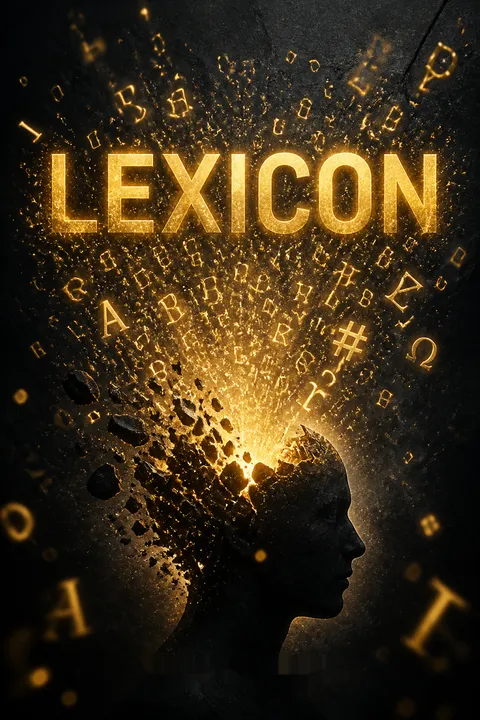
In a world where words can control minds, a clandestine organization known as the Poets trains select individuals to master the art of persuasion at a neurochemical level. The story opens with Wil Parke, an ordinary man, being violently abducted and interrogated by mysterious agents who believe he is the key to a catastrophic event. Meanwhile, Emily Ruff, a streetwise hustler, is recruited for her natural talent in manipulation. The narrative quickly establishes the stakes: language is not just communication, but a tool of immense, even biblical, power. The Poets' ability to segment and compromise people through tailored words sets the stage for a conflict where identity, memory, and free will are all at risk.
The Outlier's Awakening
Wil, confused and traumatized, is swept into a deadly chase. He learns that he is an "outlier"—someone uniquely immune to the Poets' mind control. His captors, led by the enigmatic Tom Eliot, are desperate to understand why Wil survived a disaster in Broken Hill, Australia, where a "bareword"—a primal, irresistible command—wiped out an entire town. As Wil's memories begin to resurface, he realizes his past is not what he believed. The tension between his ordinary self and the extraordinary expectations placed upon him drives his journey, as he becomes both a target and a potential savior in the escalating war of words.
Recruitment and Resistance
On the streets of San Francisco, Emily's skill at reading and manipulating people catches the eye of the Poets' recruiters. She is tested, both through psychological games and outright coercion, and offered a place at the Academy—a secretive school for linguistic prodigies. Emily's resistance to authority and her instinct for survival make her both a promising and problematic candidate. Her journey from hustler to initiate is fraught with suspicion, as she navigates the Academy's labyrinthine rules and the ever-present threat of being compromised by her peers or teachers.
The Academy's Secret Curriculum
At the Academy, Emily and her cohort are immersed in a curriculum that blends psychology, linguistics, and covert operations. They are taught to segment personalities, identify vulnerabilities, and deploy "keywords" that can bypass mental defenses. The school's culture is one of secrecy and competition, with students forbidden from forming close relationships lest they become susceptible to persuasion. Emily's outsider status and unconventional thinking both hinder and help her, as she uncovers the true nature of the Poets' power and the moral cost of wielding it.
Segmentation and Seduction
As Emily advances, she masters the art of segmentation—classifying people into psychographic types and tailoring her words to control them. She forms a forbidden bond with Jeremy, a fellow student, and their relationship becomes a battleground of trust, desire, and manipulation. The Academy's rules against intimacy are revealed to be not just about discipline, but about self-preservation: to love is to risk being known, and to be known is to risk being controlled. Emily's growing power is shadowed by her increasing isolation and the seeds of tragedy.
The Making of a Poet
Emily's talent propels her through the Academy's brutal elimination process, but her disregard for rules and her hunger for connection set her apart. She cheats, bends the system, and ultimately faces expulsion—only to be rescued by Eliot, who sees her potential for both greatness and destruction. The Academy's final test is not just of skill, but of character: to become a Poet is to sacrifice part of one's humanity. Emily's graduation is both a triumph and a loss, as she is given the name "Virginia Woolf" and set on a path that will lead to catastrophe.
Love and Forbidden Knowledge
Emily's relationship with Jeremy ends in disaster, as the Academy's rules and the dangers of intimacy prove fatal. The trauma of loss and guilt shapes her, driving her deeper into the Poets' world and further from her own sense of self. Meanwhile, Eliot's own history of forbidden love with Brontë haunts him, illustrating the personal cost of the Poets' creed. The tension between love and power, vulnerability and control, becomes the emotional core of the narrative, as characters struggle to reconcile their desires with the demands of their training.
The Broken Hill Catastrophe
In Broken Hill, the ultimate weapon is unleashed: a bareword, a primal command that compels all who hear or see it to obey, regardless of their will. The town's population is annihilated in a frenzy of violence and self-destruction. Wil's immunity to the bareword makes him the sole survivor and the object of the Poets' desperate search. The event is covered up as a chemical disaster, but its true nature reverberates through the organization, exposing the limits and dangers of their power. The bareword becomes both a prize and a curse, its existence threatening the very fabric of society.
Exile and Survival
After Broken Hill, Emily is exiled, forced to survive on her own in Australia, while Wil grapples with his fractured identity and the burden of being the outlier. Both are hunted by the organization, and both must rely on their wits and resilience to endure. Emily's journey is one of adaptation and reinvention, as she builds a new life in the ruins of the old, while Wil's is one of recovery and revelation, as he pieces together the truth of his past and his connection to Emily.
The Bareword's Legacy
The organization's leaders, especially Yeats, become obsessed with recovering and mastering the bareword. The narrative explores the philosophical and practical implications of a word that can override free will, raising questions about the nature of language, consciousness, and power. Emily, now Woolf, is both a weapon and a threat, her mind infected by the bareword's command to "kill everyone." The struggle to contain or exploit the bareword becomes a race against time, with the fate of individuals and nations hanging in the balance.
Return to the Source
The story's threads converge as Emily, Wil, and Eliot return to Broken Hill, each driven by their own motives: revenge, redemption, or survival. The desolate town becomes a crucible, forcing each character to confront their history, their choices, and the consequences of wielding or resisting power. The bareword's presence lingers, a symbol of both ultimate control and ultimate vulnerability. The confrontation with the past is both literal and metaphorical, as secrets are revealed and destinies decided.
The Organization's Endgame
As Yeats consolidates his control over the organization, internal divisions and personal vendettas come to a head. Eliot, disillusioned and haunted by guilt, seeks to atone for his failures, while Emily, torn between her love for Harry and the compulsion of the bareword, becomes both a pawn and a player in the final struggle. The organization's reliance on secrecy, segmentation, and manipulation is exposed as both its strength and its Achilles' heel. The endgame is a battle not just of words, but of wills.
The Final Confrontation
In a climactic showdown, Emily faces Yeats, the architect of her suffering and the would-be master of the bareword. Their duel is as much psychological as physical, a contest of defenses, desires, and the fundamental nature of language itself. Eliot's sacrifice and Harry's love become the keys to breaking the cycle of control and violence. The bareword's power is revealed to be both irresistible and self-defeating, as conflicting commands and the irreducible core of human will create a space for choice, forgiveness, and change.
Free Will and Machine Language
The aftermath of the confrontation exposes the paradox at the heart of the Poets' power: the more perfectly a word can compel, the more it risks triggering resistance or chaos. The concept of a "machine language" of the mind—a primal lexicon beneath all spoken tongues—emerges as both the source of the bareword's power and the foundation of free will. Emily and Harry's love, rooted in mutual recognition and the refusal to control or be controlled, becomes a counterpoint to the organization's philosophy. The story suggests that true connection requires vulnerability, not domination.
Aftermath and New Beginnings
In the wake of the organization's collapse and the neutralization of the bareword, survivors struggle to rebuild their lives. Emily and Harry, scarred but free, find solace in each other and in the possibility of a future not dictated by others' words. Eliot, having faced his own failures and losses, seeks redemption in new beginnings. The world remains haunted by the legacy of the Poets, but the story ends on a note of cautious optimism: the power of language is real, but so is the power to choose, to forgive, and to love.
Analysis
Lexiconis a dazzling, high-concept thriller that explores the intersection of language, power, and identity in a world where words can literally control minds. Max Barry's novel is both a page-turning adventure and a philosophical meditation on the ethics of persuasion, the construction of self, and the dangers of unearned authority. The Poets' mastery of segmentation and psychographics is a sharp allegory for modern marketing, surveillance, and political manipulation, while the bareword embodies the ultimate fantasy—and nightmare—of total control. Yet the novel's heart lies in its characters' struggles to remain human in the face of dehumanizing systems: Emily's journey from hustler to weapon to lover, Wil/Harry's quest for selfhood and connection, Eliot's haunted search for redemption. The story's nonlinear structure and interwoven documents create a sense of pervasive uncertainty, mirroring the characters' own doubts about reality and agency. Ultimately, Lexicon
argues that the power of language is real, but so is the power to choose, to resist, and to love. The book's final message is both cautionary and hopeful: in a world of manipulation and control, the most radical act is to know oneself and to refuse to be defined by others' words.
People Also Read

Characters
Emily Ruff / Virginia Woolf
Emily begins as a street-smart hustler, her natural talent for persuasion drawing her into the Poets' world. At the Academy, she is both an outsider and a prodigy, excelling at manipulation but resisting the organization's discipline and emotional coldness. Her journey is marked by a hunger for connection and a refusal to be defined by others' rules. Emily's love for Harry becomes both her strength and her undoing, as she is ultimately infected by the bareword's compulsion to kill. Her psychological arc is one of transformation: from survivor to weapon to, finally, a person who chooses love and vulnerability over power. Her relationship with Eliot is complex—mentor, adversary, and fellow exile—while her bond with Harry is the story's emotional core, illustrating the limits and possibilities of free will.
Wil Parke / Harry Wilson
Wil, later revealed as Harry, is an everyman whose immunity to the Poets' words makes him both a target and a hope for resistance. His journey is one of self-discovery, as he recovers lost memories and confronts the truth of his past in Broken Hill. Harry's psychological resilience is rooted in his refusal to be defined by others' expectations or commands. His love for Emily is steadfast, even as it is tested by trauma, manipulation, and the threat of annihilation. Harry embodies the possibility of free will in a world of control, his immunity symbolizing both a gift and a burden. His relationships—with Emily, Eliot, and the organization—are marked by suspicion, loyalty, and the struggle to remain himself.
Tom Eliot / T. S. Eliot
Eliot is a former Poet who becomes Wil's protector and Emily's teacher. His mastery of language is matched by his emotional repression and guilt over past failures, especially his forbidden love for Brontë and his role in unleashing Woolf. Eliot's psychological complexity lies in his struggle to balance discipline and desire, control and compassion. He is both a guide and a cautionary tale, illustrating the costs of the Poets' creed. His relationship with Emily is fraught with regret, hope, and the recognition of shared brokenness. Eliot's arc is one of attempted atonement, as he seeks to undo the damage he helped cause, even at the cost of his own life.
Yeats
Yeats is the head of the Poets, a master manipulator whose belief in the power of language is matched only by his ambition. He is both a philosopher and a tyrant, seeking to reshape the world through control of the bareword. Yeats's psychological profile is marked by a calculated suppression of emotion, a reliance on God as a surrogate for intimacy, and a willingness to sacrifice anything for his vision. His relationship with Emily is that of creator and destroyer, mentor and nemesis. Yeats embodies the dangers of unearned power and the seductive logic of control, ultimately undone by his inability to understand or value genuine connection.
Charlotte Brontë
Brontë is the headmistress of the Academy, a figure of authority and restraint. Her relationship with Eliot is one of mutual longing and unfulfilled desire, both shaped and thwarted by the organization's rules. Brontë represents the ideal of discipline, the belief that power must be earned and controlled. Her eventual compromise and death at Woolf's hands are both a personal tragedy and a symbol of the organization's vulnerability. Brontë's presence haunts Eliot and the narrative, a reminder of what is lost when love is sacrificed for power.
Jeremy Lattern
Jeremy is Emily's fellow student and secret lover at the Academy. Their relationship, conducted in defiance of the rules, is a source of joy and eventual devastation. Jeremy's death, caused by a combination of Emily's words and the Academy's prohibitions, marks a turning point in Emily's arc, driving her deeper into guilt and isolation. Jeremy represents the dangers of intimacy in a world where knowledge is weaponized, and his loss is a wound that shapes Emily's choices.
Sashona / Patty Smith
Sashona is Emily's peer at the Academy and later in the organization. Her journey parallels Emily's in some ways, as she navigates the demands of segmentation and the temptations of power. Sashona's friendship is both a comfort and a challenge, as the two women compete and confide in each other. Sashona's survival and adaptation illustrate the costs and compromises required to endure in the Poets' world.
Plath
Plath is a rising figure in the organization, marked by ambition, insecurity, and a willingness to do whatever is necessary to advance. Her interactions with Emily and Yeats are characterized by rivalry, suspicion, and a lack of empathy. Plath's role in the final confrontations highlights the organization's internal divisions and the dangers of unchecked ambition.
Lee Bob Black
Lee is the recruiter who first tests and manipulates Emily, later reappearing as a minor antagonist. His predatory behavior and lack of empathy exemplify the organization's willingness to exploit and discard talent. Lee's fate at Emily's hands is both a moment of catharsis and a commentary on the costs of the Poets' methods.
Masters
Masters leads the Environmentally Isolated Personnel, soldiers shielded from compromise by technology. His presence underscores the organization's reliance on force and the limits of linguistic power. Masters is both a tool and a victim of the system, his fate tied to the outcome of the final battles.
Plot Devices
Segmentation and Psychographics
The Poets' power is rooted in their ability to segment people into psychographic types, allowing them to tailor words that bypass individual defenses. This device serves both as a metaphor for marketing and manipulation in the real world and as a literal mechanism for mind control in the story. Segmentation drives the plot, shaping relationships, conflicts, and the organization's internal politics. It also raises questions about identity, privacy, and the ethics of persuasion.
The Bareword
The bareword is a mythical, primal word that can override all mental defenses, compelling anyone who perceives it to obey. Its deployment in Broken Hill is the story's central catastrophe, and its recovery becomes the focus of the organization's endgame. The bareword functions as both a MacGuffin and a symbol: of absolute power, the dangers of unearned authority, and the limits of language. Its effects—mass death, loss of free will, and psychological infection—drive the narrative's tension and philosophical inquiry.
Memory, Identity, and Amnesia
Both Wil/Harry and Emily grapple with fractured memories and constructed identities, manipulated by the Poets for their own ends. Amnesia and recovered memory serve as both plot twists and explorations of the relationship between language, selfhood, and agency. The gradual revelation of Wil's true identity and Emily's transformation into Woolf are central to the story's emotional and thematic arcs.
Forbidden Love and Intimacy
The organization's prohibition on intimacy is both a practical defense against compromise and a source of psychological tension. Love—whether between Emily and Jeremy, Eliot and Brontë, or Emily and Harry—serves as both a weakness and a source of resistance to control. The interplay between desire and discipline, connection and isolation, is a recurring motif, shaping character arcs and the story's resolution.
Foreshadowing and Nonlinear Structure
The narrative employs nonlinear storytelling, shifting between past and present, multiple points of view, and interspersed documents (news articles, memos, forum posts) that foreshadow events and deepen the world-building. This structure creates suspense, reveals information gradually, and mirrors the story's themes of hidden knowledge and the power of narrative arrangement.
Machine Language and Free Will
The concept of a "machine language" of the mind—a fundamental, pre-linguistic code—serves as both a plot device and a philosophical inquiry. The bareword's power is rooted in this underlying lexicon, and the story's climax hinges on the conflict between irresistible command and the unpredictable emergence of free will. The interplay between language, thought, and autonomy is both the engine of the plot and the heart of the book's message.

Download PDF
Download EPUB
.epub digital book format is ideal for reading ebooks on phones, tablets, and e-readers.








































