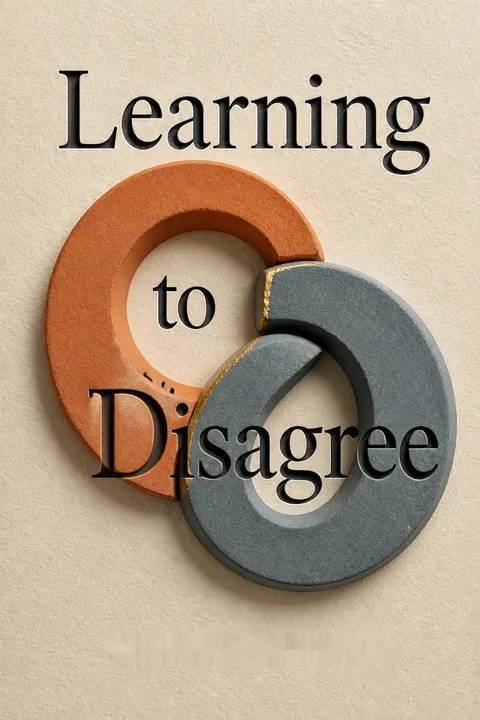

Key Takeaways
1. Empathy: The Foundation of Understanding and Disagreement
Empathy lets you see that smart and well-intentioned people can also make bad arguments.
Empathy bridges divides. It's the ability to understand and share the feelings of another, even when their experiences differ vastly from our own. In law school and in life, empathy allows us to engage with different perspectives meaningfully. It's not about agreeing with everyone, but about recognizing the humanity in those we disagree with.
Practicing empathy requires effort. It involves:
- Listening actively without immediately judging
- Acknowledging the limits of our own experiences
- Seeking to understand the context behind others' beliefs and actions
- Recognizing that our initial assumptions about others may be incorrect
Empathy doesn't mean abandoning our own convictions. Rather, it enriches our understanding and strengthens our ability to articulate our own positions effectively.
2. Fairness: A Complex Interplay of Experience and Perspective
Sometimes questions of fairness lack clear answers.
Fairness is subjective. What seems fair to one person may seem unjust to another. Our perceptions of fairness are shaped by our personal experiences, cultural background, and individual circumstances. This complexity is evident in legal systems, where judgments about fairness often involve weighing competing interests and values.
Factors influencing perceptions of fairness include:
- Personal experiences and biases
- Cultural and societal norms
- Power dynamics and privilege
- Contextual information
Recognizing the subjectivity of fairness doesn't mean abandoning the pursuit of justice. Instead, it calls for a more nuanced approach, considering multiple perspectives and striving for solutions that balance competing interests as equitably as possible.
3. Navigating Zero-Sum Situations: When Compromise Isn't Possible
Compromise is not always possible.
Zero-sum situations are inevitable. In law and in life, we often encounter situations where one party's gain is another's loss. These scenarios challenge our ability to find middle ground and force us to make difficult choices.
Strategies for handling zero-sum situations:
- Clearly define the stakes and interests involved
- Seek creative solutions that might expand the available options
- Focus on long-term relationships rather than short-term wins
- Accept that sometimes, a clear decision must be made
While compromise is often ideal, recognizing when it's not possible allows us to approach conflicts more realistically and find alternative ways to maintain relationships and respect differing viewpoints.
4. The Art of Difficult Conversations: Timing, Context, and Approach
We can have difficult conversations, but context matters.
Difficult conversations require skill. Engaging in challenging discussions about sensitive topics is an essential part of personal growth and societal progress. However, the effectiveness of these conversations depends greatly on when, where, and how they occur.
Key considerations for difficult conversations:
- Choose the right time and place
- Build a foundation of trust and mutual respect
- Listen actively and empathetically
- Be open to changing your own mind
- Focus on understanding, not just convincing
Approaching difficult conversations with care and intentionality can transform potentially divisive interactions into opportunities for mutual understanding and growth.
5. Seeing People, Not Problems: Humanizing Interactions
Everyone you meet is far more than whatever impression you have formed in your brief encounter with them.
People are complex. In our fast-paced world, it's easy to reduce others to labels or problems to be solved. However, taking the time to see the full humanity in those we interact with can profoundly change our relationships and our approach to conflicts.
Ways to humanize interactions:
- Practice curiosity about others' experiences and perspectives
- Avoid making assumptions based on limited information
- Look for common ground, even in disagreement
- Remember that everyone is dealing with their own struggles
By recognizing the complexity in others, we open ourselves to deeper connections and more nuanced understandings of the world around us.
6. Faith and Neutrality: Recognizing Inherent Biases
When it comes to education and politics, almost everything hinges on what is "reasonable," not on what is "objective."
True neutrality is elusive. Our beliefs, experiences, and values shape our perceptions and decisions, often in ways we don't fully recognize. This is particularly evident in education and politics, where claims of objectivity often mask underlying biases and assumptions.
Implications of inherent bias:
- The importance of transparency about our own perspectives
- The need for diverse voices in decision-making processes
- The value of critically examining our own beliefs and assumptions
- The recognition that "neutrality" often favors the status quo
Acknowledging our inherent biases doesn't mean abandoning the pursuit of fairness or truth. Instead, it calls for greater self-awareness and a willingness to engage with perspectives different from our own.
7. Forgiveness: A Path to Healing and Growth
Our capacity to forgive depends in part on our capacity to see ourselves as both in need of forgiveness and able to be forgiven.
Forgiveness is transformative. It has the power to heal relationships, reduce personal stress, and create opportunities for growth and reconciliation. However, forgiveness is often misunderstood and can be incredibly challenging, especially in the face of serious harm or injustice.
Key aspects of forgiveness:
- It's a process, not a single act
- It doesn't require forgetting or excusing harmful behavior
- It benefits the forgiver as much as the forgiven
- It requires empathy and self-reflection
Embracing forgiveness doesn't mean accepting injustice. Rather, it's a way of freeing ourselves from the burden of resentment and opening possibilities for positive change.
8. Building Friendships Across Differences
Real friends can go deep and challenge each other but also sometimes hang out and do nothing except make small talk.
Genuine friendships transcend differences. In a world often divided by ideology and identity, building relationships with those different from us is both challenging and essential. These friendships provide opportunities for growth, understanding, and bridging societal divides.
Elements of cross-difference friendships:
- Shared experiences and activities
- Willingness to engage in both light and deep conversations
- Mutual respect and curiosity about each other's perspectives
- Ability to disagree without damaging the relationship
By cultivating friendships across differences, we not only enrich our own lives but also contribute to a more empathetic and interconnected society.
Review Summary
Learning to Disagree receives mostly positive reviews, with readers appreciating its unique approach to navigating differences in a pluralist society. Many found the book's memoir-like structure and law school setting effective in demonstrating real-world examples of disagreement. Readers valued the emphasis on empathy, respect, and open-mindedness when engaging with differing viewpoints. Some critics felt the book lacked concrete strategies for resolving conflicts or didn't provide enough new ideas. Overall, reviewers found the book thought-provoking and relevant to today's polarized climate.
People Also Read




FAQ
What is "Learning to Disagree" by John D. Inazu about?
- Year in the Life: The book follows a year in the life of a law professor, using stories from law school, family, and community to explore how we navigate disagreements.
- Navigating Differences: It focuses on how to engage with people who hold different, even opposing, beliefs with empathy, respect, and nuance.
- Practical and Personal: Through personal anecdotes and classroom vignettes, Inazu illustrates the challenges and rewards of practicing empathy, fairness, and forgiveness in a polarized society.
- Beyond Law: While rooted in legal education, the book’s lessons apply broadly to everyday life, relationships, and civic engagement.
Why should I read "Learning to Disagree" by John D. Inazu?
- Timely Relevance: The book addresses increasing polarization and the need for better ways to handle deep differences in society.
- Practical Tools: Inazu offers actionable advice and real-life examples for having difficult conversations and building empathy.
- Nuanced Perspective: The book avoids simplistic answers, instead encouraging readers to embrace complexity and ambiguity in disagreements.
- Personal Growth: Readers are challenged to reflect on their own biases, assumptions, and approaches to conflict, making it valuable for personal and professional development.
What are the key takeaways from "Learning to Disagree"?
- Empathy is Essential: Understanding others’ perspectives, especially those we disagree with, is foundational to healthy dialogue and relationships.
- Fairness is Complicated: Our sense of fairness is shaped by personal experience, and the law often reflects ambiguity and human judgment rather than clear-cut answers.
- Compromise Isn’t Always Possible: Some conflicts are zero-sum, but even then, we can engage with humility and seek understanding.
- Difficult Conversations Matter: Productive disagreement requires patience, humility, and the willingness to see people, not just problems or positions.
- Forgiveness and Friendship: Forgiveness is possible and necessary for reconciliation, and genuine friendships can form across deep differences.
How does John D. Inazu define and teach empathy in "Learning to Disagree"?
- Seeing Through Others’ Eyes: Empathy is described as “seeing with the eyes of another, listening with the ears of another, and feeling with the heart of another.”
- Law School as Training Ground: Inazu uses law school cases and discussions to push students to empathize with people in extreme or unfamiliar situations.
- Everyday Practice: Empathy is not just theoretical; it’s practiced in daily interactions, from classroom debates to family disagreements.
- Limits and Challenges: The book acknowledges that empathy has limits, especially when our experiences are vastly different from others, but encourages slowing down judgment and seeking understanding.
What does "Learning to Disagree" say about fairness and how we determine what’s fair?
- Fairness is Contextual: Our judgments about fairness are influenced by our backgrounds, experiences, and cultural assumptions.
- Law’s Ambiguity: Legal cases often reveal that fairness is not always clear-cut; the law relies on human judgment and is sometimes inconsistent.
- Procedural vs. Substantive Fairness: The book discusses the tension between following fair procedures and achieving just outcomes, especially in diverse institutions.
- Empathy and Fairness: The ability to empathize with others can shape and sometimes challenge our sense of what is fair.
How does "Learning to Disagree" address situations where compromise isn’t possible?
- Zero-Sum Conflicts: Some issues, like certain legal cases or policy debates, have winners and losers with no room for compromise.
- Law’s Role: The law often resolves these conflicts through rules backed by coercive force, highlighting the seriousness of legal authority.
- Navigating Loss: Inazu encourages readers to keep engaging and persuading, even after losing, rather than resorting to cynicism or calls for revolution.
- Empathy in Defeat: Even when compromise fails, understanding the other side’s motivations can lead to more constructive future engagement.
What practical advice does John D. Inazu offer for having difficult conversations in "Learning to Disagree"?
- Context Matters: Start with relationships and shared experiences before diving into contentious topics, especially with family or close friends.
- Charitable Engagement: Be as charitable as possible, ask good follow-up questions, and avoid taking offense too quickly.
- Distinguish People from Ideas: Separate individuals from their beliefs, recognizing shared humanity even when disagreeing strongly.
- Timing and Readiness: Not every moment is right for a hard conversation; sometimes it’s better to wait or focus on common ground.
How does "Learning to Disagree" explore the concept of neutrality, especially in law and education?
- Neutrality is a Myth: The book argues that true neutrality is impossible—every law, policy, or curriculum reflects underlying values and judgments.
- Case Studies: Examples like snake handling and Amish education show how legal decisions are shaped by nonneutral, value-based reasoning.
- Embrace Nuance: Recognizing the lack of neutrality should lead to more nuanced, persuasive arguments rather than dogmatic assertions.
- Persuasion over Pronouncement: Inazu advocates for open dialogue and persuasion, rather than pretending to be objective or above the fray.
What does "Learning to Disagree" say about the difference between being wrong and being evil?
- Wrong vs. Evil: The book distinguishes between people who are wrong (even deeply wrong) and those who are truly evil, cautioning against labeling all opponents as evil.
- Changing Standards: What is considered evil can shift over time, as seen in historical legal cases about polygamy and marriage.
- Presumption of Good: Inazu encourages starting with the assumption that most people are not evil, even when we strongly disagree with them.
- Practical Exercise: Readers are challenged to find something good in those they most disagree with, as a way to humanize opponents.
How does "Learning to Disagree" approach the topic of forgiveness?
- Forgiveness is Difficult: The book acknowledges that forgiveness, especially after deep harm or injustice, is challenging and often messy.
- Essential for Reconciliation: Forgiveness is presented as necessary for restoring relationships, both personally and societally.
- Examples of Forgiveness: Stories from history (e.g., Japanese American internment, Charleston church shooting) illustrate the power and complexity of forgiveness.
- Openness to Change: True forgiveness requires recognizing our own faults and being open to both giving and receiving grace.
What role do friendship and ordinary interactions play in "Learning to Disagree"?
- Friendship Across Difference: The book highlights the importance of forming friendships with people who hold different views, as a foundation for empathy and understanding.
- Ordinary Moments Matter: Shared activities and small talk are as important as deep conversations in building trust and connection.
- Balancing Deep and Shallow: Real friendships blend meaningful engagement with everyday interactions, making space for both.
- Opportunities for Growth: Cross-generational and cross-perspective friendships challenge and enrich our lives, shaping what we value most.
What are some of the best quotes from "Learning to Disagree" and what do they mean?
- “Empathy is seeing with the eyes of another, listening with the ears of another, and feeling with the heart of another.” — Highlights the core of the book’s approach to understanding others.
- “People don’t always get what they deserve in this world.” — Reminds us of the complexity and imperfection of fairness.
- “If you start a conversation with the assumption that you are right or that you must win, obviously it is difficult to talk.” — Emphasizes the need for humility in dialogue.
- “Each of us is more than the worst thing we’ve ever done.” — Encourages seeing the full humanity in others, not reducing them to their mistakes.
- “If we really want to love, we must learn to forgive.” — Underlines the necessity of forgiveness for genuine connection and healing.
What is the overall method or philosophy that John D. Inazu advocates in "Learning to Disagree"?
- Embrace Complexity: Inazu urges readers to resist oversimplification and to accept the ambiguity and nuance inherent in disagreements.
- Practice Empathy and Charity: The book’s central method is to approach others with empathy, seeking to understand before judging.
- Engage in Good Faith: Recognize that people can disagree strongly and still be acting in good faith, without surrendering one’s own convictions.
- Build Civic Virtue: By practicing these habits in daily life, readers can contribute to a healthier, more pluralistic society where disagreement leads to growth rather than division.
Download PDF
Download EPUB
.epub digital book format is ideal for reading ebooks on phones, tablets, and e-readers.








































