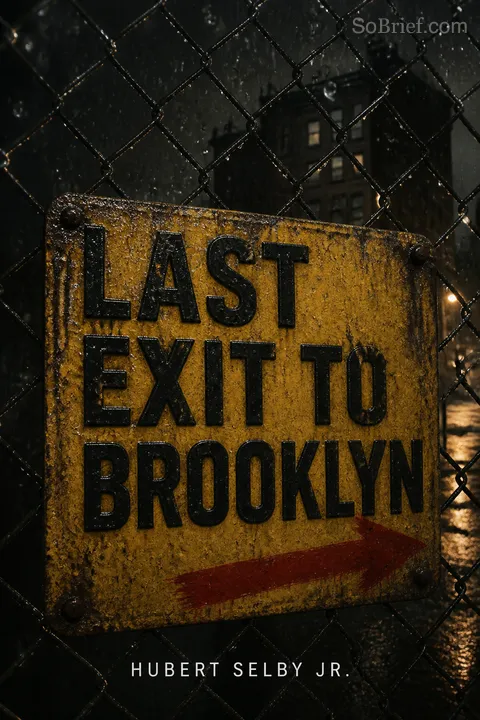
Plot Summary
Diner Dreams and Dread
The novel opens in a Brooklyn all-night diner—the Greeks—where young men slump restlessly, scraping by, dreaming of fast cars and sharp clothes to cut through the monotony. Their world is shaped by poverty, boredom, and a hunger for respect, measured as much by their fighting as their fashion. Jokes, petty insults, and casual violence fill the air, masking a constant undercurrent of frustration. In moments of camaraderie and cruelty, they jostle for superiority in the only ways they know—through stories, bravado, and the currency of humiliation. The atmosphere is raw, restless, and tense, with the unspoken knowledge that nothing here ever really changes. The jukebox spins out lives stuck on repeat, and the moonlight outside offers only the delusion of freedom.
Georgette's Broken Night
Georgette, a flamboyant queen, floats on the fringes of this male world—neither accepted nor entirely rejected. She burns with desire for Vinnie, an ex-con whose allure is the stuff of dreams for the misfits circling the diner's orbit. Her life is a tangle of benzedrine, fleeting affection, and endless masquerade. Vulnerability is dangerous currency; the more Georgette reveals, the more she risks derision or outright harm. When a night of chasing Vinnie for attention ends in a cruel wound—one played for laughs and pain by the crowd—Georgette's spiral deepens. Even at home, there's no comfort: family disgust replaces street brutality, and the hope of love curdles into isolation, addiction, and desperate escape.
Descent of the Queen
In the perfumed, shabby safeholds of uptown queens, Georgette tries to patch the wound of rejection with pills, pot, and the queasy thrill of communal transgression. The "girls" gather, with Georgette at the center, their laughter and longing overlapping until pain and pleasure are indistinguishable. In a druggy haze of jazz and morphine, the boundary between celebration and desperation dissolves; a visit from Vinnie's crowd blurs the lines between exploitation and agency. The fleeting glimmers of acceptance—a hand held, a poem read—stand out against the ever-present threat of violence. This party is liberation and oblivion, revelry and erasure, and Georgette is both queen and victim.
Vinnie's Parole and Legacy
Vinnie's story is a parable of wasted potential and toxic masculinity. From stealing hearses as a boy to real time behind bars, his life spirals between petty crime and the warped glory that comes from survival. Tattoos and prison tales earn neighborhood respect, feeding his sense of invincibility and entitlement—especially with misfits like Georgette vying for his notice. Friendship is transactional, love is humiliation, and criminal achievement is measured in scars and headlines. Each act, from violence to sexual manipulation, reinforces a cycle of brutality that offers Vinnie meaning at the expense of empathy, never pausing for the possibility of escape.
Kicks and Cruelty
With money scarce and options scarcer, the boys of Brooklyn channel their rage into ever-escalating challenges and competitions—fights, sexual conquest, and mugging drunks. Violence is entertainment, currency, and identity all at once. The girls, too, must assert dominance, undermining each other for the right to scraps of affection or attention. In this world, physical force and emotional manipulation are indistinguishable; to be weak is to be dead already. All bonds are temporary, broken by fear, need, or the lure of a better hustle. Here, cruelty is not merely survival, but the only language most understand.
Strike Machine
The strike at the local factory offers the illusion of collective power and brotherhood, but reality seeps in quickly. Harry, the union man, uses authority as a salve for personal failings: he eschews actual labor for self-aggrandizement, antagonizing bosses, and stoking resentment among his peers. The strike devolves into a farce—beer-soaked meetings, food lines, and mounting bitterness as the weeks drag on and hope curdles into resignation. Above it all, the union's supposed unity is undercut by self-interest and brewing violence, with Harry's emptiness mirrored in the men's deteriorating spirits.
Tralala's Spiral
Tralala, once the boldest and most desired among the neighborhood's girls, finds herself slipping from petty larceny to open prostitution, lurching from one degraded encounter to the next. Her sexuality is both weapon and curse—a way to survive, to get a few dollars, to be seen. But the men who once gathered for her respect now come only to take, and each drunken conquest leaves her emptier and more alienated. The city's endless appetite for violence and sex leaves Tralala used up, culminating in a horrifying, public gang rape that is at once spectacle and oblivion—a fate no one laments.
Parties, Pills, and Pain
As nights blur into days, the apartments of Brooklyn double as stages for desperate attempts at joy—parties fueled by alcohol, drugs, and exhausted hope. Each gathering promises connection, escape, or at least numbness, but the morning after always arrives. The women struggle with children and men, the men with work or idleness; everyone dreams of something just out of reach. The cycle of high and crash becomes its own jail—sharpening old wounds and birthing new ones. The need for love turns cruel, turning the façade of fun into a mask for mutual destruction.
Birth, Bikes, and Burdens
For a moment, life seems almost manageable: weddings, births, a bike, a bit of celebration. But these rituals reveal only the fragility beneath the surface—the old wounds that never heal, love that is confused with violence, and the ever-present threat of falling back into poverty or disaster. Even hope is transactional; each good thing exacts its price, and every celebration is shadowed by the ghosts of what's been lost. The next crisis, it's understood, is never far off.
Harry's Union Hell
Stripped of genuine dignity and connection, Harry's sense of worth is invested entirely in his role as shop steward. He basks in moments of power—issuing orders, signing expense forms, ranting at management—but cannot escape the self-hatred and emptiness that chase him into dream and waking. His relationships, with wife and child or with the men under his sway, are brittle. The more the strike drags him down, the more beer, empty bravado, or sexual exploration he seeks, unable to fill the growing void inside or to escape the angry, childish nightmares of his own mind.
Desperation on the Picket
As weeks stretch into months, the strike loses all its romance. Food lines and brawls supersede unity, while rats—literally and figuratively—pick at all toward emptiness. The company weathers the stoppage easier than the men; even when trucks are bombed and blood is spilled, nothing fundamental changes. Both bosses and union leaders are revealed as self-serving, more interested in keeping a place at the table than in the fate of the workers. By the time a contract is settled, all that remains is exhaustion, disappointment, and the nagging knowledge nothing significant has changed.
The Lot's Final Act
Harry's personal struggle reaches its breaking point in a horrifying scene of humiliation and sexual violence—a public display of destruction, vengeance, and misplaced justice. The boys needed someone to blame, and Harry's difference, weakness, and secret desires have long marked him. The mob's violence is personal and systemic: a way of expunging terror, lust, and futility by breaking another. Harry's destruction is unsparing, even as the world outside—the moon, the diner—remains untouched, unconcerned.
Apartment Block Blues
Beyond the Greeks, the story fans out into the apartments and courtyards of the Brooklyn project, where families scrape through life's indignities: neighbors turn on neighbors, children and parents fight, gossip becomes a weapon against loneliness. Violence simmers beneath the surface, children reenact its lessons, and the cycle of resentment, hope, and degradation continues. The petty and the profound collapse together in the chorus of everyday bruising, all of it magnified by the concrete and gossip of communal living.
Children, Chaos, and Chains
The youngest in the projects quickly absorb the world's lessons: cruelty, racial tension, and bitter avoidance of vulnerability. Play turns violent, games are rehearsals for the power struggles that await. Parents, themselves beaten down by circumstance, enforce these codes, perpetuating the chain. Even the smallest crises—spilled milk, lost tempers—are colored by the greater violence pressing from all sides. Childhood here is less protected sanctuary than a crucible and a curse.
Love, Loneliness, Longing
Ada, the elderly Jewish widow, embodies the persistence of memory and the ache of longing in a world that barely sees her. Each action—bed-making, window-gazing—is a ritual against despair, the past a soft echo in her present solitude. She looks for warmth, for conversation, even for a word, and survives on reminiscence and faith, her heartbreak sharp in the spring sun. While others battle for scraps, Ada endures, waiting, haunting the bench where nobody sits.
Nighttime Revels and Routine
As night falls, the apartments and streets fill with the sounds of parties, fights, lovemaking, and men and women chasing warmth in one another's arms or in the bottle. The endless chase for pleasure and money—whether temporary or transactional—dominates the dark hours. In the gaps between moments of sex, laughter, or sleep, bitterness seeps back in, but the routine remains unbroken. The city's heart beats on, indifferent to individual pain.
Sunday Sun and Suffering
Dawn brings little renewal. The few brief hours of sunlight highlight everything that's been lost, wasted, or beaten down: hangovers, bruises, frayed nerves, persistent poverty. Families shuffle through the motions—breakfast, errands, church bells ringing—never quite escaping the weariness beneath. Even the children at play reflect the underlying current of exhaustion and violence. Yet some, like Ada, find a slim grace in memory or ritual, small hope glowing in the routine of heartbreak.
Circle: All Ends Return
In the grim ballet of Brooklyn's streets and apartments, the players return to their marks. The arguments, beatings, pleasures, and betrayals play out on constant loop. Some continue to hope for escape; most merely endure. In the margins, dreams fade or flare, wisdom is ignored or spat upon. The story closes as it began: night falls, tempers simmer, the city's indifferent churn continues. Except, perhaps, for the faint trace of a hymn from Ada's window, or a child's half-innocent laughter at play—the smallest cracks in the concrete, letting through a little, fragile light.
Analysis
Last Exit to Brooklyn is a shockwave—both a howl against postwar urban despair and a darkly lyric hymn to the indestructible, if perverse, will to survive. Selby's narrative strips dignity from the American myth of social mobility, making visible the violence, sexism, and hypocrisy that enables the few to rise while the many founder. The city's poor are not "noble" but desperate, capable of beauty and horror in the same breath; love is mangled by power, and community gives way to cruelty more often than compassion. The novel's fragmentation, chorus structure, and relentless voice make it a touchstone for subsequent urban literature, prefiguring modern tales of marginalization and systemic failure. Its lessons are bleak, but essential: empathy cannot be manufactured by law or custom, and cycles of degradation will hold unless some deep inner change—a real interruption—forces the spell to break. Until then, Selby's Brooklyn churns, and in its mirror, so does our own world, asking whether we will continue to walk each other back into the darkness, or find, in the stubborn longing of even the most broken, a way toward real connection.
Review Summary
Reviews of Last Exit to Brooklyn are overwhelmingly positive, averaging 3.95/5. Many readers describe it as a brutal, visceral, and unforgettable experience, praising Selby's unconventional prose style—minimal punctuation, stream-of-consciousness narrative—as deliberately reflecting the broken world he depicts. The book's unflinching portrayal of violence, addiction, prostitution, and repressed sexuality in 1950s Brooklyn provoked an obscenity trial in Britain. While some find it gratuitously shocking or lacking redemptive qualities, most acknowledge its powerful empathy and lasting literary influence on works like Trainspotting.
People Also Read




Characters
Georgette
Georgette, born George, is a self-proclaimed queen at odds with both her family and the brutal masculinity of the Brooklyn street. Hyper-conscious of her otherness, Georgette constructs and lives her identity through performance—costume, language, and the hope of passion. Her longing for Vinnie is more than a crush: it's a hunger for recognition, affection, and belonging in a world that punishes vulnerability. Her friends—other queens and outcasts—are both solace and competition; acceptance is temporary, betrayal forever lurking. Her psychological core is a swirling mix of yearning, self-loathing, and stubborn hope, making Georgette both tragic and heroic in her futile chase for love.
Vinnie
Vinnie is the archetype of the local tough—handsome, streetwise, invested in image, and haunted by a disfiguring emptiness. He moves between crime and brief domesticity, idolized by those weaker or more isolated. His masculinity is armor, but also a trap: his need for control, respect, and sexual conquest masks the fear that he's nothing on his own. Each bout of violence or casual humiliation feeds his sense of invincibility, yet leaves him restless and unsatisfied. With Georgette, he teases and exploits rather than confronts any deeper emotion, incapable of genuine intimacy.
Harry Black
Harry is both a factory worker and a union steward—his life defined by resentment, empty pride, and a toxic need to assert dominance. He lords over those weaker, especially women and the vulnerable, but is himself fundamentally empty, wracked with self-disgust, nightmares, and a yearning for nurture he cannot accept. His sexuality is confused, surfacing in uneasy moments with his child and in furtive liaisons with drag queens. Harry's psychological landscape is one of bitter power struggles, repression, and a constant running from his own pain.
Tralala
A brash, beautiful girl who wields her sexuality as a tool and a weapon, Tralala drifts from transactional relationships to outright prostitution, always trying to stay one step ahead of the men—until the city's appetite finally swallows her whole. Beneath her defiance burns a terrible vulnerability: the knowledge that the world respects her only for what it can take. Her psychological arc is a classic tragedy of self-destruction, marked by brief highs, growing desperation, and a shattering, violent end that no one mourns.
Ada
Ada is the novel's moral and emotional anchor, if also its most tragic casualty. Her world is set apart—her husband dead, her son killed in war, old rituals the only defense against the surrounding brutality. She endures in solitude, making her small apartment a shrine to vanished warmth, even as her neighbors mock and ignore her. Ada's resilience is spiritual but also heartbreakingly meaningless in the world around her. Psychologically, she is sustained by memory, ritual, and a faith that outlasts all disproval.
Vinnie's Crew (Tony, Al, Freddy, et al.)
This squad of drifters and hustlers revolves around the Greeks diner, defined by their routines, their violence, and their empty dreams. Each is stuck in adolescence—struggling for scraps of dignity, taking pleasure in another's fall, yoked together by desperation and a need for recognition. Their group dynamic is both family and battleground; even camaraderie quickly curdles into bullying.
Mary and Lucy
Mary and Lucy represent different faces of womanhood in the project: Mary is loud, combative, barely holding family chaos at bay; Lucy, softer but no more fulfilled, channels her anxiety into housework and quiet desperation. Both are trapped—by poverty, by men, by the endless demands of motherhood. Their relationships with children and partners are riddled with love, frustration, and defeatism, leaving them psychologically battered day after day.
Harry's Wife, Marry
Harry's wife rarely speaks but is a living measure of the violence and futility Harry visits on those closest to him. She craves affection and stability, clings to unhealthy hope, yet is continuously used, disappointed, and abused. Her psychological arc is one of increasing resignation and stoic despair, witnessing but unable to break the cycles around her.
Tralala's Victims
Tralala's partners and abusers are less individuals than a collective embodiment of the city's hunger for pleasure, violence, and spectacle at any price. Their brief moments of humanity are overwhelmed by their willingness to take, discard, or destroy, leaving a trail of damage they never pause to consider.
The Chorus of Residents
Across the project, the anonymous voices—housewives, children, drunks, janitors, and the endless crowd—form a brutal Greek chorus. Their stories overlap, clash, and echo, weaving together a backdrop of perpetual conflict, fleeting amusement, and tired wisdom. Individually, most are powerless; together, their gossip and judgment shape the fates of the characters far more than law or love ever do.
Plot Devices
Fragmented Narrative Structure
Selby's novel is famously nonlinear: instead of one hero's journey, the story is broken into overlapping fragments—mini-novellas, chapters, vignettes—that spiral around recurrent themes and characters. This fragmentation heightens the sense of chaos and entrapment. The world is not one big story, but countless small ones bleeding into each other, each with their own private tragedies and dirty jokes. Time is circular; nothing is resolved. Familiar faces may vanish for hundreds of pages, only to reappear as background or victim later. The sum is a tapestry of collective ruin, not individual progress.
Chorus and Interlude
Throughout the narrative, Selby interjects choruses and newsletters—bits of gossip, project bulletins, and petty hatreds—echoing the style of Greek tragedy. These voices judge, comment, mislead, and torment. Their effect is to ground the story in communal reality; no tragedy is private, and no act escapes the scrutiny and malice of one's neighbors. The chorus is both suffocating and darkly comic, showing how the community perpetuates its own cycles of deprivation.
Recurrent Motifs: Violence as Ritual, and Yearning as Anchor
In Brooklyn, violence is not an aberration but a daily rite—a method of attaining temporary order, keeping chaos at bay, or proving identity. It is as structured as any job or religion, perpetuated in games among children, sex acts among adults, and voting among union men. Counterpoint to this is yearning—each character, from Georgette to Ada, believes in something just out of reach (love, respect, peace), and this hope keeps them going, however foolish or doomed.
Hyperrealism and Free Indirect Speech
Selby's relentless use of unpunctuated dialogue, rapid interior monologue, and nonstandard spelling serves to immerse the reader completely in the consciousness of the characters. The reader feels the suffocation, anger, irony, and confusion not as a spectator but as a participant—inside the skin of Georgette, Tralala, Harry, even the children. The cumulative effect is both empathy and claustrophobia.
Foreshadowing and Cyclical Fate
From the first scene at the diner to the last neighborhood squabble, the sense of doom is constant. Violence will return; parties will end in tears; even apparent victories (the birth of a child, a new contract, a love affair) are only setups for the next disaster. This inexorable circularity is foreshadowed again and again, so the end is always implicit in the beginning.
Download PDF
Download EPUB
.epub digital book format is ideal for reading ebooks on phones, tablets, and e-readers.








































