
Résumé de l'intrigue
Three Women, Three Worlds
In India, Sicily, and Canada, three women awaken to days that will change their lives. Smita, a Dalit "untouchable" in rural Uttar Pradesh, dreams of a better future for her daughter, Lalita. Giulia, in Palermo, is the youngest daughter in a family of wig-makers, inheriting a legacy of skilled hands and tradition. Sarah, in Montreal, is a high-powered lawyer and mother, balancing ambition and motherhood with a precision that leaves no room for error. Each woman is bound by invisible threads—of duty, hope, and the desire to break free from the roles assigned to them. Their stories begin apart, but the silent promise of transformation pulses beneath the surface, waiting to entwine their fates.
Smita's Defiant Morning
Smita wakes with a flutter of hope and dread: today, her daughter will go to school. In a world where Dalits are condemned to clean latrines and eat rats, Smita's insistence that Lalita be educated is an act of rebellion. Her husband, Nagarajan, is skeptical, fearing the wrath of the upper castes. But Smita's determination is unyielding—she will not let her daughter inherit the same shame and suffering. The ritual of braiding Lalita's hair becomes a silent vow: her child will not be invisible, will not be broken. Smita's love is fierce, her hope fragile, and as she sends Lalita off, she clings to the possibility of change, even as the world conspires to keep them in their place.
Giulia's Inheritance of Hands
Giulia's world is the hum of women's voices and the scent of hair in her father's workshop. She is both daughter and worker, proud of her skill and the legacy of the Lanfredi family. The business of collecting, washing, and weaving hair is intimate and communal, a tapestry of stories and secrets. Giulia's hands are deft, her eyes sharp, and she finds comfort in the rhythm of tradition. Yet, beneath the surface, change is coming. Her father's absence one morning signals a shift, and Giulia feels the weight of responsibility settling on her shoulders. The workshop is her inheritance, but also her burden—a fragile world she must learn to protect or let go.
Sarah's Relentless Race
Sarah's day is a symphony of efficiency: mother, lawyer, provider, perfectionist. She is the first woman partner at her firm, a model of success and discipline. Yet, her victories come at a cost—her marriages have failed, her children are raised by "Magic Ron," and guilt is her constant companion. Sarah's identity is built on achievement and denial; she cannot afford to show weakness. The pressure is relentless, the stakes always rising. She is admired and feared, but inside, she is split in two, always running, always hiding the cracks that threaten to break her apart.
The First Fractures
Smita's hope is shattered when Lalita returns from school, beaten and humiliated for refusing to sweep the classroom. Giulia's father is hospitalized after a mysterious accident, leaving the family and the workshop in limbo. Sarah collapses in court, her body betraying her ambition. Each woman faces a moment of crisis—an intrusion of violence, loss, or vulnerability that exposes the limits of their control. The world they have known is no longer safe or certain. The braid of their lives begins to unravel, and the need for change becomes urgent, inescapable.
Smita's Daughter's Wound
Smita discovers the marks of violence on Lalita's back, inflicted by the schoolmaster for her refusal to submit. The dream of education is crushed by the reality of caste and cruelty. Smita's anger turns briefly against her daughter, then against herself and the world that perpetuates such injustice. She vows that Lalita will not return to school, but the alternative—returning to the latrines—is unbearable. Smita's love is both shield and sword, but she is trapped by poverty and tradition. Her silent rebellion grows, a seed of hope in barren soil.
Giulia's Father Falls
Giulia's father lies in a coma, and the workshop's future is uncertain. The family is paralyzed by grief and fear, but Giulia is forced to confront the reality of their financial ruin. The discovery of unpaid bills and mounting debts reveals the fragility of their legacy. Giulia is haunted by memories of her father's strength and the laughter they shared, but now she must become the pillar. The weight of tradition and expectation presses down, and Giulia must decide whether to fight for the workshop or let it die with her father.
Sarah's Collapse
Sarah's collapse in court is the first undeniable sign that something is wrong. The diagnosis is swift and brutal: cancer. The news is delivered in clinical terms, but its meaning is existential. Sarah's identity as a warrior, a provider, is threatened by the vulnerability of illness. She resolves to fight in silence, to hide her condition from her colleagues and children. The battle is not only against disease, but against the stigma and isolation that come with it. Sarah's world narrows to a secret war, fought behind a mask of competence.
Smita's Breaking Point
Smita's world closes in as the village's violence and fatalism threaten to consume her and Lalita. Stories of Dalit women punished for seeking freedom haunt her. Her husband's resignation is unbearable—he would rather endure humiliation than risk everything. Smita, however, cannot accept a life of submission for her daughter. She decides to flee, to risk everything for a chance at dignity and hope. The act of stealing back the money given to the Brahmin is both crime and justice, a desperate bid for agency in a world designed to keep her powerless.
Giulia and the Stranger
In the midst of crisis, Giulia meets Kamal, a Sikh immigrant whose presence is both unsettling and magnetic. Their connection is immediate, forged in the shared experience of being outsiders—he by race and religion, she by circumstance and ambition. Kamal's story of exile and resilience inspires Giulia, and their clandestine love becomes a source of strength. Kamal's perspective opens Giulia to new possibilities, challenging her to imagine a future beyond the boundaries of tradition and fear.
Sarah's Diagnosis
Sarah's diagnosis is a private apocalypse. She orchestrates her treatment with the same precision as her legal cases, hiding her illness from her colleagues and children. The secrecy is both shield and prison, isolating her from support and compassion. As the disease progresses, Sarah's control slips—her body changes, her work suffers, and her colleagues begin to suspect. The betrayal by a trusted junior, Inès, exposes her vulnerability to the firm's hierarchy. Sarah is forced to confront not only her mortality, but the fragility of the identity she has built.
Smita's Flight
Under cover of night, Smita and Lalita flee their village, leaving behind everything they have known. The journey is fraught with danger—poverty, hunger, the threat of violence. Smita's resolve is tested at every turn, but her love for Lalita is unwavering. The road to Varanasi and beyond is a pilgrimage of faith and desperation. Along the way, Smita encounters other women—widows, exiles—whose stories echo her own. The solidarity of suffering becomes a source of strength, and Smita clings to the hope that somewhere, a new life is possible.
Giulia's Secret Unveiled
Giulia uncovers the full extent of the workshop's debts and the impossibility of saving it through traditional means. The family is divided—her mother and sisters urge her to accept defeat, to marry for security. Giulia is torn between duty and desire, tradition and innovation. Kamal proposes a radical solution: importing hair from India, where it is offered in temples as a sacred gift. The idea is audacious, risky, and potentially transformative. Giulia's faith in herself wavers, but the memory of her father's trust and Kamal's support rekindle her courage.
Sarah's Unraveling
Sarah's secret is exposed, and the firm turns against her. Compassion is a mask for exclusion; her clients and colleagues begin to sideline her. The betrayal by Inès and the opportunism of Curst, her rival, strip Sarah of her professional identity. She is forced into sick leave, her career in ruins. The loss is devastating, and Sarah spirals into depression. Yet, in the depths of despair, she finds a new resolve—not to reclaim her old life, but to fight for dignity, for herself and for others who are marginalized by illness and difference.
Smita's Pilgrimage
Smita and Lalita's journey culminates at the temple of Tirupati, where thousands offer their hair in devotion. The act of shaving their heads is both sacrifice and liberation—a shedding of the past, an offering for the future. Smita's faith is rewarded with a sense of peace and renewal. The journey has been harrowing, but she and Lalita emerge transformed, ready to begin anew in Chennai. The braid is cut, but the bond between mother and daughter is stronger than ever.
Giulia's Impossible Choice
With her father's death, Giulia becomes the head of the family and the workshop. Against the doubts of her family and the weight of tradition, she persuades the workers to embrace the new vision—importing Indian hair, forging a link between worlds. Kamal becomes her partner in business and in life, their union a testament to the power of love and courage. The first shipment arrives, a symbol of hope and continuity. Giulia's hands, once bound by tradition, now weave a future of her own making.
Sarah's Surrender and Resolve
Sarah, stripped of her old identity, finds strength in vulnerability. She seeks out a wig made from Indian hair, crafted in Sicily—a tangible connection to the lives of women she will never meet. The act of shaving her head and donning the wig is a ritual of acceptance, a reclaiming of self. Sarah resolves to fight not only for her own survival, but for justice and dignity for all who are marginalized. Her new life will be built on truth, compassion, and the courage to be whole, even in brokenness.
The Braid Completed
The stories of Smita, Giulia, and Sarah converge in the silent journey of hair—cut in devotion, woven in skill, worn in hope. Each woman, in her own way, has broken free from the constraints of her world, forging new paths for herself and those she loves. The braid, symbol of connection and resilience, is completed—not as a single story, but as a tapestry of lives interwoven across continents and destinies. The work is never finished; the threads continue, binding women in struggle, in hope, and in the quiet triumph of survival.
Analysis
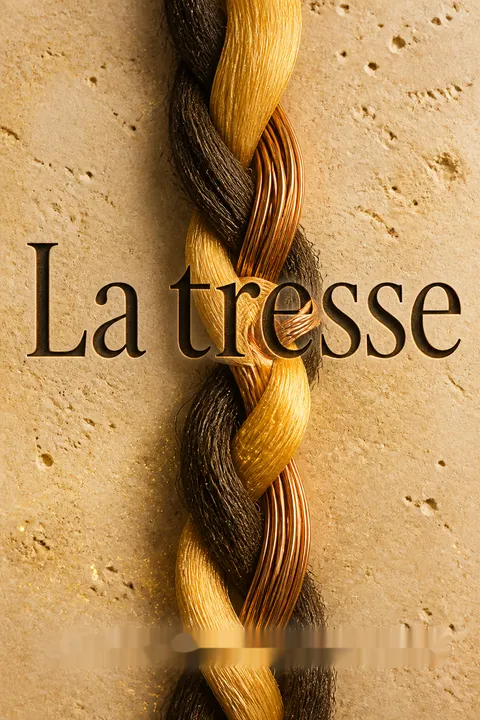
Laetitia Colombani's La tresse is a powerful meditation on the invisible threads that bind women across cultures, classes, and continents. Through the interwoven stories of Smita, Giulia, and Sarah, the novel explores the enduring realities of caste, tradition, and gendered oppression, while celebrating the resilience and agency of women who refuse to be defined by their circumstances. The braid is both literal and symbolic—a marker of identity, a tool of survival, and a bridge between worlds. Colombani's narrative structure reinforces the theme of interconnectedness, showing how acts of courage and solidarity can ripple across boundaries, transforming not only individual lives but the fabric of society itself. The novel's modern relevance lies in its insistence that dignity, hope, and change are possible, even in the face of overwhelming odds. La tresse invites readers to recognize the shared humanity in every struggle, and to honor the quiet, persistent work of women who, like the braider, weave new stories from the broken strands of the old.
Les lecteurs ont aussi lu


Characters
Smita
Smita is a Dalit woman in rural India, condemned by birth to the lowest rung of society. Her life is defined by humiliation and backbreaking labor, but her love for her daughter, Lalita, ignites a fierce hope for change. Smita's psychological landscape is shaped by trauma and resilience; she is both victim and rebel, haunted by the violence of caste but unwilling to surrender her child to the same fate. Her journey is one of transformation—from resignation to defiance, from invisibility to agency. Smita's relationships are marked by both tenderness and conflict, especially with her husband, whose fatalism she cannot accept. Her ultimate act of escape is a testament to the power of maternal love and the longing for dignity.
Giulia
Giulia is the youngest daughter in a Sicilian family of wig-makers, raised in the warmth and chaos of the workshop. She is practical, loyal, and deeply connected to her family's craft, yet restless beneath the surface. Giulia's psychological struggle is between duty and desire, tradition and innovation. The crisis of her father's illness and the threat of bankruptcy force her to confront her own capacity for leadership and change. Her relationship with Kamal, an immigrant outsider, awakens her to new possibilities and challenges her to defy social expectations. Giulia's development is a journey from passivity to agency, from the safety of inherited roles to the risk of forging her own path.
Sarah
Sarah is a high-powered lawyer in Montreal, defined by her relentless drive and perfectionism. Her identity is built on achievement, control, and the denial of vulnerability. The onset of cancer shatters her carefully constructed world, exposing the fragility beneath her armor. Sarah's psychological arc is one of disintegration and renewal—she is forced to confront the limits of her strength, the cost of her sacrifices, and the reality of exclusion and stigma. Her relationships—with her children, her ex-husbands, and her colleagues—are marked by both love and distance. Ultimately, Sarah's journey is toward acceptance, authenticity, and the courage to fight for herself and others.
Lalita
Lalita is Smita's young daughter, the embodiment of her mother's dreams and fears. Her innocence is both shield and vulnerability; she is subjected to violence and humiliation, yet her refusal to submit marks her as a figure of quiet resistance. Lalita's relationship with her mother is central—she is both protected and burdened by Smita's hopes. Her journey from the village to the temple is a rite of passage, a shedding of the past and a step toward a future her mother dares to imagine.
Kamal
Kamal is a Sikh immigrant in Sicily, marked by loss and resilience. His presence in Giulia's life is transformative—he is both lover and catalyst, challenging her to see beyond the boundaries of tradition. Kamal's own journey is one of survival and adaptation, carrying the scars of exile and the hope of belonging. His knowledge of the world beyond Sicily becomes the key to Giulia's salvation, and their partnership is a testament to the power of love across difference.
Nagarajan
Nagarajan is Smita's husband, a man shaped by generations of oppression and fatalism. His love for his family is real, but his capacity for hope is limited. He embodies the internalized oppression of the Dalit community, preferring the safety of submission to the risk of rebellion. His relationship with Smita is complex—he admires her strength but fears her defiance. Ultimately, he is left behind, a symbol of the cost of change.
The Mamma (Giulia's Mother)
Giulia's mother is the emotional anchor of the family, fiercely protective and deeply rooted in tradition. Her faith and pragmatism are both comfort and constraint for her daughters. She resists change, fearing the loss of identity and security, but ultimately yields to Giulia's vision. Her grief and resilience mirror the struggles of mothers everywhere, caught between the past and the future.
Inès
Inès is Sarah's junior colleague, initially loyal and competent, but ultimately driven by ambition. Her betrayal of Sarah is both personal and systemic—a reflection of the ruthless competition and lack of solidarity in the professional world. Inès's actions catalyze Sarah's downfall, exposing the fragility of trust and the dangers of isolation.
Francesca
Francesca is Giulia's older sister, pragmatic and risk-averse. She represents the pull of tradition and the fear of change, urging Giulia to accept defeat and seek security through marriage. Her skepticism is both a challenge and a foil to Giulia's courage, highlighting the generational and psychological divides within families facing crisis.
The Nonna
The Nonna is the oldest worker in the Lanfredi workshop, a surrogate grandmother to Giulia and a living link to the past. Her wisdom, humor, and resilience provide comfort and perspective. She embodies the strength of women who endure, adapt, and support one another through hardship and change.
Plot Devices
Interwoven Narratives
The novel's structure mirrors its central metaphor: three women's lives are told in alternating chapters, each strand distinct yet gradually converging. The narrative moves between India, Italy, and Canada, using parallel events—crisis, loss, rebellion—to highlight universal themes of oppression, resilience, and transformation. The stories are linked not by direct contact, but by the journey of hair: cut in India, woven in Sicily, worn in Canada. This invisible thread becomes a symbol of connection across cultures and destinies. Foreshadowing is used to build tension—each woman's crisis hints at the possibility of change, while the motif of braiding recurs as a sign of both bondage and liberation. The narrative's cyclical structure—beginning and ending with the act of braiding—emphasizes the continuity of women's struggles and the hope of renewal.
Télécharger le PDF
Télécharger l'EPUB
.epub digital book format is ideal for reading ebooks on phones, tablets, and e-readers.








































