
Plot Summary
River Boy's Quiet Life
Malcolm Polstead, an innkeeper's son, lives a contented life at the Trout Inn near Oxford, helping his parents and running errands for the nuns at Godstow Priory. He is curious, kind, and happiest in his canoe, La Belle Sauvage, with his dæmon Asta. The world is full of small wonders and gentle routines: school, chores, and the quiet wisdom of the nuns. Yet, beneath the surface, Malcolm's inquisitive mind and open heart make him attentive to the subtle tensions and secrets that ripple through his community. His life is shaped by the river, the inn's guests, and the gentle rhythms of rural Oxfordshire, but change is coming, and Malcolm's innocence is about to be tested by forces far beyond his understanding.
Secrets Across the Water
One winter night, three distinguished men dine at the Trout, including the ex–lord chancellor, Lord Nugent. Their probing questions about the priory and the possibility of a baby being sheltered there unsettle Malcolm. He senses, with Asta's help, that these men are not what they seem—agents in a secret war between the secular and religious powers. Malcolm's world expands as he becomes a silent witness to adult intrigue, learning that the priory may soon become a sanctuary for someone important. The river, once a playground, now carries whispers of secrets and danger, and Malcolm's role as an observer draws him into a web of political and spiritual conflict.
The Acorn and the Court
Malcolm stumbles upon a mysterious acorn-shaped container dropped by a desperate man on the canal towpath. Inside is a coded message about the Rusakov field and Dust, hinting at forbidden research and the threat of the Consistorial Court of Discipline (CCD). The man is soon arrested and later found dead, a victim of the CCD's ruthless suppression. Malcolm, with Asta's guidance, keeps the secret, realizing the peril of knowledge in a world ruled by fear. The acorn becomes a symbol of resistance and curiosity, connecting Malcolm to a clandestine network of scholars and spies, and marking him as a player in a larger, more dangerous game.
Lyra's Arrival
The priory receives a new charge: Lyra, the infant daughter of Lord Asriel and Mrs. Coulter, both notorious figures. Malcolm is enchanted by the baby and becomes her devoted protector. Rumors swirl about Lyra's parentage and a witches' prophecy that marks her as a child of destiny. The nuns, unaccustomed to caring for infants, rely on Malcolm's practical help and gentle affection. Yet, Lyra's presence draws the attention of powerful enemies, and the priory's peaceful routines are disrupted by fear, secrecy, and the threat of violence. Malcolm's bond with Lyra deepens, and he senses that her safety is now his responsibility.
The League of St. Alexander
A new force of control emerges in Malcolm's school: the League of St. Alexander, a Church-sponsored movement encouraging children to spy on teachers and parents. The league's badges become symbols of loyalty and fear, dividing the school and empowering the zealous. Teachers are denounced, the headmaster is removed, and a climate of suspicion takes hold. Malcolm resists joining, wary of the league's true purpose and its connection to the CCD. The league's rise mirrors the tightening grip of the Magisterium on society, and Malcolm's refusal to conform marks him as an outsider and a potential target.
Spies, Scholars, and Dust
Malcolm's secret meetings with Dr. Hannah Relf, an alethiometer scholar and Oakley Street agent, deepen his understanding of the conflict over Dust and the Rusakov field. Through coded messages and clandestine exchanges, Malcolm becomes a child spy, reporting on the priory, the league, and the CCD's activities. He learns of the alethiometer's power to reveal truth, the dangers of forbidden research, and the existence of a witches' prophecy about Lyra. The adult world of espionage, scholarship, and resistance opens to him, and he must navigate its moral ambiguities while protecting Lyra and himself.
The Gathering Storm
As the political and spiritual storm intensifies, the priory fortifies itself with heavy shutters and increased vigilance. Malcolm witnesses the arrival of sinister figures: Gerard Bonneville, a disgraced scientist with a violent past and a terrifying hyena dæmon, and Miss Carmichael, an agent of the Magisterium. The CCD attempts to seize Lyra, but Sister Benedicta's courage thwarts them. Malcolm's world grows darker as friends disappear, the river rises, and the sense of impending disaster mounts. The safety of Lyra and the priory is more precarious than ever, and Malcolm's loyalty and ingenuity are tested to their limits.
The Flood Unleashed
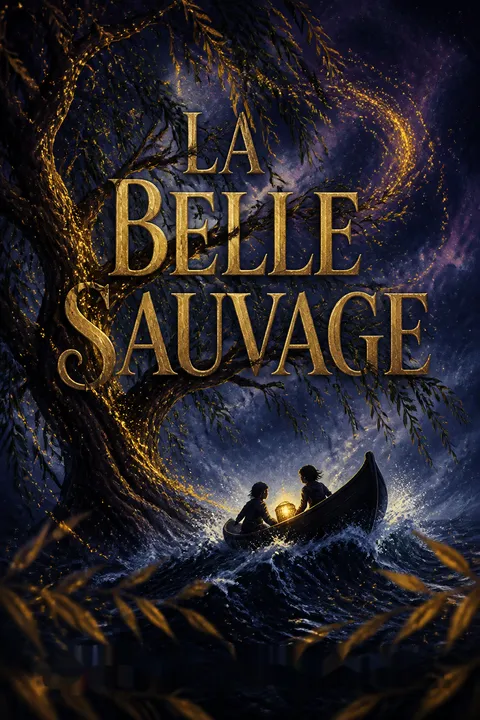
A catastrophic flood engulfs Oxford, destroying the priory and scattering its inhabitants. Malcolm, Alice (the inn's sharp-tongued kitchen girl), and Lyra escape in La Belle Sauvage, pursued by Bonneville and the CCD. The river, once a source of joy, becomes a wild, unpredictable force, sweeping them into a perilous journey. The trio must navigate the flooded landscape, evade their pursuers, and care for the vulnerable Lyra. The flood is both a physical and symbolic upheaval, washing away the old order and thrusting Malcolm and Alice into a world of survival, courage, and transformation.
Flight in La Belle Sauvage
Malcolm and Alice, with Lyra in tow, face relentless pursuit from Bonneville and the CCD as they journey downriver. They encounter dangers both human and supernatural: treacherous currents, hostile strangers, and the ever-present threat of betrayal. Along the way, they find unexpected allies—George Boatwright, a poacher in hiding, and a witch queen who offers cryptic guidance. The journey tests their resourcefulness, trust, and endurance. Malcolm's bond with Alice deepens, and both are changed by the hardships they endure and the choices they must make to protect Lyra.
Pursued by Shadows
Bonneville's pursuit becomes increasingly deranged and violent, culminating in a series of confrontations that force Malcolm and Alice to confront the darkness within themselves. The shadow of guilt, fear, and trauma haunts them, especially after they are forced to kill Bonneville to save Lyra and each other. The boundaries between innocence and experience blur, and both children are marked by what they have done and what they have survived. The flood's supernatural elements—enchanted islands, ghostly visions, and the secret commonwealth—underscore the strangeness and peril of their journey.
The Enchanted Island
The travelers find refuge on a magical island ruled by a fairy queen who tries to claim Lyra as her own. The island is a place of beauty, illusion, and forgetfulness, where time and reality are distorted. Malcolm and Alice must use wit and courage to resist the queen's enchantments and reclaim Lyra. The episode is a test of identity and memory, echoing ancient tales of fairy abduction and the power of names. Their escape marks a turning point, as they move from the realm of myth back into the world of human struggle and responsibility.
The White Priory
Lyra is captured by the Sisters of Holy Obedience, a harsh and secretive order. Malcolm infiltrates the white priory, braving danger and deception to rescue her. The episode is a harrowing ordeal, exposing the cruelty of religious authority and the vulnerability of children in its grasp. Malcolm's ingenuity and determination are tested as he navigates locked doors, drugged children, and suspicious nuns. The successful rescue is a triumph of love and loyalty, but it comes at a cost: the children are now fugitives, with nowhere left to turn but onward.
The Witch's Prophecy
A witch queen reveals to Malcolm the prophecy surrounding Lyra: she is destined to "put an end to destiny," but must do so without knowing it. The flood is revealed as part of the secret commonwealth, a realm of spirits and ancient powers that shapes the fate of the world. Malcolm glimpses the deeper mysteries of Dust, consciousness, and the struggle between freedom and control. The journey becomes a quest not just for survival, but for meaning, as Malcolm and Alice carry Lyra toward her uncertain future.
The Final Confrontation
The journey's climax is a violent confrontation with Bonneville, who returns as a monstrous, almost supernatural threat. Malcolm and Alice are forced to fight for their lives and Lyra's, drawing on all their courage and the wild, animal strength of Malcolm's recurring dreams of savage dogs. The battle is brutal and transformative, leaving them physically and emotionally scarred. The act of killing in self-defense marks the end of childhood innocence and the beginning of a new, more complex understanding of good and evil.
Scholastic Sanctuary
With the flood receding and their strength nearly spent, Malcolm and Alice reach London and October House, Lord Asriel's residence. In a final act of trust and hope, they deliver Lyra to Asriel, who arranges for her to be granted scholastic sanctuary at Jordan College in Oxford. The journey ends where it began, with Lyra's fate entrusted to the scholars and the ancient protections of learning. Malcolm and Alice, battered but triumphant, are told to return to their old lives and keep silent about their ordeal, but nothing will ever be the same.
Safe Harbor
Malcolm, Alice, and Lyra find a measure of safety and rest, but the world has changed irrevocably. The flood has exposed the fault lines of power, faith, and knowledge, and the children have crossed the threshold into a more dangerous, more wondrous reality. The bonds forged in adversity—between Malcolm and Alice, between them and Lyra—will shape their futures. The story ends with the promise of new adventures, the lingering mysteries of Dust and prophecy, and the enduring hope that love and courage can prevail against the darkness.
Analysis
La Belle Sauvage is a masterful prelude to Pullman's His Dark Materials, blending adventure, philosophy, and psychological depth in a coming-of-age tale set against the backdrop of political and spiritual upheaval. The novel explores the tension between innocence and experience, the dangers of authoritarianism, and the transformative power of love and knowledge. Through Malcolm's journey—from the quiet certainties of childhood to the trauma and complexity of survival—the story interrogates the costs of resistance and the ambiguities of good and evil. The flood, both literal and symbolic, sweeps away the old world and forces the characters to confront their deepest fears and desires. The interplay of prophecy, science, and faith raises profound questions about destiny, free will, and the nature of consciousness. Pullman's use of dæmons as external souls provides a unique lens for exploring identity, trauma, and psychological growth. Ultimately, the novel is a testament to the resilience of the human spirit, the necessity of moral courage, and the enduring hope that even in the darkest times, compassion and curiosity can light the way forward.
Review Summary
La Belle Sauvage receives generally positive reviews, averaging 4.15/5. Many readers appreciate Pullman's richly imagined alternate Oxford, the compelling new protagonist Malcolm, and his relationship with Alice. Fans of His Dark Materials enjoy returning to the world of dæmons and alethiometers. Common criticisms include a slow first half, underdeveloped characters, and limited narrative tension since Lyra's survival is predetermined. The darker tone, including scenes of rape and violence, surprised some readers. Most consider it an enjoyable if imperfect setup for the broader trilogy.
People Also Read

Characters
Malcolm Polstead
Malcolm is the eleven-year-old son of the Trout Inn's innkeeper, a boy whose gentle curiosity and practical intelligence set him apart. He is deeply observant, eager to learn, and happiest in his canoe, La Belle Sauvage, with his dæmon Asta. Malcolm's relationships—with the nuns, his parents, and later Alice—are marked by kindness and a sense of responsibility. As the story unfolds, Malcolm is drawn into a world of secrets, danger, and moral complexity. His devotion to Lyra becomes the axis of his transformation from innocence to experience. He is forced to make difficult choices, confront violence, and navigate the ambiguities of loyalty and truth. By the end, Malcolm is changed: still gentle, but marked by trauma, courage, and a new understanding of the world's darkness and wonder.
Alice Parslow
Alice is a sixteen-year-old kitchen girl at the Trout, initially prickly and antagonistic toward Malcolm. Her rough exterior hides vulnerability and a longing for respect and affection. As circumstances force her and Malcolm together, Alice reveals resourcefulness, courage, and a deep capacity for care—especially for Lyra. Her relationship with Malcolm evolves from mutual irritation to profound trust and partnership. Alice's psychological journey is one of self-acceptance and the shedding of old defenses. She is haunted by her own insecurities and the trauma of violence, but emerges as a survivor and a protector, her bond with Malcolm forged in adversity.
Lyra Belacqua
Lyra is the infant daughter of Lord Asriel and Mrs. Coulter, entrusted to the care of the nuns at Godstow Priory. Though too young to speak, she is the story's emotional and symbolic heart—a child marked by prophecy, destined to "put an end to destiny." Lyra's vulnerability draws out the best in those around her, especially Malcolm and Alice, who become her surrogate family. Her presence attracts danger and shapes the actions of powerful adults. Psychologically, Lyra represents innocence, hope, and the possibility of change. Her dæmon, Pantalaimon, mirrors her moods and growth, and her survival becomes a test of love and courage for all who protect her.
Asta
Asta is Malcolm's dæmon, able to change form at will, reflecting his inner state and providing intuition, caution, and companionship. She is more perceptive than Malcolm in matters of danger and emotion, often guiding him through moral dilemmas. Asta's bond with Malcolm is deep and symbiotic; their separation during moments of crisis is agonizing. As Malcolm matures, Asta's forms become more stable, symbolizing his psychological development. She is both his conscience and his courage, embodying the unity of body and soul in Pullman's world.
Gerard Bonneville
Bonneville is a disgraced scientist with a violent past, marked by his terrifying three-legged hyena dæmon. He is both a literal and symbolic predator, pursuing Lyra with obsessive malice. Bonneville's psychological profile is one of rage, resentment, and self-loathing, projected onto his dæmon and his victims. His violence is both physical and psychological, and his pursuit of Lyra and the children is relentless. Bonneville's presence forces Malcolm and Alice to confront the reality of evil and the necessity of self-defense. His ultimate defeat is both a victory and a trauma for the children, marking the end of innocence.
Dr. Hannah Relf
Dr. Relf is an alethiometer scholar at St. Sophia's and a covert agent for Oakley Street, the secret resistance to the Magisterium. She becomes Malcolm's mentor, guiding him in the world of forbidden knowledge and espionage. Hannah is intelligent, compassionate, and conflicted, torn between her duty to the cause and her guilt at involving a child in dangerous affairs. Her psychoanalytic depth lies in her struggle with complicity, secrecy, and the ethics of resistance. She represents the power and peril of knowledge, and her relationship with Malcolm is one of mutual respect and care.
Lord Asriel
Lyra's father, Lord Asriel, is a powerful and controversial figure—an explorer, scholar, and enemy of the Magisterium. He is both a source of hope and a source of danger, his love for Lyra complicated by his larger ambitions. Asriel's psychological complexity lies in his willingness to sacrifice personal ties for a greater cause, and his interactions with Malcolm and Alice are marked by both gratitude and distance. His dæmon, the snow leopard Stelmaria, reflects his strength and predatory nature. Asriel's choices set the stage for the larger conflicts of the trilogy.
Mrs. Coulter
Lyra's mother, Mrs. Coulter, is a figure of fascination and fear. Her beauty and intelligence mask a ruthless ambition and a willingness to use any means to achieve her ends. She is connected to the rise of the League of St. Alexander and the Magisterium's campaign against Dust. Psychologically, Mrs. Coulter is marked by a profound ambivalence toward motherhood, power, and morality. Her golden monkey dæmon is both alluring and sinister, embodying her capacity for both charm and cruelty.
Sister Benedicta
The leader of the nuns at Godstow Priory, Sister Benedicta is a figure of strength and moral clarity. She stands up to the CCD and other threats, determined to protect Lyra at all costs. Her psychological depth lies in her faith, her courage, and her willingness to defy authority for the sake of compassion. She is a surrogate mother to Lyra and a mentor to Malcolm, embodying the best of religious devotion and human kindness.
George Boatwright
A poacher and fugitive, Boatwright becomes an ally to Malcolm and Alice during their flight. He represents the marginalized and the resourceful, those who live outside the law but possess their own codes of honor. Boatwright's psychological resilience and practical wisdom help the children survive, and his presence underscores the theme of solidarity among the oppressed.
Plot Devices
The Flood as Catalyst and Metaphor
The flood is both a literal disaster and a metaphor for upheaval, transformation, and the loss of innocence. It sweeps away the old order, forcing characters into new roles and relationships. The flood's supernatural elements—enchanted islands, ghostly visions, and the secret commonwealth—blur the boundaries between reality and myth, testing the characters' resourcefulness and beliefs. The flood's unpredictability mirrors the chaos of political and spiritual conflict, and its aftermath marks the beginning of a new, uncertain era.
The Alethiometer and the Acorn
The alethiometer, a truth-telling device, and the acorn-shaped message carrier are central symbols of forbidden knowledge and resistance. They connect Malcolm to a clandestine network of scholars and spies, and their secrets drive the plot. The struggle to possess and understand the alethiometer reflects the larger conflict over Dust, consciousness, and the power of inquiry. The coded messages, dead-letter drops, and secret meetings evoke the atmosphere of espionage and the dangers of seeking truth in a repressive society.
Dæmons as Mirrors of the Soul
Dæmons, the animal companions of every human, are external manifestations of the soul, reflecting inner states and psychological growth. Their ability to change form in childhood symbolizes the fluidity of identity, while their eventual settling marks maturity. The pain of separation, the taboo against touching another's dæmon, and the violence done to dæmons (as with Bonneville's hyena) are powerful metaphors for trauma, intimacy, and the boundaries of the self. Dæmons are both companions and consciences, shaping and reflecting the characters' journeys.
Prophecy and Destiny
The witches' prophecy about Lyra—destined to "put an end to destiny"—casts a shadow over the narrative, shaping the actions of both allies and enemies. The prophecy is both a source of hope and a burden, raising questions about free will, innocence, and the dangers of knowledge. Foreshadowing is woven throughout the story, from the warnings of the gyptians to the recurring dreams of wild dogs, preparing the reader for the climactic choices and sacrifices to come.
Sanctuary and Betrayal
The motif of sanctuary—at the priory, in Jordan College, and among outlaws—contrasts with the ever-present threat of betrayal, whether by institutions, friends, or oneself. The granting of scholastic sanctuary to Lyra is both a legal protection and a symbol of the fragile hope that learning and compassion can withstand tyranny. Betrayals, both large and small, test the characters' trust and force them to redefine their loyalties and identities.
About the Author
Other books by Philip Pullman


Download PDF
Download EPUB
.epub digital book format is ideal for reading ebooks on phones, tablets, and e-readers.








































