
Summary Temporarily Unavailable
This summary is temporarily unavailable and is currently being updated. You can still explore the FAQs and other metadata below.
Plot Summary
Rumour's Whispered Deceptions
The play opens with the allegorical figure of Rumour, who boasts of his power to spread lies and uncertainty. He sets the stage for a world where truth is elusive, and expectations are constantly upended. Rumour's influence is immediately felt as he delivers false news of victory to the Earl of Northumberland, igniting hope where there should be mourning. This theme of misinformation and misunderstanding will echo throughout the play, shaping the actions and emotions of both the powerful and the powerless. The audience is warned: in this world, appearances deceive, and the truth is always in question, setting a tone of instability and distrust that pervades the unfolding drama.
Northumberland's Grief Unleashed
Awaiting news from the battlefield, Northumberland is first buoyed by a false report of his son Hotspur's triumph. The truth soon arrives: Hotspur is dead, the rebellion crushed. Northumberland's grief is volcanic, his sorrow quickly morphing into a desire for vengeance against King Henry IV. Yet, even as he rages, his allies urge caution, and the seeds of doubt and hesitation are sown. Northumberland's personal loss becomes a symbol of the larger disorder in the kingdom, as private grief fuels public unrest. The emotional turbulence of this moment sets the stage for the rebels' uncertain future and the kingdom's continued instability.
Falstaff's Comic Schemes
In London, the irrepressible Sir John Falstaff is embroiled in his usual mischief. Hounded by creditors and the law, he charms, deceives, and manipulates those around him, especially Mistress Quickly, from whom he borrows more money. Falstaff's wit and self-indulgence provide comic relief, but his actions also reveal a deeper moral decay. He is both lovable rogue and symbol of disorder, thriving in a world where law and honor are easily subverted. His relationship with Prince Hal, the heir apparent, is complex—part friendship, part exploitation—foreshadowing the difficult choices that lie ahead for both men.
Rebellion's Unsteady Alliance
The rebel leaders—Archbishop of York, Mowbray, Hastings, and Lord Bardolph—gather to plot their next move against the king. Their alliance is fragile, built more on mutual self-interest than shared conviction. Northumberland's wavering commitment and the rebels' cautious strategizing reveal a lack of true unity or purpose. The Archbishop, cloaking rebellion in religious justification, exposes the moral ambiguity at the heart of their cause. The rebels' uncertainty mirrors the broader instability of the realm, as personal ambition and fear undermine any hope of a righteous or effective uprising.
The King's Restless Nights
King Henry IV, burdened by the crown he seized from Richard II, finds no peace. Sleepless and sick, he is tormented by guilt and the constant threat of rebellion. His soliloquies reveal a man who envies the simple rest of commoners, while he, the king, is consumed by anxiety and regret. The king's personal turmoil is a microcosm of the nation's disorder, his physical decline mirroring the kingdom's moral and political sickness. Henry's inability to find rest or certainty foreshadows the eventual transfer of power and the hope for renewal through his son.
Hal's Divided Loyalties
Prince Hal, the future Henry V, is caught between two worlds: the lawless camaraderie of Falstaff and the heavy expectations of kingship. He is aware of his reputation for riotous living and the doubts it sows in his father's mind. Hal's moments of introspection reveal a young man preparing for transformation, determined to prove himself worthy of the crown. His playful schemes with Poins to spy on Falstaff show both his wit and his growing distance from his old companions. Hal's journey is one of self-mastery, as he readies himself to leave behind youthful folly for the responsibilities of rule.
Falstaff and the Law
Falstaff's run-ins with the Lord Chief Justice highlight the tension between individual freedom and the rule of law. The Chief Justice, embodiment of order and integrity, repeatedly challenges Falstaff's lawlessness and impudence. Their verbal duels are both comic and serious, exposing Falstaff's disregard for authority and the Chief Justice's unwavering commitment to justice. This conflict is not merely personal; it symbolizes the broader struggle between disorder and order in the kingdom. Falstaff's charm and wit can only go so far—eventually, the law must assert itself, setting the stage for the reckoning to come.
Northumberland's Retreat
As the rebels prepare for battle, Northumberland's resolve falters. Persuaded by his wife and Hotspur's widow, he chooses self-preservation over vengeance, fleeing to Scotland rather than joining the fight. His withdrawal weakens the rebel alliance, dooming their cause. Northumberland's retreat is emblematic of the play's pervasive sense of disillusionment and the collapse of old loyalties. The personal and political are intertwined: his inability to act decisively reflects the broader paralysis afflicting the kingdom. The rebels, now leaderless and divided, are left vulnerable to the king's forces and their own doubts.
The Rebels' Fatal Bargain
The rebel leaders, desperate and diminished, negotiate with Prince John, the king's son. Promised fair terms and redress for their grievances, they disband their army—only to be immediately arrested for treason. Prince John's cold pragmatism and betrayal mark a shift from chivalric honor to ruthless realpolitik. The rebels' naivety and lack of unity seal their fate, and their execution is swift. This episode underscores the play's moral ambiguity: justice is served, but through deception and broken oaths. The collapse of the rebellion clears the way for the kingdom's renewal, but at a heavy ethical cost.
Falstaff's Recruitment Farce
Tasked with recruiting soldiers for the king's army, Falstaff turns the process into a farce. He accepts bribes from the able-bodied to avoid service, conscripting only the poor and unfit. His actions are both comic and corrupt, highlighting the pervasive decay of public life. In the countryside, Falstaff exploits the hospitality of Justice Shallow, reminiscing about youthful exploits while plotting to fleece his old acquaintance. These scenes, rich in humor and pathos, reveal Falstaff's resourcefulness and moral bankruptcy. His world is one of self-interest and illusion, increasingly out of step with the demands of the new order.
The King's Failing Health
The king's illness worsens, and he is haunted by fears about his legacy and his son's fitness to rule. News of the rebels' defeat brings little comfort; his mind is clouded by memories of his own usurpation and the prophecy of Richard II's troubled successor. As he is carried to his bed, Henry's thoughts turn to the future of England and the burdens of kingship. The crown, symbol of power and responsibility, becomes a source of anxiety and sorrow. The king's decline signals the end of an era and the urgent need for renewal.
Hal's Moment of Reckoning
Believing his father dead, Hal takes the crown, only to be confronted by the revived king, who accuses him of ambition and callousness. In a deeply emotional exchange, Hal defends his actions and pledges to redeem his reputation. The scene is a crucible for both men: the king must let go of his doubts, and Hal must prove his worth. Their reconciliation is bittersweet, marked by mutual understanding and the passing of wisdom. The moment crystallizes the play's central themes of succession, legitimacy, and the personal cost of power.
The Crown's Heavy Burden
With Henry IV's death, Hal becomes King Henry V. The court is anxious, fearing the new king's reputation for wildness. Hal's first acts as king are decisive: he reaffirms the authority of the Lord Chief Justice and promises to govern with justice and restraint. The transformation is complete—Hal sheds his former self and embraces the responsibilities of kingship. The crown, once a source of anxiety and disorder, now becomes a symbol of hope and stability. The new king's actions signal a break with the past and the possibility of national renewal.
Justice and Authority Tested
The Lord Chief Justice, who once imprisoned Hal, fears retribution. Instead, Henry V praises his integrity and reinstates him, declaring that the law must stand above personal grievance. This act reassures the court and the nation, establishing the new king's commitment to justice and order. The episode underscores the importance of principled authority in restoring stability to a fractured realm. Henry's magnanimity contrasts sharply with the betrayals and self-interest that have characterized the play, marking a new era of governance and moral clarity.
Falstaff's Final Hope
Hearing of Hal's accession, Falstaff is jubilant, convinced that his old friend will reward him with wealth and influence. He rushes to London, boasting of his imminent rise. Falstaff's optimism is both comic and tragic; he remains oblivious to the changes in Hal and the shifting tides of power. His journey is a last, desperate bid to cling to the world he once knew—a world of indulgence, wit, and personal connection. The audience, aware of the inevitable rejection, watches with a mix of amusement and pity as Falstaff approaches his moment of truth.
The New King's Judgment
In a dramatic coronation scene, Falstaff presents himself to the new king, expecting a warm welcome. Instead, Henry V rebukes him harshly, declaring, "I know thee not, old man." The rejection is public and final, severing the ties of friendship and signaling the end of Falstaff's influence. The moment is both necessary and cruel: the king must distance himself from disorder and embrace the demands of leadership. Falstaff's fall is the play's emotional climax, embodying the painful sacrifices required for the restoration of order and the fulfillment of destiny.
Rejection and Renewal
Cast aside by the king, Falstaff is left bewildered and heartbroken. His companions, too, are swept away by the new order—arrested, dismissed, or forgotten. The rejection of Falstaff is both a personal tragedy and a symbolic act: the old, disorderly world must give way to a new era of discipline and justice. The play's comic energy dissipates, replaced by a sober recognition of the costs of renewal. Yet, in this moment of loss, there is also hope: the kingdom, purged of its excesses, is poised for greatness under Henry V.
England's Order Restored
With the ascension of Henry V, England stands on the threshold of a new age. The chaos and uncertainty that marked Henry IV's reign are replaced by a sense of purpose and unity. The new king's commitment to justice, his rejection of disorder, and his embrace of responsibility offer the promise of national healing. The play ends not with triumph, but with the quiet assurance that order has been restored and the future is secure. The journey from disorder to renewal is complete, and the stage is set for the glories—and challenges—of Henry V's reign.
Analysis
A meditation on power, order, and personal transformationKing Henry IV, Part 2 is a profound exploration of the costs and necessities of leadership in a world riven by disorder and moral ambiguity. Shakespeare uses the interplay between court and tavern, high politics and low comedy, to dramatize the challenges of succession and the painful sacrifices required for national renewal. The play's central figure, Prince Hal, embodies the tension between individual freedom and public duty, ultimately choosing the latter in a decisive act of self-renunciation. The rejection of Falstaff, both comic and tragic, is the emotional and symbolic heart of the play, marking the end of an era and the beginning of a new, more disciplined order. Shakespeare's nuanced portrayal of authority, justice, and the burdens of kingship remains deeply relevant, inviting reflection on the nature of power, the dangers of self-interest, and the possibility of redemption through personal and collective transformation.
Last updated:
Report IssueReview Summary
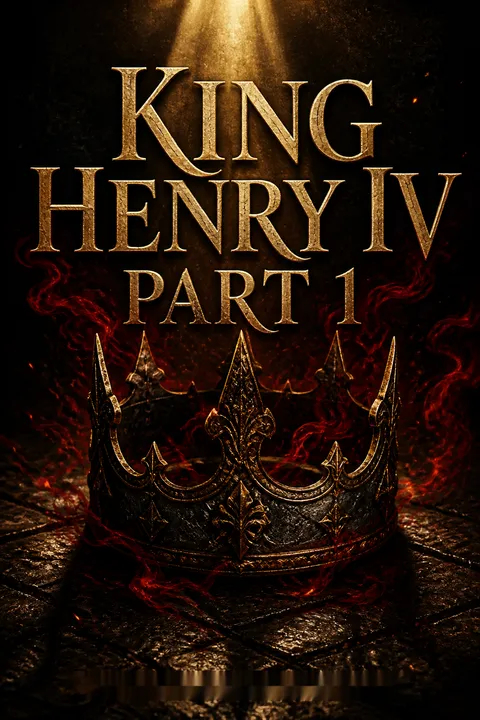
King Henry IV, Part 1 receives widespread acclaim from readers for its masterful blend of history and comedy. Reviewers consistently praise Falstaff as one of Shakespeare's greatest comic creations, though opinions vary on whether he's endearing or merely amusing. Prince Hal's transformation from wastrel to hero resonates strongly, with many appreciating his strategic planning behind seeming irresponsibility. The Hal-Hotspur rivalry provides compelling drama, while tavern scenes offer brilliant comic relief contrasting with serious political intrigue. Readers value Shakespeare's linguistic virtuosity, character development, and exploration of honor's meaning across social classes.
People Also Read



Characters
King Henry IV
King Henry IV is a ruler tormented by the consequences of his own usurpation of Richard II's throne. His reign is marked by unrest, rebellion, and personal guilt, which manifest in sleeplessness and declining health. He is a shrewd, pragmatic politician, but his conscience is never at ease, and he fears for the future of his kingdom and his son. His relationship with Prince Hal is fraught with disappointment and anxiety, as he doubts Hal's fitness to rule. In his final moments, Henry imparts hard-won wisdom to his son, urging him to govern wisely and maintain order. His death marks the end of an era and the hope for renewal through his heir.
Prince Hal / King Henry V
Prince Hal is the play's central figure, embodying the tension between youthful rebellion and the demands of kingship. Initially seen as a wayward prince, he is self-aware and strategic, using his association with Falstaff and the tavern world as a means of understanding his people and preparing for rule. Hal's journey is one of self-discipline and transformation; he ultimately rejects his former companions to embrace the responsibilities of the crown. His public renunciation of Falstaff is both a personal sacrifice and a political necessity, signaling his commitment to justice and the restoration of order. As Henry V, he becomes the model of the ideal monarch.
Sir John Falstaff
Falstaff is the play's most memorable character—a larger-than-life figure whose humor, charm, and self-indulgence mask a deep moral decay. He is both a source of comic relief and a symbol of the disorder afflicting England. Falstaff exploits friendships, evades responsibility, and manipulates those around him for personal gain. His relationship with Hal is complex, blending genuine affection with opportunism. As the play progresses, Falstaff's wit becomes tinged with desperation, and his final rejection by the new king is both inevitable and heartbreaking. He represents the old world of misrule, which must be cast aside for the nation's renewal.
Lord Chief Justice
The Lord Chief Justice stands as the play's moral anchor, representing the rule of law and the necessity of authority. He is unafraid to confront both Falstaff and Prince Hal, even risking his position to uphold justice. His integrity and wisdom earn him the respect of the new king, who reinstates him as a symbol of continuity and order. The Chief Justice's presence underscores the play's central conflict between lawlessness and authority, and his survival into the new reign signals the triumph of justice over personal grievance and disorder.
Earl of Northumberland
Northumberland is driven by personal loss—the death of his son Hotspur—and a desire for revenge against the king. His initial rage gives way to hesitation and self-preservation, as he ultimately abandons the rebel cause. Northumberland's vacillation and retreat reflect the broader collapse of old loyalties and the impotence of the past generation. He is a figure trapped by grief and indecision, his personal tragedy mirroring the kingdom's disorder. His withdrawal marks the end of meaningful resistance and the inevitability of change.
Archbishop of York
The Archbishop is a key leader of the rebellion, cloaking political ambition in religious rhetoric. He is calculating and persuasive, but his cause lacks true conviction or unity. The Archbishop's willingness to use faith as a justification for rebellion highlights the play's pervasive moral ambiguity. His eventual betrayal and execution underscore the dangers of self-interest masquerading as principle, and his fate serves as a warning against the perils of divided loyalties and expedient alliances.
Poins
Poins is Prince Hal's close friend and partner in mischief, representing the prince's connection to the world of youthful folly. He is clever and resourceful, aiding Hal in his schemes to spy on Falstaff and mock the pretensions of the tavern crowd. Poins's presence highlights Hal's dual nature and the choices he must make. As Hal moves toward kingship, Poins fades into the background, a reminder of the pleasures and dangers of a life unbound by responsibility.
Mistress Quickly
Mistress Quickly is the hostess of the Boar's Head Tavern, perpetually entangled in Falstaff's schemes. She is both shrewd and gullible, easily manipulated by promises of marriage and repayment. Her malapropisms and misunderstandings provide humor, but her repeated victimization by Falstaff also evokes sympathy. She represents the ordinary people caught in the crossfire of larger political and personal machinations, her fate a microcosm of the play's broader themes of exploitation and disappointment.
Justice Shallow
Justice Shallow is a country magistrate whose reminiscences of youthful exploits are both comic and poignant. He is easily duped by Falstaff, who exploits his hospitality and vanity. Shallow's obsession with the past and his lack of self-awareness make him an easy target, but his generosity and good nature also provide a contrast to the cynicism of the court and the tavern. He embodies the fading world of rural innocence, soon to be swept away by the demands of the new order.
Prince John of Lancaster
Prince John, Hal's brother, is the architect of the rebels' downfall. He is efficient, calculating, and untroubled by moral scruples, using deception to achieve victory. His actions mark a departure from the chivalric ideals of the past, embracing a new, more ruthless form of politics. Prince John's success is achieved at the cost of honor, and his character serves as a foil to both Hal's transformation and Falstaff's irrepressible disorder.
Plot Devices
Dual Worlds: Court and Tavern
Shakespeare structures the play by alternating scenes between the royal court and the tavern, juxtaposing the seriousness of political intrigue with the comic disorder of Falstaff's world. This device emphasizes the interconnectedness of high and low society, showing how disorder at the top infects the whole nation. The contrast also serves to illuminate the choices facing Prince Hal, who must navigate between these worlds and ultimately choose the path of responsibility.
Foreshadowing and Dramatic Irony
The play is rich in foreshadowing, particularly regarding Hal's eventual rejection of Falstaff and the collapse of the rebellion. The audience is often privy to information that the characters lack, creating dramatic irony and heightening emotional impact. Falstaff's confidence in Hal's favor, for example, is undercut by the audience's awareness of the inevitable rejection, making his downfall both anticipated and tragic.
Allegory and Personification
The use of Rumour as an allegorical figure in the induction establishes the play's preoccupation with uncertainty, misinformation, and the unreliability of appearances. This device frames the entire narrative, reminding the audience that truth is elusive and that the actions of individuals are shaped as much by perception as by reality.
Morality Play Structure
The play draws on the structure of medieval morality plays, positioning Hal between the forces of disorder (Falstaff) and order (the Lord Chief Justice). This device externalizes Hal's internal struggle and dramatizes the process of moral and political maturation. The eventual rejection of Falstaff is both a personal and symbolic act, marking Hal's embrace of virtue and authority.
Symbolism of the Crown
The crown is a recurring symbol, representing not only political power but also the weight of responsibility, guilt, and expectation. Its transfer from Henry IV to Hal is fraught with anxiety and significance, encapsulating the play's central concerns with legitimacy, succession, and the personal cost of leadership.
Wars of the Roses Series
About the Author
William Shakespeare was an English playwright, poet, and actor born in Stratford-upon-Avon, Warwickshire. Widely regarded as the greatest writer in the English language, he produced approximately 39 plays, 154 sonnets, and several narrative poems between 1589 and 1613. He married Anne Hathaway at 18 and had three children. Shakespeare worked with the Lord Chamberlain's Men (later the King's Men) in London before retiring to Stratford around 1613, where he died three years later. His works span comedies, histories, and tragedies, including masterpieces like Hamlet, Macbeth, and King Lear, continuing to influence literature worldwide.
Other books by William Shakespeare




Download PDF
Download EPUB
.epub digital book format is ideal for reading ebooks on phones, tablets, and e-readers.








































