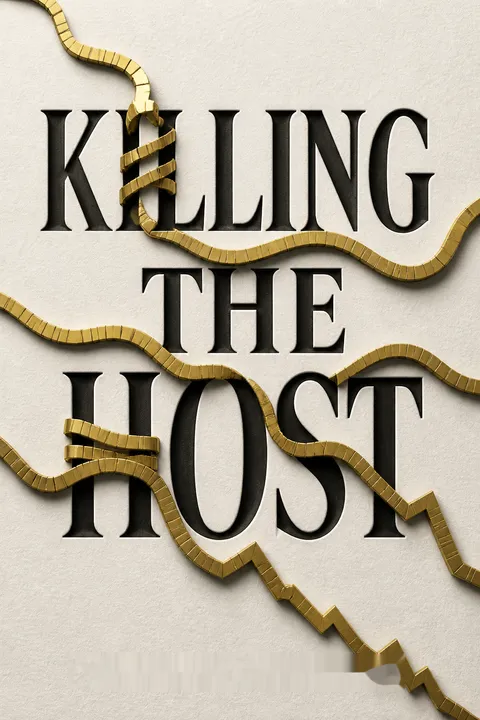

Key Takeaways
1. The financial sector has become parasitic, extracting wealth from the economy
Finance capitalism is based on exponentially growing debts owed to creditors. Industrial capitalism is based on expanding tangible capital investment, employment and markets.
Parasitic finance. The financial sector has transformed from a facilitator of economic growth into a parasitic force extracting wealth from the productive economy. Rather than funding new enterprises and innovations, banks primarily lend against existing assets like real estate, inflating their prices. This creates paper wealth for asset owners without generating real economic value.
Rent extraction. Financial institutions increasingly profit through various forms of economic rent - unearned income derived from ownership or control rather than productive activity. This includes:
- Interest on ever-growing debts
- Fees for financial services
- Capital gains from asset price inflation
- Monopoly rents from privatized public assets
Financialization. The economy has become increasingly "financialized," with a greater share of profits and activity occurring in the FIRE sector (finance, insurance, real estate) rather than productive industries. This extracts wealth from workers and businesses, reduces investment in the real economy, and increases inequality.
2. Debt-fueled asset inflation leads to debt deflation and economic stagnation
Paying off these loans with interest leaves less wage or profit income available to spend on consumer goods or capital goods. This Debt Deflation is the inevitable successor to Asset-Price Inflation.
Bubble and bust cycle. The financial sector fuels asset bubbles by extending credit to bid up prices of real estate, stocks, etc. When the bubble inevitably bursts, the economy is left with massive debts but declining asset values. This leads to a period of debt deflation as debtors struggle to pay down loans.
Debt overhead. The growing debt burden acts as a drag on the economy:
- Mortgage and consumer debt reduces household spending
- Corporate debt discourages business investment
- Government debt leads to austerity measures
Financial instability. Economist Hyman Minsky described how periods of economic stability lead to increased financial speculation and risk-taking, ultimately resulting in crisis. This "Minsky moment" occurs when asset values can no longer support the debt taken on to purchase them.
3. The 2008 bailouts prioritized Wall Street over Main Street
To the Federal Reserve and Treasury, the sectors that needed to be saved were not labor and industry, but bank balance sheets – claims on the economy.
Bank bailouts. The government's response to the 2008 financial crisis focused on rescuing banks and financial institutions rather than helping indebted homeowners and workers. Trillions of dollars were used to purchase toxic assets and recapitalize banks, while relatively little was done to reduce the debt burden on ordinary citizens.
Socialized losses. The bailouts effectively socialized the losses of the financial sector while allowing them to keep their earlier profits. This created moral hazard by insulating banks from the consequences of their risky behavior. Key features included:
- TARP (Troubled Asset Relief Program)
- Federal Reserve's quantitative easing
- Government takeover of Fannie Mae and Freddie Mac
Missed opportunity. The crisis presented an opportunity for major financial reform, debt relief, and economic restructuring. Instead, the pre-crisis system was essentially restored, setting the stage for future instability.
4. Central banks and governments have been captured by financial interests
Wall Street's idea of reviving prosperity was to re-inflate a new bubble by providing nearly free credit to banks.
Regulatory capture. Financial institutions have gained undue influence over the agencies meant to regulate them. This occurs through:
- Revolving door between Wall Street and government positions
- Campaign contributions and lobbying
- Ideological alignment between regulators and industry
Monetary policy. Central banks like the Federal Reserve increasingly prioritize the interests of the financial sector over the broader economy. This is seen in policies like:
- Ultra-low interest rates that boost asset prices
- Quantitative easing that primarily benefits large financial institutions
- Reluctance to impose stricter regulations on banks
Government policy. Elected officials often defer to the preferences of the financial industry on economic matters. This results in policies that favor capital over labor, such as:
- Tax cuts for the wealthy and corporations
- Opposition to financial transaction taxes
- Resistance to breaking up "too big to fail" banks
5. Neoliberal policies have widened inequality and eroded democracy
Preventing banks that received bailouts from paying future bonuses is not 'clawing back' bonuses. Clawing back bonuses means recovering bonuses that were improperly paid based on false accounting statements that massively overstated bank income.
Rising inequality. Neoliberal economic policies implemented since the 1980s have led to a dramatic increase in wealth and income inequality. These include:
- Financial deregulation
- Regressive tax policies
- Weakening of labor unions
- Privatization of public assets
Erosion of democracy. As wealth becomes increasingly concentrated, the political influence of economic elites grows. This creates a feedback loop where policies further benefit the wealthy, undermining democratic principles of equality and representation.
Financialization of daily life. Ordinary citizens are increasingly pushed into financial markets for basic needs:
- 401(k) plans replacing pensions
- Rising student loan debt
- Home equity used as ATM
- Proliferation of consumer credit
6. Public debt is used to justify austerity and privatization
The government's failure to take ownership gave managers, stockholders and bondholders a free lunch.
Manufactured crises. Governments often cite high levels of public debt to justify austerity measures and privatization of public assets. However, this debt is often the result of:
- Tax cuts for the wealthy
- Bank bailouts and corporate subsidies
- Military spending
- Economic downturns caused by financial crises
Austerity politics. The push for fiscal austerity in response to high debt levels typically involves:
- Cuts to social programs and public services
- Privatization of state-owned enterprises and infrastructure
- Reduction of public sector employment
- Regressive tax increases (e.g. sales taxes)
False comparisons. Public debt is often falsely equated with household debt, ignoring crucial differences:
- Governments can print their own currency
- Public investment can generate long-term returns
- National economies are not like household budgets
7. A new progressive movement is needed to challenge financial oligarchy
If we cannot change economic policy through elections, then elections are irrelevant and it is useless to vote.
Reclaiming democracy. Challenging the power of the financial sector requires a broad-based progressive movement focused on:
- Campaign finance reform
- Breaking up too-big-to-fail banks
- Implementing a financial transaction tax
- Restoring Glass-Steagall-type regulations
Alternative economic models. Progressive reforms should promote more equitable and sustainable economic structures:
- Public banking options
- Worker-owned cooperatives
- Green energy investment
- Universal basic income
International cooperation. Given the global nature of finance, effective reform requires coordination between nations to prevent regulatory arbitrage and race-to-the-bottom competition. This could involve:
- Global financial transaction tax
- Crackdown on tax havens
- Debt relief for developing countries
- Reform of institutions like the IMF and World Bank
Review Summary
Killing the Host receives high praise for its insightful analysis of how finance capitalism parasitically extracts wealth from the productive economy. Readers appreciate Hudson's historical context, detailed explanations of financial mechanisms, and critique of neoliberal economics. Many find the book eye-opening and thought-provoking, despite some repetition and editing issues. While some question Hudson's proposed solutions, most agree the book offers valuable perspective on economic inequality and the need for reform.
People Also Read




FAQ
What is Killing the Host: How Financial Parasites and Debt Bondage Destroy the Global Economy by Michael Hudson about?
- Central theme: The book examines how financial parasites—primarily the finance, insurance, and real estate (FIRE) sectors—extract wealth from the productive economy, leading to economic polarization, stagnation, and crisis.
- Historical and global analysis: Hudson traces the evolution of debt, rent, and financial power from ancient times to the present, showing how these forces repeatedly destabilize economies.
- Critique of neoliberalism: The narrative critiques neoliberal policies, deregulation, and the capture of governments by financial elites, arguing these trends undermine democracy and social welfare.
Why should I read Killing the Host by Michael Hudson?
- Insight into financial crises: The book provides a clear explanation of the causes and consequences of major financial crises, including the 2008 crash and the European debt crisis.
- Challenges mainstream economics: Hudson critiques widely accepted economic theories, encouraging readers to question conventional wisdom and consider alternative approaches to economic policy.
- Accessible and global perspective: The book makes complex financial concepts understandable and uses global case studies to illustrate the real-world impact of financialization and debt bondage.
What are the key takeaways of Killing the Host by Michael Hudson?
- Debt writedowns are essential: Unsustainable debts must be written down to restore economic balance and prevent prolonged depression and social disintegration.
- Financialization harms the real economy: The FIRE sectors extract unearned income, crowding out productive investment and shrinking markets.
- Neoliberal austerity deepens crises: Policies favoring creditors over citizens worsen inequality and economic stagnation, while undermining democracy.
- Systemic reform is needed: Hudson advocates for taxing economic rent, public banking, and a fundamental reevaluation of economic theory and policy.
What does Michael Hudson mean by "financial parasites" in Killing the Host?
- Definition of financial parasites: Borrowing from biology, Hudson describes banks, bondholders, landlords, and monopolists as entities that extract income from the economy without contributing to production.
- Mechanisms of extraction: These actors siphon off wealth through rent, interest, and monopoly profits, draining resources from labor and industry.
- Control over policy: Financial parasites influence government and policy-making to protect their interests and suppress reforms that would limit their power.
How does Michael Hudson define and critique "financialization" in Killing the Host?
- Definition of financialization: Financialization is the growing dominance of financial actors, markets, and motives, prioritizing debt, rent extraction, and asset-price inflation over productive investment.
- Economic consequences: This process raises costs for labor and industry, crowds out investment in tangible capital, and leads to economic polarization and stagnation.
- Social and political impact: Financialization undermines democratic control, promotes austerity, and shifts wealth upward to the financial elite.
What are the two economies described in Killing the Host by Michael Hudson?
- Tangible (real) economy: This is the sector of production and consumption, involving labor, capital goods, and technological progress that create real goods and services.
- Finance and rent economy: Centered on the FIRE sector, this economy deals with credit, debt, property ownership, and rent extraction, transferring income from the real economy.
- Conflict between economies: Interest and rents are transfer payments from the productive sector to the financial sector, but mainstream economics often obscures this parasitic relationship.
How does Killing the Host by Michael Hudson explain the 2008 financial crisis and its aftermath?
- Foreseen but ignored: The crisis was anticipated by insiders, but warnings were dismissed due to regulatory capture and political influence.
- Role of junk mortgages and derivatives: Fraudulent lending and complex financial products created a bubble that inevitably collapsed.
- Bailouts for banks, not debtors: Government interventions prioritized saving financial elites while imposing austerity on the broader population, deepening inequality and economic stagnation.
What is the "Bubble Economy" and how does it function according to Killing the Host by Michael Hudson?
- Asset-price inflation: The Bubble Economy is driven by rising prices for real estate, stocks, and bonds, fueled by easy credit and low interest rates.
- Debt-for-equity arbitrage: Speculators borrow cheaply to buy assets, inflating prices and creating financial bubbles.
- Transition to debt deflation: When debts become unsustainable, repayment drains income from the real economy, leading to contraction and austerity.
How does Killing the Host by Michael Hudson describe the role of corporate stock buybacks and debt leveraging?
- Shift in corporate goals: Corporations now prioritize maximizing shareholder value through stock price increases, often at the expense of productive investment.
- Debt-financed buybacks: Companies borrow to buy their own shares, increasing debt and reducing funds for research, development, and hiring.
- Short-termism and instability: Executive compensation tied to stock prices incentivizes short-term gains, undermining long-term corporate health and economic stability.
What role do the IMF, ECB, and EU Commission (the Troika) play in financial crises according to Killing the Host by Michael Hudson?
- Pro-creditor enforcement: The Troika enforces repayment to bondholders and banks, often imposing austerity and privatization as bailout conditions.
- Blocking debt restructuring: These institutions resist meaningful debt writedowns, prolonging economic crises and deepening recessions.
- Undermining democracy: The Troika’s policies override national parliaments and popular will, reducing democratic control and fueling political instability.
What solutions or remedies does Michael Hudson propose in Killing the Host?
- Debt write-downs: Hudson advocates for restructuring and writing down unsustainable debts to restore economic balance and prevent depression.
- Public control of banking: He calls for making banking a public utility to align credit creation with productive investment and public interest.
- Taxing economic rent: Reviving classical economic ideas, Hudson supports taxing land, natural resource, and monopoly rents to reduce inequality and limit financial parasitism.
What are the best quotes from Killing the Host by Michael Hudson and what do they mean?
- "Debts that can’t be paid, won’t be paid." This highlights the inevitability of debt writedowns when obligations exceed the ability to pay, emphasizing the need for systemic reform.
- "The financial sector is not part of the real economy; it is a parasite on it." Hudson underscores the distinction between productive and extractive economic activities, challenging mainstream economic narratives.
- "Austerity is not a solution, but a symptom of financial dominance." This quote critiques policies that prioritize creditors over citizens, arguing that austerity deepens economic and social crises.
- "Restoring economic balance requires taxing economic rent and making finance serve the real economy." Hudson calls for a return to classical economic principles to curb financial parasitism and promote equitable growth.
Download PDF
Download EPUB
.epub digital book format is ideal for reading ebooks on phones, tablets, and e-readers.








































