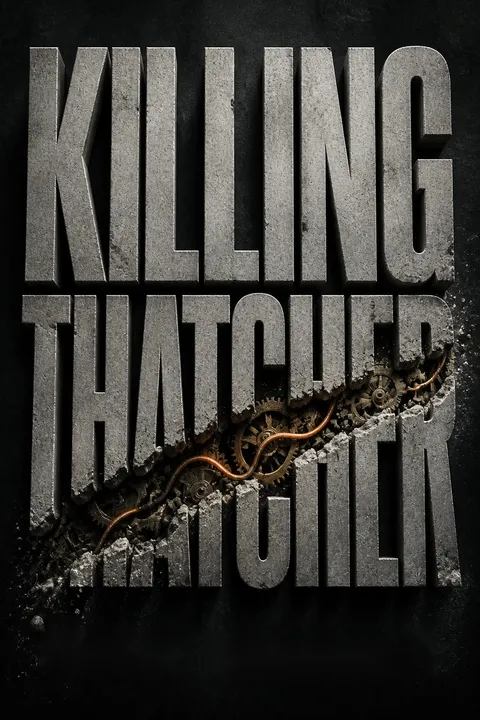

Key Takeaways
1. The Deep Roots of Conflict
Ireland’s tormented relationship with the English Crown was written into the Sligo landscape that so thrilled Mountbatten.
Centuries of subjugation. The conflict between Ireland and England spanned centuries, marked by Anglo-Norman conquest, the Reformation's religious divide, and the 17th-century Protestant plantations in Ulster. The Great Famine in the 1840s, which saw over a million Irish peasants die of starvation while the British government limited aid, cemented a deep-seated resentment and fueled caricatures of the Irish as an "inferior race."
Rise of Irish nationalism. Small underground groups like the Fenians and the Irish Republican Brotherhood emerged, vowing to end British rule. The 1916 Easter Rising, though militarily a "shambles," radicalized public sentiment after British executions of its leaders. This led to the War of Independence (1919-1921) and the creation of the Irish Free State, but also the partition of the island, leaving six northern counties as "Northern Ireland" within the UK.
The Troubles ignite. The Catholic minority in Northern Ireland faced systemic discrimination in jobs, housing, and voting rights, leading to civil rights marches in the late 1960s. Police brutality escalated into riots, and a revived Irish Republican Army (IRA) launched an insurgency to end British rule and unite Ireland. This period, euphemistically called "the Troubles," claimed thousands of lives and became a persistent, violent challenge to British authority.
2. Thatcher's Unyielding Stance
Mr. Sands was a convicted criminal. He chose to take his own life.
The Iron Lady's ascent. Margaret Thatcher, a self-made woman from a humble background, rose to become Britain's first female Prime Minister in 1979. Driven by a belief in self-reliance and a horror of idleness, she embodied a new, unyielding form of Conservatism, earning her the nickname "Iron Lady" from Soviet media. Her political philosophy aimed to reverse Britain's perceived decline through free-market policies and a strong stance against perceived enemies.
Criminalization strategy. Thatcher's policy on Northern Ireland was to treat IRA members as "common criminals," not political combatants, thereby delegitimizing their cause. This approach was tested early in her premiership by the IRA's assassination of Lord Mountbatten and the massacre of British paratroopers at Narrow Water in 1979. Despite these "spectaculars," Thatcher doubled down on security, giving primacy to the police over the army.
The hunger strikes. The "criminalization" policy led to republican prisoners in the H-Blocks refusing to wear prison uniforms and engaging in "dirty protests." In 1981, Bobby Sands and nine other prisoners starved themselves to death demanding political status. Sands's death, after being elected an MP, sparked global outrage and galvanized republican support, but Thatcher remained implacable, stating, "A crime is a crime is a crime."
3. The IRA's Evolving Strategy
The IRA claims responsibility for the detonation of 100lb of gelignite in Brighton against the British cabinet and Tory warmongers. Thatcher will now realise that Britain cannot occupy our country, torture our prisoners and shoot our people in their own streets and get away with it.
Early England campaigns. The IRA's campaign in England began with blunders, like the 1867 Clerkenwell prison bombing that killed civilians. The "dynamite campaign" of the 1870s and the "Looney Tunes" era of the 1970s saw sporadic, often indiscriminate attacks. However, lessons were learned from failures like the 1973 London car bombings, which led to the capture of Roy Walsh's unit, prompting a shift towards "sleeper" cells and more sophisticated tactics.
Adams's "long war" vision. Gerry Adams, a rising IRA leader, advocated a "long war" strategy, emphasizing political engagement alongside armed struggle. His "Green Book" outlined new cell structures for security and a dual approach: the "Armalite and ballot box." This strategy aimed to build a political movement (Sinn Féin) while maintaining military pressure, a shift that would eventually lead to Sinn Féin's electoral breakthroughs.
Global terror network. To sustain its campaign, the IRA developed a global network for funding and weapons. Joe Cahill, a veteran IRA figure, cultivated Irish-American support through NORAID, even securing arms from figures like Boston mobster Whitey Bulger. Patrick Ryan, a renegade priest, managed a complex European network for gunrunning and money laundering. Muammar Gaddafi, impressed by the Brighton bomb, later promised the IRA hundreds of tons of weapons, further expanding their reach.
4. The Brighton Bomb Plot: Lochinvar
The IRA had studied the Grand’s architecture but could still only guess at the bomb’s impact. The explosion itself was just the spark. The real weapon would be the hotel itself, its bricks, stone, marble, and glass loosened from 120 years of compact solidity and turned into a great, sweeping avalanche.
Revenge and opportunity. The hunger strikes of 1981, and Thatcher's unyielding stance, fueled a visceral hatred for the Prime Minister within the IRA. The England Department, led by Owen Coogan and Michael Hayes, conceived "Operation Lochinvar" – a plot to assassinate Thatcher and her cabinet during the annual Conservative Party Conference. This was seen as a unique opportunity to strike at the heart of the British state.
Meticulous reconnaissance. The IRA conducted extensive reconnaissance, including surveilling a Labour Party conference in Brighton in 1979 and the Tory conference in Blackpool in 1983. They studied hotel layouts, security protocols, and Thatcher's habits. A construction engineer was dispatched to analyze the Grand Hotel's architecture, identifying load-bearing walls and a detachable bath panel in room 629 as a prime location for a bomb.
Magee's selection. Patrick Magee, known as "the Chancer" for his daring operations and narrow escapes, was chosen to plant the bomb. Despite a previous setback in Blackpool where he suspected surveillance, Magee's experience in England, his meticulous nature, and the lack of other willing, competent candidates made him the ideal operative. His personal life, including a disintegrating marriage, reflected the profound sacrifices demanded by the cause.
5. The Bombing and Thatcher's Survival
Had Thatcher been in the Napoleon Suite bathroom, or had the avalanche of rubble swerved another way, she could have died. For want of two minutes, or a few feet, history could have turned, and with it the fate of Northern Ireland, Thatcherism, and the Cold War.
Infiltration and planting. On September 15, 1984, Patrick Magee, using the pseudonym "Roy Walsh," checked into room 629 of the Grand Hotel. Over three days, he and an accomplice meticulously assembled a gelignite bomb, incorporating a long-delay timer, a Memo-Park timer, and booby traps. The device was concealed behind the bath panel, set to detonate at 2:54 a.m. on October 12, the final day of the Conservative Party Conference.
The explosion. At the appointed time, the bomb detonated with a "brilliant, blinding white light" and a "roar like thunder." The blast toppled a five-ton chimney stack, which plunged through the hotel, creating a "monstrous guillotine" of masonry and debris. This avalanche sliced through a vertical stack of rooms, devastating the hotel's core and trapping many, including cabinet ministers and their spouses.
Thatcher's escape. Margaret Thatcher, working on her speech in the Napoleon Suite lounge, had left her bathroom just two minutes before the explosion. She and Denis Thatcher, who was asleep in the bedroom, survived unscathed. Despite the chaos and unknown casualties, Thatcher's immediate instinct was defiance. She emerged from the wreckage, "impeccable in her ball gown," and declared, "The conference will go on."
6. The Manhunt: A Forensic Triumph
Coppers and spooks had been chasing a specter; now he could give it a face and a name.
Initial chaos and methodical search. The Brighton bomb triggered Britain's largest-ever manhunt, led by Detective Chief Superintendent Jack Reece of Sussex CID. Overwhelmed by the scale, Reece's team was reinforced by Scotland Yard's Anti-Terrorist Branch (C13). "Flour graders" meticulously sifted through 880 tons of rubble, filling 3,798 dustbins, searching for clues amidst the "choking dust" and "blue asbestos."
Key forensic breakthroughs. The investigation's turning point came with the discovery of the Grand Hotel's registration cards, which had miraculously survived. Analysis of these cards, combined with intelligence from the Salcey Forest cache (where a missing long-delay timer, number 4, was noted), quickly identified "Roy Walsh" as a false identity. A partially completed newspaper crossword found in a later IRA hideout also showed a distinctive "E" matching the registration card.
Fingerprint unmasking. David Tadd, head of fingerprinting at Scotland Yard's Anti-Terrorist Branch, applied ninhydrin to the "Roy Walsh" card, revealing four latent prints. One, a palm print from the hypothenar eminence, was meticulously compared against a vast archive of IRA suspects. On January 17, 1985, analyst Steve Turner found a match: Patrick Joseph Magee's 1967 Norwich juvenile print, finally giving a face and name to the invisible bomber.
7. The Chancer's Capture and Reckoning
He visualized escape, scrutinized every moment and space for an exploitable weakness, as if sheer willpower could conjure a way out: a gun to grab, a window to hurl through, a porthole out of the chaos.
A new bombing campaign. Unaware his identity was known, Magee, despite suspicion of surveillance, volunteered for a new IRA campaign in England. He joined a unit in Glasgow, including Gerry "Blute" McDonnell, Martina Anderson, and Ella O’Dwyer, to plant sixteen time bombs across British resorts and cities, including one at the Rubens Hotel in London, near Buckingham Palace.
Surveillance and capture. British intelligence, having identified Magee, gambled on letting him return to the UK, maintaining discreet surveillance. A tip-off about Peter Sherry, another IRA commander, led RUC and Met Special Branch teams to Carlisle, where Magee rendezvoused with Sherry. Despite Magee's countersurveillance tactics, he was identified. A tense decision was made to "let the guy run" to uncover his network. This led to the Glasgow raid on June 22, 1985, where Magee and his unit were captured.
Trial and sentencing. Magee and his co-defendants maintained silence during interrogation, adhering to the IRA's Green Book. However, the discovery of McDonnell's money belt, containing a list of targets and a diagram of the Rubens bomb, provided crucial evidence. Magee was charged with five counts of murder for Brighton and, after a six-week trial at the Old Bailey, was found guilty and sentenced to eight life terms, with a recommendation to serve at least thirty-five years.
8. The Enduring Legacy of Brighton
However one weighs the damage and grief, a great irony hangs over the IRA attempt to assassinate Thatcher. Because they failed to kill her, it gave her years to turn ever more hostile toward European integration, seeding in the Conservative Party a radical idea that would take time to bloom: quit the European Union.
Immediate political shifts. Thatcher's survival and defiance after Brighton solidified her image as an unbowed leader. The attack, however, did influence her approach to Northern Ireland. While initially cautious, she eventually signed the Anglo-Irish Agreement in 1985, a landmark treaty that gave the Irish government an advisory role in the province, laying a foundation for future peace. Her renewed vigor also contributed to her influence in shaping global relations with figures like Mikhail Gorbachev.
Personal and security transformations. The bomb left a lasting mark on Thatcher, who kept a torch by her bed and feared future attempts. Norman Tebbit and his wife, Margaret, suffered grievous, life-altering injuries, leading to his eventual withdrawal from frontline politics. The incident also ushered in a new era of heightened security in Britain, with public figures increasingly shielded behind "bullet-proof screens and body scanners," altering the nature of public engagement.
Long-term ironies. Patrick Magee was released early in 1999 as part of the Good Friday Agreement, a peace deal that ended the Troubles. He later engaged in reconciliation efforts with Jo Berry, daughter of one of his victims, expressing regret but defending the act as legitimate war. Ironically, Thatcher's survival allowed her to deepen her Euroscepticism, a stance that ultimately led to Brexit in 2016. This decision, in turn, destabilized Northern Ireland's borders and allegiances, potentially paving the way for the united Ireland that IRA bombs failed to deliver.
Review Summary
Reviews for Killing Thatcher are largely positive, averaging 4.46 out of 5. Many readers praise Carroll's thriller-like pacing, meticulous research, and largely balanced approach to a deeply divisive subject. The book's coverage of the 1984 Brighton Hotel bombing, the IRA's history, and the subsequent police manhunt are frequently highlighted as gripping and educational. Critics feel the book lacks sufficient political nuance, particularly regarding British atrocities in Northern Ireland and the broader context of the Troubles, with some accusing it of bias toward Thatcher.
People Also Read
About the Author
Other books by Rory Carroll
Download PDF
Download EPUB
.epub digital book format is ideal for reading ebooks on phones, tablets, and e-readers.








































