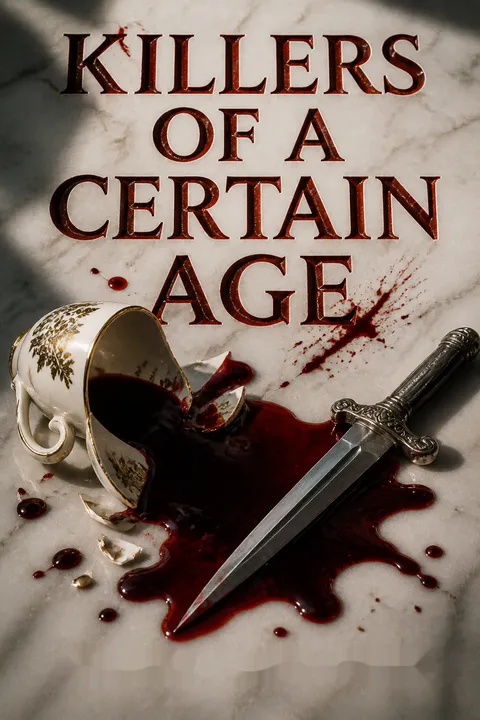

Plot Summary
Four Women, One Mission
Billie, Mary Alice, Helen, and Natalie—four women in their sixties—are not your average retirees. For forty years, they've worked as elite assassins for a clandestine organization known as the Museum. As the story opens, they're sent on a mission in 1979, posing as stewardesses to assassinate a dangerous target. Their teamwork, wit, and resilience are immediately apparent, as is the unique bond that ties them together. The mission is tense, with complications like an unexpected dog and a bodyguard who won't go down easily. The women's skills and improvisation save the day, but the experience forges a connection that will define their lives. The emotional weight of their work is clear, but so is their pride in being the best at what they do.
The Museum's Deadly Legacy
The Museum, born from the ashes of WWII's SOE and OSS, is a shadowy group dedicated to eliminating those who threaten global justice—first Nazis, then dictators, traffickers, and criminals. The founders, disillusioned with bureaucracy, created their own rules and recruited the best, including the first all-female squad: Billie, Mary Alice, Helen, and Natalie. The Museum's ethos is strict: no freelancing, no killing for pleasure, only sanctioned targets. The women are proud of their work, but the organization's slow progress on social justice and its male-dominated leadership are not lost on them. Their sense of purpose is strong, but the seeds of future conflict—loyalty, secrecy, and the cost of violence—are sown early.
Retirement Cruise Gone Wrong
Decades later, the women are lured onto a luxury cruise to celebrate their retirement. The cruise is lavish, but beneath the surface, old wounds and secrets simmer. Helen grieves her late husband, Mary Alice hides her true profession from her wife Akiko, and Natalie's irreverence masks deeper insecurities. The reunion is bittersweet, filled with humor and nostalgia, but also a sense of loss and uncertainty about life after killing. When Billie spots a familiar face from the Museum among the crew, the mood shifts from celebration to suspicion. The women realize they are being targeted, and the cruise becomes a deadly trap. Their skills are put to the test as they must outwit a new generation of assassins.
Recruitment and Training
Flashbacks reveal how each woman was recruited: Billie, a rebellious college student with a taste for justice; Mary Alice, an idealist shaped by family tragedy; Helen, the daughter of a diplomat; and Natalie, a legacy of resistance fighters. Their training under the legendary Constance "Shepherdess" Halliday is grueling—etiquette, combat, poisons, sharpshooting, and the art of blending in. Each woman develops a specialty, but Billie struggles to find her place until she discovers her talent for hand-to-hand combat. The Shepherdess's lessons—about cunning, teamwork, and the difference between law and justice—become the foundation of their bond. The Sphinxes are forged in hardship, ready to face any enemy.
Trouble on the High Seas
On the cruise, Billie discovers a bomb planted by a Museum operative, Brad Fogerty. The women's suspicions are confirmed: the Museum wants them dead. Their attempt to confront Fogerty turns violent, and Billie is forced to kill him before they can extract the override code for the bomb. With time running out, they orchestrate a chaotic evacuation, setting fires to force passengers and crew into lifeboats. The women escape in a small launch, burning their identities and leaving their old lives behind. The emotional toll is heavy—Mary Alice mourns her marriage, Helen's grief resurfaces, and the group's trust is tested. Survival means reinvention, but the threat is far from over.
Bombs, Betrayal, Blood
After their narrow escape, the women regroup in the Caribbean, using Billie's safe house in New Orleans as a base. They piece together the Museum's betrayal, realizing someone high up has marked them for death. Old allies are questioned, and the women debate their next move: run forever, or fight back. The emotional stakes rise as Mary Alice's secret life is exposed to Akiko, straining their marriage. The group's dynamic shifts—Helen's confidence wavers, Natalie's bravado cracks, and Billie shoulders the burden of leadership. The past and present collide as they confront the reality that their own organization has become their greatest enemy.
Escape and Reinvention
The women scatter, adopting new identities and traveling separately to avoid detection. They use their skills to stay off the grid, relying on old contacts and burner phones. Billie's resourcefulness and Minka's tech expertise keep them one step ahead. The group debates their options: disappear and start over, or take the fight to the Museum. The emotional cost of their choices is clear—Mary Alice longs for Akiko, Helen battles depression, and Natalie confronts her own guilt. The women's bond is tested but ultimately strengthened as they choose to fight back, vowing to take down the corrupt leadership of the Museum.
The Sphinxes' First Kill
A flashback to their first mission as a team: assassinating a Nazi war criminal and his entourage. The operation is meticulously planned but goes awry, forcing the women to improvise and rely on each other's strengths. The mission cements their bond and earns them the respect of their mentor, Constance Halliday. The emotional aftermath—vomiting, tears, and a sense of accomplishment—sets the tone for their careers. The Shepherdess's approval is hard-won, but her lessons about joy in the work and the necessity of violence linger. The Sphinxes are no longer just trainees; they are killers of a certain age.
Old Friends, New Enemies
Seeking answers, the women reach out to old colleagues, including Sweeney, a retired Museum operative. But trust is a luxury they can't afford—Sweeney betrays them, lured by the bounty on their heads. A deadly confrontation in New Orleans ends with Billie killing Sweeney, and the realization that the Museum's reach is everywhere. The women's world narrows to a handful of trusted allies, and paranoia sets in. The emotional cost of betrayal is high, but the women's resolve hardens. They are no longer just survivors; they are hunters, determined to turn the tables on their would-be killers.
Catacombs and Confrontations
The trail leads to Paris, where the women must infiltrate the catacombs to reach a Museum board member, Carapaz. Natalie's knowledge of urban exploration proves invaluable as they navigate miles of tunnels, facing physical and psychological challenges. The mission is dangerous and claustrophobic, but their teamwork prevails. The confrontation with Carapaz is brutal—blood, fire, and quick thinking ensure their victory. The women's resourcefulness and adaptability are on full display, but the cost is mounting. Each kill brings them closer to the truth—and to the final confrontation with the mastermind behind the betrayal.
Poison, Paintings, and Plots
The women's next target is Günther Paar, another board member, who is obsessed with health spas. Using Mary Alice's expertise with poisons, they infiltrate a Swiss spa and kill Paar with a nicotine-laced mud wrap. The operation is a masterclass in improvisation and dark humor. Meanwhile, the discovery of a stolen painting—the Queen of Sheba Arising—becomes a clue to the Museum's corruption. The painting's journey, from Nazi loot to auction house, mirrors the women's own quest for justice. The emotional resonance of art, memory, and loss deepens the story, as the women realize the stakes are not just personal, but historical.
The Board's Deadly Game
With two board members dead, the women set their sights on Vance Gilchrist, the last and most dangerous. The Museum's internal politics are revealed—ambition, betrayal, and the hunger for power have corrupted the organization's core. Martin, a trusted curator, is unmasked as a traitor, manipulating events to seize control. The women must navigate a web of lies, using every skill they've learned to survive. The emotional stakes are at their highest—friendships are tested, old wounds reopened, and the line between justice and revenge blurs. The women's determination to see the mission through is unshakeable.
Betrayal in the Ranks
The final act unfolds at an auction house in London, where the Queen of Sheba painting is up for sale. Billie confronts Vance, who reveals his plan to consolidate power and eliminate all threats. Martin's betrayal is exposed, and the women are captured and brought back to Benscombe, their old training ground, for execution. But the Sphinxes are never out of options—they turn the tables with a combination of cunning, violence, and teamwork. The emotional climax is raw—old grievances are aired, forgiveness is sought, and the women's loyalty to each other proves unbreakable.
The Final Reckoning
In a bloody, chaotic battle, the women face off against Vance, Martin, and their henchmen. The fight is brutal—fire, bullets, and hand-to-hand combat leave the house in ruins and the ground littered with bodies. Each woman confronts her own demons—Helen overcomes her hesitation, Mary Alice finds closure with Akiko, and Billie faces Vance in a final, savage duel. The Sphinxes emerge victorious, but not unscathed. Naomi, the Provenance curator, arrives to clean up the mess and offer the women a deal: their lives and pensions in exchange for silence and a promise to disappear. Justice is served, but at a cost.
Justice, Joy, and Survival
With the Museum's threat neutralized, the women are free to choose their futures. Mary Alice and Akiko plan a new life together, Helen decides to restore Benscombe, Natalie dreams of Japan, and Billie contemplates a quiet retirement in Greece—with the possibility of love rekindled. The emotional arc comes full circle: from killers to survivors, from hunted to hunters, from loneliness to connection. The story ends not with triumph, but with hard-won peace, bittersweet memories, and the knowledge that justice—however imperfect—has been done. The Sphinxes have wintered into wisdom, and their legacy endures.
Analysis
Killers of a Certain Age is a sharp, subversive thriller that reimagines the spy genre through the lens of aging, female experience, and moral complexity. Deanna Raybourn crafts a narrative that is both a rollicking adventure and a meditation on justice, loyalty, and the cost of violence. By centering four women in their sixties as action heroes, the novel challenges societal assumptions about gender, age, and relevance, offering a powerful counter-narrative to the male-dominated world of espionage fiction. The story's nonlinear structure, rich symbolism, and ensemble cast create a tapestry of memory, trauma, and resilience. The Sphinxes' journey—from loyal operatives to hunted survivors to avenging angels—mirrors broader questions about institutional corruption, the meaning of justice, and the possibility of redemption. Ultimately, the novel is a celebration of friendship, agency, and the wisdom that comes from a life fully lived. Its message is clear: survival is not just about outwitting enemies, but about choosing joy, connection, and one's own ending.
Review Summary
Killers of a Certain Age receives mixed reviews averaging 3.86 stars. Readers praise the unique premise of four 60-something female assassins discovering their organization wants them dead during a retirement cruise. Many enjoy the humor, action, and representation of older women, calling it cinematic and fun. However, critics cite weak character development, juvenile humor, predictable plotting, and characters who don't seem age-appropriate. Several reviewers note the women act younger than their years. Positive reviews highlight the friendship dynamics, wit, and commentary on ageism and invisibility of older women in society.
People Also Read






Characters
Billie Webster
Billie is the heart and backbone of the Sphinxes, a woman whose tough exterior masks deep wounds and a longing for justice. Recruited for her rebellious spirit and sense of right and wrong, she becomes the team's hand-to-hand combat specialist. Billie's leadership is pragmatic and often laced with dark humor, but she carries the emotional weight of every kill and every loss. Her relationships are complicated—she's fiercely loyal to her friends, haunted by a lost love (Taverner), and struggles with the cost of a life spent in violence. Billie's arc is one of self-acceptance, learning to find joy even in darkness, and ultimately choosing her own ending.
Mary Alice Tuttle
Mary Alice is the team's moral compass, driven by a desire to make the world better. Her expertise in poisons is matched by her empathy and attention to detail. She hides her true profession from her wife, Akiko, creating a rift that is both poignant and relatable. Mary Alice's journey is one of reconciliation—between her ideals and her actions, her love and her secrets. Her loyalty to the group is unwavering, and her willingness to take risks for those she loves is both her strength and her vulnerability. She embodies the tension between justice and personal happiness.
Helen Randolph
Helen's icy exterior and aristocratic poise conceal a well of grief and self-doubt. The team's best shot and a master of detail, she is haunted by the loss of her husband and the fear of becoming obsolete. Helen's struggle with depression and the "yips" (loss of nerve) adds depth to her character, making her victories hard-won. Her relationship with the others is complex—she is both the team's conscience and its most exacting critic. Helen's arc is about reclaiming agency, finding purpose beyond loss, and embracing the messy, imperfect bonds of friendship.
Natalie Schuyler
Natalie is the team's wildcard—irreverent, impulsive, and brilliant with explosives. Her humor masks insecurities and a deep-seated guilt about her past. Natalie's relationships are often chaotic, but her loyalty to the Sphinxes is absolute. She struggles with feelings of inadequacy and the fear that her life's work has left her empty. Natalie's arc is one of self-forgiveness, learning to value her own survival, and finding meaning beyond the next adrenaline rush. Her journey is both comic and tragic, a testament to the resilience of the human spirit.
Akiko
Akiko is Mary Alice's wife, initially kept in the dark about her partner's true profession. Her discovery of the truth is a catalyst for emotional upheaval, but also for growth. Akiko's presence grounds Mary Alice and, by extension, the group. She represents the cost of secrecy and the possibility of forgiveness. Her arc is about adaptation, resilience, and the power of love to bridge even the deepest divides.
Minka
Minka is a younger ally, rescued by Billie and brought into the fold. Her skills with technology and her resourcefulness are invaluable to the group's survival. Minka's outsider perspective highlights the generational gap and the changing nature of espionage. She is both a surrogate daughter and a symbol of hope for the future. Her arc is about finding belonging, learning from her elders, and forging her own path.
Vance Gilchrist
Vance is the last surviving member of the Museum's board, a man whose ambition and resentment drive the plot's central betrayal. Once a respected leader, his hunger for power and inability to let go of old grudges make him a formidable antagonist. Vance's psychological complexity—his need for control, his fear of irrelevance, and his capacity for violence—make him both pitiable and terrifying. His downfall is a cautionary tale about the corrupting influence of unchecked authority.
Martin Fairbrother
Martin is a curator who betrays the Sphinxes, hoping to seize power for himself. His actions are driven by ambition, insecurity, and a desire to prove himself. Martin's arc is one of hubris and downfall—he is ultimately outmaneuvered by those he sought to control. His fate is a reminder that in the world of the Museum, loyalty is a double-edged sword.
Naomi Ndiaye
Naomi is the head of the Museum's intelligence division, a woman of formidable intellect and moral ambiguity. She navigates the organization's treacherous politics with skill, ultimately siding with the Sphinxes when it serves her interests. Naomi's arc is about survival, adaptation, and the willingness to make hard choices. She is both ally and adversary, a mirror of the Sphinxes' own pragmatism.
Constance "Shepherdess" Halliday
Constance is the Sphinxes' mentor, a legendary figure whose lessons shape the women's lives. Her belief in justice, cunning, and the power of women to change the world is the story's moral core. Even after her death, her influence endures—her teachings about joy, teamwork, and the necessity of violence guide the Sphinxes through their darkest moments. Constance's legacy is one of empowerment, resilience, and hope.
Plot Devices
Nonlinear Narrative and Flashbacks
The novel's structure alternates between present-day action and flashbacks to the women's recruitment, training, and early missions. This nonlinear approach builds suspense, reveals character motivations, and allows the reader to see how the past shapes the present. The flashbacks provide emotional context for the women's choices, highlighting the cost of violence and the strength of their bond. The interplay between timelines creates a sense of inevitability, as the women's history with the Museum comes full circle.
Foreshadowing and Symbolism
Recurring symbols—such as the Queen of Sheba painting, the Shepherdess, and the Sphinx—underscore themes of female power, justice, and survival. Foreshadowing is used to build tension, with early hints of betrayal, the Museum's corruption, and the women's eventual confrontation with their own organization. The use of art, music, and cultural references adds layers of meaning, connecting personal stories to broader historical and ethical questions.
Ensemble Cast and Shifting Perspectives
The story is told primarily from Billie's perspective, but the ensemble cast allows for deep exploration of each woman's psyche. Their distinct voices, strengths, and vulnerabilities create a rich tapestry of relationships—friendship, rivalry, love, and loss. The shifting focus keeps the narrative dynamic and emotionally resonant, allowing readers to invest in each character's journey.
Dark Humor and Subversion of Tropes
The novel subverts traditional spy and thriller tropes by centering older women as protagonists. Their age is both a liability and a superpower—society's tendency to overlook them becomes an asset in espionage. Dark humor, irreverence, and self-awareness infuse the narrative, challenging stereotypes about gender, aging, and violence. The women's banter and resilience provide levity amid the darkness, making their victories all the more satisfying.
Moral Ambiguity and Ethical Dilemmas
The Sphinxes are not unambiguous heroes—they kill for a living, and the story does not shy away from the psychological and moral consequences. The Museum's original mission of justice is corrupted by ambition and bureaucracy, forcing the women to confront the limits of loyalty and the meaning of right and wrong. The plot's central dilemma—fight back or disappear—mirrors real-world questions about complicity, resistance, and the cost of survival.
Download PDF
Download EPUB
.epub digital book format is ideal for reading ebooks on phones, tablets, and e-readers.








































