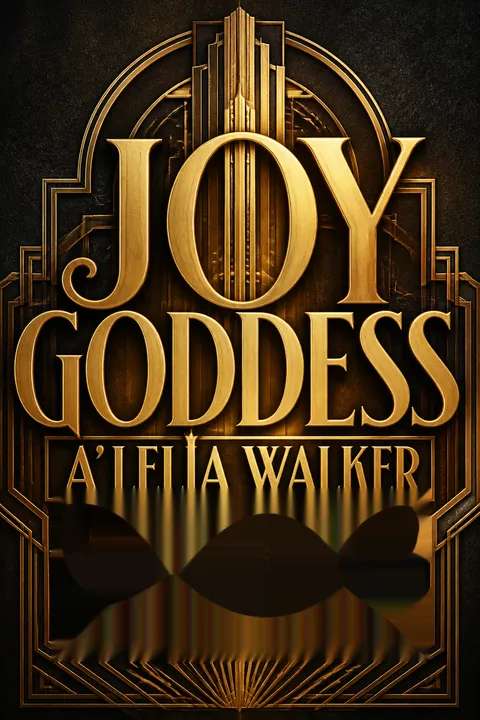

Key Takeaways
1. From the washboard to wealth: The foundational struggle of the Walker women
On this October evening in 1914, Lelia had insisted on the best of everything because, not so long ago, she and her mother had had the worst of everything and sometimes they’d had nothing at all except each other.
Humble, painful beginnings. Before becoming the legendary "joy goddess" of Harlem, Lelia Walker's early life was defined by extreme poverty, loss, and domestic instability. Born in a sharecropper's cabin in Louisiana, she lost her father as a toddler and moved with her mother, Sarah Breedlove (later Madam C. J. Walker), to St. Louis. There, they survived on Sarah's meager earnings as a washerwoman while enduring the terror of an abusive stepfather, John Davis.
The turning point. This grueling environment forged an unbreakable bond between mother and daughter, driving Sarah to seek a better life for her child. Sarah's transition from a laundress to a hair care entrepreneur was fueled by a desperate desire to secure Lelia's future. By the time they established their beauty empire, the memory of their early hardships remained a powerful motivator.
Key milestones of survival:
- Escaping the sharecropping system of the South for the opportunities of urban St. Louis.
- Utilizing the support networks of the African Methodist Episcopal (AME) Church for shelter and community.
- Enrolling Lelia in Knoxville College to protect her from domestic chaos and city temptations.
- Transitioning from selling Annie Turnbo's products to inventing the Walker system in Denver.
2. The "fire and ice" dynamic of maternal devotion and personal autonomy
They loved each other dearly and they sometimes fought fiercely.
A complex partnership. The relationship between Madam C. J. Walker and her daughter was a tempestuous mix of deep affection, mutual dependence, and intense power struggles. As the business grew into a national empire, Lelia sought financial and personal independence, while Madam Walker struggled to relinquish control. This tension manifested in frequent arguments over business decisions, expenditures, and Lelia's romantic choices.
Generosity with strings. Madam Walker frequently showered Lelia with lavish gifts, such as automobiles and townhouses, yet these gestures often came with implicit expectations of obedience and business dedication. Lelia resented her mother's overprotective nature, viewing it as an encroachment on her autonomy. Despite their clashes, they remained fiercely loyal allies, always working their way back to reconciliation.
Dynamics of their relationship:
- Fierce arguments followed by extravagant peace offerings and financial bailouts.
- Lelia's use of company attorney F. B. Ransom as a diplomatic buffer to avoid direct conflict with her mother.
- Madam's desire for Lelia to focus on administrative details versus Lelia's passion for public relations and entertaining.
- A shared commitment to protecting their private struggles from the scrutiny of the public eye.
3. The double-edged sword of adoption and generational control
While Mae’s new life granted her a Spelman College education and the material trappings of wealth, there were other consequences.
A modern Cinderella. In 1912, Lelia legally adopted Fairy Mae Bryant, a young girl from Indianapolis whose striking hair made her the perfect model for the Walker system. For Mae, the adoption was a life-altering transition from poverty to a world of luxury, private education, and high-society debutante balls. However, this elevated status came with a heavy price: the loss of personal freedom and constant surveillance.
Replicating maternal control. Ironically, A'Lelia replicated the same controlling dynamics she had resented in her own mother, micro-managing Mae's social circles and romantic prospects. Mae was groomed to be the face and future of the Walker legacy, leaving little room for her own desires. This generational cycle of control culminated in a disastrous, arranged marriage orchestrated by A'Lelia to secure a prestigious family alliance.
The reality of Mae's life:
- Serving as a prominent hair model and the symbolic "granddaughter" of the Walker empire.
- Being restricted from normal social activities to preserve a carefully curated debutante image.
- Attending Spelman College and receiving training to eventually manage the manufacturing operations.
- Enduring an abusive, arranged marriage to Dr. Gordon Jackson before finally reclaiming her independence.
4. Cultivating influence through strategic hospitality and cultural patronage
She’d also begun to discover her power as a convener, to see how thoughtfully orchestrated social events could influence culture and commerce.
Socializing as strategy. A'Lelia Walker understood that glamour, hospitality, and entertainment could be leveraged to build brand loyalty and advance social causes. Her elegant Harlem townhouse and the majestic Villa Lewaro became legendary gathering spaces where business, art, and politics intersected. By hosting influential figures, she elevated the Walker brand while normalizing interracial and cross-class socialization.
Championing the community. During World War I and its aftermath, A'Lelia used her social prominence to support Black soldiers and advocate for civil rights. She organized high-profile fundraisers, collaborated with the NAACP, and even secured the endorsement of international figures like Enrico Caruso. These events demonstrated that the Walker empire was about more than beauty products; it was a vehicle for racial uplift.
Key cultural contributions:
- Designing the Neoclassical Harlem townhouse and Villa Lewaro as monuments to Black success.
- Organizing the "Conference of Interest to the Race" at Villa Lewaro to discuss civil rights and wartime patriotism.
- Raising funds for a military ambulance for Black troops through celebrity-backed galas.
- Showcasing classical musicians, opera singers, and jazz pioneers in spaces that celebrated Black talent.
5. The pursuit of love amidst the perils of celebrity and fortune
She’d had a hard enough time finding someone who wasn’t paralyzed by her mother’s money or overwhelmed by her celebrity.
The burden of wealth. A'Lelia's immense fortune and public celebrity made her a target for opportunistic suitors, complicating her lifelong quest for genuine romantic happiness. Her first marriage to John Robinson ended quickly due to his jealousy of her independence. Her second marriage, to the charming but manipulative Dr. Wiley Wilson, proved to be a devastating emotional and financial betrayal.
Exploitation and heartbreak. Wiley Wilson exploited A'Lelia's desire for affection, using her wealth to finance his medical sanitarium and his brother's hotel while openly conducting an affair with a younger woman. Despite her mother's warnings and her own misgivings, A'Lelia's vulnerability blinded her to his opportunism. This painful chapter reinforced the tragic reality that her wealth often attracted those who valued her checkbook more than her heart.
A'Lelia's romantic trajectory:
- A brief, rebellious marriage to John Robinson that ended in desertion.
- A lavish, financially draining marriage to Wiley Wilson, who used her funds for personal real estate ventures.
- A quiet, late-life marriage to Dr. James Arthur Kennedy, a decorated war hero who offered genuine companionship.
- The constant struggle to balance her desire for a "safety valve" husband with the need to protect her estate.
6. Expanding horizons through international travel and global solidarity
The lessons she’d missed in the textbooks of her youth were coming to life through the people she encountered and the incidents she observed as she moved from country to country.
A global education. In 1921, seeking escape from her marital heartbreak and the grief of her mother's death, A'Lelia embarked on an extraordinary grand tour of Europe, North Africa, and the Middle East. This journey transformed her from a Harlem socialite into a sophisticated woman of the world. In Paris, London, Rome, Cairo, and Addis Ababa, she experienced a level of personal freedom and respect denied to her in segregated America.
Connecting the diaspora. Her travels allowed her to witness the global realities of colonialism, class, and race, fostering a deep sense of international solidarity. She met with European aristocrats, African royalty, and Black expatriates who had found success abroad. Upon her return, she utilized these global perspectives to enrich Harlem's cultural scene and inspire her sales agents with tales of her travels.
Highlights of her global tour:
- Socializing with artists and musicians in the vibrant, integrated salons of Paris and London.
- Visiting the pyramids of Egypt and exploring the historic streets of Jerusalem.
- Receiving an audience with Empress Zauditu of Ethiopia, who was captivated by her style and stature.
- Utilizing her travel experiences to launch a highly successful national lecture tour for the Walker Company.
7. The Dark Tower as a sanctuary for Harlem's creative vanguard
We dedicate this tower to the aesthetes.
A cultural salon. In 1927, A'Lelia converted a floor of her Harlem townhouse into the "Dark Tower," a legendary cultural salon designed to support the younger generation of Harlem Renaissance writers, artists, and musicians. Named after a poem by Countee Cullen, the space featured modernist furniture designed by Paul Frankl and walls stenciled with the poetry of Langston Hughes. It was envisioned as a sanctuary where creative minds could gather, collaborate, and connect with wealthy patrons.
An inclusive crossroads. The Dark Tower became an iconic symbol of the Jazz Age, welcoming a diverse mix of queer and straight, Black and white, uptown and downtown guests. While some critics dismissed it as a playground for the wealthy, it provided crucial exposure for emerging talents like Augusta Savage and Wallace Thurman. It normalized interracial socialization on equal terms during a deeply segregated era.
The legacy of the Dark Tower:
- Providing a sophisticated alternative to the exploitative, white-owned cabarets of Harlem.
- Hosting poetry readings, art exhibitions, and book signings for the creative vanguard.
- Fostering an environment of radical inclusivity that welcomed diverse sexualities and backgrounds.
- Serving as the inspiration for characters in prominent novels, including Carl Van Vechten's Nigger Heaven.
8. A majestic legacy preserved through the storms of tragedy and economic ruin
She was still Harlem’s queen.
The final curtain. The onset of the Great Depression in 1929 brought severe financial strain to the Walker empire, forcing the closure of the Dark Tower and the painful auction of Villa Lewaro's luxurious furnishings. Despite these setbacks, A'Lelia remained a beloved and majestic figure in Harlem until her sudden death from a stroke in 1931. Her funeral was a grand, theatrical celebration of her life, attended by thousands of grieving admirers.
An enduring impact. While critics often dismissed her as a frivolous dilettante, A'Lelia Walker's legacy as a patron of the arts and a champion of Black culture remains undeniable. She used her wealth and influence to create spaces that celebrated Black excellence and fostered the creative explosion of the Harlem Renaissance. Her life proved that hospitality and generosity could be powerful tools for social change.
The preservation of her memory:
- The transition of the Walker Company presidency to her daughter, Mae Walker Perry.
- The donation of her historic Harlem townhouse to the city to serve as a community health clinic.
- The enduring recognition of the Dark Tower as a cornerstone of Harlem Renaissance history.
- The commissioning of her portrait by friends to ensure her place among the icons of Black America.
Review Summary
Reviews for Joy Goddess are generally positive, averaging 3.85 out of 5. Readers praise the meticulous research, vivid portrayal of the Harlem Renaissance, and the unique perspective of a great-granddaughter writing about her ancestor. Many appreciate learning about A'Lelia Walker's role as America's first prominent Black heiress and her cultural patronage. Common criticisms include overwhelming name-dropping, slow pacing, and insufficient exploration of queer relationships among A'Lelia's circle. Most recommend it for history enthusiasts, particularly those interested in the Harlem Renaissance or the Walker family legacy.
Download PDF
Download EPUB
.epub digital book format is ideal for reading ebooks on phones, tablets, and e-readers.








































