
Plot Summary
Inauguration and Old Flames
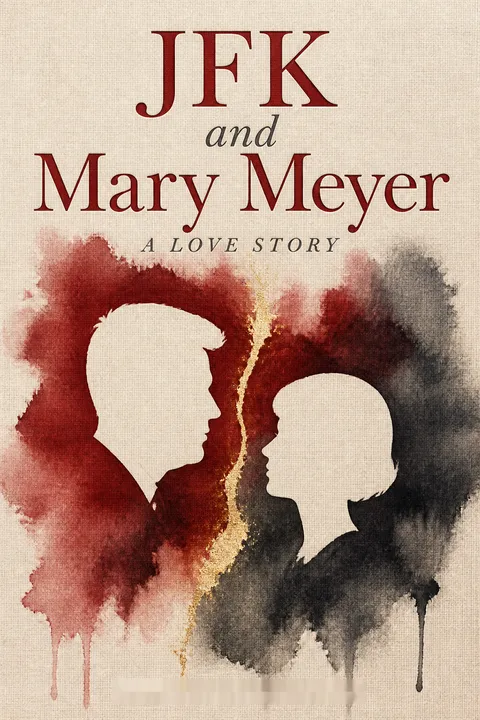
As John F. Kennedy is sworn in as President, Mary Pinchot Meyer, an artist and family friend, watches with a mix of skepticism and nostalgia. The transformation of Jack from unserious playboy to inspiring leader is both thrilling and unsettling for her. Mary's own life is in flux—recently divorced, she's determined to focus on her art and her sons, but the gravitational pull of the Kennedy circle is irresistible. The inauguration is not just a national event; it's a personal turning point, as Mary is drawn back into the orbit of Jack and Jackie, setting the stage for a story where public history and private longing will collide.
The Artist's Solitude
Mary's diary reveals her struggle to balance artistic ambition with the loneliness of single motherhood. Her studio is both sanctuary and prison, a place where she confronts her own desires and disappointments. She resists sharing her space, even with her beloved sister Tony, fearing distraction from her work and the pain of exclusion from the coupled world. The art world's demands mirror her emotional life: striving for recognition, fearing irrelevance, and seeking meaning in color and form. Mary's reflections on painting, relationships, and the shadow of her past set a tone of introspection and yearning that will echo throughout her journey.
White House Invitations
Invitations to White House dinners and glamorous parties become frequent, blurring the lines between friendship and flirtation. Mary is both insider and outsider—close enough to observe the Kennedys' charisma and dysfunction, yet always aware of her own outsider status as a divorced woman. The social scene is a stage for power plays and sexual tension. Mary's wit and intelligence attract Jack's attention, but she's wary of becoming just another conquest. The dinners, dances, and late-night conversations are charged with possibility, hinting at deeper connections and the risks of stepping beyond the boundaries of propriety.
Crossing Boundaries
A private dinner invitation from Jack marks the crossing of a crucial boundary. The encounter is fraught with anticipation, vulnerability, and the thrill of danger. Mary is acutely aware of the stakes: the risk to her reputation, the pain it could cause Jackie, and the emotional cost to herself. Yet, the loneliness she senses in Jack—masked by his legendary promiscuity—draws her in. Their conversation is layered with flirtation and confessions of isolation. The night ends with restraint, but the emotional intimacy established is a prelude to the affair that will define and haunt them both.
The Secret Affair Begins
The affair commences in earnest, marked by secrecy, excitement, and a sense of inevitability. Mary's diary captures the complexity: the exhilaration of being desired by the most powerful man in the world, the awkwardness of their first physical encounter, and the knowledge that she is one among many. Yet, there is something different in their connection—a meeting of minds as well as bodies. Jack's need for escape from the pressures of the presidency finds solace in Mary's presence, while she seeks validation and intimacy. The relationship is both a refuge and a source of anxiety, shadowed by the impossibility of permanence.
Intimacy and Distance
As the affair deepens, so do the contradictions. Jack is attentive yet emotionally unavailable, capable of tenderness but ultimately self-absorbed. Mary oscillates between feeling special and feeling like just another woman in line. Their moments together are intense but fleeting, always constrained by the demands of Jack's public life and the ever-present threat of exposure. Mary's longing for intimacy is met with Jack's inability to move beyond physical pleasure. The diary becomes a record of both connection and alienation, as Mary grapples with the limits of what Jack can give and what she truly needs.
Power, Politics, and Passion
Mary's proximity to power immerses her in the political dramas of the era: the Bay of Pigs, civil rights struggles, and the Cuban Missile Crisis. Her conversations with Jack touch on policy, philosophy, and the burdens of leadership. She becomes a confidante and, in her own mind, an influence on his thinking. Yet, the intersection of their personal and political lives is fraught—Jack's decisions are shaped by forces far beyond their private world, and Mary is reminded of her own powerlessness. The passion of their affair is both heightened and undermined by the weight of history unfolding around them.
Psychedelic Pursuits
Mary's quest for meaning leads her to the burgeoning world of psychedelics, seeking insight and transformation for herself and, potentially, for Jack. Encounters with figures like Timothy Leary reflect her belief that altered consciousness could foster peace and understanding, even at the highest levels of power. She introduces Jack to marijuana and contemplates the possibility of LSD as a tool for enlightenment. These experiments are both personal and political, an attempt to break free from the constraints of conventional thinking. Yet, the risks are real, and the boundaries between idealism and recklessness blur.
The Web of Women
Mary is not alone in Jack's affections; the president's appetite for women is legendary and indiscriminate. The web of lovers—some friends, some strangers—creates a climate of competition, secrecy, and complicity among the women in his life. Jackie's stoic acceptance, other women's pragmatic detachment, and Mary's own ambivalence reveal the complex dynamics of power, desire, and survival in a world where men's needs dominate. The affair is both a source of pride and a wound, as Mary navigates the shifting alliances and betrayals that define the Kennedy circle.
Cracks in Camelot
The idealized image of Camelot begins to fracture under the strain of personal and political crises. Jack's limitations as a partner and a leader become more apparent, and Mary's hopes for transformation—both in him and in herself—are repeatedly dashed. The civil rights movement, Vietnam, and the pressures of the presidency expose the moral ambiguities and failures of the administration. Mary's own sense of purpose wavers as she confronts the reality that love, art, and influence may not be enough to change the world or heal her own wounds. The myth of Camelot gives way to a more complicated, painful truth.
Civil Rights and Conscience
Mary's engagement with the era's great issues—poverty, race, war—intensifies as she witnesses the limits of Jack's leadership and the resistance to change. Her diary reflects a growing sense of responsibility and frustration: the gap between ideals and action, the persistence of injustice, and the complicity of those in power. She challenges Jack on policy, pushes for greater courage, and mourns the suffering she sees around her. The personal becomes political, and Mary's conscience becomes both a source of strength and a burden, as she realizes the cost of caring in a world resistant to transformation.
The End of Innocence
The affair falters as Jackie's pregnancy, political pressures, and Jack's emotional distance take their toll. Mary senses the end approaching, marked by awkward encounters, unspoken resentments, and the return of old patterns. The hope that love could heal or redeem is replaced by resignation and sorrow. The assassination of Jack looms as an unspoken threat, a culmination of the violence and secrets that have always shadowed their relationship. Mary's diary becomes a chronicle of loss—of love, of innocence, and of the belief that personal connection can overcome the forces of history.
The Assassination and Aftermath
Jack's assassination shatters Mary's world and the nation's. The diary captures the immediate aftermath: disbelief, numbness, and the overwhelming sense of something irretrievably lost. The public spectacle of mourning is mirrored by Mary's private agony. She reflects on their love, the secrets they shared, and the loneliness that defined them both. The questions of who killed Jack and why become obsessions, fueling her search for meaning amid chaos. The assassination is not just a political event but a personal cataclysm, marking the end of an era and the beginning of a darker, more uncertain time.
The Search for Truth
Haunted by Jack's death, Mary turns detective, probing the official story and seeking answers in a web of conspiracy, cover-up, and silence. She interviews friends, challenges the Warren Commission's findings, and confronts the possibility that powerful forces orchestrated not just Jack's death but the suppression of truth. Her inquiries are met with warnings, threats, and the realization that knowledge can be dangerous. The search for truth becomes a quest for justice and a way to keep Jack's memory alive, even as it isolates her further and puts her at risk.
Grief Stones and Ghosts
Mary channels her grief into her art, conceiving "Grief Stones" as a permanent memorial to Jack and a protest against the forces that destroyed him. The act of creation becomes an act of defiance, a way to assert meaning in the face of loss and injustice. Yet, the ghosts of the past—Jack, her lost son, the dreams of Camelot—haunt her. The permanence of stone contrasts with the fragility of memory and the impermanence of love. Mary's art is both a tribute and an accusation, a testament to what was lost and what endures.
The Unsolved Murders
Eleven months after Jack's assassination, Mary is murdered while walking along the canal. The crime is never solved, and the circumstances—her connections to the Kennedys, the CIA, and her own investigation—fuel endless speculation. The diary ends before her death, but the shadow of violence and secrecy hangs over the final entries. The unsolved murders of Jack and Mary become symbols of a nation's unresolved traumas, the price of power, and the dangers of seeking truth in a world built on secrets.
The Weight of Secrets
The aftermath of the assassinations is marked by official inquiries, rumors, and the persistent sense that the real story remains hidden. Mary's friends and family are drawn into the web of suspicion, and the boundaries between fact and fiction blur. The diary's final pages are filled with questions—about Oswald, the CIA, the nature of power, and the possibility of justice. The weight of secrets is crushing, and the hope that knowledge can bring healing is replaced by the fear that some truths are too dangerous to uncover.
Endings and Echoes
The story closes with reflections on loss, survival, and the impossibility of closure. Mary's life and death, like Jack's, become part of a larger narrative about love, power, and the costs of both. The echoes of their affair reverberate through history, shaping the memories of those who knew them and the myths that endure. The diary is both a love letter and a lament, a record of what was possible and what was lost. In the end, the longing for connection, meaning, and truth remains, even as the world moves on.
Analysis
JFK and Mary Meyer: A Love Story is a meditation on the intersection of love, power, and history, told through the imagined diary of a woman at the heart of America's most mythologized era. The novel reimagines the Kennedy years not as a golden age of idealism, but as a time of profound loneliness, moral ambiguity, and unfulfilled longing. Through Mary's eyes, we see the costs of ambition, the fragility of intimacy, and the dangers of seeking truth in a world built on secrets. The story challenges the myth of Camelot, exposing the personal and political failures that underlie its glamour. It also interrogates the nature of memory and narrative—how we construct meaning from loss, and how the stories we tell can both heal and haunt us. Ultimately, the book is a lament for what might have been—a love that could not save, a leader who could not deliver, and a nation forever marked by the violence and mysteries of its past. The lessons are sobering: that power isolates, that truth is elusive, and that the search for meaning is both necessary and perilous.
Review Summary
JFK and Mary Meyer receives mixed reviews (3.68/5 stars). Readers appreciate Kornbluth's fictional diary format recreating Meyer's relationship with Kennedy from 1961-1963, supported by extensive historical footnotes. Many praise the unique storytelling approach and research depth, finding it fascinating and thought-provoking. However, opinions split on the footnotes—some find them integral and enriching, while others consider them tedious and disruptive to the narrative flow. The book explores themes of love, betrayal, conspiracy theories around JFK's assassination, and Meyer's mysterious unsolved murder in 1964. Most agree it's a quick, engaging read for Kennedy-era history enthusiasts.
Characters
Mary Pinchot Meyer
Mary is the emotional and narrative center of the story—a fiercely intelligent, independent artist whose life is shaped by both privilege and tragedy. Her relationships, especially with Jack Kennedy, are marked by longing, skepticism, and a desire for authenticity. Mary's psychoanalytic depth is revealed in her diary: she is haunted by loss (her son's death, her failed marriage), driven by a need for meaning, and unafraid to confront her own darkness. Her affair with Jack is both a source of joy and pain, offering glimpses of intimacy but ultimately reinforcing her sense of isolation. As the story progresses, Mary's quest for truth and justice—both personal and political—leads her into dangerous territory, culminating in her own unsolved murder. Her legacy is one of courage, vulnerability, and the refusal to accept easy answers.
John F. Kennedy (Jack)
Jack is portrayed as both the dazzling public figure and the deeply private, wounded man. His need for constant female attention masks a profound loneliness and insecurity. With Mary, he seeks not just physical pleasure but a kind of emotional refuge, though he is ultimately unable to offer true intimacy. Jack's presidency is a whirlwind of ambition, idealism, and compromise, shaped by the pressures of history and the limitations of his own character. His relationships—with Jackie, with Mary, with his advisors—reveal a man torn between duty and desire, public image and private need. Jack's assassination is both a personal and national tragedy, leaving behind a legacy of hope, disappointment, and unresolved questions.
Jacqueline Kennedy (Jackie)
Jackie is both a symbol of grace and a figure of quiet suffering. Her marriage to Jack is a complex arrangement—publicly glamorous, privately fraught with infidelity and emotional distance. Jackie's response to Jack's affairs is pragmatic, even cold, but the pain is real. Her relationship with Mary is layered: friendship, rivalry, and, after Jack's death, a shared grief that transcends past wounds. Jackie's ability to shape narrative—most famously with the "Camelot" myth—demonstrates her resilience and her need to find meaning in tragedy. She is both victim and architect of her own story, embodying the contradictions of her era.
Cord Meyer
Cord is Mary's former husband, a brilliant but increasingly bitter figure whose career in the CIA brings him into conflict with both Mary and Jack. His need for control and recognition is matched by a capacity for cruelty, especially in the aftermath of their divorce and the death of their son. Cord's presence in the story is a reminder of the dangers of power and the costs of ambition. His relationship with Mary is marked by rivalry, resentment, and a lingering, toxic connection. Cord's role in the larger conspiracies surrounding Jack's assassination is ambiguous, fueling Mary's suspicions and the story's atmosphere of paranoia.
Tony Pinchot Bradlee
Tony is Mary's younger sister and closest friend, married to Ben Bradlee. She provides emotional support, artistic camaraderie, and a link to the world of Washington power. Tony's own struggles—with marriage, motherhood, and creative fulfillment—mirror Mary's, but she is less willing to challenge the status quo. Her loyalty is tested by the secrets she must keep and the tragedies she witnesses. Tony's presence grounds Mary, offering moments of warmth and humor amid the story's darkness.
Ben Bradlee
As Tony's husband and a prominent journalist, Ben is both insider and chronicler of the Kennedy era. His friendship with Jack and Jackie gives him access to the highest circles of power, but also complicates his loyalties. Ben's role in the aftermath of Mary's death—securing and ultimately destroying her diary—underscores the tension between truth and protection, public interest and private pain. He is a figure of integrity, but also of compromise, navigating the blurred lines between reporting and participation.
Anne Truitt
Anne is Mary's best friend in the Washington art world, a minimalist sculptor whose own struggles with creativity and family life provide a counterpoint to Mary's journey. Anne is both supportive and skeptical, challenging Mary's idealism and offering pragmatic advice. Her presence in the story highlights the importance of female friendship and the ways in which art can serve as both escape and engagement with the world's pain.
James Angleton
As the CIA's chief of counterintelligence and godfather to Mary's children, Angleton is a figure of both protection and menace. His obsession with secrets, surveillance, and the possibility of betrayal makes him a symbol of the era's pervasive mistrust. Angleton's involvement in the aftermath of Mary's death—searching for her diary, monitoring her activities—adds to the atmosphere of conspiracy and fear. He is both a guardian and a potential threat, embodying the dangers of unchecked power.
Bobby Kennedy
Bobby is Jack's fiercely loyal brother, devastated by the assassination and burdened by the weight of legacy. His grief is palpable, manifesting in physical decline and emotional withdrawal. Bobby's relationship with Mary is distant but significant, as both are left to navigate the ruins of Camelot. His own political ambitions and eventual assassination echo the story's themes of hope, loss, and the costs of challenging entrenched power.
Raymond Crump Jr.
Crump is the man arrested and acquitted for Mary's murder, a figure whose presence highlights the failures of the justice system and the unresolved nature of the story's central mysteries. His trial and acquittal underscore the limits of truth and the ease with which the vulnerable can be sacrificed to protect the powerful. Crump's story is a reminder of the broader social injustices that persist beyond the personal dramas of the elite.
Plot Devices
Diary as Narrative Lens
The novel is structured as Mary's imagined diary, offering a first-person, present-tense account of events. This device creates immediacy and intimacy, allowing readers to experience history through Mary's eyes. The diary format blurs the line between fact and fiction, memory and invention, and foregrounds the subjectivity of experience. It also enables the inclusion of footnotes—editorial asides that provide historical context, commentary, and alternative perspectives. The diary's limitations—what is left unsaid, what is forgotten or repressed—become part of the story, highlighting the elusiveness of truth and the power of narrative to shape memory.
Foreshadowing and Retrospective Irony
From the outset, the story is shadowed by the knowledge of Jack's and Mary's eventual deaths. The diary's tone is often elegiac, with Mary reflecting on the impermanence of happiness and the inevitability of loss. Moments of joy are tinged with foreboding, and seemingly minor details—an open door, a missed call—take on ominous significance. The use of historical hindsight allows the author to layer meaning, irony, and pathos, as readers recognize the signs of impending disaster that the characters cannot see.
Conspiracy and Uncertainty
The story is driven by questions—about love, power, and the nature of truth. The unresolved mysteries of Jack's assassination and Mary's murder create an atmosphere of paranoia and doubt. The inclusion of real historical debates, conflicting testimonies, and alternative theories invites readers to question official narratives and consider the possibility of hidden forces at work. The lack of closure is both frustrating and thematically resonant, reflecting the complexities of history and the limits of knowledge.
Interplay of Public and Private
The novel weaves together the intimate and the historical, showing how private desires and relationships are shaped by, and in turn shape, the course of public events. Mary's affair with Jack is not just a love story but a lens through which to explore the moral and political dilemmas of the era. The characters' personal struggles—grief, ambition, betrayal—mirror the larger crises of the nation, from civil rights to war to the loss of innocence.
About the Author
Other books by Jesse Kornbluth


Download PDF
Download EPUB
.epub digital book format is ideal for reading ebooks on phones, tablets, and e-readers.








































