
Key Takeaways
1. Jewish Fundamentalism: A Potent Force in Israeli Society
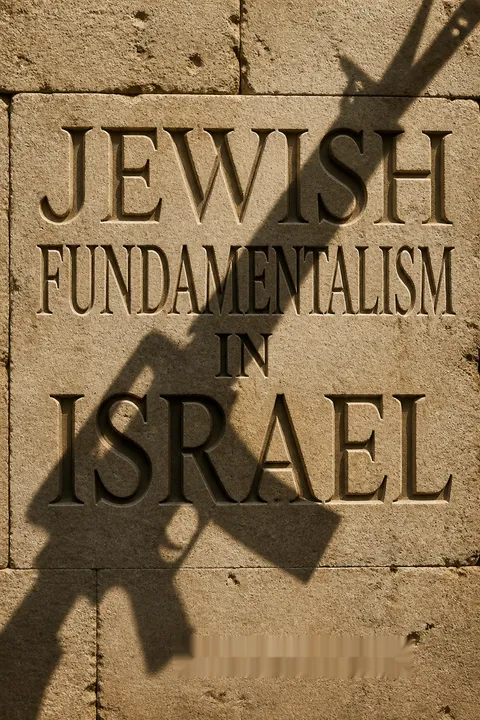
Jewish fundamentalism is here briefly defined as the belief that Jewish Orthodoxy, which is based upon the Babylonian Talmud, the rest of talmudic literature and halachic literature, is still valid and will eternally remain valid.
Defining the core. Jewish fundamentalism, unlike its Islamic or Christian counterparts, is often overlooked or minimized outside Israel, yet it wields significant political power within the state. It is rooted in the belief that the Babylonian Talmud and subsequent Halachic literature, not primarily the Bible, constitute the eternal and authoritative Jewish law. This ideology shapes the lives of its adherents and, crucially, influences broader Israeli society and policy.
Two main groups. In Israel, fundamentalist Jews are primarily divided into two distinct groups: the Haredim (ultra-Orthodox) and the National Religious Party (NRP), which includes the Gush Emunim settlers. While Haredim are more extreme in their anti-modern stance and strict adherence to Halacha, the NRP, though making some compromises with modernity, shares core messianic and ethnocentric beliefs. Both groups, despite their numerical minority, exert disproportionate political influence due to their unity, ideological clarity, and strategic alliances, particularly with the secular right-wing Likud party.
Beyond religious matters. The influence of Jewish fundamentalism extends beyond purely religious issues, deeply affecting political decisions, social norms, and even military policies. Its adherents' Judeocentric worldview, which often perceives non-Jews as inherently hostile, resonates with segments of the secular right, creating a powerful bloc that shapes Israel's internal divisions and its approach to the Arab-Israeli conflict. This shared outlook, rooted in a reverence for a perceived "unique" Jewish past and a fear of external threats, allows fundamentalist demands to gain traction in the political arena.
2. The Haredi Worldview: Anti-Modernity and Rabbinical Authority
The Haredi world is Judeocentric. The essence of Haredi thought is the notion of an abyss separating the Jews from the Gentiles.
A world apart. Haredim, or "God-fearing" Jews, represent an extreme anti-modern backlash, insisting on the strictest observance of Halacha and maintaining a distinct, often black-clad, lifestyle reminiscent of 19th-century Eastern Europe. Their educational system, from heder to yeshiva and kollel, focuses almost exclusively on sacred studies, deliberately excluding secular subjects like mathematics, science, and even most of the Bible. This insular education aims to perpetuate a pre-modern Jewish way of life, shaping a character deeply resistant to external influences.
Divine justification for privilege. A cornerstone of the Haredi system is the belief that intense talmudic study by men is the ultimate source of divine favor for all Jews, including military victories and good fortune. This conviction justifies their exemption from military service and their reliance on state financial support, often through "special money" grants that have led to significant corruption. They argue that their spiritual contributions are more vital than any secular duties, a stance that creates deep resentment among secular Israelis who bear the brunt of military service and taxation.
Controlling information and thought. The Haredi press operates under strict rabbinical censorship, deliberately omitting information deemed harmful to their worldview and fiercely attacking secular society. This control extends to condemning modernity, secular lifestyles, and even specific individuals, often using derogatory and dehumanizing language. Their misogynistic views, rooted in talmudic interpretations that define women as inferior and restrict their roles, are also enforced, further highlighting their rejection of modern liberal values and their desire for a theocratic society governed solely by Halacha.
3. Messianic Fundamentalism: Gush Emunim's Ideology of Divine Conquest
The modern secular world, according to this approach, “is struggling for survival, and thus our war is directed against the impurity of Western culture and against rationality as such.”
A radical vision. The National Religious Party (NRP) and its activist arm, Gush Emunim, are driven by a messianic ideology largely derived from the teachings of Rabbi Abraham Yitzhak Kook the elder and his son. This ideology, rooted in the Lurianic Cabbala, posits a cosmic struggle between Jewish holiness and the "satanic souls" of non-Jews, viewing the modern secular world and its rationality as an impurity to be eradicated. They believe the State of Israel is the "kingdom of heaven on earth," and its military victories are metaphysical transformations, transferring land from Satan to the divine sphere.
Justifying conquest and discrimination. Gush Emunim interprets the messianic era as already having begun, justifying actions that would otherwise be considered morally reprehensible.
- Jewish superiority: They assert a genetic and spiritual superiority of Jews over non-Jews, arguing that non-Jews exist solely for the sake of Jews.
- Land ownership: All land in Israel is considered exclusively Jewish, making any Arab presence or property a form of theft.
- Violence: The murder of a non-Jew by a Jew is not considered murder under Halacha, and taking non-Jewish organs to save a Jewish life is permissible.
- Expulsion: Palestinians are often equated with ancient Canaanites, whose extermination or expulsion was divinely predestined.
The "Messianic Ass." Rabbi Kook the elder's innovative concept of a "collective Messiah" (Gush Emunim itself) riding upon "ass-like Jews" (ignorant, non-believing secular or traditional Jews) justifies exploiting and even coercing other Jews for messianic goals. This doctrine transforms land confiscation into "sanctification" and provides a theological basis for their aggressive settlement policies and their rejection of any political compromise that would cede land to non-Jews.
4. Religious Settlements: Strategic Outposts of a Sacred Society
The more important aim of Gush Emunim leaders is to create in their homogeneous settlements models of a new society.
Beyond mere land. While often portrayed as simply land grabs, the religious settlements in the Occupied Territories are, for Gush Emunim, much more: they are citadels of messianic ideology and nuclei for a new, divinely ordered Jewish society. These settlements, particularly the isolated ones like Netzarim, are strategically vital for Israel's "control from the outside" policy, serving as pivots for military road grids and allowing the army to maintain dominance with minimal forces. Only ideologically committed religious Jews are willing to inhabit such dangerous and exposed locations.
A model for the future. Gush Emunim aims to expand this "sacred society" until it absorbs all Israeli Jews into a religious, ethnocentric, anti-liberal, and anti-universalist collective identity. Their dedication, discipline, and perceived moral superiority, especially after the 1973 war, garnered significant public sympathy, contrasting with the perceived hedonism of secular society. This allowed them to penetrate and influence Israeli culture and collective identity, particularly among the political right.
Military penetration and political power. The NRP and Gush Emunim have strategically encouraged their youth to join combat and elite units of the Israeli army, often through specialized Hesder Yeshivot and pre-military academies. These units, known for their excellent military quality and dedication, are also noted for their cruelty towards Palestinians. This military penetration, coupled with the formation of powerful rabbinical councils (like the Association of Judea and Samaria Rabbis) that exert authority over settlers and even influence army operations, demonstrates their growing power and their long-term goal of dominating the Israeli General Staff and shaping national policy.
5. Baruch Goldstein: A Symbol of Sanctioned Violence Against Non-Jews
The Halacha enjoins precisely the behavior of Goldstein’s refusing to attend non-Jews.
A doctor's refusal. Baruch Goldstein, the perpetrator of the 1994 Hebron massacre, exemplified the extreme end of Jewish fundamentalism. Long before his act, as an army physician, he repeatedly refused to treat Arabs, including wounded soldiers, citing his religious faith and allegiance to Maimonides and Rabbi Meir Kahane. This blatant breach of military discipline went unpunished due to intervention from "highly placed people in senior ministries," revealing a deep-seated tolerance for anti-Gentile sentiment within the Israeli establishment.
The massacre and its aftermath. Goldstein's massacre of 29 Muslim worshippers in the Patriarchs' Cave on Purim was met with initial attempts by Israeli leaders to portray him as a psychopath or deranged. However, this narrative quickly shifted to thinly veiled justifications, with some politicians even blaming the victims.
- Rabbinical approval: Prominent rabbis, including Dov Lior, eulogized Goldstein as a "righteous man" and "holy martyr," claiming he acted "in God's own name" to "sanctify the holy name of God."
- Public rejoicing: Religious neighborhoods in Jerusalem and elsewhere displayed posters extolling Goldstein, and many Israelis, particularly youth, openly approved of the massacre, wishing he had killed more Arabs.
- Halachic justification: The underlying principle, openly stated by rabbis, is that the killing of a non-Jew by a Jew is not considered murder under Halacha, and in some cases, can even be a virtuous act.
A disturbing legacy. Goldstein's tomb became a pilgrimage site, and a book, "Blessed the Male," was published in his praise, containing halachic justifications for killing non-Jews. This widespread support and the ambiguous official response underscore the profound influence of Jewish fundamentalism, where violence against non-Jews can be rationalized and even celebrated, posing a grave danger to democratic values and peace.
6. Rabin's Assassination: A Legacy of Intra-Jewish Religious Violence
In these and in many similar incidents in Jewish history, killing was allegedly committed for the greater glory of God.
A religious imperative. Prime Minister Yitzhak Rabin's assassination in 1995 by Yigal Amir was not an isolated act of madness but a direct consequence of a long, often suppressed, history of intra-Jewish religious violence. Amir, a talmudic scholar, was convinced his act was a divine commandment, a belief rooted in centuries of rabbinically sanctioned persecution and murder of fellow Jews deemed heretics or informers. This historical context, largely omitted from romanticized accounts of Jewish history, reveals a darker side of Jewish communal autonomy.
A history of persecution. Before the modern state, Jewish communities, under rabbinical authority, routinely employed brutal methods against dissenters.
- Physical violence: Flogging, mutilation (cutting noses, hands, tongues), and even execution were common punishments for religious sins, disobedience to rabbis, or informing.
- "Ass burial": Heretics were subjected to humiliating burials, their corpses beaten, paraded in dung, and buried outside cemeteries.
- Religious civil wars: Jewish history is replete with violent internal conflicts, such as the Sikarikin's assassinations during the Great Rebellion against Rome, all justified in the name of God.
The silence of the righteous. The assassination of Rabbi Avraham Cohen in Lemberg in 1848 by fanatical Hassids, for his moderate reforms and efforts to abolish burdensome taxes, serves as a chilling precedent. Like Rabin, Cohen was subjected to incitement, declared a "pursuer," and ultimately murdered, with no condemnation from Orthodox rabbis. This historical pattern of rabbinical silence or implicit approval of violence against perceived internal enemies highlights the continuity of a totalitarian impulse within certain strands of Orthodox Judaism.
7. Halachic Justifications for Killing: The Laws of Pursuer and Informer
All who separate themselves from public custom [of the Jews], such as those who do not fulfil commandments and do not honor the holidays or do not frequent synagogues or houses of study but rather regard themselves free and [behave] like other nations, and heretics, converts and informers should not be mourned; when they die, their brothers and all other relatives should put on white garments, make banquets and rejoice, since those who hate the Lord, blessed be he, have perished.
Divine mandate for murder. Yigal Amir explicitly invoked two halachic laws to justify Rabin's assassination: the "law of the pursuer" (din rodef) and the "law of the informer" (din moser). These laws, deeply embedded in traditional Judaism, command Jews to kill or severely wound fellow Jews under specific circumstances. The "law of the pursuer" mandates killing any Jew perceived as intending to kill another Jew, a determination that can be made by rabbinic authorities without direct evidence.
The informer's fate. The "law of the informer" dictates that any Jew who informs non-Jews about Jewish affairs, property, or persons, or delivers them to non-Jewish authority, should be killed. This law was historically applied with extreme cruelty, with informers being flogged, mutilated, or executed, often without witnesses or due process. Rabin's engagement with the Palestinian Authority and his concessions of land were interpreted by many religious Jews as "informing," thereby making him subject to this ancient decree.
Rabbinical authority and its dangers. The application of these laws historically depended on the degree of Jewish communal autonomy. In periods of strong autonomy, rabbis wielded immense power, issuing secret verdicts and even ordering public executions. The incitement against Rabin, with influential rabbis publicly denouncing him as an "informer" or "pursuer," directly mirrored these historical practices. The willingness of some rabbis to sanction the killing of non-religious Jews, as evidenced by the 1984 Jewish underground's plot to bomb Arab buses at a time when only non-religious Jews would be present, underscores the extreme and dangerous implications of these fundamentalist interpretations.
8. Jewish Chauvinism: A Barrier to Peace and Democratic Values
We have to acknowledge that our supposed advancement in progressive beliefs and democracy have failed to affect the archaic forms of Jewish tribalism.
Moral superiority complex. A pervasive Jewish chauvinism, deeply intertwined with fundamentalist beliefs, presents a significant obstacle to peace and democratic values in Israel. This chauvinism often manifests as a belief in Jewish moral superiority over all other nations, leading to a falsification of history and a denial of discriminatory practices. This is particularly dangerous when combined with religious fanaticism and willful ignorance, as it justifies actions that would be condemned if perpetrated by other groups.
Discrimination as policy. The influence of Jewish fundamentalism is evident in state policies that discriminate against non-Jews.
- "Jewish blood" concept: The value of Jewish life is deemed infinitely greater than non-Jewish life, influencing decisions on prisoner releases and military operations.
- Political segregation: Non-Jews in Israel are often confined to separate "sectors" within political parties, unable to participate fully in mainstream political life.
- Kibbutz membership: Non-Jews can only join kibbutzim if they convert to Judaism, a process that includes humiliating rituals for women.
- Religious symbols: Official approval of petty forms of anti-Christian sentiment, such as removing the "plus" sign from arithmetic textbooks, highlights a broader cultural intolerance.
The threat to democracy. The authors warn that a fundamentalist Jewish regime in Israel would treat its own non-adherents worse than it would treat Palestinians, mirroring historical patterns of persecution within Jewish communities. The widespread indifference or even support among many Jews for discrimination against non-Jews, particularly in the Jewish state, underscores the conscious and unconscious influence of Jewish fundamentalism, which poses a direct threat to the democratic character of Israeli society.
9. The Omission of Truth: English-Language Accounts Distort Jewish History
The falsification is sometimes a result of explicit lying but is mostly the result of omission of major facts that may create what the authors consider to be an adverse view of their subjects.
A biased narrative. The authors contend that much of the English-language literature on Judaism and Israel systematically falsifies its subject matter, primarily through the omission of critical facts. This apologetic approach, akin to propaganda from totalitarian systems, prevents readers from understanding the true nature and dangers of Jewish fundamentalism. While Hebrew sources openly discuss these issues, English accounts often sanitize or ignore them, driven by a desire to present a morally superior image of Jews and to avoid comparisons with other forms of discrimination.
Suppressed realities. Key aspects of Jewish history and contemporary Israeli society, crucial for understanding fundamentalism, are routinely absent from English narratives:
- Intra-Jewish violence: The long history of rabbinically sanctioned violence, persecution, and even murder of Jewish heretics and informers is largely omitted.
- Discrimination against non-Jews: Policies like segregated political party sectors, conversion requirements for kibbutz membership, and the "Jewish blood" concept are rarely mentioned.
- Magic and witchcraft: The widespread belief in and practice of magic within certain Jewish communities, both historically and in modern Israel, is ignored, despite its social and political significance.
- Fundamentalist ideology: The explicit anti-Gentile, ethnocentric, and messianic tenets of groups like Gush Emunim are often downplayed or replaced with vague biblical references.
The cost of silence. This systematic omission creates a distorted perception of Judaism and Israel, hindering critical analysis and perpetuating a dangerous ignorance. The authors argue that such falsification, especially when Jews wield significant power, is "purely adverse and totally unacceptable." They advocate for an honest engagement with Jewish history, including its darker aspects, as a necessary step towards eradicating Jewish xenophobia and averting the potential for a fundamentalist regime in Israel.
Review Summary
Jewish Fundamentalism in Israel receives polarized reviews averaging 4.15/5. Supporters praise it as essential reading for understanding Israeli politics and religious extremism, noting Shahak's unique Hebrew source access and insights into Orthodox influence. Critics acknowledge valuable information but question one-sidedness, comparing it to selective religious critiques that may misrepresent how adherents actually practice. Some warn the work has been misappropriated by antisemites. Reviewers appreciate discussions of settler policies, religious parties, and radical figures, though several note the strongly secular, leftist perspective may overshadow nuanced understanding of religious communities.
People Also Read







Download PDF
Download EPUB
.epub digital book format is ideal for reading ebooks on phones, tablets, and e-readers.








































