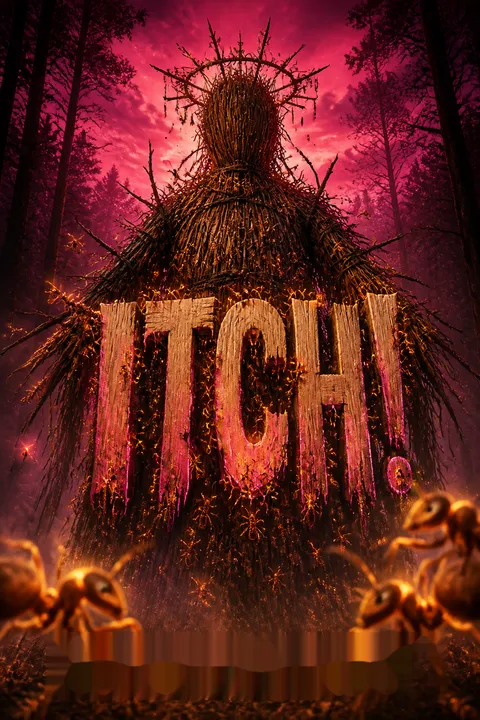

Plot Summary
Rain, Meat, and Ants
In 2001, young Josie Jackson interrupts her grieving father as he chops meat for festival pies, the house echoing with violent violin concertos and the relentless patter of rain. Her mother is dead, her father unpredictable—sometimes loving, sometimes cruel. Ants crawl across the kitchen floor, a subtle infestation that mirrors Josie's growing unease. She seeks comfort, but her father's moods are a minefield. The house, once her mother's domain, is now untidy and cold. As Josie is carried to bed, the ants swarm the meat, and an itch begins—both on her skin and deep in her mind. This night, with its storm and crawling things, marks the beginning of a lifelong discomfort, a sense that something is always wrong beneath the surface.
The Body in the Knoll
Twenty-three years later, Josie, now an adult, finds a decomposing body in the Devil's Knoll, a shortcut between her rural hometown and her apartment. At first, she mistakes it for a mannequin, but the stench and the crawling maggots force her to confront the truth: it's a young woman, brutalized and left for the ants. The discovery triggers panic, memories of abuse, and a physical collapse as the ants swarm from the corpse to Josie herself. The police arrive to find her in a state of shock, scratching at her skin, haunted by the dead woman's resemblance to herself. The event reopens old wounds and sets off a chain of obsession and investigation.
Haunted by the Past
Josie's life is a cycle of rumination—her abusive ex Lena's voice echoes in her mind, and the scars of her childhood and recent trauma refuse to heal. She is isolated, her father distant, her sense of self eroded by years of neglect and violence. The dead woman, Laurel Howell, becomes a fixation. Josie's skin crawls with phantom ants, and she compulsively checks her body for signs of infestation. The boundaries between herself and the corpse blur; she fears she is becoming the dead girl, or that she was always destined to be her. The past and present merge, and Josie's grip on reality weakens.
The Itch Beneath Skin
The ant bites from the Knoll become a relentless torment. Josie's body swells, itches, and erupts in rashes and wounds she cannot stop scratching. Her father is unsympathetic, and she withdraws further, obsessed with the sensation of things crawling beneath her skin. She researches formication, but no explanation soothes her. The ants become a metaphor for trauma—an internal colony that hollows her out, feeding on her pain. She isolates herself, performing rituals to prove she is alive, but the line between hallucination and reality blurs. The dead woman's image haunts her mirror, and Josie's sense of self dissolves.
Laurel Howell's Ghost
The news reveals the dead woman's identity: Laurel Howell, a local girl with a troubled past who looks uncannily like Josie. The resemblance deepens Josie's obsession and paranoia. She investigates Laurel's life, visiting her mother and learning of Laurel's struggles with mental health, addiction, and hallucinations of bugs crawling under her skin. Laurel's sketchbooks, filled with drawings of ants and a masked figure, suggest a shared affliction and a hidden connection. Josie realizes that Laurel's fate could easily have been her own, and that the town's secrets run deeper than she imagined.
The Devil's March Returns
The annual Devil's March, a centuries-old procession meant to keep evil at bay, looms over the town. Josie learns of its dark history—how the cancellation of the March once brought disaster, and how the ritual centers on the sacrifice of a straw queen. The festival's masks and pageantry conceal a legacy of violence against women, and the marks of the Devil—three claw-like gouges—appear near Laurel's body. Old Jacob, the town folklorist, warns Josie of Emmet, a masked killer who has haunted the region for decades. The March becomes a stage for both communal catharsis and hidden horror.
Angela's Sanctuary
Angela, the pub landlord and Josie's mother's old friend, offers Josie refuge and comfort. In the warmth of the King's Arms, Josie finds a rare sense of safety and belonging. Angela tends to her wounds, both physical and emotional, and encourages her to seek help. The pub, filled with symbols of local tradition and feminine strength, becomes a place where Josie can begin to heal. Angela's practical kindness and unwavering support contrast sharply with Josie's father's neglect and Lena's cruelty, offering a glimpse of what family could be.
Old Jacob's Warnings
Old Jacob, the town's keeper of lore, reveals the dark underbelly of Ellwood's traditions. He tells Josie of past murders—young women found dead in the woods, all with braids in their hair, all resembling Josie and Laurel. He speaks of Emmet, a masked figure who kills during the winter, leaving bodies as offerings or warnings. Jacob's stories blur the line between myth and reality, but forensic evidence—sawdust, straw, and soil—suggests a real killer hiding behind the mask. The past is not dead; it is alive in the rituals, the land, and the people.
The Masked Killer's Trail
Detective Wilkes, initially suspicious of Josie, reveals that forensic evidence links the murders: sawdust from a specific type of oak, straw from the queen effigies, and traces of rare poisons. The killer is a carpenter, someone with access to the materials of both the March and the woods. Josie's father, a local woodworker, becomes the prime suspect. The evidence mounts—his connection to the victims, his role in the festival, his secret sheds and storage bins scattered through the forest. The mask of Emmet is not just a symbol; it is a disguise for a very real predator.
Laurel's Sketchbook Secrets
Laurel's sketchbooks, which Josie steals from her childhood room, are filled with obsessive images: ants, masked figures, and scenes of ritual violence. The drawings suggest that Laurel, like Josie, was haunted by visions and perhaps by the killer himself. One sketch depicts a waymark with her father's signature acorn, linking him to the sites where bodies were found. The notebooks become a map of trauma, connecting the personal to the communal, the psychological to the physical. Josie realizes that the killer's methods are both practical and symbolic, using the town's traditions as cover for his crimes.
Sawdust and Straw
As Josie, Angela, and Wilkes piece together the clues, the pattern becomes clear: the killer stores bodies in wood bins, moves them around to avoid detection, and uses the straw queens as both hiding places and vehicles for disposal. The sawdust found on the victims matches that from Josie's father's workshop. The poison used to paralyze the women is traced to local herbs and rare toxins, some of which are found in Old Jacob's apothecary cabinet. The community's rituals have been corrupted, turned into a theater for murder. The killer is both of the town and outside it, using its customs as camouflage.
The Queen of the March
With her father missing and the police investigation stalled, Josie takes on the task of building the Queen of the March, guided by Old Jacob's traditional methods. The process is both cathartic and horrifying, as she realizes the effigy has been used to conceal living victims. The queen becomes a symbol of both suffering and resistance—a vessel for the town's pain and a potential trap for the killer. As the March approaches, Josie prepares herself for a final confrontation, donning the mask of Emmet and embracing the power and rage that have been building inside her.
The Father's Shed
Josie's investigation leads her to her father's sheds—one at the cottage, another deep in the woods, inherited from Old Jacob. There, she uncovers evidence of his crimes: hidden pits, discarded masks, and the tools of both carpentry and murder. Flashbacks reveal that as a child, Josie witnessed more than she remembered—her father drugged her to keep her quiet, and she saw glimpses of the women he tortured and killed. The ants, once a metaphor for trauma, now seem to be a literal infestation, a colony that has taken root inside her, driving her toward justice and revenge.
The Colony Within
The ants inside Josie become a force of their own, a churning mass of pain, anger, and memory. They drive her to confront her father, to reclaim her agency, and to break the cycle of silence and complicity. The colony is both a curse and a weapon, a manifestation of generational trauma and a source of power. As the March begins, Josie feels the presence of something older and darker than her father—a feminine Devil, a force of retribution that has been waiting for justice. The line between victim and avenger blurs.
Lena's Return
Lena, Josie's abusive ex, reappears, manipulating Josie's father into inviting her back. The confrontation is explosive—Lena tries to reassert control, but Josie, empowered by her ordeal and the colony within, resists. The ants become a literal weapon, swarming from Josie's mouth to attack Lena. The encounter is both cathartic and terrifying, as Josie realizes she no longer needs to be a "good girl" or to seek love from those who harm her. She chooses herself, and the colony quiets, waiting for the true reckoning to come.
The Final Procession
The Devil's March proceeds, with Josie as Emmet and the queen as both bait and symbol. The town gathers, masked and singing, unaware of the danger in their midst. Josie's father, disguised as an ant, lurks near the queen, reliving his crimes. The procession becomes a hunt, with Josie and Wilkes tracking him through the crowd, the rain, and the ancient woods. The rituals of the town, once meant to keep evil at bay, are revealed as both protection and prison. The final confrontation is inevitable, as the colony inside Josie demands justice.
The Devil's Pulpit
At the Devil's Pulpit, the site of so many sacrifices, Josie corners her father. The ants erupt from her body, a torrent of rage and memory, pinning him to the ground. The Devil—feminine, ancient, and vengeful—manifests through Josie, guiding her hands as she enacts a brutal, poetic justice. Her father is forced to swallow her severed braid, the symbol of her lost innocence, and is suffocated with earth and bile. The colony is expelled, the curse broken, and Josie stands over his corpse, transformed from victim to avenger. The town's cycle of violence is ended, but the scars remain.
Justice in the Forest
With her father dead and the truth revealed, Josie is left to pick up the pieces. The police investigation stalls, the town returns to its routines, and the Devil's March continues. Josie, supported by Angela, Old Jacob, and the community, begins to heal. She shaves her head, discards her braid, and writes her own story in a book bound with her father's skin. The ants are gone, but the memory of their power lingers. Josie is no longer a "good girl"—she is her own person, shaped by pain but not defined by it. The forest, the rituals, and the scars remain, but so does hope.
Analysis
Gemma Amor's Itch! is a searing exploration of generational trauma, the complicity of tradition, and the transformative power of rage. At its core, the novel interrogates what it means to survive in a world where violence is both hidden and normalized—where rituals meant to protect can also enable harm, and where the line between victim and avenger is perilously thin. Through Josie's journey, Amor examines the psychological and physical toll of abuse, the ways memory and identity are shaped by pain, and the necessity of breaking cycles of silence. The recurring motif of infestation—ants beneath the skin—serves as both a metaphor for trauma and a literal engine of justice, culminating in a cathartic, mythic reckoning that reclaims agency for the silenced. The novel's use of folklore, ritual, and the landscape of rural England grounds its horror in the everyday, making the supernatural elements feel both inevitable and earned. Ultimately, Itch! is a story about the cost of survival, the possibility of healing, and the fierce, necessary work of confronting the monsters within and without. It is a feminist horror that refuses easy answers, insisting instead on the messy, painful, and ultimately redemptive process of facing the truth.
Review Summary
ITCH! by Gemma Amor is a feminist folk horror novel featuring Josie, who returns to her rural hometown after an abusive relationship and discovers an ant-infested corpse. The visceral body horror and insect imagery effectively disturb readers, with many praising the atmospheric writing and complex protagonist. While reviewers appreciate the blend of folk horror traditions, psychological depth, and feminist themes, some found the pacing uneven, the mystery predictable, and the middle sections repetitive. Overall, most readers recommend it for fans of crawling dread and contemporary folk horror, particularly those who can stomach graphic insect descriptions.
Characters
Josie Jackson
Josie is the emotional core of the story—a woman shaped by childhood trauma, parental neglect, and intimate partner abuse. Her relationship with her father is fraught: he is both caretaker and tormentor, his love conditional and his violence unpredictable. Josie's psyche is marked by dissociation, obsessive rumination, and a profound sense of unworthiness, reinforced by her ex Lena's manipulations. The discovery of Laurel's body triggers a spiral of obsession, self-harm, and hallucination, symbolized by the ants crawling beneath her skin. As she investigates the murders, Josie confronts the legacy of generational violence and the complicity of tradition. Her journey is one of reclamation—of memory, agency, and rage. By the end, she channels her pain into justice, becoming both victim and executioner, and finally begins to heal with the support of Angela and her chosen family.
Josie's Father (John Jackson)
John is a complex antagonist—outwardly a skilled carpenter, community fixture, and grieving widower, but secretly a serial predator who exploits the town's rituals to conceal his crimes. His relationship with Josie is manipulative and controlling; he alternates between affection and cruelty, using her as a surrogate wife and emotional scapegoat. John's violence is both physical and psychological—he drugs Josie to keep her quiet, gaslights her, and ultimately involves her in his crimes. His use of the Emmet mask and the straw queen effigies is both practical and symbolic, allowing him to hide in plain sight. John's pathology is rooted in misogyny, entitlement, and a need for power. His downfall comes not from the law, but from the rage and retribution of those he has harmed, especially his daughter.
Angela
Angela is the landlord of the King's Arms and a surrogate mother to Josie. She embodies warmth, resilience, and no-nonsense compassion, providing a safe haven for Josie when her own family fails her. Angela's pub is a sanctuary, filled with symbols of feminine strength and local tradition. She is deeply connected to the community and to Josie's late mother, and her practical wisdom and emotional intelligence help Josie begin to heal. Angela's own history of loss and survival informs her empathy, and her relationship with Josie evolves from caretaker to equal, hinting at a future of chosen family and mutual support.
Old Jacob
Old Jacob is the town's keeper of lore, a living repository of history, myth, and ritual. He is both a source of wisdom and a reminder of the dangers of tradition—his stories blur the line between folklore and reality, and his warnings about Emmet prove prescient. Jacob's relationship with Josie is complex; he is both mentor and provocateur, pushing her to confront uncomfortable truths. His own history with Josie's father is fraught, marked by suspicion and disappointment. Jacob's role as the former maker of the straw queens ties him to the crimes, and his eventual support helps Josie reclaim the rituals for healing rather than harm.
Detective Wilkes (Allie)
Wilkes is the detective assigned to the case, initially suspicious of Josie but gradually becoming an ally. Her approach is procedural and sometimes insensitive, but she is driven by a genuine desire for justice. Wilkes's own career is derailed by misconduct, mirroring the failures of institutional authority in the face of systemic violence. Her relationship with Josie evolves from adversarial to supportive, and her willingness to listen and adapt becomes crucial in the final reckoning. Wilkes represents the limitations of the law and the necessity of community action.
Lena
Lena is Josie's former partner, a charismatic and successful woman whose love quickly turns to control, criticism, and violence. Her psychological abuse leaves Josie isolated and doubting her own worth. Lena's return is a catalyst for Josie's transformation—her attempts to reassert control are met with resistance, and Josie's internal colony of rage finally turns outward. Lena embodies the cycle of abuse and the difficulty of breaking free, but also the possibility of survival and self-assertion.
Laurel Howell
Laurel is both victim and doppelgänger—a young woman whose life and death parallel Josie's own. Her struggles with mental health, addiction, and hallucinations of infestation echo Josie's experiences, and her sketchbooks provide crucial clues to the killer's identity. Laurel's fate is a warning and a call to action, and her memory drives Josie's quest for justice. Through Laurel, the story explores the ways trauma is inherited, shared, and sometimes overcome.
The Colony (Ants)
The ants are both literal and metaphorical—a physical infestation that mirrors Josie's psychological wounds. They represent the cumulative effects of abuse, neglect, and generational violence, hollowing Josie out from within. As the story progresses, the colony becomes a source of power, driving Josie toward confrontation and justice. The ants are also a link to the town's rituals, the natural world, and the feminine Devil who ultimately enacts retribution.
The Devil (Feminine Force)
The Devil in this story is not a Christian demon, but a feminine, chthonic force tied to the land, the rituals, and the cycles of violence and retribution. She is invoked through the March, the masks, and the sacrifices, and her presence is felt most strongly in moments of crisis and transformation. The Devil is both terrifying and necessary—a reminder that justice, when denied by human institutions, will be claimed by older, wilder powers.
The Town of Ellwood
Ellwood is more than a backdrop—it is a character in its own right, shaped by history, tradition, and secrecy. The town's rituals both protect and endanger its women, and its insularity allows violence to flourish unchecked. The landscape—the woods, the Knoll, the Devil's Pulpit—is both beautiful and menacing, a place where the past is never truly buried. Ellwood's complicity and eventual reckoning mirror Josie's own journey from silence to action.
Plot Devices
Ritual and Folklore as Camouflage
The Devil's March and its associated rituals serve as both a literal and metaphorical cover for the killer's crimes. The masks, the straw queen, and the communal pageantry allow the murderer to hide in plain sight, exploiting the town's need for tradition and belonging. Folklore becomes both a source of wisdom (through Old Jacob) and a tool of obfuscation, making it difficult to distinguish myth from reality. The use of ritual also explores the ways communities can become complicit in harm, turning a blind eye to what is hidden in the familiar.
Infestation as Metaphor and Motif
The recurring motif of ants crawling beneath the skin operates on multiple levels: as a symptom of psychological distress, a metaphor for the cumulative effects of abuse, and ultimately as a supernatural force that empowers Josie to seek justice. The infestation blurs the line between hallucination and reality, and its progression mirrors Josie's journey from victimhood to agency. The ants also connect to the natural world, the cycles of decay and renewal, and the feminine Devil who enacts retribution.
Doubling and Mirroring
The resemblance between Josie and Laurel, the shared experiences of abuse and hallucination, and the repetition of patterns across generations create a sense of inevitability and entrapment. The killer's choice of victims—women who look like Josie—underscores the personal nature of the violence and the difficulty of escaping inherited trauma. The doubling extends to the town itself, which is both sanctuary and prison, and to the rituals, which are both protective and destructive.
Unreliable Memory and Repression
Josie's fragmented memories, dissociation, and obsessive rituals reflect the ways trauma disrupts narrative and identity. The use of flashbacks, hallucinations, and recovered memories allows the story to withhold crucial information until the moment of reckoning. The repression of childhood experiences—witnessing her father's crimes, being drugged to forget—mirrors the town's collective denial and the difficulty of confronting systemic harm.
Feminine Justice and the Subversion of Power
The story subverts traditional power dynamics by transforming Josie from a passive victim to an active agent of justice. The feminine Devil, invoked through ritual and rage, becomes the true force of retribution, reclaiming the town's traditions for healing rather than harm. The final confrontation is both personal and mythic, blending psychological catharsis with supernatural vengeance. The use of the mask—first as a tool of concealment, then as a symbol of empowerment—underscores the theme of reclaiming agency.
Download PDF
Download EPUB
.epub digital book format is ideal for reading ebooks on phones, tablets, and e-readers.








































