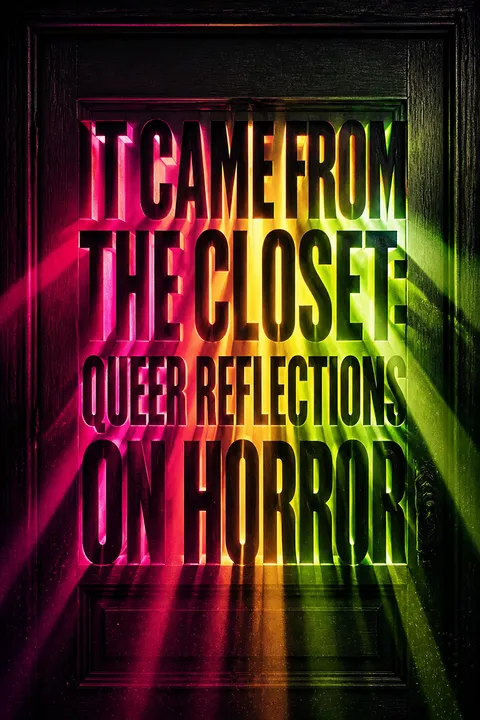
Key Takeaways
1. Horror serves as a mirror for the marginalized, transforming societal fear into queer empowerment.
Like most things touched by queerness, horror becomes more textured, more nuanced, and far more exciting when viewed through a queer lens.
A subversive sanctuary. Queer audiences have long found a strange comfort in the dark corners of horror cinema, identifying with the monsters rather than the heteronormative heroes who seek to destroy them. This affinity is not born of self-loathing, but of a shared experience of being cast as the "other" by a straight, patriarchal society. By finding kinship with the creature in the shadows, the queer spectator reclaims their own perceived "otherness" as a source of strength.
Reclaiming the monstrous. By rooting for the monster, queer viewers actively subvert the moral lessons these films attempt to teach. The genre becomes a playground where transgression is celebrated, and the threat of getting gender or sexuality "wrong" is transformed into a thrilling source of power. This active reinterpretation allows marginalized audiences to find joy and validation in narratives that were originally designed to terrify or warn them.
Vibrant cultural dialogue. This collection of essays demonstrates that horror is not merely a passive viewing experience for the LGBTQIA+ community, but an active site of cultural recontextualization. Through personal memoirs and film analysis, the authors show how the genre helps them navigate their own lives.
- Finding community in online horror forums and chat rooms.
- Using the genre to process personal trauma, shame, and grief.
- Complicating simple binaries of good versus evil.
2. The "monstrous-feminine" and bodily transformation reflect the realities of transgender and nonbinary embodiment.
The posttransition body is not a mutilated body. It’s a healed body.
Visceral physical transitions. The dramatic, often grotesque bodily changes depicted in horror films—from werewolves to facial transplants—mirror the profound, sometimes painful realities of gender transition. While transphobic narratives weaponize these transformations as "mutilation," transmasculine and nonbinary individuals recognize them as a necessary shedding of an artificial mask. The physical discomfort of altering the flesh is a small price to pay for the alignment of the self.
Dismantling the binary. The fear of the altered body in mainstream culture is rooted in a desperate need for gender legibility and control. When a trans person alters their flesh, they reject the biological essentialism forced upon them at birth, choosing authenticity over the comfort of the cisgender gaze. This act of self-creation is inherently disruptive to a society that demands rigid, easily categorized bodies.
Reclaiming the scars. Rather than viewing the trans body as a site of horror, these narratives can be reinterpreted as stories of survival and self-actualization. The scars left behind by medical transition are not marks of damage, but of healing.
- Top surgery scars as symbols of a healed, rather than ruined, self.
- The pain of physical transition as a grounding return to the skin.
- The rejection of the "passing" standard in favor of visible authenticity.
3. Slasher films and the "Final Girl" archetype provide a framework for navigating real-world trauma and survival.
Everyone recognizes the Final Girl... Brimming with unseen inner power, waiting to demonstrate her strength.
The ultimate survivor. The "Final Girl" is a legendary horror trope: the wholesome, often sexually unavailable young woman who outlasts her peers and defeats the killer. For closeted queer youth, she represents a powerful avatar of resilience, possessing an unspoken inner strength that allows her to survive a hostile environment. Her battle with the killer mirrors the queer struggle to survive in a world that often feels actively hostile to their existence.
Ordering chaotic violence. Slasher films impose a strict, almost comforting morality where rules are clear and survival is earned through vigilance. This structured violence offers a therapeutic escape for those processing real-world terrors, such as the devastating specter of the HIV/AIDS crisis or domestic abuse. By watching the Final Girl outsmart the monster, the viewer experiences a vicarious sense of control over their own chaotic circumstances.
The cost of survival. However, surviving the monster permanently alters the survivor, isolating them from the naive world they once inhabited. The Final Girl must carry the memory of the violence with her, forever marked by her encounter with the dark.
- The Final Girl's loss of innocence as a metaphor for coming out.
- Using slasher trivia to compartmentalize and control personal anxiety.
- The realization that survival requires adopting the killer's own relentless focus.
4. The horror of the "abject" and boundary-dissolving monsters represent the desire for non-legible queer intimacy.
The blob, by threatening to merge the subject and the object of desire into a single being, promises the “rewards of being loved” without submission to “the mortifying ordeal of being known.”
Dissolving the self. Amorphous monsters like the Blob or the flesh-merging elites of Society represent the ultimate collapse of boundaries. For those who exist outside the gender binary, these creatures offer a beautiful fantasy of escaping the rigid taxonomies of identity altogether. The fear of being consumed by the monster is transformed into a desire for a total, boundary-less union with the other.
Intimacy without legibility. The "abject" is that which threatens meaning by refusing to stay within prescribed categories. By merging completely with another, the need to be observed, categorized, and judged by a heteronormative society is blissfully erased. This represents a radical alternative to the "mortifying ordeal of being known," offering a space where desire can exist without the pressure of definition.
The end of solitude. This monstrous union represents a desire for absolute connection that human language and physical limitations cannot otherwise achieve. It is a queer fantasy of perfect, unmediated intimacy.
- The rejection of gender as a necessary prerequisite for desire.
- The collapse of the distinction between the Self and the Other.
- Finding comfort in the monstrous, boundary-less void.
5. Demonic possession and the supernatural expose the violence of patriarchal control and conversion therapy.
I saw a revolting girl revolting against the little-girl box in which she was stuck—and I saw an army of men working to put her back in.
Enforcing the status quo. Demonic possession films like The Exorcist are often conservative parables about the fear of wayward youth, particularly young women who refuse to conform to patriarchal expectations. The "cure" administered by priests and doctors mirrors the psychological violence of conversion therapy, designed to force the queer or non-conforming child back into a neat, compliant box. The horror lies not in the demon, but in the desperate lengths to which society will go to enforce conformity.
The power of transgression. The possessed girl's low, growling voice and physical defiance represent a terrifying disruption to the nuclear family. For queer children, this monstrous behavior is not evil, but a thrilling display of power and a refusal to be quiet, clean, and nice. The demon-girl becomes a fellow traveler, a symbol of the wild, untamable self that refuses to be suppressed.
Queer kinship in survival. Even when the demon is cast out, the experience of possession leaves an indelible mark, permanently altering the survivor's relationship to authority. The memory of the transgression remains, a quiet promise of future rebellion.
- The medical and religious institutions working in tandem to police deviance.
- The absent father as the narrative excuse for a child's "corruption."
- Finding queer alliances in the characters who sacrifice themselves for the monster's survival.
6. Covert intimacy and the queer gaze subvert the heteronormative narratives of mainstream cinema.
The thing about Jaws is that it’s only queer if you’re looking for it.
Reading between the lines. Mainstream cinema has historically coded or suppressed queer desire, forcing LGBTQIA+ audiences to become experts in subtext. By focusing on the gaze, close physical proximity, and casual touch, viewers can uncover rich veins of homoeroticism in ostensibly straight films. This active reading transforms a heteronormative text into a site of queer connection and validation.
Isolation from expectation. When characters are isolated from the demands of polite society—such as three men on a boat hunting a shark—their intimacy is given room to flourish. Free from the contrasting presence of women and heteronormative expectations, their bond becomes intensely physical and emotional. The close quarters of the boat require a constant negotiation of space, touch, and vulnerability.
The safety of ambiguity. This covert communication allows queer desire to exist in a state of fluid potential, safe from the immediate threat of societal punishment. It is a testament to the resilience of queer audiences, who find their own lives reflected in the most unlikely of places.
- The comparison of physical scars as a safe form of erotic touch.
- The intense, lingering gaze that communicates unspoken longing.
- The subversion of hypermasculine spaces through queer interpretation.
7. The intersection of Blackness and horror exposes the systemic trauma of white supremacy and gentrification.
The deep, bloody pain related to certain plot points of Candyman resonate with me on a cellular level.
Systemic violence as horror. Films like Candyman and Get Out use the horror genre to illustrate the very real, historical terrors of being Black in America. From the legacy of lynching to the modern violence of gentrification and police brutality, the true monster is often the white supremacy that creates and exploits Black pain. The supernatural elements of these films serve as metaphors for the inescapable, systemic trauma that Black bodies must navigate daily.
The extraction of Black bodies. In Get Out, the literal harvesting of Black bodies by white liberals exposes the insidious nature of systemic racism, where Black culture and physical strength are coveted while Black humanity is erased. This "sunken place" represents the psychological paralysis of navigating spaces that demand Black assimilation. The horror is found in the polite, smiling faces of those who seek to consume and replace the Black self.
Reclaiming the narrative. By centering Black protagonists and storytellers, modern horror filmmakers are reclaiming these narratives of trauma, transforming them into acts of resistance. The monster is no longer a simple villain, but a manifestation of historical vengeance.
- The destruction of public housing projects as a form of state-sanctioned erasure.
- The "one drop rule" and the trauma of forced white-passing.
- The use of urban legends to preserve the memory of racial violence.
8. Bisexuality and fluid desire resist the rigid binaries of both straight and queer gatekeeping.
Bisexuality is slippery; it can appear to be other things, it can disguise itself in ways monosexuality can’t, reveal itself against all knowledge and expectations.
Navigating the fluid middle. Bisexuality is often treated with suspicion by both straight and gay communities, dismissed as a phase, a trend, or a form of "queerbaiting." In films like Jennifer's Body, the intense, shifting intimacy between female best friends captures the perfect, messy reality of parallel sexualities on the cusp of adulthood. This fluid desire resists the rigid binaries that seek to categorize and limit human connection.
The acceptance of loss. Choosing to step off the predictable path of compulsory heterosexuality is an act of courage, even if the destination remains unfixed. Desire does not require genetic certainty or immediate self-knowledge to be real; it is allowed to be experimental, confusing, and wild. The journey through these fluid waters is a vital part of the queer experience, regardless of where one eventually lands.
Resisting the gatekeepers. The demand for immediate, legible sexual labels ignores the human capacity for mystery and self-discovery. Bisexuality remains a powerful, disruptive force that refuses to be easily contained or defined.
- The rejection of the "born this way" narrative as a limiting framework.
- The erotic power of the "both ways" catchphrase in horror.
- The validation of the conflicted, transient bisexual experience.
9. Disability and chronic illness are weaponized as monstrosity, prompting a reclamation of the sick body.
What does it mean as a sick girl to learn again and again that sick girls deserve to be punished?
The horror of the sick body. Mainstream horror frequently uses the physical markers of disability and chronic illness—deformed spines, sallow skin, medical electrodes—to shock and terrify the audience. This weaponization of the disabled body teaches sick children that their physical differences make them inherently monstrous and worthy of isolation. The genre often equates physical vulnerability with moral corruption, reinforcing the ableist gaze.
The violence of the medical gaze. In films like The Ring, the sick child is hidden away in attics or wells, subjected to painful tests by doctors who seek to cure or contain her. This mirrors the real-world neglect and cruelty experienced by disabled people at the hands of an ableist medical institution. The hospital and the laboratory become sites of horror, where the disabled body is treated as an object to be corrected or feared.
Revolutionary care and rage. Rather than trying to "heal" themselves to fit the abled standard, disabled and trans people can find power in their shared vulnerability and rage. By embracing their "monstrous" bodies, they reject the abled demand for conformity.
- The reclamation of the "monstrous" cracking of joints as a form of freedom.
- The rejection of the abled gaze through mutual, revolutionary care.
- The understanding that the "infected" body is not a threat, but a site of community.
10. The "double" and the shadow self represent the psychological toll of the closet and compartmentalized trauma.
A queer person is used to keeping secrets, telling lies, sectioning off parts of themselves.
The divided self. Living in the closet requires the creation of a double: a respectable, palatable version of the self presented to the public, and a hidden, "monstrous" version kept in the dark. In Jordan Peele's Us, the "Tethered" represent this repressed, underground self, waiting to rise up and reclaim the life they were denied. This physical division of the self is a visceral metaphor for the psychological toll of hiding one's true identity.
The trauma of replacement. The fear of the double is the fear that the hidden self will eventually take over, destroying the carefully constructed facade of normalcy. This compartmentalization of trauma and desire creates a profound sense of dissociation, where the individual can no longer tell which version of themselves is real. The struggle between the two selves is a battle for survival, where only one can occupy the light.
Confronting the shadow. True healing requires descending into the basement of the subconscious to face the double, rather than continuing to run from it. Only by integrating the repressed past can the individual achieve a singular, authentic present.
- The "sunken place" as a metaphor for the silence of the closet.
- The realization that the "monster" in the driveway is actually a reflection of the self.
- The integration of the repressed past into a singular, authentic present.
Review Summary
It Came from the Closet receives generally positive reviews, averaging 4.12/5. Readers praise its diverse, intersectional essays blending personal memoir with queer analysis of horror films, highlighting standouts like Carmen Maria Machado on Jennifer's Body and S. Trimble on The Exorcist. Common criticisms include repetitive "monster as metaphor" framing, tenuous film connections, and insufficient trans representation. Multiple reviewers express discomfort with Will Stockton's essay revealing private details about his adopted son. Most recommend it enthusiastically to fans of both horror and queer literature.








































