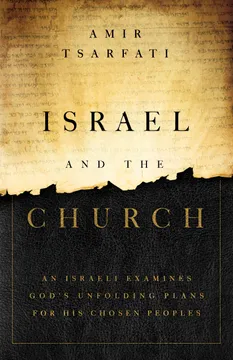
Key Takeaways
1. God has two distinct chosen peoples: Israel and the Church.
The same God who told Israel not to worry about the Assyrian army is the same God who comforts me today with His love and power.
Two divine witnesses. God has established two distinct groups to testify of His character and plan to the world. In Numbers 10, God commanded Moses to make two silver trumpets, which serve as a prophetic shadow of these two witnesses.
Distinct roles and callings. While both trumpets sound the testimony of the same God, they do so through different methodologies and messages:
- Israel acts as a passive, living testimony of God's existence, faithfulness, and character simply by existing.
- The Church is given an active commission to "go" and proclaim the gospel of salvation to the ends of the earth.
Sustained by God's breath. Neither Israel nor the Church can sound their testimony on their own. They are silver trumpets—precious but imperfect—that only produce a true, life-giving sound when the Holy Spirit, the very breath of God, passes through them.
2. Replacement Theology is a false, either/or deception.
It is in the truth that God didn’t reject a people as deserving of rejection as Israel that we find hope that God will never reject a people so deserving of rejection as are we, His church.
Both/and, not either/or. Many Christians fall into the trap of either/or thinking, believing that because Israel rejected the Messiah, God has permanently discarded them in favor of the Church. This view, known as Replacement Theology, is a dangerous error that ignores the literal promises of Scripture.
The root supports the branches. Paul warns Gentile believers in Romans 11 not to boast against the natural branches of Israel. The Church has been grafted in among and with them, not in place of them:
- Gentiles are partakers of the spiritual blessings that flow from the Jewish root.
- Israel's temporary stumble opened the door of salvation to the Gentiles.
- God's covenant with Abraham remains active and irrevocable.
A reflection of God's character. If God were to break His promises to Israel due to their unfaithfulness, it would mean He could break His promises to the Church. Israel's survival and future restoration serve as the ultimate proof of God's unchanging faithfulness and mercy.
3. Israel is the Wife of the Father; the Church is the Bride of the Son.
There are two marriages—the Father to Israel, and the Son to the church.
The Wife of Jehovah. God uses two distinct marital relationships to illustrate His deep intimacy with His chosen peoples. Israel is portrayed as the wife of God the Father, who entered into a covenant with her, suffered her spiritual adultery, issued a temporary certificate of divorce, but promises a glorious, eternal restoration.
The Bride of Christ. In contrast, the Church is betrothed to Jesus, the Son of God. This relationship is distinct in its origin, timing, and destiny:
- The Church is currently in a period of betrothal, being sanctified and cleansed by the Word.
- The formal marriage of the Lamb will take place in heaven after the Rapture.
- The Church will dwell with the Son in the New Jerusalem, a custom-prepared home.
No spiritual polygamy. Conflating these two relationships leads to theological confusion. The Father and the Son are distinct persons of the triune Godhead, and their respective relationships with Israel and the Church highlight the unique, non-overlapping plans God has for each group.
4. Israel is under temporary "tough love" discipline, not permanent rejection.
The hand that disciplines is the same hand that restores.
A season of tough love. Because of Israel's persistent rebellion and rejection of the Messiah, God placed the nation under a severe but temporary period of discipline. This "tough love" resulted in their physical exile from the land and a spiritual veil over their hearts, but it is not a permanent rejection.
The sounding of the trumpets. Over the last century, God has been blowing prophetic trumpets to signal the end of Israel's spiritual exile and call them back to the land:
- The 1917 Balfour Declaration and the 1920 San Remo Conference established the legal right to a Jewish homeland.
- The miraculous re-establishment of the State of Israel in 1948.
- The reclamation of Jerusalem in 1967 and its recognition as the capital in 2018.
A promise of restoration. Just as a loving father never stops loving his disciplined child, God's covenant with Israel remains irrevocable. Once the "fullness of the Gentiles" has come in, God will remove the veil, pour out His Spirit, and restore His people.
5. God is the sovereign author of time and has set distinct timelines for both groups.
God has set times and borders in order for people to find Him.
Sovereign calendar. Time is a creation of God, and He is entirely outside of its constraints. He has written the major events of human history on His calendar in permanent ink, and no earthly crisis or human failure can erase or alter His perfect schedule.
Order in the divine plan. God's interactions with humanity follow a precise, orderly sequence of "appointed times":
- The perfect moment for the creation, the flood, and the birth of Isaac.
- The "fullness of time" for Christ's birth, ministry, and crucifixion.
- The specific, separate dispensations for the ministry of Israel and the ministry of the Church.
Redeeming the time. While we cannot know the exact day or hour of Christ's return, we are commanded to understand the seasons and signs. The Holy Spirit gives believers the wisdom to discern the times, encouraging us to live watchfully and share the gospel urgently.
6. The Church is raptured before the Tribulation, leaving the focus on Israel.
According to Jesus’ words, for us to avoid the trial that will come upon the whole world, to test those who dwell on the earth, we must no longer be of those who dwell on the earth.
Exempt from wrath. The Bible promises that the Church is not appointed to wrath but to obtain salvation. Before the horrific judgments of the Tribulation are poured out upon the earth, Jesus will descend with a shout and a trumpet blast to snatch His Bride away in the Rapture.
The missing Church. A careful reading of the book of Revelation reveals a dramatic shift in focus after Chapter 3:
- The Church is mentioned repeatedly in Chapters 2 and 3.
- From Chapter 4 through Chapter 19, the word "church" completely disappears from the earthly narrative.
- The Church is seen in heaven, clothed in white linen, celebrating the marriage of the Lamb.
Comfort in the promise. This pre-tribulation Rapture is the ultimate comfort for believers living in a deteriorating world. We do not look forward to the Antichrist or the wrath of God, but to the imminent return of our Groom, who will keep us ek (out of) the hour of trial.
7. The Tribulation is "Jacob's Trouble," designed for Israel's discipline and ultimate salvation.
The Gentile reason for the tribulation is punishment; the Jewish reason is discipline.
Jacob's Trouble. The seven-year Tribulation is not a random period of global chaos, but a highly structured period of divine intervention. Its primary purpose is to bring "Jacob's trouble" to a head, forcing the Jewish nation to its knees so that they will finally cry out for their Messiah.
The 144,000 and the two witnesses. During this time, God will raise up unique Jewish witnesses to proclaim the gospel of the kingdom:
- 144,000 sealed Jewish virgins from the twelve tribes of Israel will act as global evangelists.
- Two powerful witnesses will preach from Jerusalem, performing miracles and striking the earth with plagues.
- A great multitude of Gentiles and Jews will be saved, though many will face martyrdom.
The refining fire. Through the fire of the Tribulation, two-thirds of the Jewish population will perish, but the remaining one-third will be refined like gold. When Jesus returns at the Second Coming, they will look upon Him whom they pierced, mourn in repentance, and "all Israel will be saved."
8. Eternity is orderly, featuring distinct resurrections and final destinations.
He is not the God of the dead but of the living, for all live to Him.
The waiting room of Hades. Death is not the end of conscious existence. Before the cross, both saved and unsaved souls went to Hades, separated by a great gulf into "Abraham's bosom" and a place of torment; today, deceased believers go immediately into the presence of Christ.
Two distinct resurrections. God's plan features an orderly resurrection process for all who have ever lived:
- The First Resurrection (the resurrection of life) includes Christ (the firstfruits), the Church at the Rapture, and the Old Testament and Tribulation saints at the Second Coming.
- The Second Resurrection (the resurrection of condemnation) occurs after the Millennium, bringing the unsaved to the Great White Throne.
The second death. Those whose names are not written in the Lamb's Book of Life will face the second death—eternal separation from God in the lake of fire. Believers, however, will inherit the new heavens, the new earth, and the glorious New Jerusalem, where God will dwell with His people forever.
9. Satan's primary strategy is to destroy Israel to invalidate God's promises.
The way Satan is fighting God is by fighting His "sheltered ones."
A spiritual war. The relentless, historical hatred directed toward the Jewish people is not merely a political or social phenomenon; it is a highly coordinated spiritual attack. Satan knows that if he can completely destroy the Jewish people, God's promises of a future Jewish restoration will fail, proving God to be a liar.
Three deceptive tactics. The devil employs three primary strategies to accomplish his goal of rendering Israel irrelevant:
- Deceiving the nations into launching physical attacks, pogroms, and genocides against the Jews.
- Deceiving the Church into adopting Replacement Theology, thereby cutting off Christian support for Israel.
- Wearing down the Israelis through constant conflict, making them desperate enough to accept a false peace covenant with the Antichrist.
A losing battle. Despite the devil's best efforts, his strategy is a guaranteed failure. God's protective hand over Israel is a constant demonstration of His sovereignty, proving to the world that He is faithful to His covenants and will never allow His "sheltered ones" to be destroyed.
10. The Church has a clear, biblical mandate to pray for, proclaim, and bless Israel.
For if the Gentiles have been partakers of their spiritual things, their duty is also to minister to them in material things.
A debt of gratitude. The Church owes an immense spiritual debt to the Jewish people, through whom we received the knowledge of the one true God, the written Scriptures, and the Savior Himself. Loving and supporting Israel is not an optional hobby for Christians, but a biblical duty.
Practical ways to bless. The Bible outlines three specific ways the Church is commanded to support and minister to Israel:
- Praying consistently for the peace, prosperity, and ultimate salvation of Jerusalem.
- Proclaiming the truth of God's ongoing covenant with Israel, standing firmly against the errors of Replacement Theology.
- Giving financially to support the physical, material, and spiritual needs of the Jewish people.
The blessing of the blessers. When we align our hearts with God's heart by loving what He loves, we position ourselves to receive His blessings. By comforting and supporting Israel, the Church acts as a faithful witness of Christ's love, eagerly anticipating the day when both chosen peoples will dwell together in His eternal kingdom.
Review Summary
Download PDF
Download EPUB
.epub digital book format is ideal for reading ebooks on phones, tablets, and e-readers.








































