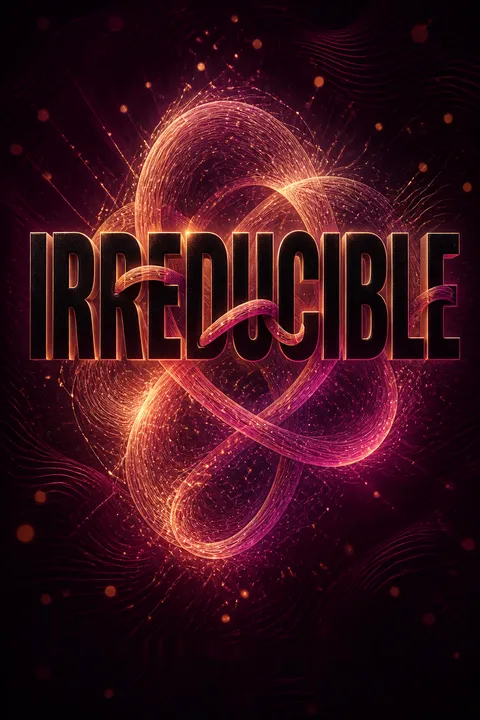

Key Takeaways
1. Materialism and Classical Physics Fail to Explain Core Reality
The interpretation of reality provided by classical physics could not have been more wrong!
Outdated worldview. For centuries, science, rooted in classical physics, embraced a materialist and reductionist worldview, believing everything could be explained by inanimate matter and deterministic laws. This perspective, epitomized by "Laplace's demon," assumed a predictable universe where free will was an illusion and consciousness an epiphenomenon. However, this framework, while successful for mechanical systems, fundamentally fails to account for life, consciousness, and free will.
Unexplained anomalies. The late 19th and early 20th centuries saw the collapse of classical physics due to phenomena it couldn't explain, such as:
- Black body radiation
- The photoelectric effect
- Lorentz transformations
These anomalies led to quantum mechanics and relativity, revealing a universe far stranger and more complex than previously imagined, challenging the very foundations of determinism and reductionism.
The "Hard Problem." The most significant failure of materialism is its inability to explain qualia—our subjective sensations, feelings, and emotions. No scientific theory can explain how electrochemical signals in the brain transform into the conscious experience of, say, the scent of a rose or the feeling of love. To dismiss these as mere illusions is to deny the most intimate aspect of human existence, creating a "hard problem" that materialism cannot solve.
2. Quantum Physics Reveals Reality's Inner, Private Nature
The interpretation of reality provided by classical physics could not have been more wrong!
Beyond classical objects. Quantum physics fundamentally changed our understanding of reality, showing that matter is not made of solid, separable objects but of vibratory energy networks and quantum fields. Particles are not tiny balls but probability waves, and their behavior is indeterministic and probabilistic, not deterministic. This challenges the classical notion of an objective, observer-independent reality.
Nonlocality and entanglement. Quantum phenomena like nonlocality and entanglement demonstrate that reality is holistic and interconnected, defying classical logic. Entangled particles, separated by vast distances, instantly influence each other, suggesting a deeper connection beyond spacetime. This implies that:
- The state of a system doesn't exist prior to measurement.
- Reality is not locally realistic.
- The observer is a participant, not a detached entity.
Private quantum states. Crucially, quantum physics describes "pure quantum states" as non-clonable and knowable only by the system itself. This property mirrors the private, subjective nature of conscious experience. If quantum physics describes the inner world, its "absurdity" to classical minds makes perfect sense, as it reveals a reality that is fundamentally subjective and private before it manifests objectively.
3. Consciousness is Fundamental, Not an Emergent Brain Function
Consciousness cannot be accounted for in physical terms. For consciousness is absolutely fundamental. It cannot be accounted for in terms of anything else.
The irreducible nature. The author, through personal "awakening experiences" and scientific inquiry, concludes that consciousness is a fundamental, irreducible property of nature, akin to electricity or gravity. It cannot "emerge" from unconscious matter, just as electromagnetism cannot emerge from particles devoid of charge. This directly challenges the materialist view that consciousness is merely a byproduct of complex brain activity.
Qualia as pure states. The QIP (Quantum Information-based Panpsychism) theory proposes that a conscious experience (qualia) can be mathematically represented by a pure quantum state. This is because:
- Pure quantum states are definite and private.
- They are non-clonable, meaning they cannot be copied or known by an external observer.
- They are knowable only "from within" by the system itself, perfectly reflecting subjective experience.
This connection provides a scientific basis for panpsychism, where consciousness is inherent in the universe's fundamental constituents.
Beyond epiphenomenalism. If consciousness is fundamental, it is not an epiphenomenon—a passive byproduct without causal power. Instead, it is an active, causal force. The "hard problem" disappears if consciousness is a primary aspect of reality, rather than something that needs to be explained by simpler, unconscious components. This reorients scientific inquiry towards understanding how consciousness manifests in the physical world.
4. "Seities" are Self-Conscious Entities Driving Universal Evolution
If we accept this principle, the fundamental entities from which everything that exists emerges must be conscious entities similar to the monads of Leibniz.
Emanations of "One." The author introduces "One" as the holistic Whole, the ultimate source of all existence, possessing consciousness and free will. From "One" emerge "seities" (self-conscious entities with free will), which are akin to Leibniz's monads. Each seity is a "part-whole" of One, containing its essence and driven by the same desire for self-knowing.
Identity and agency. A seity is defined by inseparable properties:
- Consciousness: The ability to have inner, qualia-rich experience.
- Identity: Self-consciousness, knowing one's experience as one's own, a unique perspective of the One.
- Agency: The capacity to act with free will, making creative choices.
These properties allow seities to direct their own experience and contribute to the collective self-knowing of the One.
Solving the combination problem. Classical panpsychism struggled with the "combination problem"—how individual atomic consciousnesses combine into a higher consciousness. QIP solves this by positing that consciousness is a property of quantum fields (seities), not individual particles. When two seities (fields) combine quantum mechanically, they form a new higher-order seity (field) with distinct properties, while the original seities continue to exist. The "particles" are merely states of these conscious fields.
5. Reality is Inseparable Semantic and Symbolic Information
The meaning of a book is free even if the symbols obey deterministic laws (in terms of probability). This is why physics can only guarantee that the next book to be written will obey the laws of symbols, but cannot predict the semantic content of a book that has not yet been written.
Two irreducible aspects. Reality is fundamentally dualistic in its manifestation, comprising:
- C-space (Consciousness space): The subjective, private semantic space of qualia and meaning, where seities experience.
- I-space (Information space): The objective, public symbolic space of "live information" used by seities to communicate.
These two spaces are inseparable, representing the inner and outer aspects of the universe. Meaning precedes symbols, and symbols exist to communicate and explore meaning.
Information vs. knowing. The book distinguishes between "knowledge" (unconscious, symbolic information, like a computer's data) and "knowing" (conscious, semantic comprehension, unique to seities). Shannon's information theory, while useful for machines, only quantifies objective symbols, devoid of subjective meaning. For seities, information is only valuable when it conveys meaning.
The universe as language. The physical universe, as described by physics, is interpreted as the symbolic aspect of seities' communications. Elementary particles are "live symbols" (like phonemes) that combine according to "syntactical laws" (physical laws) to express the ever-deepening meaning (self-knowing) of interacting seities. This makes the universe a dynamic, evolving language, not a static, predetermined machine.
6. Life is a Quantum-Classical Phenomenon, Beyond Machines
A cell is a microscopic quantum-classical system, while a human is a macroscopic quantum-classical system made up of trillions of cells.
Beyond classical mechanisms. Living organisms are fundamentally different from classical machines like computers or robots. They are open, dynamic, far-from-equilibrium systems that continuously exchange matter, energy, and information with their environment. Unlike static hardware and separate software, a cell's components are constantly flowing, transforming, and interacting, blurring the lines between matter, energy, and information.
Live information. The author introduces "live information" as the inseparable matter-energy-information complex within living systems. This live information:
- Utilizes both classical and quantum properties of atoms and molecules.
- Allows for sophisticated, global information processing beyond biochemistry.
- Enables self-reproduction, a feat impossible for any classical machine.
This concept highlights the inadequacy of reductionist, biochemical explanations for life.
Seities and organisms. Living organisms serve as "informational vehicles" or "drones" for seities to experience and interact with the symbolic world. A seity "incarnates" into an organism, controlling it with free will and experiencing the world through its senses. The organism processes "live symbols" from I-space, which the seity then perceives as qualia in C-space, deepening its self-knowing. This explains the autonomy, intelligence, and purpose observed in even the simplest organisms.
7. Free Will is Real, and Laws Emerge from Conscious Agreements
The existence of free will requires that physical laws emerge from the agreements between the seities that communicate with each other.
Indeterminism's embrace. Unlike classical physics, which denies free will due to its deterministic nature, quantum physics' inherent indeterminism makes free will possible. The "collapse of the wave function," a long-standing mystery, is reinterpreted as a free-will decision by a seity, creating a state that cannot be predicted algorithmically. This means the future is genuinely open and creative.
Laws as agreements. Physical laws are not immutable, external dictates but rather "syntactical laws" that spontaneously emerge from the agreements and communications between seities. Just as human languages evolve rules for communication, seities establish laws to facilitate their symbolic exchanges. These laws constrain free will but do not negate it, as they are self-imposed for the purpose of collective self-knowing.
Creative choices. Free will implies non-algorithmic choices, genuine creations that cannot be predetermined. This is why quantum randomness is fundamentally different from classical randomness (which merely reflects a lack of knowledge about a predetermined state). The universe is not a "blind watchmaker's" creation but the result of cooperating, intelligent, conscious entities constantly making creative choices.
8. True Knowing Transcends Pure Rationality and Symbolic Knowledge
Rationality is not enough.
Beyond intellectual understanding. Science often equates understanding with intellectual, mathematical descriptions of reality. However, true "knowing" (conoscere) goes beyond mere "knowledge" (sapere), which is symbolic and often mechanical. It requires conscious comprehension, intuition, emotion, and lived experience—faculties that pure rationality alone cannot provide.
The limits of algorithms. Computers excel at algorithmic processing and pattern recognition, but they lack comprehension, creativity, and genuine judgment. They operate "in the dark," without conscious experience or meaning. Attributing "intelligence" to machines in the human sense is a dangerous misunderstanding, as it confuses the imitation of reality with reality itself.
Integrating faculties. To achieve true knowing, humans must integrate:
- Head: Rationality, intuition, creativity.
- Heart: Emotions, empathy, love, purpose.
- Gut: Courage, right action, determination.
This holistic integration allows for deep comprehension, ethical decision-making, and courageous action, distinguishing human intelligence from any artificial counterpart.
9. The Universe's Purpose is "One's" Continuous Self-Knowing
One is a Whole, both in potentiality and in actuality, irreducibly dynamic and holistic, that desires to know itself to self-realize.
The Creative Principle. The fundamental purpose of the universe is the "One's" desire for continuous self-knowing and self-realization, leading to joy and love. This Creative Principle drives the emergence of seities, each a unique perspective through which the One experiences and understands itself. This teleological view contrasts sharply with the materialist notion of a meaningless, purposeless cosmos.
Eternal becoming. Creation is not a singular event but an ongoing process of the One bringing itself into actual existence from potentiality through the self-knowing of its seities. This process is endless, as infinity can never be fully reached. Each new act of knowing by a seity expands the self-knowing of the One, fostering an ever-evolving, unpredictable universe.
Life as self-expression. Life, in this context, is the fundamental strategy for self-knowing. Living organisms are complex "live symbols" created by seities to experience the world and translate meaning into shareable forms. This process creates a virtuous circle where new knowing leads to more complex symbols, enabling further knowing, and preserving the collective comprehensions of the seities.
10. The Illusion of Separation Obscures Interconnected Reality
There is not a single isolated fragment in all of nature, each fragment is part of a harmonious and complete unity.
Holism over reductionism. The materialist worldview, with its emphasis on separate, inanimate parts, fosters a sense of separation. However, quantum physics reveals a holistic reality where everything is interconnected. Particles are not isolated objects but states of quantum fields, inseparable from the whole, and entangled in ways that defy classical locality.
Spacetime as a projection. The physical spacetime we perceive is not the ultimate reality but a 3+1 dimensional projection of a vaster, multi-dimensional quantum reality (Hilbert space). Our embodied consciousness, conditioned by the body's sensory-brain system, interprets this projection as "physical reality," often forgetting the deeper, interconnected I-space and C-space from which it emerges.
Death as awakening. The identification of the ego (a portion of the seity's consciousness) with the physical body creates the illusion of separation and mortality. Death is reinterpreted not as an end, but as an "awakening" from this immersive "virtual reality" (P-space) back into the vaster reality of the seity, retaining identity and accumulated knowing. This perspective aligns with perennial philosophical and spiritual traditions.
11. Overcoming the Need for Superiority is Key to Union
There is nothing noble in being superior to another man. True nobility lies in being superior to the person we were until yesterday.
The root of distortion. The human "need for superiority" is identified as a major obstacle to union and a source of suffering. This drive, often reinforced by societal competition and the "survival of the fittest" narrative, distorts our perception, leading to selfishness, aggression, and a sense of being separate from nature and others. It prevents us from recognizing our inherent uniqueness and interconnectedness.
Cooperation over competition. The universe, at its fundamental level, operates on principles of cooperation and resonance, not blind competition. True progress and fulfillment come from striving for personal excellence ("superior to the person we were until yesterday") and contributing to the collective good, rather than dominating others. This shift in mindset is crucial for humanity's spiritual evolution.
Integrating for wisdom. To navigate the challenges of our time, humanity must integrate its scientific knowledge with the wisdom of the heart. This means:
- Empathic science: Converting knowledge into lived knowing.
- Rational spirituality: Generating new knowledge from lived knowing.
This union of head, heart, and gut, guided by love and compassion, is essential for creating a just, joyful, and fulfilling future, aligning with the universe's deepest nature.
Review Summary
Irreducible by Federico Faggin explores consciousness as a fundamental, irreducible property of reality rather than an emergent phenomenon from matter. The book argues that computers and AI can never achieve true consciousness or semantic understanding, only symbolic processing. Faggin proposes a quantum information-based panpsychism where conscious entities ("seities") communicate through physical reality as symbols. Reviews are polarized: supporters praise the ambitious integration of quantum physics, consciousness, and spirituality, while critics find it repetitive, pseudoscientific, and lacking empirical evidence. Many note the dense, technical writing requires scientific background for full comprehension.
People Also Read



About the Author
Other books by Federico Faggin
Download PDF
Download EPUB
.epub digital book format is ideal for reading ebooks on phones, tablets, and e-readers.








































