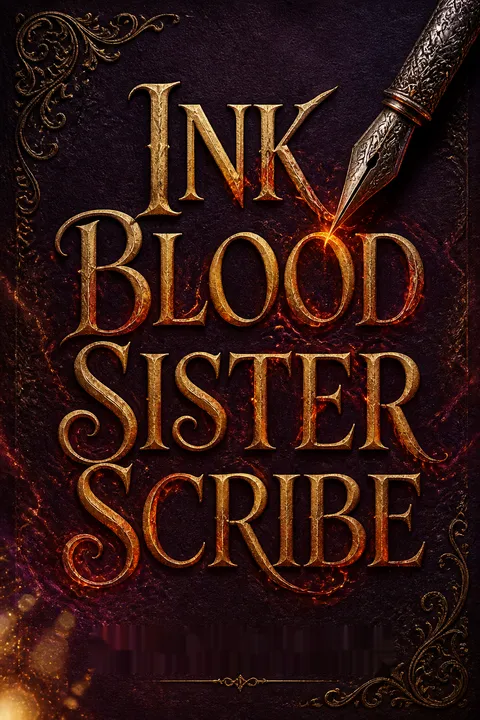

Plot Summary
Blood on the Page
Joanna Kalotay finds her father, Abe, dead in their Vermont yard, a mysterious book at his side and a final note warning her to keep the book away from blood. The image of his drained, shriveled body haunts her, and she's left with a house full of magical books—each written in blood, each dangerous in its own way. The book that killed Abe is unfamiliar, its words shifting and unreadable, and Joanna's grief is compounded by confusion and fear. She clings to the rules Abe taught her: protect the books, set the magical wards, and trust no one. But the presence of the deadly book signals that the old rules are breaking, and that the past—her family's, and the world's—is about to resurface.
Sisters Divided, Sisters Bound
Esther, Joanna's older sister, lives at the South Pole, hiding from a threat she barely understands. Every year, she's moved on November 2, obeying her father's warning that those who killed her mother will come for her if she stays. But this year, for the first time, she stays for love—her relationship with Pearl, a fellow worker. As the Antarctic summer begins, Esther senses magic at the station: blood-marked mirrors, the scent of yarrow, and the old fear that someone is hunting her. Meanwhile, Joanna, isolated in Vermont, tries and fails to write her own magical book, desperate to understand the power that killed her father and to connect with her lost sister.
The Library's Secret Heir
Across the ocean, Nicholas, the last living Scribe, is the Library's most valuable prisoner. He alone can write new magical books, each costing him blood and health. His uncle Richard and the enigmatic Maram protect and control him, keeping him isolated and safe—until an assassination attempt reveals that the Library's secrets are leaking. Nicholas, chafing at his confinement, yearns for freedom and recognition, but the Library's power is built on his captivity. When a bodyguard, Collins, saves his life, Nicholas begins to see the cracks in his world and the dangers lurking within.
Mirror Spells and Wards
Joanna maintains the magical wards that keep her home hidden, using blood and ancient Latin spells. Her relationship with her mother, Cecily, is strained by old betrayals—Cecily once tried to destroy the wards and the books, believing they were a prison. The sisters' separation is both magical and emotional, each haunted by the past and the choices of their parents. When Cecily receives a postcard from Esther, panic and urgency ripple through the family, hinting at dangers that transcend distance and time.
The Scribe's Legacy
Esther and Joanna's family history is steeped in blood and loss. Only Joanna can hear the books' magic, but Esther is immune to all spells—a fact that once protected the family, but now isolates her. Nicholas, too, is bound by legacy: his bloodline is the only one that can write new books, a power that has made his family both revered and hunted. The Library's history is one of exploitation, secrecy, and violence, and the Scribes' gift is as much a curse as a blessing.
A House of Magic
Joanna's life is circumscribed by the house, the books, and the wards. She longs for connection—human or animal—and finds fleeting comfort in a stray cat. Her memories of childhood are filled with magic, both wondrous and dangerous, and the absence of her sister is a wound that never heals. The house is both sanctuary and prison, and the books hum with secrets she cannot fully access. The world outside is a threat, but the world inside is slowly suffocating her.
The Book That Kills
Nicholas identifies the book that killed Abe as a "vampire"—a magical trap that drains the blood of anyone who tries to tamper with it. The book bears the Library's tracking mark, and its spell is one of immortality: it binds a life to an object, making the owner unkillable unless the book and the object are destroyed by two Scribes. The revelation that Richard, Nicholas's uncle, is the immortal founder of the Library—and that he has killed to maintain his power—shatters the illusions of safety and legacy.
Unraveling Family Lies
Cecily confesses the truth about the sisters' mother, Isabel: she is alive, living as Maram, and has been working for the Library all along. Isabel/Maram's plan was to protect Esther by hiding her from Richard's seeking spell, but the cost was a lifetime of lies and separation. Cecily and Abe's choices were shaped by fear and love, but their silence has left Joanna and Esther adrift. The family's history is rewritten in pain and revelation, and the sisters must decide what to do with the truth.
The Library's Living Prisoner
Nicholas, desperate for freedom, flees the Library with Collins's help—only to discover that Collins is acting on Maram's orders, and that the Library's wards and silencing spells are everywhere. Collins's own NDA is broken by a spell written by Esther, revealing his true name and history. The Library's power is built on contracts, blood, and enforced silence, and breaking free requires both magic and trust.
The Path Provides
Esther receives a message through a blood-marked mirror: "The path provides the natural next step." The phrase, a palindrome tattooed on her body and written by her mother, becomes a key to understanding the mirror magic and the family's legacy. The mirror is both a trap and a doorway, and the sisters realize that the only way to confront the Library is to step through—together.
Through the Looking Glass
Esther and Nicholas use mirror magic to enter the Library while it is empty, seeking the object that anchors Richard's immortality. The secret passageways and mirrored rooms are filled with danger and memory. Maram, revealed as Esther's mother, has orchestrated their arrival, but her true motives remain unclear. The final confrontation with Richard is a test of courage, loyalty, and the willingness to destroy the past to save the future.
The Vampire's Bargain
In Richard's study, the truth is laid bare: Richard is the immortal founder, and Maram has been both his lover and his betrayer. Esther and Nicholas, the only two Scribes, must work together to destroy the book and the bone that anchor Richard's life. The act is both murder and liberation, ending centuries of exploitation and opening the way for a new future. The cost is high, but the cycle of blood and silence is finally broken.
Breaking the Silence
With Richard dead and Maram vanished, the survivors must decide what to do with the Library and its legacy. Joanna, once isolated and powerless, helps Nicholas and Esther write a new spell to break the bloodline curse and free magic from its chains. The world cracks open: the wards come down, the books hum with possibility, and the sisters are finally reunited—not just with each other, but with the world. The story ends with hope, uncertainty, and the promise of new stories yet to be written.
Analysis
"Ink Blood Sister Scribe" is a novel about the cost of legacy, the dangers of hoarding power, and the possibility of breaking cycles of silence and exploitation. Through its intricate magical system—books written in blood, wards, silencing spells, and mirror magic—it explores the ways families and institutions bind, protect, and imprison. The story is, at its heart, about sisters divided by trauma and lies, and the journey toward reunion, truth, and agency. The Library, with its seductive promise of knowledge and immortality, is revealed as both sanctuary and prison, its power built on the suffering of Scribes and the silencing of dissent. The novel interrogates the ethics of inheritance: what do we owe to the past, and what must we destroy to build a better future? By centering the voices of those who have been silenced—Joanna, Esther, Collins—the book argues for the necessity of breaking old contracts, speaking forbidden truths, and forging new connections. The ending, with its promise of a new spell and a new world, is both hopeful and uncertain: magic, like family, is a source of both wonder and danger, and the future depends on the willingness to risk change.
Review Summary
Ink Blood Sister Scribe received mixed reviews, with ratings ranging from 1 to 5 stars. Many readers praised the rich world-building, complex characters, and intriguing magic system centered around books. Some found the pacing slow, especially in the first half, but enjoyed the increased momentum in the latter part. Critics noted predictable plot elements and underdeveloped relationships. The story's themes of family, loyalty, and power resonated with many readers. While some found it captivating and immersive, others struggled to connect with the characters or found the writing style challenging.
People Also Read
Characters
Joanna Kalotay
Joanna is the younger Kalotay sister, left behind in Vermont to care for the family's magical book collection after their father's death. Sensitive and attuned to magic, she can "hear" the books' hum, but is haunted by isolation, grief, and the burden of responsibility. Her relationship with her estranged sister, Esther, is fraught with longing and resentment, shaped by years of silence and secrets. Joanna's psychological arc is one of moving from passive caretaker to active participant, learning to question the rules she inherited and to claim agency in her own life. Her connection to the books is both a gift and a curse, and her journey is about breaking free from the prison of duty to embrace connection and change.
Esther Kalotay
Esther, the older sister, is a wanderer—her life defined by flight, secrecy, and the annual ritual of moving to avoid the threat that killed her mother. Unlike Joanna, she is immune to magic: spells cannot touch her, and she cannot read or activate magical books. This immunity is both protection and exile, making her the family's scapegoat and savior. Esther's relationships are marked by a fear of intimacy and abandonment, but her love for Pearl and her longing for home drive her to break the cycle of running. Her psychological journey is about accepting her own power, confronting the legacy of lies, and choosing to connect rather than escape. Her immunity, once a source of shame, becomes the key to breaking the Library's hold.
Nicholas (Nick) Collins
Nicholas is the last living Scribe, the only person who can write new magical books. Raised in the Library's gilded cage, he is both revered and exploited, his blood the source of the Library's power. His relationship with his uncle Richard is complex—part love, part fear, part resentment—and his bond with Maram is equally fraught. Nicholas is intelligent, witty, and deeply lonely, yearning for recognition and freedom. His psychological arc is about breaking free from captivity, learning to trust others, and accepting the cost of his own power. His friendship with Collins and his partnership with Esther are transformative, allowing him to move from passive victim to active agent of change.
Collins (Nick Collins)
Collins is Nicholas's bodyguard, recruited for his ability to hear magic. Bound by a silencing spell (NDA), he is forced to betray Nicholas and Joanna by stealing the wards, but his actions are driven by a desperate hope for freedom—for himself, his friends, and his sister. Collins is practical, loyal, and haunted by guilt, his tough exterior masking a deep longing for connection. His psychological journey is about breaking silence, reclaiming agency, and choosing loyalty to people over institutions. His relationship with Joanna is a source of healing and hope, and his arc is one of redemption and self-discovery.
Cecily
Cecily is Joanna and Esther's stepmother, once a caretaker of the magical books, now estranged from the family and the house. Her relationship with Abe was destroyed by the books and the wards, and her relationship with her daughters is marked by regret, longing, and the pain of necessary lies. Cecily's psychological arc is about breaking the silences that have defined her life, reclaiming agency, and seeking reconciliation. Her actions—burning the wards, breaking the silencing spell—are both destructive and redemptive, and her love for her daughters is the force that ultimately brings the family back together.
Maram / Isabel
Isabel, Esther's birth mother, lives a double life as Maram, the Library's chief librarian and Richard's lover. Brilliant, ambitious, and emotionally guarded, she is both protector and betrayer, her actions shaped by a desire to safeguard her daughter and to serve the Library. Her relationship with Richard is complex—love, rivalry, and shared guilt—and her relationship with Esther is defined by absence, longing, and the hope of reunion. Maram's psychological arc is about the cost of secrecy, the limits of power, and the possibility of redemption. Her final act—helping Esther and Nicholas destroy Richard—breaks the cycle of exploitation and opens the way for a new future.
Richard
Richard is the immortal founder of the Library, a man who has killed, lied, and sacrificed others to maintain his power and legacy. Charismatic and paternal, he is both Nicholas's uncle and his jailer, his love inseparable from his need for control. Richard's psychological arc is one of hubris and denial, unable to accept the consequences of his actions or the inevitability of change. His immortality is both his triumph and his curse, and his final downfall is the result of the very power he sought to preserve.
Pearl
Pearl is Esther's lover at the South Pole, a source of warmth, joy, and the possibility of a different life. Her relationship with Esther is marked by honesty, vulnerability, and the willingness to believe in magic. Pearl's presence catalyzes Esther's decision to stop running, and her memory is a touchstone for hope and connection. Though not a central actor in the magical conflict, Pearl represents the world outside the cycle of blood and silence, and the promise of a future built on trust.
Abe
Abe is the sisters' father, a man defined by his love for his daughters and his fear of the dangers that surround them. His life is shaped by trauma, loss, and the burden of protecting the books. Abe's rules—protect, hide, obey—are both shield and shackle, and his death is the catalyst for the unraveling of secrets. His psychological arc is one of tragic impotence, unable to save himself or his family from the consequences of the past.
The Cat
The stray cat that Joanna befriends is a minor but potent symbol: of the world outside, of the possibility of trust, and of the breaking of old boundaries. The cat's eventual entry into the house marks a turning point for Joanna, signaling her willingness to open herself to new experiences and relationships.
Plot Devices
Blood Magic and Bookwriting
The central device of the novel is the creation of magical books, each written in blood and activated by ritual, herbs, and intent. Only Scribes—those with the rare bloodline—can write new books, and the act is physically costly, draining the writer and binding them to the spell. The books themselves are both objects of wonder and instruments of control, their power coveted and exploited by the Library and others. The device serves as both literal magic and metaphor for the cost of legacy, the transmission of trauma, and the dangers of hoarding knowledge.
Wards, Silencing Spells, and NDAs
Magical wards, set with blood and ritual, hide the Kalotay house and the Library from the world, but also imprison those within. Silencing spells—magical NDAs—enforce secrecy, preventing characters from speaking the truth or breaking free from contracts. These devices are both plot obstacles and psychological metaphors, representing the ways families and institutions enforce silence, loyalty, and complicity.
Mirror Magic
Mirror spells allow for communication across distance, the passing of objects, and, for Scribes, even the passage of bodies. Mirrors are both windows and traps, reflecting the novel's themes of duality, hidden selves, and the possibility of escape. The palindrome "the path provides the natural next step" is both literal and symbolic, guiding the characters through mirrors and into new worlds.
Immortality Spell and the Vampire Book
Richard's immortality is anchored to a book written in blood and bound to a bone, making him unkillable unless two Scribes destroy both. The "vampire" book that killed Abe is a magical trap, draining the life of anyone who tries to tamper with it. These devices embody the dangers of unchecked power, the exploitation of others for personal gain, and the impossibility of escaping the past without sacrifice.
Narrative Structure and Foreshadowing
The novel alternates between Joanna, Esther, and Nicholas, weaving together their stories and revealing the connections between them. Foreshadowing is used throughout—Abe's warnings, the recurring motif of mirrors, the repetition of the palindrome—to build suspense and thematic resonance. The structure mirrors the characters' journeys: from isolation to connection, from silence to speech, from imprisonment to freedom.
Download PDF
Download EPUB
.epub digital book format is ideal for reading ebooks on phones, tablets, and e-readers.








































