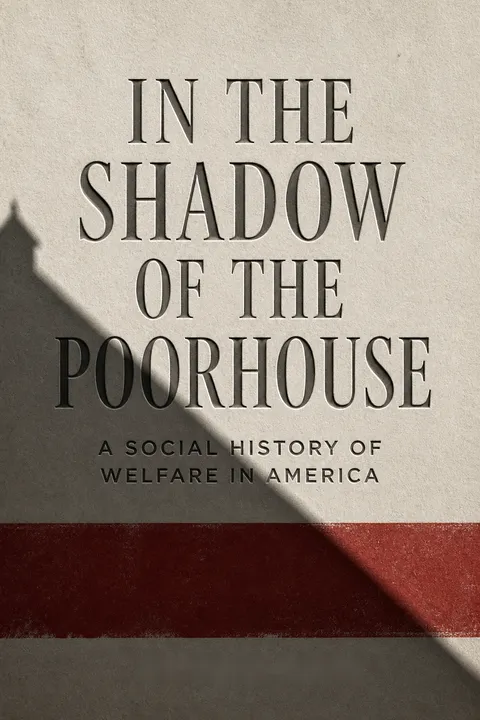

Key Takeaways
1. American Welfare: A History of Contradictions
Despite accretions and extensions, it has served a consistent and useful set of purposes; its strength derives from its symbiosis with American social structure and political economy.
Incoherent system. American welfare has never been a coherent system, but rather a layered construct of public, private, and mixed initiatives, often defeating its own objectives. This "crazy system" has persisted for centuries due to its deep entanglement with the nation's social structure and political economy. Its resilience stems from serving multiple, often conflicting, purposes beyond mere humanitarian aid.
Four structural features. The American welfare system is marked by four key characteristics:
- Public assistance vs. social insurance: A class-based divide where means-tested public assistance (e.g., AFDC) carries stigma and low benefits, while non-means-tested social insurance (e.g., Social Security) is an entitlement for all eligible, crossing class lines.
- Local variation: Historically, relief was a local responsibility, and despite federal involvement, significant disparities in assistance persist based on geography.
- Public/private blend: Governments frequently achieve public purposes through private agents, blurring boundaries and sometimes leading to confusion of service with profit.
- Incompleteness: The U.S. remains the only advanced Western democracy without national health insurance or family allowances, reflecting ideological resistance to comprehensive social welfare.
Conflicting purposes. Welfare has consistently served humanitarian goals, but also:
- Preservation of social order: Extended or redesigned to appease protest or discipline the poor.
- Regulation of the labor market: Manipulated to encourage hard labor for low wages by threatening pauperism.
- Political mobilization: Used by local politicians for votes and by the federal government to build support among urban minorities.
These inherent contradictions, especially between compassion and deterrence, have consistently undermined attempts to formulate coherent welfare policy, with deterrence often prevailing.
2. The Poorhouse Era: Deterrence Over Compassion
American welfare has remained within the shadow of the poorhouse.
Symbol of intent. From the early 19th century until the New Deal, the poorhouse symbolized the spirit and intent of American welfare, despite more people receiving outdoor relief. It was conceived as a response to rising poverty, social discipline issues, and labor control during early capitalism, aiming to deter the working class from seeking aid. The poorhouse was designed to be unpleasant, ensuring that only the truly desperate would seek its shelter, thereby reinforcing the work ethic.
Poverty's structural roots. Poverty was a serious and growing problem, deeply intertwined with the reorganization of work in early industrial America.
- Wage labor: The shift to wage labor meant loss of flexibility and skill for artisans, leading to lower wages and job insecurity.
- Seasonality and irregularity: Much work was seasonal (e.g., outdoor labor in winter) or unsteady, pushing families into poverty.
- Low wages for women: Women, especially widows, were paid too little to survive, often relying on charity or the poorhouse.
- Illness and old age: Sickness was a major cause of destitution, and without savings or family support, the elderly faced complete destitution.
- Immigration: Mass immigration, particularly from Ireland, exacerbated labor market competition and increased the number of people needing relief.
These factors meant that periods of dependence were normal, blurring the line between the "respectable poor" and "paupers," a distinction reformers constantly struggled to enforce.
Failure of the poorhouse. Despite optimistic predictions, poorhouses proved an "abject failure," becoming miserable, poorly managed, and underfunded institutions. They failed to:
- Reduce expenses: Cost more than outdoor relief.
- Deter effectively: Many used them as temporary refuges, not permanent homes.
- Transform behavior: Idleness persisted, and alcohol was often available.
- Provide decent care: Conditions were often squalid, with inadequate medical attention and mixing of all ages and conditions.
The inherent contradiction of being both a refuge and a deterrent meant that humane care was sacrificed to the goal of deterrence, with the old and sick held "hostage to the war on able-bodied paupers."
3. Scientific Charity's Flawed Individualism
The greatest evil that I have experienced in the whole course of twenty years’ experience, and the one that requires the most difficult handling, is ‘hereditary pauperism.’
New theory, old fears. After 1870, scientific charity emerged, twisting old poor-relief doctrines into a new theory to rationalize philanthropy and impose stricter policies. Alarmed by urban disorder, militant labor, and the perception of relief as a "right," reformers aimed to re-establish charity as a discretionary act, not an entitlement. This movement sought to cut expenses, purge the "able-bodied poor," and privatize relief, reflecting a harsh response to the social tensions of the Gilded Age.
Charity organization's principles. Scientific charity, championed by figures like Josephine Shaw Lowell and S. Humphreys Gurteen, advocated:
- Systematic investigation: Thorough inquiry into applicants' lives to distinguish the "worthy" from "unworthy" poor.
- Coordination of charities: Centralized organization to prevent duplication and fraud among numerous private and public relief efforts.
- Friendly visiting: Volunteers (often well-to-do women) would offer moral guidance and advice, not material aid, to foster self-sufficiency.
- No public outdoor relief: Believed to encourage idleness and dependence, public outdoor relief was seen as a menace to the work ethic and tax rates.
Gurteen, in particular, used the analogy of Frankenstein's monster to warn that unchecked pauperism, fueled by indiscriminate charity, threatened to destroy society.
Internal contradictions and failure. Scientific charity was plagued by internal contradictions that led to its ultimate failure. Visitors were meant to be both friends and investigators, inspiring trust while intruding on privacy. The system, designed to restore independence, often fostered dependence, as clients learned deference was the price of aid.
- Limited impact: Few societies avoided giving direct relief, and most struggled to coordinate diverse charities.
- Volunteer shortage: Reliance on volunteers proved unsustainable, leading to increased use of paid agents.
- Inadequate response to crises: The depression of 1893 exposed its inability to cope with mass poverty.
By the early 20th century, it was clear that scientific charity, with its focus on individual moral failings and limited state intervention, could not address the systemic roots of urban poverty.
4. Child-Saving: Reshaping Childhood and State Intervention
The child is so constituted that the relations and associations of the home are just those which are suited to its most perfect development.
New era of reform. The 1890s marked a new era in social welfare, with "child-saving" becoming a central focus for reformers. This movement was driven by:
- New concepts of childhood: Influenced by evolutionary biology and psychology, children were seen as "economically 'worthless' but emotionally 'priceless'," requiring protection and nurturing for their unique developmental stages.
- Fear of social disintegration: Concerns about falling birth rates among native-born whites, massive immigration, and urban disorder fueled a desire to Americanize immigrant children and stabilize families.
- Failure of past policies: Scientific charity and poorhouses had proven inadequate, leading reformers to seek new approaches.
Child-saving aimed to transform children from victims to agents of social redemption, believing that reforming children could, in turn, reform society.
Anti-institutional shift. Critics increasingly condemned large, congregate institutions for children, arguing they dulled personalities, stunted emotional development, and failed to prepare children for independent life.
- Institutional growth: Despite criticism, the number of orphanages and children's institutions dramatically increased, especially in New York City.
- Catholic defense: Catholic asylums, often serving immigrant families, defended their role by emphasizing family ties and temporary care, but even they began to adopt "cottage" systems to mimic family life.
- Foster care advocacy: Reformers like Charles Loring Brace (Children's Aid Society) championed placing children in foster homes, particularly in the West, as a superior alternative to institutionalization, though this often led to family separation.
The consensus shifted towards family-like settings, even if it meant "pseudo households" within institutions, reflecting a growing belief in the importance of a nurturing home environment.
Government's expanded role. Child-saving led to an unprecedented expansion of government intervention in family life, justified by a new faith in the state's disinterested benevolence.
- Compulsory education: Laws became widespread, drawing children into public scrutiny and aiming to instill civic values.
- Juvenile justice: The creation of juvenile courts and probation officers blurred the lines between dependency and delinquency, granting judges broad powers to intervene in children's lives without traditional legal protections.
- Public health: Campaigns against infant mortality and infectious diseases, like the Sheppard-Towner Act, demonstrated government's capacity for effective social change, though often resisted by the male medical establishment.
This era saw the state assume a parental role, intervening to protect children, but also to regulate family behavior and ensure the "Americanization" of immigrant youth, often at the cost of parental rights and civil liberties.
5. Reorganizing Labor: Welfare Capitalism and Social Insurance
Unless those who control our industrial policies accept responsibility for those hardships [that workers suffer], and recognize that the worker’s relation to production is and must be different from that of the raw material or the machine, we will have to face, sooner or later, a demand for a social and economic system that will concern itself.
Industrial transformation. Between 1880 and 1920, American industry underwent massive reorganization, leading to larger factories, new technologies, and complex managerial structures. This era saw:
- Increased worker militancy: Strikes and union growth surged as workers confronted new production demands and harsh conditions.
- Management strategies: Businesses responded with repression (crushing strikes), scientific management (controlling production processes), and welfare capitalism (winning worker loyalty).
- Labor market problems: Irregular employment, high turnover, and a large reserve labor pool created widespread insecurity for workers.
These changes highlighted the need for new approaches to labor relations and worker welfare, as traditional practices proved inadequate for the industrial age.
Welfare capitalism's rise. Progressive businesses introduced "welfare capitalism" to boost productivity, reduce turnover, and preempt unionization.
- Industrial villages: Early efforts like Pullman offered housing and amenities to foster loyalty but often failed due to paternalism and eviction policies during strikes.
- Post-1900 expansion: Welfare work became a national movement, with corporations appointing "welfare secretaries" and universities offering industrial welfare courses.
- Wartime acceleration: World War I spurred adoption of welfare programs to prevent labor disputes and boost production, driven by fears of Bolshevism and demobilization.
Welfare capitalism included savings plans, homeownership aid, group insurance, pensions, and improved plant conditions, but it rarely covered all workers, often failed during depressions, and was primarily a "protective device aimed largely at trade unionism."
Social insurance origins. The American Association for Labor Legislation (AALL) championed social insurance, leading to the first widespread form: workmen's compensation.
- Workmen's compensation: Passed by 43 states between 1909-1920, it aimed to provide prompt compensation for industrial injuries, which were appallingly high in the U.S.
- Broad support: It appealed to labor (for compensation), big business (for predictable costs), insurance companies (for new markets), and experts (for prevention).
- Limitations: Laws often favored business, with low benefits, voluntary participation, and reliance on private insurers, ultimately failing to provide adequate income or fundamentally alter labor conditions.
Workmen's compensation marked a hesitant step towards entitlement and federal involvement, but its narrow scope and regulatory approach reflected the enduring reluctance to extend public responsibility into economic decisions.
6. The New Deal: Federal Power, Unequal Outcomes
The New Deal set in motion not only an extension of governmental responsibility or an increase in public spending on social welfare; it also stimulated a profound and enduring shift in the nature of federalism and, hence, in the character of American government itself.
Unprecedented crisis. The Great Depression, with unemployment soaring to 25%, exposed the catastrophic inadequacy of local and state relief systems. Voluntary agencies were overwhelmed, and cities faced bankruptcy. This crisis forced President Franklin D. Roosevelt to launch a massive federal intervention, transforming the role of the national government in social welfare.
Emergency relief. FDR's initial response included:
- Federal Emergency Relief Administration (FERA): Modeled after New York's TERA, it provided over $3 billion in matching grants to states, forcing them to expand and professionalize their relief administration.
- Civilian Conservation Corps (CCC) and National Youth Administration (NYA): Provided jobs for young men and women, often bypassing traditional educational systems.
- Civil Works Administration (CWA): A temporary but massive program that employed 4 million people in public works, paying wages rather than relief, and demonstrating the federal government's capacity for rapid mobilization.
These programs prevented mass starvation and social disorder, but FDR viewed them as temporary, eventually returning relief for "unemployables" to the states.
Social Security's limitations. The landmark Social Security Act of 1935 established a permanent system of economic security but was designed with conservative principles:
- Contributory insurance: Funded by worker and employer contributions, it aimed to appear self-sufficient and avoid the stigma of "relief."
- Reinforced inequality: Benefits were tied to wages, meaning higher earners received more, and it did not redistribute income.
- Exclusions: Agricultural and domestic workers (disproportionately Black) were excluded, leaving two-thirds of employed Black Americans without protection.
- Federal-state compromise: Unemployment insurance and old-age assistance involved a complex federal-state system, perpetuating local variations in benefits.
Despite its significance, Social Security created a "semiwelfare state" that prioritized social insurance for the steadily employed over comprehensive public assistance, leaving many of the poorest without adequate support.
7. The War on Poverty: Opportunity, Rights, and Unmet Needs
The civil rights movement, which developed in the late 1950s and early 1960s, began to center attention on the desperate economic condition of millions of Americans.
Civil rights catalyst. The civil rights movement, exposing the deep links between race, poverty, and opportunity, became a powerful force for social welfare expansion. Urban riots and growing racial tensions in the North underscored the urgency of addressing economic disparities and discrimination. This movement transformed welfare into a strategy for attacking racism's consequences and became the most effective poor people's movement in American history.
Opportunity-focused strategy. John F. Kennedy and Lyndon B. Johnson's "War on Poverty" focused on opportunity rather than wealth redistribution, aiming to strengthen capitalism while ameliorating suffering. Key programs included:
- Juvenile delinquency initiatives: Based on "blocked opportunity" theory, projects like Mobilization for Youth aimed to overcome structural barriers for poor youth.
- Job training and education: Programs like Manpower Development and Training, Job Corps, and Operation Headstart sought to improve skills and educational attainment.
- Civil rights legislation: The Civil Rights Act (1964) and Voting Rights Act (1965) aimed to reduce discrimination in employment, housing, and political participation.
While these programs improved opportunities for some, particularly Black Americans in white-collar jobs, the Vietnam War severely limited funding, and structural inequalities persisted.
Community action and service expansion. The War on Poverty introduced "community action," a novel strategy that linked local activists directly to the federal government, defining powerlessness as a root cause of poverty.
- "Maximum feasible participation": OEO funded community agencies, threatening established local politicians and fostering grass-roots social action.
- Social service growth: Federal spending on social services surged, diversifying offerings beyond casework to include day care, health-related services, and housing improvement.
- Medicare and Medicaid: These programs revolutionized health care access for the elderly and poor, significantly reducing infant mortality and increasing life expectancy, though at escalating costs and reinforcing the social insurance/public assistance divide.
Despite its mixed results and eventual curtailment, community action reshaped national-local relations and fostered a new generation of public servants, while the expansion of social services and income maintenance programs vastly increased government's role in Americans' lives.
8. The New Poverty: Feminized, Jobless, and Stigmatized
The policies of the present administration have effectively unleashed a war on the poor.
Emergence of new poverty. Starting in the mid-1970s, America experienced a "new American poverty" characterized by:
- Feminization of poverty: Two out of three poor adults were women, with over half of children in female-headed households living in poverty, driven by deindustrialization, lack of childcare, and inadequate child support.
- Deindustrialization: Massive job losses in manufacturing decimated older cities and left ex-industrial workers facing joblessness or low-paid service work, breaking the historic link between economic recovery and poverty reduction.
- Chronic joblessness: A new phenomenon of relatively permanent disassociation from the regular labor force emerged, particularly among minority men in cities.
This structural and feminized poverty demanded a comprehensive social welfare response, but instead, the nation embarked on a "war on welfare."
The "underclass" concept. A new, derogatory concept of the "underclass" emerged, blending long-term poverty, crime, and mental illness into an updated image of the "unworthy poor." This concept:
- Fractured political mobilization: Drew a sharp line between the working class and the very poor, justifying punitive policies.
- Obscured systemic issues: Diverted attention from structural inequalities and the widespread, transient nature of poverty.
- Reinforced stereotypes: Despite research showing poverty's temporary nature for most, the "underclass" label served to stigmatize and blame individuals for systemic failures.
This rhetorical shift provided a convenient scapegoat for economic anxieties and justified policies that further eroded the safety net.
Sources of the war on welfare. The shift towards dismantling the welfare state was fueled by:
- Economic anxieties: Oil shortages, inflation, and rising unemployment in the 1970s led to a "psychology of scarcity" and resentment, making welfare an easy target.
- Blaming welfare for economic problems: Welfare benefits and trade unions were incorrectly blamed for declining productivity and profits, leading to a dual offensive against both.
- Ideological shift: The Reagan administration's philosophy emphasized "capital shortage" and "declining investment" as root causes, proposing solutions that involved cutting taxes on the wealthy and slashing income-maintenance programs.
- Myth of voluntarism: The belief that the private sector could replace government services, despite historical evidence to the contrary, justified federal withdrawal from social welfare.
This confluence of economic, political, and ideological factors created a receptive environment for policies that aimed to reduce the share of national product going to the working class and to discipline the labor market.
9. Austerity and State-Led Welfare Rollbacks
New York’s poor, not its corporations, paid the bill for the city’s return from the edge of bankruptcy.
Urban fiscal crises. The mid-1970s saw the first round of the war on welfare, with cities like New York facing severe fiscal crises. This was driven by:
- Economic transformation: Decline in private sector jobs and federal policies that favored suburbs and defense contractors, leading to massive debt.
- Bank actions: Banks, having profited from municipal bonds, called in debts, pushing cities to the brink of bankruptcy.
- Misplaced blame: The crisis was often attributed to a "bloated public sector" (welfare, public employee salaries), despite evidence that these were not the primary causes.
The solution imposed was austerity, with control shifting from elected officials to financial and corporate leaders, leading to deep cuts in essential services at the expense of the poor.
State-led general assistance cuts. State governments became aggressive welfare reformers, cutting or abolishing general assistance (state-level welfare for those ineligible for federal programs).
- Rising caseloads: Explosive growth in general assistance recipients coincided with state fiscal crises, making "employables" a prime target for cuts.
- "Thornfare" and similar policies: States like Pennsylvania and Michigan drastically reduced benefits, imposed work requirements, and made eligibility much stricter, aiming to force recipients into the workforce.
- Flawed assumptions: These policies assumed the availability of jobs for low-skilled recipients and ignored the human cost, often pushing people into homelessness and increasing demand on other services.
These state-level actions reversed the historic trend of social welfare policy, demonstrating a new willingness to use welfare cuts to solve fiscal problems and discipline the workforce.
New urban strategies. In the 1990s, a new cohort of mayors, both Republican and Democrat, adopted market-based strategies for urban governance.
- Downsizing and privatization: Mayors like Rudolph Giuliani and Ed Rendell cut government services, privatized operations, and confronted city unions to reduce costs.
- Rejection of federal aid: Mayors distanced themselves from calls for federal handouts, instead asking Washington to redirect existing spending and remove unfunded mandates to create incentives for urban investment.
- Market discipline: This approach reflected a faith that market competition would lower costs and improve quality, and that long-term, market-based solutions would create jobs and reduce poverty more effectively than social spending.
While these strategies led to fiscal improvements for some cities, critics argued they balanced budgets "on the backs of the poor," exacerbating inequality and signaling a new form of class war.
10. The Private Welfare State: Benefits for the Employed
America’s private welfare state began in the late nineteenth and early twentieth centuries with a few company pensions and welfare capitalism.
Evolution of private welfare. America's private welfare state, a vast system of work-related benefits, complements public social welfare. It originated with early welfare capitalism but expanded significantly after World War II, driven by labor militancy and federal rulings that compelled employers to bargain over pensions and group insurance. This system operates within a framework of federal law and regulation, blurring the lines between public and private responsibility.
Scope and limitations. The private welfare state is immense, providing health care, life insurance, and retirement support for most Americans. However, its benefits are unevenly distributed:
- Employment-dependent: It primarily supports employed workers, leaving the jobless vulnerable.
- Firm size and status: Benefits vary sharply between large and small firms, and full-time versus part-time workers.
- Declining coverage: Since the 1980s, the growth of the private welfare state has slowed, with declining coverage rates and contracting benefits, particularly in health care and pensions.
- Cost shifting: Employers increasingly shifted health care costs to employees through higher deductibles and co-pays, and replaced "defined benefit" with "defined contribution" pension plans, transferring market risk to workers.
These trends reflect a broader erosion of worker security and a shift away from employer paternalism, leaving many workers more vulnerable to economic insecurity.
Union decline and worker vulnerability. The strength of the private welfare state is directly tied to workers' bargaining power, which has diminished with the decline of labor unions.
- Anti-union campaigns: Employers, often supported by the federal government and courts, aggressively attacked unions, leading to a significant drop in union membership.
- Concessions: Workers increasingly negotiated over the rollback of benefits and work rules, with employers using threats of privatization or relocation to extract concessions.
- Erosion of security: The decline of manufacturing industries, coupled with the growth of low-benefit service and part-time jobs, meant many workers lost pensions and health care.
This reeducation of American workers emphasized individual responsibility and market reliance over employer or state support, heightening economic insecurity for ordinary Americans during unemployment, sickness, and old age.
11. Marketization and the End of Entitlement
The Personal Responsibility Act promised to move America even further away from a community of shared obligation toward a nation of private individuals competing for survival and success on their own.
Redefining the welfare state. The mid-1990s saw a profound redefinition of the American welfare state, driven by market models and a rejection of "entitlements." This shift, apparent across all levels of government and in the private sector, aimed to dismantle paternalistic government and embrace free markets, even if it meant short-term pain and increased inequality. The focus shifted from alleviating poverty to changing behavior, particularly among young, unmarried mothers on AFDC.
The Family Support Act's illusion. The Family Support Act of 1988, initially hailed as a landmark reform, aimed to move welfare clients from welfare to work through education, job training, and child support enforcement. However, it was underfunded and based on unrealistic assumptions about job availability.
- Limited impact: It failed to reverse rising AFDC rolls or lift women out of poverty, with many returning to welfare.
- State waivers: States increasingly sought waivers to implement punitive and coercive policies, such as time limits and work requirements, rather than supportive services.
- Shifting debate: The welfare debate moved from "work should be voluntary or mandatory" to "benefits should be cut and entitlements ended," reflecting a harsher public sentiment.
The FSA, intended to be a transformation, became an anachronism as the initiative for welfare reform shifted decisively to the states.
The Personal Responsibility Act. The culmination of the "war on welfare" was the Personal Responsibility and Work Opportunity Reconciliation Act of 1996, which radically redesigned public assistance.
- End of federal guarantee: It ended the 61-year-old federal guarantee of cash assistance for poor families, replacing AFDC with block grants to states.
- Strict time limits: Benefits were limited to two years, with a five-year lifetime cap, and states gained vast discretion over eligibility and benefits.
- Punitive measures: The bill included sanctions for non-cooperation in identifying fathers, reduced food stamps, and cut benefits for legal immigrants and disabled children.
- Market logic: By eliminating entitlements and emphasizing "personal responsibility," the act aligned welfare with market principles, promoting individual competition over collective obligation.
This legislation, despite predictions of increased poverty and hardship, was a political triumph, signaling the breach of the first entitlement barrier and placing all other social insurance programs under potential threat.
People Also Read





Download PDF
Download EPUB
.epub digital book format is ideal for reading ebooks on phones, tablets, and e-readers.








































