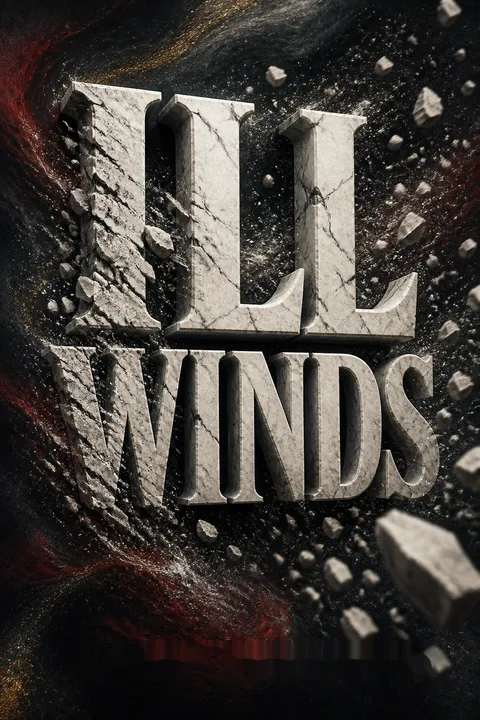

Key Takeaways
1. Global Democracy Faces a Deepening Crisis
For the past decade, I had been warning of a gathering tide of political corruption, polarization, and decay that was disillusioning ordinary citizens in many democracies and diminishing and destabilizing previously durable democratic systems.
A decade-long recession. The world is experiencing a significant retreat from freedom, moving from a period of democratic expansion to a "democratic recession." This decline is marked by increasing political corruption, polarization, and a weakening of democratic systems globally. The rise of leaders like Donald Trump, while a symptom, highlights the severity of this crisis.
Authoritarian resurgence. Autocrats are seizing the initiative worldwide, with competitive politics and free expression shrinking. Established democracies are becoming more polarized and dysfunctional, while emerging democracies face existential threats. This global shift is not merely a natural ebb but is actively driven by powerful authoritarian states.
US leadership void. The timing of this crisis is particularly worrisome, as the United States, traditionally the "keystone of democracy," has retreated from vigorous global leadership. This void is being filled by ambitious autocratic powers like Russia and China, who actively undermine democratic norms and institutions, threatening to make autocracy the defining force of the new century.
2. Democracy's Survival Hinges on Legitimacy and Good Governance
Ultimately, what sustains democracy is a deep and unconditional belief in its legitimacy.
Foundational belief. Democracy's stability rests on citizens' unwavering belief in its legitimacy as the best form of government, even when their preferred parties or policies lose. This commitment must extend beyond mere pragmatic acceptance to a profound, unconditional faith that endures through economic downturns or political misbehavior.
Good governance is vital. For this belief to take root, democracy must perform well, delivering broadly distributed prosperity, managing conflict, and upholding the rule of law. This requires a capable, professional state that can implement decisions, foster development, and control corruption. Without good governance, public faith erodes, leaving democracy vulnerable.
Cultural underpinnings. A healthy democratic culture emphasizes tolerance, flexibility, and moderation, promoting compromise and mutual respect. These norms thrive with economic development, limited inequality, high education levels, and a vibrant civil society. Institutional designs, such as fair electoral systems and robust checks on power, also contribute to effective and honest governance.
3. Authoritarian Populism Dismantles Democracy from Within
Increasingly, populism is showing a snarling face—in Venezuela, Turkey, Bolivia, Hungary, Poland, and more.
Populism's core features. Populism, a primary internal threat to democracy, mobilizes "the people" against perceived enemies like corrupt elites, international institutions, or immigrants. It is characterized by:
- Antielitism
- Anti-institutionalism
- Plebiscitary leadership
- Ultramajoritarianism
Creeping authoritarianism. This form of populism often leads to "creeping authoritarianism," a subtle but lethal process that gradually erodes political pluralism and institutional checks. Leaders systematically attack the judiciary, media, civil society, and electoral rules, leaving only a hollow shell of democracy.
The autocrats' playbook. This dismantling follows a predictable "twelve-step program," including demonizing opposition, packing courts, attacking media, controlling the internet, intimidating businesses, enriching cronies, and rigging electoral rules. Examples like Hungary's Viktor Orbán and Turkey's Recep Tayyip Erdogan illustrate this systematic subversion, often fueled by nativism and hostility to pluralism.
4. Russia Wages a "Sharp Power" Assault on Western Democracies
Putin succeeded in both of his apparent aims in hacking the 2016 election: on the one hand, to sow division and discord in American democracy, and on the other, to punish Clinton and elect Trump.
Putin's insecurity and ambition. Vladimir Putin's Russia, driven by a deep sense of insecurity and resentment over the Soviet Union's collapse, seeks to undermine Western democracies and the US-led liberal order. He views democratic "regime change" as a threat to his own rule, leading to aggressive geopolitical actions.
Digital age subversion. Russia employs "sharp power" tactics, blending covert intelligence operations with overt propaganda through state-funded media and social media "trolls." The 2016 US election interference, involving hacking, disinformation, and strategically timed leaks, aimed to damage Hillary Clinton, elect Donald Trump, and sow discord.
Global reach and "whataboutism." Russia's malign influence extends across Europe, targeting elections, fanning support for movements like Brexit, and exploiting social tensions. Its propaganda machine, including RT and Sputnik, uses "whataboutism" to deflect criticism and promote cynicism about democracy, aiming to show that no real differences separate authoritarian and democratic systems.
5. China Pursues Global Hegemony Through Stealth and Economic Leverage
China’s global reach and power will increasingly and inevitably dwarf Russia’s.
Sweeping ambitions. China's goals are more expansive than Russia's, aiming for hegemony over Asia and the Pacific, and eventually challenging the US for global leadership. Beijing promotes its "China model" of authoritarian, state-directed capitalism as a superior alternative to liberal democracy, extending its influence across every region.
Economic and technological might. China leverages massive foreign aid, investments (like the Belt and Road Initiative), and technological advancements to gain geopolitical influence. This often leads to "debt traps" for weaker nations and allows China to export its digital surveillance and control technologies to other autocracies.
Infiltration and co-option. Beijing's "sharp power" involves patient, incremental infiltration of democratic societies' media, universities, businesses, and political parties. Through "united front" networks, it silences criticism, mobilizes support for its policies, and co-opts influential figures, compromising the independence of democratic institutions and stifling public debate.
6. Kleptocracy Corrupts Democracies and Empowers Autocrats
The money being looted from public coffers in corrupt autocracies is not only sustaining abusive rulers; it is also being laundered into the banking and property systems of the world’s democracies, corroding our own rule of law and undermining our will to confront the spread of despotism.
A global menace. Kleptocracy, the systematic theft of public wealth by ruling elites, is a paramount threat to democracy, national security, and human well-being. It perpetuates undemocratic behavior, gives elites incentives to cling to power, and is a major obstacle to democratic development in many countries.
Western complicity. The West's wealthy democracies, with their lax regulations, serve as havens for laundered dirty money. This allows corrupt autocrats and oligarchs to acquire property and influence, degrading the rule of law and making Western institutions complicit in global corruption.
A 10-step program. Fighting kleptocracy requires political will and closing legal loopholes. Key steps include:
- Ending anonymous shell companies and real estate purchases.
- Strengthening the Foreign Agents Registration Act (FARA).
- Banning foreign political contributions and former officials from lobbying for foreign governments.
- Modernizing anti-money laundering systems and increasing enforcement resources.
- Strengthening international cooperation and raising public awareness.
7. Public Faith in Democracy Remains Strong Globally
In every region of the world surveyed, large to overwhelming majorities of the public, on average, said that democracy is the best form of government and that an unaccountable strongman is a bad idea.
Universal value. Despite the rise of authoritarian models, global public opinion overwhelmingly supports democracy as the best form of government. Surveys across Latin America, East Asia, Africa, and the Arab world show strong aspirations for democratic and accountable governance, even in the poorest regions.
Rejecting strongman rule. Citizens in these diverse regions consistently reject authoritarian alternatives, such as "a strong leader who does not have to bother with Congress and elections" or military rule. This contradicts the self-serving arguments that autocracy better fits non-Western cultures or that poor people prioritize survival over freedom.
Rulers, not people, are the problem. The main threat to democracy is not a popular groundswell for dictatorship, but rather the corruption and lust for power of rulers, coupled with weak oversight institutions. When democracies govern decently and uphold liberal norms, they renew public faith and demonstrate that freedom can lead to a more just and prosperous society.
8. American Democracy Suffers from Internal Decay and Polarization
The quality of our republic has been decaying for decades—all of which makes today’s crisis more grave.
Trump's unprecedented threat. Donald Trump's presidency represents an unprecedented danger to American democracy, marked by direct assaults on norms and institutions. His actions include attacking judges and media, pardoning convicted officials, spreading falsehoods, and undermining the independence of intelligence and law enforcement agencies.
Deep-seated decay. The decline of American democracy predates Trump, rooted in decades of rising political polarization that has turned parties into "warring tribes." This hyperpartisanship, fueled by dark money, gerrymandering, and a fragmented media landscape, cripples governance and degrades civic life.
Erosion of checks and balances. While some institutions like the media and judiciary have shown resilience, the willingness of many Republican politicians to enable Trump's transgressions has severely weakened congressional oversight. This complicity, driven by fear of primary challenges and ideological purity, further erodes the system's ability to defend itself.
9. Reforming US Electoral Systems is Crucial for Revival
The victory for ranked-choice voting in Maine energized national interest in the idea—just as a growing number of municipalities, political scientists, thoughtful media outlets, foundations, and reformers were coming to view it as the most promising achievable reform for making American politics more civil, democratic, and amenable to compromise.
Addressing systemic flaws. To revive American democracy, fundamental reforms to its electoral systems are essential. The current system, with its low primary turnout and winner-take-all general elections, incentivizes extremism and discourages compromise.
Key electoral reforms:
- Ranked-choice voting: Allows voters to rank candidates, eliminating "spoiler" effects and encouraging moderation and broader appeal. Maine's successful implementation demonstrates its viability.
- Ending gerrymandering: Taking redistricting out of partisan legislative hands and giving it to nonpartisan commissions ensures fairer representation and more competitive districts.
- Expanding voting rights: Automatic voter registration, same-day registration, and early voting increase participation, especially among underrepresented groups, while combating partisan voter suppression efforts.
- Retiring the Electoral College: The National Popular Vote Interstate Compact offers a promising path to ensure the popular vote winner becomes president, addressing a fundamental democratic deficit.
Beyond elections. Reforms extend to Congress, advocating for changes to rules that stifle debate and compromise, and to campaign finance, pushing for full disclosure of all political spending and stricter limits on foreign influence. These changes are achievable without constitutional amendments and are gaining grassroots momentum.
10. A Proactive Foreign Policy for Freedom is Indispensable
The democracies of the West cannot save themselves if they do not stand with democrats around the world.
Interconnected destinies. In a globalized world, the fate of Western democracies is inextricably linked to the state of freedom worldwide. Authoritarian regimes pose direct threats to democratic sovereignty through covert influence and corruption, necessitating a proactive foreign policy for freedom.
Beyond intervention. This policy is not about imposing democracy through force, but about long-term support for peaceful democratic change. It involves:
- Supporting democrats: Providing financial and technical assistance to activists, independent media, and civil society organizations globally.
- Pressuring autocrats: Implementing targeted sanctions on corrupt officials and human rights abusers, while distinguishing between regimes and their people.
- Rebooting public diplomacy: Investing in robust international broadcasting, educational exchanges, and digital tools to counter authoritarian propaganda and promote democratic values.
The power of example. The US, despite its flaws, has historically been an "indispensable nation" for democracy, fusing might and right to expand freedom. Retreating from this role risks a world dominated by muscular, corrupt dictatorships, where democratic aspirations are stifled. Reasserting American leadership, in partnership with allies, is crucial to reverse the ill winds and inspire a new birth of freedom.
Review Summary
Ill Winds by Larry Diamond receives largely positive reviews (3.99/5) for its timely analysis of threats to democracy from Russia, China, and internal complacency. Readers praise Diamond's 40 years of expertise, research-backed recommendations including ranked-choice voting, and accessible writing style. The book examines autocratic tactics, kleptocracy, and democratic erosion while offering practical solutions. Critics note Western-centric perspectives, excessive America-first rhetoric, and occasional redundancy. Some question faith in American institutions and oversimplification of complex issues. Most reviewers recommend it as essential reading for understanding contemporary democratic challenges and potential remedies.
People Also Read





Download PDF
Download EPUB
.epub digital book format is ideal for reading ebooks on phones, tablets, and e-readers.








































