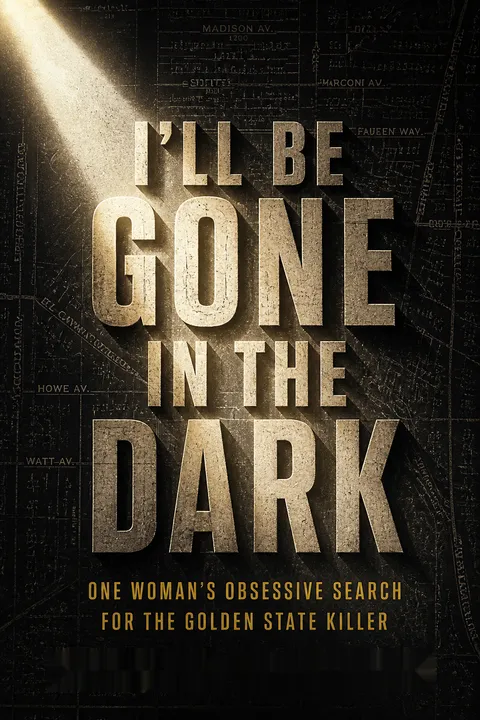

Key Takeaways
1. Michelle McNamara's Personal Drive to Uncover the Killer
The first one, faceless and never caught, marked me at fourteen, and I’ve been turning my back on good times in search of answers ever since.
A childhood catalyst. Michelle McNamara's lifelong obsession with true crime began at age fourteen with the unsolved murder of her neighbor, Kathleen Lombardo, in Oak Park, Illinois. This personal tragedy ignited an "electric curiosity" and a profound need to understand the "hollow gap" of a killer's identity, transforming her into "Michelle, the Writer" with a unique focus on cold cases.
True Crime Diary. The advent of the internet allowed Michelle to transform her fascination into an active pursuit, launching her website, True Crime Diary, in 2006. Here, she meticulously documented hundreds of unsolved crimes, leveraging online public records, search engines, and Google Earth to reframe stale evidence and share her theories with a loyal community of online sleuths.
Unwavering commitment. Michelle's dedication to the Golden State Killer case was all-consuming, leading her to work late into the night from her daughter's playroom, surrounded by toys. She immersed herself in thousands of pages of police files, autopsy reports, and online forums, driven by the conviction that the case was solvable and that knowing the killer's face would strip him of his power.
2. The Golden State Killer's Evolving Reign of Terror Across California
Neither the Zodiac Killer, who terrorized San Francisco in the late 1960s and early ’70s, nor the Night Stalker, who had Southern Californians locking their windows in the ’80s, were as active.
A prolific predator. The individual Michelle dubbed the Golden State Killer (GSK) was an exceptionally active and brutal serial offender, responsible for over fifty sexual assaults and at least ten murders across California from 1976 to 1986. His crimes spanned multiple jurisdictions, initially as the East Area Rapist (EAR) in Northern California, then escalating to murder as the Original Night Stalker (ONS) in Southern California.
Geographic shifts. The GSK's pattern of attacks showed distinct geographic phases, starting in Sacramento County (Rancho Cordova, Citrus Heights, Fair Oaks), then moving to the East Bay (Concord, San Ramon, Danville, San Jose), and finally to Southern California (Goleta, Ventura, Irvine, Dana Point). This mobility initially hindered investigators, who struggled to connect crimes across different counties.
Escalation to murder. The shift from serial rape to murder marked a significant escalation in the GSK's brutality, beginning with the killing of Claude Snelling in Visalia in 1975 (though not definitively linked to EAR until later) and then the double homicides in Southern California. This change in M.O. was likely driven by a need to eliminate witnesses and increase the stakes of his crimes.
3. DNA Unites Disparate Crimes, Revealing a Single Predator
But his power evaporates the moment we know him.
The dawn of DNA forensics. The breakthrough in the GSK case came with the advent of DNA fingerprinting, pioneered by Alec Jeffreys in 1984. While early DNA technology was laborious, the Orange County Crime Lab, particularly criminalist Mary Hong, was at the forefront of integrating new PCR-STR techniques in the mid-1990s, which could analyze minuscule or degraded samples.
Connecting the dots. In 1996, Mary Hong's meticulous work led to a "cold hit" that linked the DNA from the 1980 Harrington murders and the 1981 Witthuhn murder. Weeks later, she discovered that the same DNA profile also matched the 1986 Janelle Cruz murder, despite the victims being of different ages and the crimes occurring years apart. This was a stunning revelation, as no one had previously connected these cases.
A statewide revelation. In 2001, Paul Holes of the Contra Costa County Sheriff's crime lab, after developing a DNA profile for the East Area Rapist, confirmed a perfect match with the Orange County cases. This DNA link definitively established that the EAR and ONS were the same individual, unifying decades of seemingly unrelated crimes and providing investigators with a powerful new tool in their hunt.
4. The Killer's Calculated Methods and Psychological Warfare
Most violent criminals smash through life like human sledgehammers. They have fists for hands and can’t plan beyond their sightlines.
Master of reconnaissance. The GSK was a highly intelligent and methodical criminal, meticulously planning his attacks through extensive reconnaissance. He would conduct hang-up phone calls, pre-prowl neighborhoods, and even enter homes beforehand to study layouts, family photos, and work schedules, often leaving subtle signs that were only understood in retrospect.
Signature behaviors. His M.O. was distinct and unwavering:
- Masks and voice: Always wore a mask (ski, leather hood, nylon stocking) and used a low, guttural whisper, sometimes rising to a high pitch or stuttering when upset.
- Bindings: Used precut ligatures (shoelaces, cord, plastic ties) and often re-tied victims multiple times.
- "Dishes trick": Placed cups or dishes on the bound male victim's back, threatening to kill the female if he heard them fall.
- Ransacking: Often ransacked homes, stealing trinkets and personalized jewelry rather than valuables, suggesting a psychological motive over financial gain.
Psychological torment. Beyond physical violence, the GSK inflicted severe psychological trauma. He would pretend to leave, only to reappear, prolonging victims' terror. His occasional whimpering, crying, or even "high-pitched hysteria" after sexual assaults suggested a conflicted mind, though its authenticity was debated among victims and investigators.
5. Challenges and Red Herrings in a Decades-Long Cold Case
Small wonder that the case remains unsolved, Or that the sleuth, Le Roux, is now incurably insane, Screaming that all the world is mad, that clues Lead nowhere, or to walls so high their tops cannot be seen; Screaming all day of war, screaming that nothing can be solved.
Jurisdictional disarray. The GSK's attacks spanned numerous counties, each with its own police department and investigative procedures. In the 1970s and 80s, a lack of inter-agency communication and data sharing meant that connections between crimes were often missed or dismissed, allowing the killer to operate under the radar for years.
Public inaction and police missteps. Despite widespread fear, neighbors often failed to report suspicious activities, or their observations were not fully appreciated at the time. Police themselves made errors, from dismissing valuable evidence (like a bag containing a ski mask and gloves) to focusing on unreliable leads or eliminating suspects based on flawed early forensic methods like secretor status testing.
Persistent red herrings. The investigation was plagued by numerous false leads and suspects who consumed significant resources:
- Joe Alsip: Lyman Smith's business partner, initially arrested for the Ventura murders based on a minister's "confession" and a fingerprint, but later exonerated.
- Brett Glasby: A local Goleta hood, suspected by Santa Barbara authorities for years despite lack of physical evidence and his own death before later GSK crimes.
- Jim Walther: A suspect with a compelling geographic and behavioral profile, initially eliminated by flawed secretor status testing, and later definitively ruled out by DNA.
6. The Power of Geographic Profiling and Unconventional Clues
A criminal is more vulnerable in his history than his future.
Mapping the killer's movements. Paul Holes, a criminalist turned investigator, became a key figure in the modern hunt for the GSK, utilizing geographic profiling to analyze attack locations. He observed that the GSK's Sacramento attacks showed a "marauder" pattern (branching out from an anchor point), while East Bay attacks suggested a "commuter" pattern, possibly linked to work.
The "homework" evidence. A crucial, unconventional clue emerged from the Danville crime scene: spiral notebook pages found near the abandoned railroad tracks. These included a poorly written essay on General Custer, a rant about a humiliating sixth-grade teacher, and a hand-drawn map of a residential community. The word "PUNISHMENT" scrawled diagonally and backward on one page deeply intrigued Holes.
The airplane theory. Holes's analysis of the Modesto and Davis attacks, which occurred within 22 hours of each other and near airports, led him to a bold theory: the GSK might have been a pilot. This suggested a higher socioeconomic status and resources than previously assumed, challenging the "common joe" image and aligning with the idea that he was "very good at committing his crime, but he's not rappelling down the side of a building."
7. The Unseen Burden on Victims and Investigators
There’s a scream permanently lodged in my throat now.
Profound victim trauma. The GSK's victims endured unimaginable terror and lasting psychological scars. Many suffered from severe anxiety, paranoia, and the breakdown of relationships. Debbi Domingo, whose mother Cheri was murdered, experienced a life derailed by addiction, while other victims like Fiona Williams built brick walls around their homes, forever changed by the invasion.
The toll on law enforcement. The relentless, unsolved nature of the case took a heavy toll on investigators. Detectives like Richard Shelby and Larry Crompton were haunted by their failure to catch the EAR, leading to stress, infighting, and even broken marriages. Larry Pool, who worked the ONS cases for fourteen years, described the emotional rollercoaster of hope and disappointment with each new lead.
Michelle's shared burden. Michelle McNamara herself was deeply affected by her immersion in the case, confessing to a "scream permanently lodged in my throat." Her dedication bordered on obsession, leading to sleep deprivation and a blurring of lines between her personal life and the dark world she investigated, as evidenced by her accidental attack on her husband with a lamp.
8. The Promise and Pitfalls of Modern Forensic Genealogy
Technology got me.
Familial DNA's potential. The absence of a CODIS match for the GSK's DNA led investigators like Paul Holes to explore familial DNA searching. This technique involves uploading the killer's Y-STR markers (paternal lineage) to public genealogical databases, hoping to find distant relatives who could lead to a surname and, eventually, the killer.
Early attempts and limitations. Holes's initial attempts in 2013 yielded a promising "0 genetic distance" match, but it turned out to be a mirror image of the killer's own DNA, uploaded by another amateur sleuth. Michelle also explored this route, finding distant matches that suggested a "German name but was from the UK" for the killer, but these were too far back (330 years) to pinpoint an individual.
The privacy dilemma. The most powerful tool, autosomal DNA testing offered by companies like 23andMe and Ancestry.com (with millions of profiles), holds immense potential for solving cold cases by identifying second or third cousins. However, these companies refuse to cooperate with law enforcement due to privacy concerns and terms of service, creating a "locked door" behind which the killer's identity might be hidden.
9. Michelle McNamara's Enduring Legacy in the Hunt for Justice
I don’t care if I’m the one who captures him. I just want bracelets on his wrists and a cell door slamming behind him.
Reinvigorating the investigation. Michelle McNamara's relentless research, compelling writing, and ability to connect with both victims and investigators breathed new life into the cold case. Her blog and the Los Angeles magazine article brought unprecedented public attention to the GSK, transforming him from a little-known regional menace into a nationally recognized serial predator.
A unique partnership. Michelle forged an extraordinary "private/public partnership" with active and retired detectives, sharing her findings and insights, and in turn gaining access to thousands of pages of case files. Her energy and fresh perspective were invaluable, with Paul Holes considering her his "detective partner" on the case.
The unfinished quest. Michelle died before completing her book, leaving behind a "Mother Lode" of research and unanswered questions. Her work, completed by Paul Haynes and Billy Jensen, stands as a testament to her dedication and her unwavering belief that the killer's identity would eventually be revealed. Her ultimate goal was justice, not glory, for the victims and their families.
Review Summary
Most reviewers praise I'll Be Gone in the Dark as a compelling, beautifully written true crime account, highlighting McNamara's empathetic portrayal of victims, her relentless research, and her captivating prose. Many were moved by her personal obsession with the case and noted the bittersweet tragedy of her dying before publication and before the killer's 2018 arrest. Critical reviews cited disorganized structure, incomplete coverage of crimes, and a disjointed timeline. Nearly all readers appreciated the book's unique blend of memoir and investigative journalism.
People Also Read








Download PDF
Download EPUB
.epub digital book format is ideal for reading ebooks on phones, tablets, and e-readers.








































