
Plot Summary
Digital Exile Begins
Dayna, a seasoned but recently laid-off journalist, is abruptly dumped by her long-term boyfriend Luke just as she's about to move in with him. Homeless and financially unstable, she's forced to accept an offer from Craig, an enigmatic figure from her past, to join a new project in Los Angeles. The project: managing a "hype house" of young influencers in a crumbling, iconic mansion. Dayna's sense of failure and displacement is palpable, as she's thrust into a world where her experience is both a liability and a lifeline. The chapter sets the tone of desperation, generational anxiety, and the search for relevance in a digital world that prizes youth and virality over wisdom and stability.
The Mansion's Shadow
Dayna arrives at the Deckler House, a decaying Los Angeles mansion with a storied, tragic past. The house, designed to resemble a Mayan temple, is both a film set and a family tomb, haunted by the deaths and misfortunes of its previous inhabitants. Craig, the house's current owner, is determined to save it by monetizing the influencer economy. The house's oppressive atmosphere and history of loss mirror Dayna's own sense of being trapped by circumstances. The mansion becomes a character in itself, exerting a strange influence on its residents, blurring the line between sanctuary and prison, and foreshadowing the psychological unraveling to come.
Ghosts of the Internet
The narrative shifts between Dayna and Olivia, a young woman who arrives at the house with nothing but her digital identity and a talent for crying on camera. Both women are haunted by their pasts—Dayna by her failed ambitions and Olivia by the loss of her parents. The internet is depicted as a haunted house, filled with avatars, secrets, and the constant threat of exposure. The characters' attempts to curate their lives for an audience only deepen their sense of alienation. The chapter explores the emotional toll of living online, where every vulnerability can be commodified and every mistake can go viral.
Hype House Initiation
Dayna is introduced to the house's residents: Jake, the charismatic heartthrob; Piper and Sean, the couple with a complicated past; Morgan, the eccentric stylist; and Olivia, the orphaned newcomer. Each is desperate for attention, validation, and a piece of the digital spotlight. Dayna's role as producer and den mother is fraught with generational tension—her expertise is both resented and needed. The house operates like a reality show, with alliances, competitions, and constant surveillance. The pressure to perform and the fear of irrelevance drive the characters to emotional extremes, setting the stage for both collaboration and betrayal.
Viral Competition
Dayna launches a contest: whoever grows their following fastest gets to feature her beloved rabbit, Owen Wilson, in a video. The competition exposes the housemates' insecurities and ambitions. Olivia, initially overlooked, goes viral by accident, her raw grief and awkwardness resonating with viewers. Piper, once a star, is sidelined and lashes out. The contest becomes a microcosm of the influencer economy—arbitrary, cutthroat, and emotionally destabilizing. Dayna's attempts to manage the chaos only deepen the fractures, as the housemates' need for attention eclipses their empathy for one another.
The Orphan Arrives
Olivia's backstory unfolds: orphaned by a tragic accident, she is both vulnerable and performative, her pain quickly becoming her brand. The housemates and Dayna exploit her story for engagement, blurring the line between support and exploitation. Olivia's viral success brings her both validation and isolation, as she struggles to distinguish between genuine connection and parasocial attention. Her search for meaning leads her to Becca, a missing influencer whose tarot videos once offered Olivia solace. The chapter explores the ethics of turning trauma into content and the hunger for messages "meant for you."
Haunted Histories
The Deckler House's history is revealed through stories, rumors, and the physical decay of its walls. The deaths, betrayals, and artistic ambitions of previous generations echo in the lives of the current residents. Dayna's own past as a young artist, mentored and perhaps manipulated by Craig, resurfaces as she discovers her old photographs hidden in the house. The boundaries between past and present, art and exploitation, blur. The house's influence grows stronger, manifesting in strange coincidences, emotional breakdowns, and a sense of being watched or possessed.
Content and Collapse
The relentless demand for content pushes the housemates to their limits. Piper's past as a child influencer, managed by her mother, is exposed, revealing the psychological scars of growing up online. Morgan's need for attention leads her to desperate acts. Dayna's authority is undermined by her own emotional unraveling and her complicated relationships with both Craig and Jake. Olivia's mental health deteriorates as she becomes addicted to the algorithm's rewards and punishments. The house becomes a pressure cooker, amplifying every insecurity and conflict, and foreshadowing an inevitable collapse.
The Search for Becca
The disappearance of Becca, the tarot influencer, becomes the central mystery. Olivia, driven by grief and longing, spearheads the search, convinced that Becca's cryptic videos hold the key to her own healing. Dayna sees an opportunity to turn the search into a viral campaign, pitching it to a luxury brand as a gothic, interactive narrative. The housemates become both detectives and suspects, their own secrets and traumas surfacing as they chase clues. The search for Becca becomes a metaphor for the search for meaning, connection, and authenticity in a world of performance.
Secrets in the Walls
Olivia and Jake discover a cache of disturbing photographs—self-portraits of a young Dayna, mistaken for Becca, hidden in the house's labyrinthine corridors. The revelation forces Dayna to confront her own history of artistic ambition, exploitation, and self-erasure. Morgan is exposed as Becca's secret keeper, having hidden her in the house's nursery to protect her from the pressures of fame and the demands of the platform. The boundaries between art, life, and performance collapse, as the house's secrets come to light and the characters are forced to reckon with the consequences of their actions.
The Algorithm's Curse
Becca's return—both as a mythic figure and a deeply troubled young woman—exposes the psychological toll of living for an audience. Her tarot readings, once a source of comfort, become a site of invasion and breakdown as the demands of her followers overwhelm her. The housemates, each in their own way, are consumed by the need for attention, validation, and narrative closure. The algorithm is depicted as a malevolent force, rewarding spectacle and suffering, and punishing vulnerability and authenticity. The chapter explores the dangers of parasocial relationships and the impossibility of true connection in a world mediated by screens.
Parasocial Ties
The relationships between the housemates, their followers, and their managers become increasingly fraught. Jake's fanbase of older women blurs the line between support and obsession, culminating in a dangerous encounter with a stalker. Dayna's romantic entanglements with both Craig and Jake reflect her own divided loyalties and the generational tensions at the heart of the house. Olivia's search for forgiveness and meaning leads her to a moment of grace, as she learns to forgive the man responsible for her parents' death. The chapter interrogates the ethics of attention, the hunger for intimacy, and the ways in which digital platforms both connect and consume us.
The Wedding Spectacle
The house stages a lavish, performative wedding between Piper and Sean, orchestrated as both a brand campaign and a narrative climax. The event is a triumph of spectacle over substance, with every moment curated for maximum engagement. Becca, briefly brought into the light, is overwhelmed by the demands of her audience and suffers a public breakdown. The wedding, meant to save the house and its residents, instead exposes the emptiness at the heart of their enterprise. The chapter is both a satire of influencer culture and a poignant meditation on the longing for ritual, community, and meaning.
The House Burns Down
The Deckler House, already crumbling under the weight of its history, is destroyed in a fire set by a deranged fan. The conflagration is both literal and symbolic—a purging of secrets, ambitions, and illusions. The housemates are forced to confront the consequences of their actions, the limits of their control, and the fragility of their constructed identities. The fire is livestreamed, becoming yet another viral spectacle, even as it marks the end of an era. The chapter is suffused with both loss and liberation, as the characters are freed from the house's grip but left to reckon with what remains.
Aftermath and Inheritance
In the wake of the fire, the characters scatter—some to new projects, some to healing, some to obscurity. Dayna, now forty, reflects on the cycles of ambition, exploitation, and reinvention that have defined her life. Becca, hospitalized but recognized as an artist, becomes a symbol of both the dangers and the possibilities of digital fame. Olivia and Jake embark on new creative ventures, their relationship marked by both hope and uncertainty. The novel ends with a sense of ambiguity and possibility, as the characters inherit not just the ruins of the house, but the lessons and scars of their time within it.
Analysis
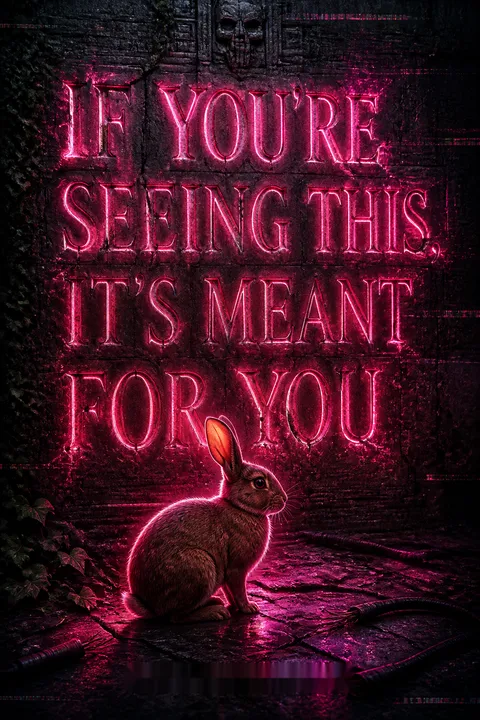
If You're Seeing This, It's Meant for You is a razor-sharp, darkly funny meditation on the costs of digital fame, the hunger for attention, and the ways in which the internet both connects and consumes us. Leigh Stein uses the gothic tradition—haunted houses, family secrets, tragic heroines—to explore the psychological toll of living for an audience, where every vulnerability can be commodified and every mistake can go viral. The Deckler House is both a literal and metaphorical prison, embodying the burdens of inheritance, the cycles of exploitation, and the longing for meaning in a world governed by algorithms and spectacle. The novel interrogates the ethics of attention, the dangers of parasocial relationships, and the impossibility of true intimacy in a world mediated by screens. Ultimately, it is a story about the search for authenticity, the need for forgiveness, and the hope for new beginnings, even in the ruins of what we once called home. Stein's incisive satire and deep empathy make this a vital, unsettling portrait of a generation—and a culture—haunted by the ghosts of the internet.
Review Summary
If You're Seeing This, It's Meant for You receives mixed reviews averaging 3.28/5 stars. Readers appreciate its unique premise blending gothic mystery with TikTok hype house culture and praise the sharp satire of social media and influencer life. However, many criticize the rushed ending, underdeveloped characters, abandoned plotlines, and lack of atmospheric tension despite the haunted mansion setting. The mystery surrounding missing influencer Becca disappointed many who expected deeper suspense. While some found it brilliantly unnerving and impossible to put down, others felt it was disjointed, outdated, and failed to deliver on its promising concept.
People Also Read





Characters
Dayna Lev
Dayna is a former journalist and photographer whose career and personal life have unraveled. She is both a survivor and a casualty of the shifting digital landscape, forced to reinvent herself as the manager of a hype house filled with younger, more adaptable creators. Her relationships—with Craig, her former mentor and lover; with Jake, the house's heartthrob; and with Olivia, the orphaned newcomer—are fraught with longing, regret, and a desperate need for relevance. Psychologically, Dayna is marked by a fear of obsolescence, a hunger for validation, and a deep ambivalence about the world she's helping to create. Her arc is one of reckoning—with her past, her ambitions, and her complicity in the exploitation of others.
Olivia Dahl
Olivia is a nineteen-year-old whose parents died in a car accident, leaving her adrift and searching for connection. Her raw grief and awkward authenticity make her an unlikely viral sensation, as her pain becomes both her brand and her burden. Olivia's journey is one of self-discovery, as she navigates the treacherous waters of digital fame, parasocial relationships, and the search for forgiveness. Her relationship with Becca, the missing influencer, is both a quest for healing and a mirror of her own longing for messages from the beyond. Olivia embodies the dangers and possibilities of turning trauma into content, and her arc is one of tentative hope and hard-won grace.
Craig Deckler
Craig is the owner of the Deckler House, a man obsessed with preserving his family's legacy even as it crumbles around him. He is both a mentor and a manipulator, using his power and charisma to draw young women into his orbit. His relationships—with Dayna, Becca, and his own family—are marked by secrecy, guilt, and a desperate need for control. Psychologically, Craig is driven by a fear of loss and a belief in the redemptive power of art and performance. His arc is one of reckoning with the consequences of his actions and the limits of his influence.
Jake Cho
Jake is the house's breakout star, a young man whose good looks and charm have earned him a devoted (and sometimes dangerous) following. He is both empowered and exploited by his audience, struggling to maintain boundaries and authenticity in a world that rewards spectacle and intimacy. Jake's relationships—with Dayna, Olivia, and Becca—are marked by both genuine connection and performative distance. Psychologically, he is driven by a need for approval, a fear of being unmasked, and a longing for something real. His arc is one of self-discovery and the search for meaning beyond the algorithm.
Piper Bliss
Piper is a former child influencer whose life has been shaped by her mother's relentless pursuit of content and fame. She is both a victim and a participant in the cycles of exploitation that define the house. Her relationship with Sean is both a source of comfort and a site of performance, as their love story is commodified for an audience. Piper's arc is one of reckoning with her past, asserting her agency, and seeking genuine connection in a world that constantly demands more.
Sean Knight
Sean is Piper's boyfriend and collaborator, a young man whose sincerity and faith set him apart from the house's more cynical residents. He is both a stabilizing force and a participant in the spectacle, struggling to reconcile his values with the demands of the platform. Sean's arc is one of loyalty, compassion, and the search for meaning in a world that often feels hollow.
Morgan Bokelberg
Morgan is the house's resident fashionista and the architect of many of its performances. She is both creative and controlling, using her skills to shape the house's narrative and to protect her own secrets. Her relationship with Becca is central—she becomes Becca's keeper, hiding her from the world and from herself. Psychologically, Morgan is driven by a need for attention, a fear of abandonment, and a talent for reinvention. Her arc is one of exposure and reckoning, as her manipulations are brought to light.
Becca Chambers
Becca is the enigmatic tarot reader whose disappearance becomes the novel's central mystery. She is both a victim and a visionary, her gifts both a source of comfort and a site of invasion. Becca's struggle with mental health, the demands of her audience, and the legacy of her family are at the heart of the novel's exploration of art, exploitation, and the search for meaning. Her arc is one of withdrawal, revelation, and the possibility of healing.
Paula Delacroix
Paula is Craig's stepsister and co-owner of the house, a woman whose life has been defined by loss, disappointment, and the burdens of inheritance. She is both a gatekeeper and a bystander, her authority undermined by the house's decay and the ambitions of others. Psychologically, Paula is marked by resignation, bitterness, and a longing for a past that can never be reclaimed.
Mindy Bliss
Mindy is Piper's mother, a former mommy blogger whose relentless pursuit of content has left her daughter scarred and estranged. She is both a pioneer and a warning, her story illustrating the dangers of turning family into brand. Mindy's arc is one of regret, self-justification, and the search for redemption.
Plot Devices
The Haunted House as Metaphor
The mansion is more than a setting—it is a living metaphor for the burdens of inheritance, the cycles of exploitation, and the psychological toll of fame. Its crumbling walls, hidden rooms, and tragic history mirror the characters' own struggles with identity, ambition, and loss. The house exerts a supernatural influence, blurring the line between past and present, art and life, sanctuary and prison. It is both a stage and a trap, amplifying the characters' desires and fears.
The Algorithm as Fate
The novel uses the structure and logic of social media algorithms as a modern form of fate or curse. Characters' successes and failures are determined by the whims of virality, the hunger for engagement, and the unpredictable rewards and punishments of the platform. The algorithm becomes a malevolent force, rewarding spectacle and suffering, and punishing vulnerability and authenticity. This device allows the novel to explore questions of agency, exploitation, and the search for meaning in a world governed by invisible, impersonal forces.
Nested Mysteries and Unreliable Narration
The novel employs a structure of nested mysteries—Becca's disappearance, Dayna's hidden past, the house's tragic history—each revealed through shifting perspectives, unreliable narration, and the discovery of physical artifacts (photographs, tarot cards, hidden rooms). The use of multiple narrators and digital artifacts (texts, videos, comments) creates a sense of fragmentation and ambiguity, mirroring the characters' own struggles to construct coherent identities in a world of performance and surveillance.
Parasocial Relationships and Performance
The novel foregrounds the dynamics of parasocial relationships—one-sided bonds between creators and their audiences—as both a source of comfort and a site of danger. Characters perform for unseen viewers, turning their traumas and desires into content, even as they are consumed by the need for attention and validation. The boundaries between real and performed emotion, genuine connection and exploitation, are constantly in flux, raising questions about the ethics of attention and the costs of living for an audience.
Foreshadowing and Gothic Tropes
The novel draws on gothic conventions—haunted houses, family secrets, tragic heroines, and the blurring of reality and fantasy—to create an atmosphere of dread and inevitability. Foreshadowing is used to heighten suspense and to suggest that the characters are caught in cycles beyond their control. The destruction of the house, the recurrence of tragic deaths, and the motif of the orphan all serve to reinforce the novel's themes of inheritance, loss, and the search for meaning.
Download PDF
Download EPUB
.epub digital book format is ideal for reading ebooks on phones, tablets, and e-readers.








































