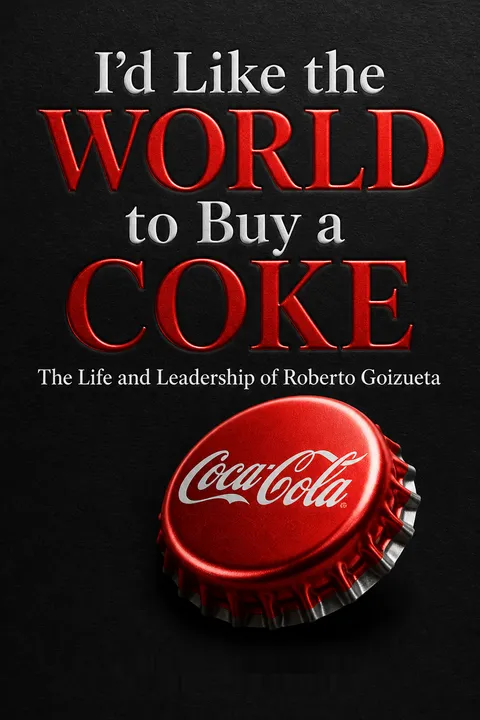

Key Takeaways
1. From Exile to Empire: Goizueta's Unlikely Rise to Power
“I was a freshly graduated chemical engineer, and everyone was telling me how great I was. It was obvious to me that, no matter what I did, everyone would say it was great because I was the owner’s son. I knew I would always be the owner’s son. It got to the point where I didn’t know whether I was in fact good or I wasn’t.”
Cuban aristocrat's ambition. Roberto Goizueta, born into a wealthy Cuban family, defied expectations by leaving his father's sugar business to join Coca-Cola in 1954. This decision stemmed from a deep-seated desire for independence and a need to prove his worth beyond his family name, seeking a role where his judgment would be questioned and his success untainted by nepotism. His privileged upbringing, including education at Yale, instilled in him discipline and a sense of status.
Flight from Castro. The Castro revolution in 1960 forced Goizueta and his family to flee Cuba with only $200, leaving behind their opulent life. This traumatic experience unexpectedly became a career-changing opportunity, shifting his ambitions from local Cuban operations to the global stage of Coca-Cola's home office. His job at Coke, once ridiculed by friends, became his most valuable asset and a lifeline to financial security and social standing in the U.S.
Cultivating influence. Goizueta's rise within Coke was marked by political astuteness and a knack for quiet leadership. He leveraged his Cuban roots and aristocratic breeding, which held an exotic appeal to the old-line Southern executives, especially Robert W. Woodruff, "The Boss." His ability to cultivate Woodruff, combined with his technical expertise and diligent work ethic, positioned him to seize control of Coke in a jarring boardroom battle, despite initial skepticism from many.
2. "No Sacred Cows": A Radical Approach to Corporate Transformation
“There are no sacred cows.”
Challenging tradition. Goizueta's declaration at the 1981 Palm Springs conference was a primal roar, signaling a radical departure from Coca-Cola's tradition-bound past. He aimed to transform Coke from a "doddering giant" into a dynamic, results-oriented company, making it clear that no aspect of the business, no matter how hallowed, was immune to change. This philosophy set the tone for his entire 16-year tenure.
Driving rapid change. He warned executives that a period of rapid change was imminent, and those unwilling to adapt would be left behind. This aggressive stance was backed by swift action, as he initiated a flurry of initiatives designed to set a new, more profitable course for the company. His "Spanish Inquisition" budget reviews instilled a healthy fear and understanding of the need for change, holding managers accountable for financial results.
Unloading underperformers. Goizueta demonstrated his commitment to "no sacred cows" by ruthlessly divesting extraneous businesses accumulated during the previous administration, such as shrimp farming and water purification. He personally oversaw the sale of AquaChem, a business he had worked in, because it failed to meet his stringent return-on-investment criteria. This sent a clear message: if it wasn't contributing economically, it was out.
3. Financial Discipline as a Core Strategy: The Economic Value Added (EVA) Imperative
“Increasing annual earnings per share and effecting increased return on equity are still the name of the game.”
Shareholder wealth focus. Goizueta's core philosophy centered on maximizing shareholder wealth, a creed he lived by, famously stating, "Management does not get paid to make the shareholders comfortable, we get paid to make the shareholders rich." He believed every decision should be evaluated based on its contribution to economic profit, which he later refined into the concept of Economic Value Added (EVA).
Leveraging the balance sheet. He dramatically shifted Coke's financial strategy, moving away from Woodruff's hyper-conservatism. He increased debt strategically, from virtually nothing to hundreds of millions, to fund critical investments in bottling and acquisitions. This was a calculated risk, but Goizueta argued that using cheaper debt was more efficient than relying on equity, which had a higher cost of capital.
Accountability for capital. Goizueta implemented a system where operating units were charged a set percentage for the capital they used, forcing managers to think like owners. This rigorous financial discipline, enforced through his "Spanish Inquisition" budget reviews, ensured that all projects and divisions were scrutinized for their economic return, transforming Coke's internal culture to prioritize profitability and efficient capital allocation.
4. Reinventing the Bottling System: The Power of the "49% Solution" and Anchor Bottlers
“As an equity investor, we will participate in the rising value of the entire system, as well as maintain a voice of influence without total direct ownership or complete investment.”
Strategic refranchising. Goizueta recognized that Coke's domestic bottling system was in disarray, with many third-generation bottlers lacking the capital or will to modernize. He initiated a "refranchising" program, buying struggling bottlers, rehabilitating them, and then selling them to stronger, more competent operators. This process aimed to strengthen the entire system and ensure consistent quality and distribution.
The "49% Solution". To address the massive debt and capital intensity of owning bottling operations, Goizueta devised the "49% solution." This involved spinning off 51% of Coca-Cola Enterprises (CCE), Coke's largest bottling arm, while retaining a 49% stake. This allowed Coke to:
- Dump $3.1 billion in debt from its balance sheet.
- Exert virtual control over bottling operations through its significant minority stake.
- Benefit from bottling profits as investment income rather than operating profits.
Global anchor bottlers. He extended this model internationally, developing the "anchor bottler" strategy. Coke would take minority ownership positions in strong, expanding multinational bottlers, directing their capital investment and enforcing financial discipline and marketing standards. This approach multiplied Coke's global reach and influence with minimal direct capital outlay, turning bottling into a profit machine and a key driver of international growth.
5. The New Coke Debacle: A Lesson in Brand Loyalty and Humility
“What do you mean you’re taking away my fucking Coca-Cola?”
The "surest step" that wasn't. Convinced by taste tests that a new, sweeter formula could beat Pepsi, Goizueta launched "New Coke" in 1985, withdrawing the original formula from the market. He believed it was "the surest move ever made," ignoring subtle warnings from market research and his own public relations counsel about the emotional attachment consumers had to the original brand.
Consumer outrage. The public reaction was swift and furious, with loyal Coke drinkers expressing outrage at the removal of their beloved beverage. Calls to Coke's hotline surged, and protests erupted nationwide, demonstrating that Coca-Cola was more than just a drink; it was a cultural icon deeply intertwined with American identity. The company had failed to ask the crucial question: "How would you feel if we took your Coke away?"
A humbling retreat. Just 77 days after its launch, Goizueta and his team, facing plummeting sales and intense public backlash, made the unprecedented decision to bring back the original formula, rebranded as "Coca-Cola Classic." This humbling experience taught Goizueta the invaluable lesson that brand loyalty, especially for a product like Coke, transcended mere taste and was rooted in deep emotional connections.
6. Global Conquest: Aggressive International Expansion and Market Dominance
“We’re after a share of stomach.”
Post-Columbia global pivot. After divesting Columbia Pictures, Goizueta fully committed Coke's resources to international expansion, recognizing that overseas markets offered immense, untapped growth potential. He aimed to dominate the global beverage market, not just soft drinks, but all liquids consumed, encapsulated in his "share of stomach" philosophy.
Eastern Europe blitz. The fall of the Berlin Wall in 1989 presented a monumental opportunity. Goizueta launched "Project Jumpstart," investing hundreds of millions to rapidly build bottling and distribution systems across Eastern Europe and the former Soviet Union, quickly overturning Pepsi's long-held dominance. He prioritized speed and market presence, even accepting local currencies with uncertain convertibility.
Strategic market entries. Goizueta systematically targeted key developing markets in Asia and South America. He orchestrated Coke's return to India, acquiring a majority stake in the country's largest bottler, and aggressively expanded in China through partnerships with anchor bottlers like Swire and Kerry Group. His crowning achievement was the $500 million joint venture in Venezuela, effectively seizing control of Pepsi's last major stronghold in South America and symbolizing Coke's global supremacy.
7. Strategic Marketing: Leveraging Sports and Innovation for Brand Pervasiveness
“I want it all. I don’t want them to have even these niche products.”
Sports as a global platform. Goizueta recognized sports as a powerful, universal marketing vehicle that connected with consumers on an emotional level. He transformed Coke's sports sponsorship strategy, making the Olympics a centerpiece of its global marketing efforts. This included massive investments in the Atlanta 1996 Games, ensuring Coke's pervasive presence and leveraging events like the torch run for grassroots engagement.
Creative advertising overhaul. Dissatisfied with McCann-Erickson's "Can't Beat the Real Thing" campaign, Goizueta sought a "hipper source." He controversially hired Creative Artists Agency (CAA), a Hollywood talent agency with no prior advertising experience, to create the "Always Coca-Cola" campaign. This bold move, driven by his desire for fresh, memorable ads, revitalized Coke's brand image and proved highly successful globally.
New product offensive. To combat the rise of "New Age" beverages and private-label brands, Goizueta launched a flurry of new products, including Fruitopia, OK Soda, and PowerAde. While some, like Tab Clear, were defensive moves with limited success, they demonstrated his commitment to fighting for "share of stomach" across all beverage categories. He redefined new products as expressions of Coke's brand strength, aiming for pervasive availability rather than just individual blockbusters.
8. The Art of Leadership: Vision, Delegation, and Unwavering Accountability
“Management does not get paid to make the shareholders comfortable, we get paid to make the shareholders rich.”
Demanding and decisive. Goizueta was a demanding, results-oriented leader who instilled a culture of unwavering accountability. He expected his managers to deliver on aggressive financial targets and was known for his "flogging in the town square" approach to underperformance. While he delegated extensively, he maintained meticulous oversight, especially on strategic decisions and financial outcomes.
Strategic political player. His leadership was marked by astute political maneuvering, both internally and externally. He skillfully navigated complex boardroom dynamics, cultivating key relationships with figures like Robert Woodruff and Warren Buffett, who became staunch supporters. He also adeptly managed public perception, using media to his advantage while fiercely defending Coke's image and his own.
A unique partnership. Goizueta formed a powerful, yet unlikely, partnership with Don Keough, his rival for the CEO position. Despite their contrasting styles—Goizueta the introverted strategist, Keough the gregarious salesman—they shared a deep commitment to Coca-Cola. Goizueta respected Keough's operational and marketing genius, allowing him significant autonomy, which proved crucial for implementing Goizueta's ambitious vision.
9. Focus on the Core: Diversification's Pitfalls and the Power of Specialization
“The worst waste of time for a company is to try to do well in something which we have no business doing.”
The Columbia Pictures lesson. Goizueta's acquisition of Columbia Pictures in 1982 was a major diversification attempt, intended to balance Coke's domestic and international revenues. However, the foray into Hollywood proved challenging, with unpredictable earnings, intense media scrutiny, and the vagaries of dealing with celebrity egos. He learned that the movie business was too costly, time-consuming, and culturally misaligned with Coke's core strengths.
Divesting non-core assets. The experience with Columbia, coupled with earlier divestitures of AquaChem and the Wine Spectrum, solidified Goizueta's belief in ruthless specialization. He concluded that investing in businesses he didn't intimately understand was a "waste of time" and a distraction from Coke's primary mission. This led to the eventual sale of Columbia to Sony in 1989, yielding a significant profit and reinforcing his commitment to the soft drink industry.
Commitment to the brand. The sale of Columbia marked a pivotal turning point, as Goizueta fully embraced the idea that Coca-Cola's future lay solely in its core beverage business. He believed that by concentrating all financial, physical, and managerial assets behind the Coca-Cola brand and related beverages, he could maximize shareholder value and reduce risk. This singular focus on "quenching the thirst needs of the world's population" became the unwavering strategic imperative for the rest of his tenure.
People Also Read







Download PDF
Download EPUB
.epub digital book format is ideal for reading ebooks on phones, tablets, and e-readers.








































