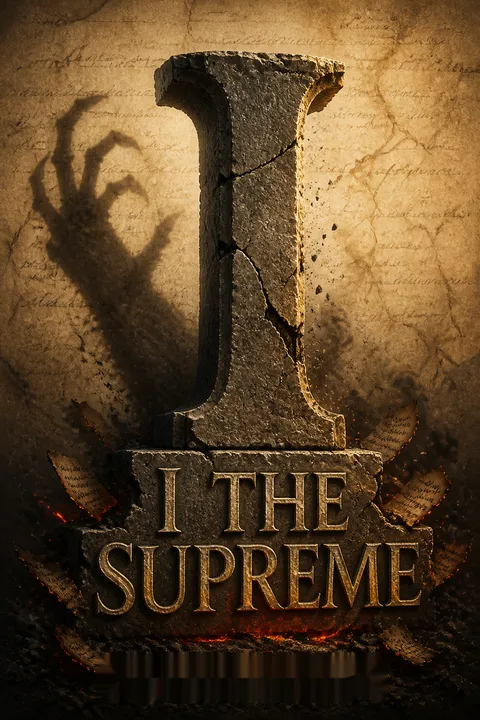

Plot Summary
The Pasquinade Appears
Early one morning, a scandalous pasquinade—an anonymous, mocking decree—appears nailed to the cathedral door, threatening the Supreme Dictator with death and mocking his authority. The Supreme, Dr. Francia, is incensed, seeing in this act a direct challenge to his absolute power and a sign of subversive unrest. He orders his secretary, Patino, to hunt down the author, suspecting both old enemies and those closest to him. The pasquinade's appearance triggers a spiral of paranoia, investigation, and reflection, as the Supreme contemplates the fragility of his rule and the ever-present threat of betrayal. The city, meanwhile, simmers with fear and rumor, the boundaries between loyalty and treason blurring in the shadow of the Dictator's suspicion.
Memory's Labyrinth
The Supreme's mind is a labyrinth of memory, where past betrayals, victories, and humiliations replay in endless loops. He obsesses over the archives—thousands of dossiers, decrees, and letters—believing that the truth of his reign and the roots of conspiracy lie hidden in handwriting and marginalia. Memory is both a weapon and a curse: it preserves the Dictator's sense of self and history, but also traps him in cycles of paranoia and self-doubt. The Supreme's reflections on memory, history, and the nature of authority reveal a man both haunted and sustained by the past, unable to distinguish between real threats and the ghosts of his own making.
The Dictator's Mirror
The Supreme is obsessed with his own image, both literal and metaphorical. He sees himself reflected in his supposed sister, in his dog, in the faces of his enemies and allies. The mirror becomes a symbol of power's duplicity: the Dictator is both himself and his double, both ruler and ruled, both the author of decrees and the subject of anonymous lampoons. This self-reflection breeds a deep paranoia—he suspects even himself of being the author of the pasquinade. The Dictator's identity fractures, and he becomes increasingly isolated, unable to trust even his own perceptions.
The People of Tevego
The penal colony of Tevego, a place of exile for the regime's undesirables, becomes a surreal landscape where people turn to stone, time slows, and identity dissolves. The Supreme listens to reports of Tevego with fascination and horror, seeing in its petrified inhabitants a metaphor for the fate of those who oppose or are forgotten by power. The story of Tevego blurs the line between reality and myth, suggesting that the Dictator's rule creates not just political prisoners but existential exiles—people transformed, silenced, and erased by the machinery of authority.
The Archive of Power
The Supreme's regime is built on an immense archive—hundreds of thousands of pages, files, and decrees. The Dictator believes that control of writing, of the official record, is control of reality itself. Yet the archive is also a labyrinth, a place where meaning is lost, documents are falsified or destroyed, and the truth is always just out of reach. The search for the author of the pasquinade becomes a descent into this bureaucratic maze, revealing the futility of trying to master history through paperwork and the way power is always undermined by its own excesses.
The Double of Authority
The Supreme is obsessed with doubles—his own, his secretary's, his enemies'. He fears being replaced, imitated, or parodied, and suspects that even his closest allies are plotting to usurp him. The Dictator's relationship with his secretary, Patino, becomes a battle of doubles: who is the true author of decrees, who is the real voice of power? The Supreme's fear of being succeeded, of being written out of history by others, drives him to ever-greater acts of control and cruelty, even as he recognizes the inevitability of his own disappearance.
The Conclave of Shadows
The Supreme calls a conclave of all his officials, demanding absolute loyalty and a reckoning of their service. The meeting is a theater of fear, suspicion, and mutual surveillance, as each functionary tries to prove his devotion while secretly fearing denunciation. The Dictator's power is revealed as both absolute and precarious, dependent on the constant performance of obedience and the ever-present threat of punishment. The conclave becomes a microcosm of the regime: a society held together by fear, secrecy, and the endless repetition of rituals of authority.
The Supreme's Circle
The Supreme reflects on the cyclical nature of power: revolutions devour their children, traitors become martyrs, and every act of violence begets another. He recalls the executions of former allies, the betrayals that brought him to power, and the endless need to purge enemies both real and imagined. The Dictator's circle is both a symbol of his control and a trap—he is caught in the very cycle of suspicion and retribution that he has created. The regime's violence is both its foundation and its undoing, ensuring that the Supreme can never rest or trust.
The Carnival of Enemies
The Supreme's court is visited by a parade of foreign envoys, spies, and would-be allies, each bringing their own schemes and demands. The Dictator navigates these encounters with cunning and suspicion, using diplomacy as another form of control. Yet the carnival of enemies also reveals the limits of his power: he is surrounded by traitors, opportunists, and rivals, and every alliance is fraught with danger. The Supreme's isolation deepens, and the boundaries between friend and foe, self and other, become ever more blurred.
The Orphan's Return
The Supreme is confronted by the return of Maria de los Angeles, the orphaned daughter of a former ally turned traitor. Her presence forces the Dictator to confront the consequences of his rule—the broken families, the exiles, the children left behind by violence and betrayal. The orphan's return is both a moment of reckoning and a reminder of the regime's failure to create a true community. The Supreme's attempts at redemption are futile; the wounds of the past cannot be healed by decrees or gifts.
The Fire and the Ashes
As the Supreme feels his end approaching, he orders the destruction of his papers, seeking to control how he will be remembered—or forgotten. The burning of the archive is both an act of self-immolation and a final assertion of power: if he cannot rule the future, he will at least deny it the truth of the past. Yet the fire also symbolizes the futility of such control: history, memory, and rumor will survive in other forms, and the Dictator's legacy will be shaped by those he cannot silence.
The End of the Dictatorship
The Supreme's death is both a private and a public event: his body fails, his mind unravels, and the machinery of power grinds to a halt. The regime's functionaries scramble to secure their positions, and the question of succession becomes a new source of intrigue and violence. The Dictator's efforts to control his legacy are undone by the chaos that follows his passing. The end of the dictatorship is not a moment of liberation, but of uncertainty and fear, as the society he ruled struggles to imagine a future without him.
The Fate of Remains
After the Supreme's death, his remains become the object of dispute, rumor, and political manipulation. Different factions claim to possess his skull, his bones, his memory. The search for the Dictator's body becomes a metaphor for the struggle over his legacy: was he a tyrant or a founder, a monster or a martyr? The fate of the remains reveals the impossibility of closure, the way history is always contested, and the way power lingers in the stories we tell about the dead.
The Hand That Writes
The Supreme reflects on the nature of writing, authorship, and the limits of language. He recognizes that every attempt to control meaning, to fix the truth in decrees or archives, is doomed to failure. The hand that writes is both his own and another's; every word is haunted by the possibility of being misread, parodied, or erased. The Dictator's final act is to surrender to the ambiguity of language, to accept that his story will be rewritten by others, and that the truth of his reign will remain forever uncertain.
The Silence of Power
In the aftermath of the Dictator's death, a profound silence descends on the country. The rituals of power continue, but their meaning is hollow. The people, once held together by fear and obedience, are left to confront the emptiness at the heart of the regime. The silence of power is both a relief and a terror: it is the absence of violence, but also the absence of meaning, direction, and community. The Supreme's legacy is a void that cannot be filled by decrees, monuments, or memories.
The Last Command
In his last moments, the Supreme issues a final command: a reckoning with his own failures, a confession of his doubts, and a plea for understanding. He recognizes that his efforts to control history, to shape the future, have been in vain. The last command is not an order, but a question: what remains when power is gone, when the archive is ash, when the hand that writes is stilled? The answer is left unresolved, a silence at the heart of the story, echoing the Dictator's own uncertainty.
Analysis
Augusto Roa Bastos's I the Supreme is a profound meditation on the nature of power, language, and history. Through the figure of Dr. Francia, the Supreme Dictator of Paraguay, the novel explores the psychological and political costs of absolute authority: the isolation, paranoia, and violence that accompany the attempt to control not just people, but memory, meaning, and the future itself. The novel's fragmented, polyphonic structure mirrors the chaos and uncertainty of the regime, suggesting that history is always provisional, contested, and incomplete. Roa Bastos uses metafiction, irony, and allegory to undermine the authority of any single narrative, revealing the instability of truth and the impossibility of closure. The story is both a tragedy and a farce: the Supreme's efforts to master history are undone by the very machinery he creates, and his legacy is left to be fought over by enemies, allies, and anonymous lampooners. In the end, I the Supreme is a warning about the dangers of unchecked power, the seductions and limits of language, and the enduring human need to tell—and retell—the stories of our rulers, our nations, and ourselves. The novel's lessons resonate in any era: that the archive is never complete, that every authority is haunted by its own doubles, and that the silence left by power is both a relief and a challenge to those who survive.
Review Summary
I the Supreme by Augusto Roa Bastos receives widely varying responses. Many praise its linguistic brilliance, innovative structure, and profound exploration of dictatorship through 19th-century Paraguayan dictator José Gaspar Rodríguez de Francia. Reviewers highlight Helen Lane's extraordinary translation, the novel's complex narrative techniques—including multiple text types, neologisms, and mixed languages—and its examination of power and language. However, several readers find it dense, challenging, and exhausting, with some unable to finish. It's recognized as a masterpiece of the Latin American dictator novel genre, though opinions diverge on its accessibility and enjoyment.
People Also Read

Characters
Dr. José Gaspar Rodríguez de Francia (The Supreme)
The Supreme Dictator of Paraguay, Francia is both the architect and the prisoner of his own absolute authority. He is brilliant, paranoid, and deeply isolated, obsessed with control, memory, and the written word. Francia's rule is marked by both visionary reforms and ruthless repression; he seeks to create a new society but is haunted by the betrayals and violence that brought him to power. His relationships—with his secretary, his supposed sister, his dog, and his enemies—are all marked by suspicion and the fear of being replaced or forgotten. As he ages, Francia becomes increasingly introspective, questioning the meaning of his rule and the possibility of redemption. His psychological complexity is the heart of the novel: he is both tyrant and philosopher, both victim and perpetrator, both the author and the subject of the story.
Policarpo Patino (The Secretary)
Patino is the Supreme's confidential clerk, amanuensis, and sometime scapegoat. He is both indispensable and despised, the hand that writes the Dictator's decrees and the possible author of the pasquinade that mocks him. Patino's relationship with the Supreme is one of mutual dependence, resentment, and mimicry: he is both the Dictator's double and his potential betrayer. Patino's own ambitions, fears, and weaknesses are revealed in his clumsy attempts to please, his petty intrigues, and his ultimate downfall. Psychologically, Patino embodies the anxieties of those who serve power: the fear of being used and discarded, the temptation to rebel, and the impossibility of true loyalty in a regime built on suspicion.
Maria de los Angeles (The Orphan)
The daughter of a former ally turned traitor, Maria de los Angeles returns to confront the Supreme with the consequences of his rule. She is both a symbol of the regime's victims and a living reminder of the past that cannot be erased. Her presence forces the Dictator to reckon with the human cost of his authority—the broken families, the exiles, the children left behind. Maria's quiet strength and dignity contrast with the Supreme's paranoia and violence, offering a glimpse of a different kind of power: one rooted in memory, forgiveness, and the possibility of renewal.
Sultan (The Dog)
Sultan, the Supreme's dog, is both a companion and a symbol: of loyalty, of the animal instincts that underlie human behavior, and of the limits of authority. The Dictator sees himself reflected in Sultan, and their relationship is marked by both affection and cruelty. Sultan's death and posthumous "voice" in the narrative serve as a commentary on the Supreme's actions, offering a perspective that is at once earthy, ironic, and deeply humane. Sultan embodies the wisdom of those who live outside the machinery of power, and his presence is a reminder of the world beyond the Dictator's control.
Correia da Camara (The Brazilian Envoy)
Correia is a recurring figure in the Supreme's court, appearing first as an envoy of the Brazilian Empire and later as a representative of the republican Farrapos. He is a master of intrigue, flattery, and self-preservation, skilled at navigating the shifting alliances and dangers of the Dictator's regime. Correia's interactions with the Supreme reveal the complexities of diplomacy in a world where every alliance is provisional and every gesture is suspect. Psychologically, he represents the opportunism and adaptability required to survive in a world ruled by absolute power.
The People of Tevego (The Exiles)
The inhabitants of the penal colony of Tevego are both literal and symbolic exiles: people cast out by the regime, transformed into stone, silence, or myth. Their fate is a metaphor for the consequences of absolute authority: the erasure of identity, the petrification of dissent, and the creation of a society where the margins are filled with the forgotten and the damned. The people of Tevego haunt the Supreme's imagination, embodying his fear of being replaced, erased, or turned to stone by the very power he wields.
The Functionaries (The Satraps)
The Supreme's officials—commandants, administrators, tax collectors—are the machinery of his regime: necessary, corrupt, and ultimately disposable. They are both the enforcers and the victims of the Dictator's suspicion, caught in a cycle of mutual surveillance, denunciation, and punishment. Psychologically, they represent the banality of evil: the way ordinary people become complicit in violence and repression, not out of conviction but out of fear, ambition, or inertia.
The Pasquinaders (The Lampooners)
The anonymous authors of pasquinades, pamphlets, and lampoons are the regime's internal enemies: invisible, mocking, and impossible to eradicate. They represent the irrepressible force of dissent, the way language and rumor can undermine even the most absolute authority. The Supreme's obsession with finding and punishing the pasquinaders reveals his recognition of the limits of power: no matter how many decrees he issues, he cannot control what people say, write, or remember.
The Archive (The Bureaucratic Machine)
The archive is both a character and a symbol: the vast machinery of paperwork, files, and decrees that the Supreme believes will secure his rule and his legacy. Yet the archive is also a labyrinth, a place where meaning is lost, documents are falsified or destroyed, and the truth is always just out of reach. The archive embodies the paradox of power: the more one tries to control reality through writing, the more one is trapped by the very machinery one has created.
The Hand That Writes (The Author/Compiler)
The hand that writes—sometimes the Supreme's, sometimes Patino's, sometimes an anonymous compiler—is both a literal and a metaphorical presence in the novel. It represents the instability of authorship, the way every story is subject to revision, parody, and erasure. The hand that writes is both the creator and the destroyer of meaning, embodying the novel's central insight: that the truth of power, history, and identity is always provisional, contested, and incomplete.
Plot Devices
Fragmented Narrative and Polyphony
The novel is structured as a collage of voices, documents, decrees, letters, and marginalia, creating a polyphonic narrative that resists closure and certainty. The story is told through the Supreme's dictations, Patino's notes, anonymous pasquinades, and the interpolations of later compilers. This fragmentation mirrors the chaos and uncertainty of the regime, the impossibility of fixing meaning, and the way history is always written and rewritten by multiple, often conflicting, voices.
Metafiction and Self-Referentiality
The novel constantly draws attention to its own status as a text: the Supreme reflects on the nature of writing, the limits of language, and the impossibility of capturing reality in words. The search for the author of the pasquinade becomes a metaphor for the search for truth, authorship, and identity. The novel's self-referentiality undermines the authority of any single narrative, suggesting that all stories are provisional, incomplete, and subject to revision.
Bureaucratic Labyrinth and the Archive
The Supreme's regime is built on an immense archive—hundreds of thousands of pages, files, and decrees. The search for the author of the pasquinade becomes a descent into this bureaucratic maze, revealing the futility of trying to master history through paperwork and the way power is always undermined by its own excesses. The archive is both a symbol of control and a site of chaos, where meaning is lost and the truth is always just out of reach.
Doubles, Mirrors, and Paranoia
The Supreme is obsessed with doubles—his own, his secretary's, his enemies'. The motif of the mirror recurs throughout the novel, symbolizing the duplicity of power and the Dictator's fear of being replaced, parodied, or erased. This paranoia drives the Supreme to ever-greater acts of control and cruelty, even as he recognizes the inevitability of his own disappearance.
Allegory and Myth
The novel blurs the line between history and myth, reality and fable. The stories of Tevego, the penal colony where people turn to stone, and the tales of the Dictator's origins and doubles, create a world where the boundaries between fact and fiction are porous. The Supreme's reign becomes both a historical event and a legend, a story told and retold by those who survive him.
Irony and Parody
The novel is saturated with irony, parody, and black humor. The Supreme's decrees are mocked by anonymous pasquinades; his efforts to control language are undermined by the very machinery he creates. The story is both a tragedy and a farce, revealing the absurdity of absolute power and the way every attempt at control is undone by the forces it unleashes.
Foreshadowing and Circularity
The novel is structured as a series of circles: the Supreme's efforts to control the future are always undone by the return of the past; every act of violence begets another; every attempt at mastery is met with resistance. The story ends where it began: with uncertainty, silence, and the unresolved question of what remains when power is gone.
Download PDF
Download EPUB
.epub digital book format is ideal for reading ebooks on phones, tablets, and e-readers.








































