
Plot Summary
Deathbed Confession Begins
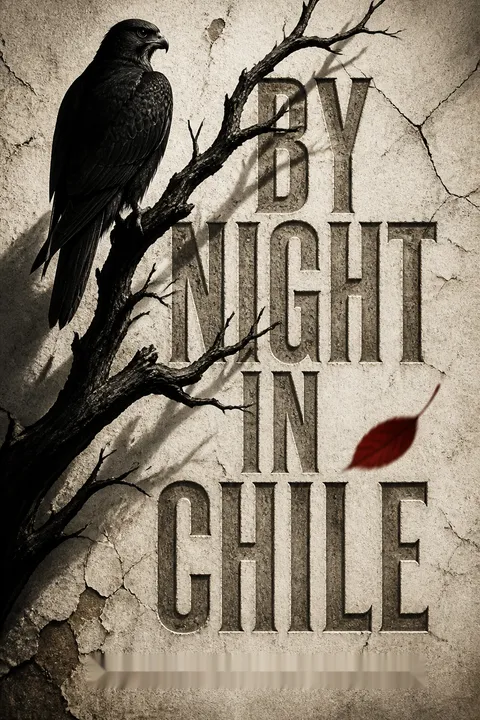
Father Sebastián Urrutia Lacroix, a Chilean priest and literary critic, lies on his deathbed, haunted by the accusations of a mysterious "wizened youth." He is compelled to defend his life, his silences, and his actions, believing that only God can judge the purity of his intentions. As he rummages through his memories, he is determined to clear his name and make sense of the choices that have defined him. The narrative unfolds as a feverish, stream-of-consciousness confession, blending pride, regret, and a desperate need for absolution. Urrutia's voice is at once self-justifying and self-doubting, setting the tone for a story where personal history and national trauma are inseparable, and where the boundaries between guilt and innocence blur in the night.
Farewell's Literary Estate
As a young seminarian, Urrutia is drawn into the world of Chilean letters by Farewell, the nation's preeminent literary critic. Farewell's estate, Là-bas, is a sanctuary for writers, poets, and intellectuals, a place where literature is revered above all else. Urrutia's first visit is marked by awe, anxiety, and a sense of initiation into a rarefied circle. The estate is both a port and a fortress, filled with books, mounted animal heads, and the ghosts of European culture. Farewell's mentorship is tinged with ambiguity—admiration, rivalry, and subtle seduction—foreshadowing the complex entanglements of art, power, and morality that will shape Urrutia's life.
Baptism of Criticism
Urrutia's literary ambitions crystallize as he becomes both a poet and a critic, adopting the pseudonym H. Ibacache for his reviews. He navigates the Santiago literary scene, reviewing and shaping the reputations of Chile's writers, while cultivating his own poetic voice. The duality of his identity—critic and creator, priest and man—mirrors the duplicity of Chilean society itself. Urrutia's rise is marked by a sense of civic virtue and rationality, but also by a growing awareness of the futility and isolation of intellectual life. The purity he seeks in literature becomes increasingly elusive, as the world around him darkens.
Encounter with Neruda
At Là-bas, Urrutia meets Pablo Neruda, Chile's greatest poet, in a moonlit garden. The encounter is both mystical and humbling: Neruda recites verses to the moon, embodying the grandeur and contradictions of Chilean culture. Urrutia is awed, feeling both insignificant and privileged to witness such a moment. The dinner that follows is a microcosm of Chilean literary society—brilliant, competitive, and haunted by the specter of history. The refrain "Sordello, which Sordello?" echoes through the night, symbolizing the endless search for meaning and the impossibility of definitive answers in art and life.
Shadows and Literary Ambition
Urrutia's nights are filled with dreams and hallucinations—conga lines of dead writers, the voice of his superego, and the ever-present shadow of the wizened youth. He is both celebrated and tormented by his role as arbiter of taste, haunted by the knowledge that time will erase all reputations, including his own. The literary world is depicted as a dance of egos, ambitions, and disappointments, set against the backdrop of a country sliding toward crisis. Urrutia's self-image oscillates between pride and self-loathing, as he struggles to reconcile his ideals with the compromises of reality.
The Double Life of Ibacache
Urrutia's adoption of the Ibacache persona allows him to separate his critical and poetic selves, but also deepens his sense of duplicity. He moves through Santiago's intellectual circles, balancing his duties as a priest, critic, and poet. His involvement with Opus Dei and his reputation for moderation mask deeper uncertainties and fears. The narrative explores the ways in which individuals construct and inhabit multiple identities, each with its own set of responsibilities and betrayals. Urrutia's silences—what he chooses not to say or see—become as significant as his words.
European Pilgrimage and Falconry
Sent to Europe to study church preservation, Urrutia embarks on a surreal pilgrimage through Italy, France, Spain, Belgium, and Germany. He encounters priests who use falcons to protect churches from pigeons, each bird a symbol of both violence and grace. The journey is a meditation on tradition, faith, and the absurdity of human endeavor. Urrutia's encounters with his European counterparts reveal the universality of doubt, melancholy, and compromise. The falconry motif becomes a metaphor for the predatory nature of power and the fragility of innocence, foreshadowing the moral predicaments awaiting him in Chile.
Return to a Changing Chile
Urrutia returns to a Chile transformed by political turmoil: Allende's election, social unrest, and the looming specter of military intervention. He seeks solace in the classics, retreating into Greek and Latin literature as the world outside grows increasingly chaotic. The narrative juxtaposes personal and national crises, highlighting the impotence of intellectuals in the face of historical catastrophe. Urrutia's detachment is both a defense mechanism and a form of complicity, as he watches the country slide toward violence and repression, unable or unwilling to intervene.
Allende, Coup, and Junta
The military coup shatters Chilean society, ushering in an era of fear, silence, and moral ambiguity. Urrutia is approached by mysterious intermediaries—Mr. Raef and Mr. Etah—who recruit him to teach Marxism to the new military rulers. The request is framed as a patriotic duty, a service to the nation in its hour of need. Urrutia's acquiescence is marked by rationalization, anxiety, and a sense of inevitability. The narrative exposes the ways in which intellectuals are co-opted by power, their expertise weaponized in the service of oppression.
Lessons for the Generals
Urrutia's secret classes for Pinochet and the Junta are surreal, bureaucratic, and chilling. He teaches the fundamentals of Marxism to men who will use this knowledge to destroy their enemies. The sessions are marked by absurdity—discussions of Marta Harnecker, Mao, and Lenin, interspersed with personal anecdotes and casual cruelty. Urrutia is both teacher and prisoner, his conscience gnawed by doubt. The classes become a symbol of the moral compromises demanded by survival, and the ease with which knowledge can be twisted to serve violence.
The Price of Silence
News of Urrutia's role as the Junta's tutor spreads through Santiago's literary circles, but is met with indifference or resignation. He is neither condemned nor exonerated, left to grapple with his own sense of guilt and betrayal. The silence of his peers mirrors the broader silence of Chilean society under dictatorship—a silence born of fear, exhaustion, and complicity. Urrutia's attempts to rationalize his actions grow increasingly desperate, as he confronts the limits of self-justification and the impossibility of redemption through words alone.
The House of María Canales
In the curfew-bound nights of the dictatorship, writers and artists gather at the home of María Canales, a young writer and gracious hostess. Her house is a sanctuary for the cultural elite, a place of conversation, laughter, and fleeting comfort. Yet beneath the surface, a terrible secret festers: the basement is used by María's husband, a DINA agent, as a site for the interrogation and torture of political prisoners. The guests, including Urrutia, sense something is amiss but choose not to see, their complicity masked by routine and denial.
The Basement's Secret
The truth about the basement emerges gradually, through rumors, confessions, and the testimony of a lost guest who stumbles upon a tortured man. The revelation implicates not only María and her husband, but the entire circle of writers and intellectuals who frequented the house. The narrative confronts the reader with the banality of evil—the ease with which horror becomes normalized, the ways in which art and atrocity coexist. Urrutia's own role is ambiguous: he did not see, but he did not ask; he did not act, but he did not protest. The house becomes a symbol of Chile itself, a nation built on silences and secrets.
Guilt, Memory, and Decay
As democracy returns and the truth about María's house becomes public, the former guests distance themselves, erasing their own involvement. María is left alone, her life and reputation destroyed, her house condemned. Urrutia visits her, seeking understanding or perhaps absolution, but finds only weariness and defiance. The encounter is suffused with sadness, shame, and the recognition that some wounds cannot be healed. The decay of the house mirrors the decay of memory, the erosion of truth, and the persistence of guilt in the national psyche.
The Judas Tree Revelation
Haunted by dreams of the Judas Tree—a symbol of betrayal and death—Urrutia comes to see Chile itself as a tree rooted in violence and denial. The vision is both personal and collective, an acknowledgment of the ways in which individuals and nations betray their own ideals. The falcon, once a symbol of grace, becomes an agent of destruction; the priest, once a guardian of purity, becomes a witness to horror. Urrutia's confession reaches its nadir, as he confronts the limits of forgiveness and the inescapability of history.
Farewell's Death and Legacy
Farewell's death marks the passing of a generation, the dissolution of the literary world that once gave Urrutia meaning. Alone in Farewell's library, Urrutia is confronted by the ghosts of the past—books, memories, and the faces of those he loved and failed. The funeral is discreet, the legacy ambiguous. Urrutia is left to ponder the futility of art, the emptiness of reputation, and the inexorable advance of time. The narrative becomes increasingly fragmented, mirroring the disintegration of self and society.
The Wizened Youth's Accusation
The figure of the wizened youth, once an external accuser, is revealed to be a projection of Urrutia's own conscience. The boundaries between self and other dissolve, as Urrutia recognizes that he is both the accused and the accuser, both the betrayer and the betrayed. The confession becomes a reckoning with the self, a final attempt to make sense of a life marked by compromise, cowardice, and the longing for absolution. The storm of memory and guilt reaches its climax, threatening to engulf all certainties.
The Storm of Shit
In the final moments of his confession, Urrutia is overwhelmed by a vision of filth, chaos, and dissolution—the "storm of shit" that signals the collapse of all illusions. The narrative ends in ambiguity and despair, with no easy answers or redemption. The personal and the political, the aesthetic and the ethical, are inextricably entwined. Urrutia's last words are a testament to the impossibility of escaping history, the futility of self-justification, and the enduring power of literature to bear witness to the darkness of the night.
Analysis
By Night in Chile is a devastating meditation on complicity, memory, and the moral responsibilities of intellectuals under authoritarianism. Through the fevered confession of Father Urrutia, Bolaño exposes the ways in which art, faith, and culture can be co-opted by power, and how the pursuit of purity or detachment often leads to silence in the face of atrocity. The novel interrogates the boundaries between guilt and innocence, action and inaction, self and other—suggesting that the true terror lies in recognizing oneself as both victim and perpetrator. Bolaño's use of stream-of-consciousness, literary allusion, and dark humor creates a narrative that is at once intimate and universal, implicating not only Chile but all societies that prefer comfort to truth. The lessons of the book are stark: history cannot be escaped, silences are never innocent, and the storm of shit that follows betrayal and denial is both personal and collective. In the end, By Night in Chile is a warning and a lament—a call to confront the darkness within and without, and to bear witness, however imperfectly, to the night.
Review Summary
By Night in Chile receives high praise for its political satire and stylistic brilliance. Written as a single-paragraph deathbed confession by Father Sebastian Urrutia Lacroix, a priest, poet, and critic, the novella explores complicity during Pinochet's dictatorship. Reviewers admire Bolaño's poetic prose, dark humor, and use of metaphor—particularly falcons hunting pigeons. The narrative examines moral silence among Chilean intellectuals who socialized while torture occurred beneath them. Most readers find it haunting and powerful, though some struggle with its stream-of-consciousness style and dense literary references. The book demonstrates Bolaño's mastery in condensing political critique into compact, fever-dream prose.
People Also Read


Characters
Sebastián Urrutia Lacroix
Urrutia is the novel's narrator and protagonist, a priest whose life is defined by his love of literature and his quest for purity—both spiritual and aesthetic. His relationships with mentors, peers, and the state are marked by ambiguity, pride, and self-doubt. Psychoanalytically, he embodies the divided self: torn between duty and desire, faith and skepticism, action and passivity. His development is a descent from youthful idealism to weary complicity, culminating in a deathbed confession that is both an act of self-defense and a plea for forgiveness. Urrutia's silences are as significant as his words, revealing the deep psychological cost of living through—and failing to resist—historical catastrophe.
Farewell
Farewell is the grand old man of Chilean letters, a figure of authority, erudition, and subtle menace. He introduces Urrutia to the world of criticism, shaping his ambitions and worldview. Farewell's estate, Là-bas, is a microcosm of Europeanized Chilean culture—refined, insular, and ultimately doomed. His relationship with Urrutia is complex: part mentorship, part rivalry, tinged with homoerotic undertones and power dynamics. Farewell's decline and death symbolize the end of an era, the collapse of the old order, and the failure of art to shield its practitioners from the violence of history.
The Wizened Youth
The wizened youth is both a real antagonist and a psychological projection—a figure who confronts Urrutia with the moral consequences of his actions and inactions. He represents the voice of the next generation, the victims of repression, and the part of Urrutia that cannot be silenced by rationalization. As the narrative progresses, it becomes clear that the youth is a mirror of Urrutia himself, embodying his guilt, self-loathing, and longing for absolution. The confrontation between the two is the novel's central psychological drama.
Pablo Neruda
Neruda appears as a larger-than-life presence, embodying the grandeur, contradictions, and compromises of Chilean culture. His interactions with Urrutia and Farewell are marked by wit, rivalry, and a sense of historical destiny. Neruda's poetry and persona haunt the narrative, serving as both inspiration and reproach. His death marks the end of an era, and his legacy is contested by those who survive him.
María Canales
María is a young writer whose house becomes a gathering place for artists and intellectuals during the dictatorship. Outwardly gracious and cultured, she is complicit in her husband's crimes, maintaining a façade of normalcy while horror unfolds beneath her feet. Her psychological complexity lies in her ability to compartmentalize, to pursue art and sociability while ignoring—or rationalizing—the suffering of others. Her eventual isolation and ruin reflect the costs of denial and the impossibility of escaping the consequences of complicity.
Jimmy Thompson
Jimmy is María's husband, a North American who serves as an agent of the Chilean secret police. He is the architect of the house's basement horrors, a figure of cold efficiency and brutality. His relationship with María is marked by love, secrecy, and mutual dependence. Jimmy's actions are the dark heart of the novel, exposing the ways in which ordinary life and atrocity coexist, and how personal relationships are corrupted by power.
Mr. Raef and Mr. Etah
These two functionaries recruit Urrutia to teach Marxism to the Junta, embodying the bureaucratic banality of evil. They are efficient, polite, and utterly lacking in empathy or imagination. Their presence in the narrative highlights the mechanisms by which intellectuals are co-opted and compromised, and the ways in which ideology is enforced through seemingly innocuous channels.
Fr. Antonio
Fr. Antonio is a Spanish priest encountered by Urrutia during his European pilgrimage. His doubts about the morality of using falcons to kill pigeons—symbols of the Holy Spirit—mirror Urrutia's own moral uncertainties. Antonio's death and subsequent appearance in Urrutia's dreams serve as a catalyst for self-examination and the recognition of betrayal.
Marta Harnecker
Though she never appears directly, Harnecker's writings on Marxism become the focus of Urrutia's lessons with the Junta. She is discussed, dissected, and objectified by the generals, serving as a symbol of the intellectual currents that both threaten and fascinate the regime. Her presence in the narrative underscores the ways in which ideas are appropriated and distorted by power.
The Chilean Junta (Pinochet, Leigh, Merino, Mendoza)
The generals are Urrutia's secret pupils, men who wield absolute authority and demand the complicity of intellectuals. Their interactions with Urrutia are marked by a mixture of curiosity, condescension, and menace. They are both individuals and symbols—representing the forces that shape, corrupt, and ultimately destroy the world of art and letters.
Plot Devices
Stream-of-Consciousness Confession
The novel unfolds as a single, unbroken monologue, blending memory, fantasy, and rationalization. This structure immerses the reader in Urrutia's psyche, exposing the contradictions, evasions, and self-justifications that define his character. The lack of clear boundaries between past and present, self and other, mirrors the moral ambiguity of the story and the historical period it depicts.
Doubling and Mirrors
The motif of doubling—Urrutia/Ibacache, Urrutia/the wizened youth, critic/poet, priest/citizen—recurs throughout the narrative. Characters serve as mirrors for one another, reflecting and distorting their desires, fears, and failures. This device deepens the psychological complexity of the novel, highlighting the ways in which individuals evade responsibility by splitting themselves into multiple selves.
Literary Allusion and Intertextuality
The narrative is saturated with references to classical, European, and Chilean literature, as well as to historical figures and events. These allusions serve both as a shield against reality and as a means of interrogating it. The refrain "Sordello, which Sordello?" encapsulates the endless, futile search for definitive answers in art and life.
Foreshadowing and Symbolism
The recurring images of falcons, pigeons, and the Judas Tree function as symbols of innocence, predation, and betrayal. The house of María Canales, with its hidden basement, is a microcosm of Chilean society—outwardly civilized, inwardly corrupt. The narrative's use of foreshadowing—dreams, visions, and premonitions—creates a sense of inevitability, as if the characters are trapped by history and their own choices.
Irony and Black Humor
The novel's tone oscillates between tragedy and farce, exposing the absurdities of intellectual life under dictatorship. The secret Marxism lessons, the literary soirées, and the bureaucratic rituals of repression are depicted with a mordant wit that underscores the moral blindness of the characters.
Download PDF
Download EPUB
.epub digital book format is ideal for reading ebooks on phones, tablets, and e-readers.








































