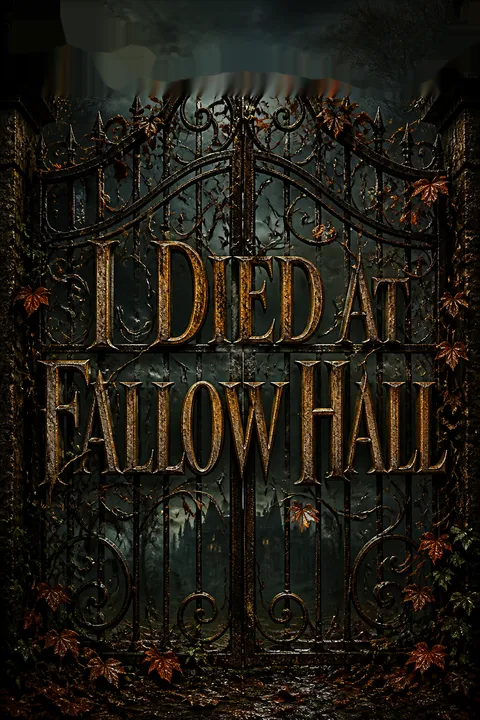

Plot Summary
Autumn's Burning Arrival
Upper Magna in autumn is a landscape ablaze with color, the air crisp and tinged with woodsmoke. Anna Deerin, the new gardener at Fallow Cottage, surveys the land with a sense of awe and purpose. The garden, once wild and neglected, is slowly being restored under her care. Anna's life is marked by solitude and hard work, her body bearing the marks of her labor. The village is a tapestry of routines and relationships, and Anna, though an outsider, is beginning to find her place. The season's end is both a literal and metaphorical cleansing, setting the stage for the secrets that lie beneath the surface.
The Garden's Resurrection
Anna's work in the garden is both physical and spiritual, a process of scraping away the dead to make room for new growth. The cottage and its grounds, once abandoned, are slowly coming back to life. Anna's interactions at the farmers' market reveal her careful navigation of village dynamics, always presenting a pleasing face while keeping her true self guarded. The garden becomes a symbol of her own attempt at renewal, a place where she can shed the expectations of her past and cultivate something of her own. Yet, beneath the surface, the land holds secrets that are about to be unearthed.
Market Faces and Newcomers
At the market, Anna is both admired and scrutinized. She sells her produce and flowers, exchanges pleasantries, and observes the subtle hierarchies and rituals of village life. The arrival of Hitesh Mistry, a new detective with a London accent, disrupts the familiar rhythms. He is marked as an outsider, much like Anna, and their brief interaction hints at a connection. The market is a stage, and Anna is adept at playing her part, but the presence of strangers—both welcome and unwelcome—signals that change is coming to Upper Magna.
Unearthing the Past
While working in the garden, Anna uncovers bones—first fragments, then the unmistakable shape of a human skull. The shock is visceral, the rain washing away the earth to reveal the past. Anna's reaction is a mix of horror, curiosity, and a strange sense of kinship with the unknown woman. The discovery brings the police to her door, and the quiet rhythms of her life are shattered. The garden, once a place of renewal, becomes a crime scene, and Anna is forced to confront the reality that the land she loves is also a grave.
Bones in the Rain
The police investigation begins, led by Hitesh Mistry. Anna is questioned, her every action scrutinized. The remains are exhumed with clinical detachment, but Anna cannot help but feel the weight of the life that was lost. The forensic details—gunshot wound, age, gender—begin to sketch the outline of a tragedy. The villagers speculate and gossip, but no one seems to know who the woman was. Anna is left with a sense of responsibility, a need to remember and honor the dead, even as she is haunted by the knowledge that violence can erupt anywhere, even in the most beautiful places.
The Detective Arrives
Hitesh Mistry, newly arrived from London, is both observer and participant in the unfolding mystery. He is marked by his difference—his ethnicity, his urban background, his grief for his late mother. Hitesh's investigation is methodical, but he is also drawn into the emotional currents of the village. He interviews villagers, navigates the politics of the Hall, and forms a tentative bond with Anna. The case becomes personal, a way for Hitesh to grapple with his own losses and search for meaning in a place that is both alien and strangely familiar.
Echoes of 1967
The narrative shifts between present-day investigation and the voices of the past, particularly the year 1967. Through diary-like entries, we glimpse the life of Catherine Blackwaite, a young woman chafing against the constraints of her family and the Hall. Her longing for freedom, her secret love affair, and her fraught relationship with her father and brother are revealed in fragments. The past is not dead; it reverberates through the land and the people who inhabit it, shaping the present in ways that are only beginning to be understood.
The Village Watches
As the investigation continues, the villagers of Upper Magna become both witnesses and suspects. The bridge club, the church, the market—all are sites of gossip, memory, and denial. Vulnerable women—single mothers, cleaners, addicts—are remembered only in passing, their disappearances rationalized or forgotten. The village's surface harmony masks deeper currents of exclusion and violence. Anna and Hitesh both sense that the truth is known, in some form, but has been collectively buried. The search for the woman's identity becomes a search for the village's conscience.
The Body's Identity
Hitesh and Anna pursue leads: missing persons, old staff records, parish memories. Each possibility—Annette Waring, Elizabeth Millhaven, Catherine Blackwaite—is investigated and, for a time, believed. DNA tests, family histories, and local legends all offer clues but also dead ends. The process is painstaking and often frustrating, as the woman's identity remains elusive. Anna becomes obsessed, feeling a personal responsibility to give the dead woman her name. The investigation is as much about the living—what they choose to remember or forget—as it is about the dead.
Night Terrors and Threats
Anna is targeted in the night—her cottage attacked, her sense of safety shattered. The violence is both a warning and a reminder of her isolation. Hitesh responds with concern and anger, but Anna refuses to be driven from her home. The attack exposes the fragility of the boundaries between safety and danger, between past and present. It also deepens the connection between Anna and Hitesh, as they navigate their own fears and desires. The threat lingers, a shadow over the investigation and their growing intimacy.
The Hall's Secrets
Fallow Hall is both a sanctuary and a prison, its history a tapestry of privilege, sacrifice, and hidden crimes. Lord Blackwaite, the current master, is a figure of authority and tradition, but his past is marked by loss and secrets. The Hall's trust, its finances, and its future are all in question. Anna is drawn into the inner workings of the estate, offered a role that is both an honor and a burden. The Hall's grandeur is inseparable from its history of exclusion and violence, and Anna must decide what it means to be its caretaker.
Women Lost and Forgotten
The investigation uncovers a pattern: women on the margins—cleaners, lovers, daughters—are easily lost, their stories erased or rewritten. Annette Waring's disappearance is emblematic, her life reduced to a police file and a brother's grief. The village's collective amnesia is both a defense and an indictment. Anna is haunted by these women, determined not to let the Fallow sister be forgotten. The search for justice becomes a reckoning with the ways society fails its most vulnerable members.
The Ghosts of Fallow
The Hall is alive with ghosts—literal and metaphorical. Local legends of star-crossed lovers and tragic deaths are revealed to be distorted echoes of real events. The past seeps into the present, shaping the lives of those who remain. Anna dreams of the dead woman, feels her presence in the garden, and is driven to uncover the truth. The boundaries between history and myth, between justice and vengeance, blur. The land itself becomes a repository of memory, bearing silent witness to all that has transpired.
The Winter Gala
The Hall's winter gala is a spectacle of tradition and community, a moment when the village comes together in celebration and display. Anna, now both insider and outsider, navigates the event with grace and anxiety. The gathering is a microcosm of the village's hierarchies and tensions. Old wounds are reopened, secrets threaten to surface, and violence erupts. The gala becomes the crucible in which the truth is finally forced into the open, with consequences that will reverberate through all their lives.
Revelations and Violence
The investigation reaches its climax as Anna and Hitesh piece together the final clues. The true history of the Hall, the Blackwaite family, and the woman in the garden is revealed: Catherine Blackwaite, murdered by her own father to protect a stolen inheritance. Edmund, the current Lord Blackwaite, is not a Blackwaite by blood but by choice and duty. The confrontation turns violent, leaving Hitesh gravely injured and Edmund dead. The cost of truth is high, and the legacy of violence cannot be undone.
The Truth of Bloodlines
In the aftermath, Anna and Hitesh grapple with the meaning of family, duty, and belonging. The Hall's history is rewritten, its future uncertain. Anna is offered the role of caretaker, not by blood but by understanding and commitment. The village must reckon with its past, its complicity, and its capacity for change. The dead are mourned, but their stories are finally told. Anna and Hitesh, both marked by loss and survival, must decide what kind of life they will build together.
The Cost of Inheritance
The consequences of the past are inescapable. Anna and Hitesh both bear scars—physical, emotional, and moral. The Hall, the garden, and the village are changed by what has been revealed. The work of repair is ongoing, and the future is uncertain. Yet, in the act of naming the dead, of telling the truth, there is a measure of redemption. Anna's choice to stay, to care for the land and its people, is both an act of defiance and of hope.
Return and Renewal
As the seasons turn, Anna and Hitesh find a fragile peace. The Hall becomes a place of community and service, its history acknowledged and its future reimagined. The garden blooms again, wild and abundant. Anna, once alone, is now rooted in a place and a purpose of her own choosing. The story ends with the promise of return—not to the past, but to a life remade through courage, love, and the willingness to face the truth.
Analysis
A modern gothic of inheritance, violence, and selfhood"I Died at Fallow Hall" is a layered, psychologically astute novel that interrogates the costs of inheritance—of land, of trauma, of gendered expectations. Through its dual timelines and interwoven narratives, it explores how the past persists in the present, shaping identities and destinies. The novel is a meditation on the ways women are erased, their stories buried beneath the weight of tradition and silence, and the necessity of naming and remembering the lost. Anna's journey from performance to authenticity, from isolation to connection, is both personal and political—a reclamation of agency in a world that demands pleasing and compliance. Hitesh's parallel arc, as an outsider seeking justice and belonging, underscores the novel's critique of exclusion and the longing for home. The garden and the Hall, as living symbols, remind us that renewal is possible, but only through the hard work of truth-telling and repair. Ultimately, the novel asks what it means to inherit, to belong, and to choose—insisting that the future can be remade, not by blood, but by understanding, courage, and the willingness to return, again and again, to the work of care.
Review Summary
I Died at Fallow Hall is generally well-received, averaging 3.72/5 across 725 reviews. Readers praise its atmospheric Cotswolds setting, strong character development, and thoughtful exploration of themes including gender, race, class, and belonging. Many appreciate how it subverts traditional cosy mystery expectations, offering something more literary and reflective. Common criticisms include uneven pacing, a divisive ending, and occasionally on-the-nose characterisation. The dual timeline and multiple POVs are largely celebrated, with the romance between Anna and Hitesh proving as compelling as the central mystery.
Characters
Anna Deerin
Anna is the emotional and moral center of the novel, a woman who has fled a life of performance and pleasing others to find solitude and purpose in the garden at Fallow Cottage. Her journey is one of self-discovery, as she peels back the layers of her own identity and the land's history. Anna is marked by resilience, intelligence, and a fierce sense of justice. Her relationships—with the villagers, with Hitesh, with the dead woman—are shaped by empathy and a refusal to look away from pain. Anna's development is a movement from isolation to connection, from silence to voice, as she claims her place in the world on her own terms.
Hitesh Mistry
Hitesh is a man caught between worlds: urban and rural, British and Indian, past and present. His arrival in Upper Magna is motivated by a desire for change after the death of his mother, but he finds himself drawn into the village's secrets and his own unresolved grief. Hitesh is methodical, compassionate, and haunted by the limits of justice. His relationship with Anna is both a source of strength and vulnerability, challenging his assumptions about power, duty, and love. Over the course of the novel, Hitesh is transformed by loss, violence, and the possibility of renewal.
Lord Edmund Blackwaite
Edmund is the master of Fallow Hall, a man whose life is defined by duty, sacrifice, and deception. He is not a Blackwaite by blood but by inheritance, having taken on the identity of the true heir's gardener father after the war. Edmund's love for the Hall is genuine, but it leads him to justify terrible acts, including complicity in his sister Catherine's murder. He is both sympathetic and monstrous, a figure shaped by history and the weight of expectation. His downfall is the inevitable result of secrets too long kept.
Catherine Blackwaite
Catherine's voice echoes through the novel, her diary entries and memories revealing a young woman yearning for freedom and self-determination. Her tragic fate—murdered by her father to protect a stolen legacy—embodies the novel's themes of female erasure, familial violence, and the cost of inheritance. Catherine is both a ghost and a symbol, her story finally brought to light by Anna's determination.
Reverend James Watts
Watts is a fixture of Upper Magna, a man whose life is devoted to service and care. He is both a source of comfort and a keeper of secrets, bound by the confessional seal even as he struggles with the weight of what he knows. Watts's friendship with Hitesh and Anna is a lifeline, offering wisdom, humor, and a reminder of the complexities of forgiveness and justice.
Paul Wolsey
Wolsey is a member of the Hall's trust, a man whose success is built on care homes and local influence. He is both charming and cynical, embodying the village's capacity for both kindness and self-interest. Wolsey's interactions with Hitesh and Anna reveal the limits of respectability and the ways in which power is wielded and justified.
Eloise Fitzhugh
Eloise is a graceful, empathetic presence, deeply connected to the Hall and its history. Her family's long-standing ties to Upper Magna make her both a source of information and a symbol of continuity. Eloise's own pain—her son's violence, her memories of lost women—mirrors the novel's exploration of generational trauma and the costs of silence.
Annette Waring
Annette's disappearance is a thread that runs through the investigation, her life and death emblematic of the many women lost to history. Her brother's grief and the village's indifference highlight the novel's critique of social neglect and the ease with which the vulnerable are erased.
Darshan Mistry
Hitesh's father is a man shaped by tradition, loss, and pride. His relationship with Hitesh is fraught with misunderstanding and love, a microcosm of the novel's themes of inheritance, duty, and the difficulty of expressing emotion. Darshan's gradual acceptance of his son's choices is a quiet but significant arc.
Keith McCarthy
Keith is a minor but pivotal character, whose jealousy and anger lead him to attack Anna's cottage. His actions are a reminder of the dangers of wounded pride and the ways in which violence can erupt from unexpected quarters.
Plot Devices
Dual Timelines and Interwoven Narratives
The novel employs a dual timeline structure, alternating between Anna and Hitesh's present-day investigation and the voices of the past, particularly Catherine Blackwaite's diary-like entries from 1967. This structure allows the reader to piece together the mystery alongside the characters, experiencing both the immediacy of the investigation and the emotional resonance of the past. The interweaving of timelines creates suspense, deepens character development, and underscores the novel's themes of memory, inheritance, and the persistence of trauma.
Unreliable Memory and Community Silence
The plot is driven by the unreliability of memory—both personal and collective. Villagers remember and forget, gossip and deny, shaping the narrative through what is spoken and what is left unsaid. The investigation is hampered by gaps in records, lost documents, and the reluctance of witnesses to confront uncomfortable truths. This device highlights the ways in which communities protect themselves from accountability and the difficulty of achieving justice for the marginalized.
Symbolism of the Garden and the Hall
The garden and Fallow Hall are more than settings; they are symbols of renewal, decay, and the weight of history. Anna's work in the garden mirrors her own journey of self-discovery and healing, while the Hall represents both the grandeur and the rot of inherited privilege. The physical act of digging—unearthing bones, planting seeds—becomes a metaphor for the search for truth and the possibility of transformation.
Foreshadowing and Red Herrings
The novel uses foreshadowing to build suspense—dreams, local legends, and subtle details hint at the truth long before it is revealed. Red herrings abound: multiple possible identities for the dead woman, false leads, and the misdirection of suspicion onto characters like Keith McCarthy. These devices keep the reader engaged and mirror the characters' own uncertainty and doubt.
Psychoanalytic Motifs
The narrative is rich with psychoanalytic motifs: Anna's struggle with the need to please, the male gaze, the inheritance of trauma, and the search for authenticity. Mirrors, masks, and the act of watching oneself are recurring images, reflecting the characters' internal conflicts and the societal pressures that shape them.
Download PDF
Download EPUB
.epub digital book format is ideal for reading ebooks on phones, tablets, and e-readers.








































