
Plot Summary
Awakening in the Void
Several families and individuals wake in their caravans, expecting a normal morning at a Swedish campsite, only to discover that everything beyond their small cluster—other campers, buildings, even the sun—has vanished. Instead, they are surrounded by an endless, perfectly manicured field of grass under a featureless blue sky. Panic, disbelief, and confusion ripple through the group as they realize they are isolated in a place that feels both real and utterly impossible. The silence is oppressive, and the absence of familiar sounds and sights is deeply unsettling. Each person's first reactions reveal their underlying fears, relationships, and the cracks in their facades, setting the stage for the psychological unraveling to come.
The Vanished World
As the shock settles, the survivors—families, couples, and a few pets—venture outside, confirming that their entire world has been reduced to four caravans, four cars, and a handful of people. The grass is real, but too perfect, and the sky is bright but sunless. Attempts to use technology—phones, GPS, radios—yield only confusion: the GPS claims they are where they should be, but the landscape says otherwise. The sun is missing, replaced by a uniform, artificial light. The group's sense of reality is shaken, and the first seeds of dread are sown as they realize there is no way to contact the outside world or even to orient themselves.
Gathering the Stranded
The disparate group—ranging from a model family, a grocer's family, an elderly couple, two old farmers, and a blustering retiree and his wife—begin to interact, drawn together by necessity. Old habits and social roles persist: some try to take charge, others seek comfort in routine, and the children, Molly and Emil, begin to play. The group debates what has happened: have they been moved, or has the world been erased? Tensions simmer, especially between Peter and Isabelle, whose marriage is already fraying. The animals, Benny the dog and Maud the cat, sense the strangeness in their own way, their instincts unsettled by the lack of familiar smells and sounds.
The Rules of Emptiness
Attempts to leave the field—by car, on foot, or by following the GPS—lead only to more grass, more emptiness, and a growing sense of futility. The GPS sometimes shows familiar maps, but the landscape never changes. The sun never rises or sets. The group's efforts to find food, water, or a way out are met with frustration. The only constants are the field, the sky, and themselves. The emptiness begins to work on their minds, amplifying their flaws, fears, and resentments. The children's games take on a darker edge, and the adults' conversations circle endlessly around the inexplicable.
Searching for Meaning
As hours pass, the survivors' attempts to impose order—by organizing supplies, searching for landmarks, or building a phone tower—are undermined by the surreal nature of their predicament. Old wounds and secrets surface: Peter's abusive childhood, Isabelle's struggles with motherhood, Carina's self-loathing, Donald's fear of senility, and the farmers' quiet love. The group discovers crosses painted in blood on each caravan, deepening the sense of being marked or chosen. Theories abound—divine punishment, alien abduction, mass psychosis—but none satisfy. The emptiness becomes a mirror, reflecting each person's deepest flaws and regrets.
The Sunless Sky
The missing sun becomes a symbol of their dislocation and loss. Without its presence, time loses meaning, and the group's sense of reality frays further. The sky's unchanging blue is both beautiful and oppressive, a constant reminder that the rules of the world no longer apply. The children, especially Molly, seem oddly attuned to the new reality, their play increasingly strange and unsettling. The adults, meanwhile, struggle to maintain hope, clinging to routines and memories even as the world they knew slips further away.
Fault Lines and Flaws
The emptiness acts as a crucible, forcing each character to confront their past. Peter relives his father's violence and his own failures; Isabelle is haunted by her abandonment of Molly; Carina faces the self-destructive choices of her youth; Donald is tormented by the memory of his father's gruesome death; Lennart and Olof reflect on lost loves and the comfort of companionship. The children's innocence is revealed to be a mask for something more primal and unsettling. The group's cohesion is tested as old resentments and new fears collide.
The Children's Games
The children, initially a source of hope and normalcy, begin to act in ways that disturb the adults. Molly, in particular, exerts a strange influence over Emil and the environment, her games echoing the group's fears and hinting at a deeper connection to the field. The children's actions—such as sabotaging the caravans' gas supplies—have real consequences, and their play blurs the line between imagination and reality. The adults, distracted by their own struggles, fail to notice the growing danger.
The Marked and the Markers
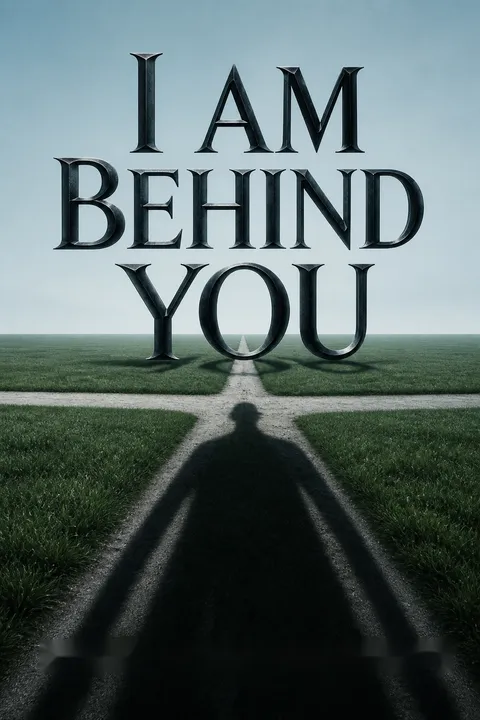
The discovery of blood-red crosses on each caravan, and the realization that they are at the intersection of two ancient tracks, heightens the sense of being marked for something. The group debates the meaning of the marks: are they targets, warnings, or invitations? The appearance of strange figures—white, featureless, and shifting in form—suggests that the field is not as empty as it seems. These figures, seen differently by each person, embody their fears, desires, and memories, and their presence signals a shift from passive waiting to active threat.
The First Forays
Attempts to explore the field—by car, on foot, or by following the tracks—lead to encounters with the inexplicable. The GPS maps shift, showing places from the characters' pasts; the radio plays only old Swedish pop songs; the landscape warps to reflect personal traumas. Some see lost loved ones, others confront monstrous versions of their fears. The field becomes a psychological maze, each journey outward a journey inward. The group's unity fractures as individuals are drawn toward their own obsessions and destinies.
The Border and the Pull
A black wall of darkness appears on the horizon, exerting a magnetic pull on some of the survivors. The rain that falls from the darkness is corrosive, burning flesh and dissolving matter. The group is forced to take shelter, but the rain is only a prelude to a greater threat: the approach of the white figures and the emergence of burnt, screaming creatures who seek blood. The survivors realize that the field is not a place of safety, but a crossroads—a place of judgment, transformation, or erasure.
The Blood and the Rain
As the rain falls and the burnt creatures attack, the survivors are forced to confront the reality of their situation. Isabelle, driven by guilt and hunger, mutilates herself in a desperate attempt to appease the white figures. Molly reveals her true nature as something inhuman, a vessel for the field's hunger. Emil is gravely injured in a tragic accident, and Carina is compelled to follow the tiger of her nightmares into the darkness. The group's numbers dwindle as individuals are claimed by the field, the rain, or their own demons.
The Unraveling
In the aftermath of the rain and the attack, the survivors are left broken and diminished. Some, like Peter and Carina, are drawn into the darkness at the edge of the field, seeking oblivion or redemption. Others, like Lennart and Olof, find solace in each other's company, even as the world collapses around them. The children, now revealed as something other than human, continue their play, indifferent to the suffering they have caused. The field is littered with the remnants of lives, loves, and dreams.
The Crossing of Paths
Those who remain are compelled to follow the tracks into the darkness, each for their own reasons. Carina follows the tiger, seeking to atone for her past and save her son. Peter, emptied of hope, surrenders to the pull of the void. Majvor, abandoned by Donald, seeks meaning in the darkness and encounters the ghostly figure of Peter Himmelstrand, who offers her a gun and a choice. The darkness is both a destination and a test, a place where the boundaries between self and other, past and present, are dissolved.
The Darkness Beckons
Inside the darkness, the survivors confront their deepest fears and desires. Peter finds himself in a place of memory and longing, embraced by the darkness he once feared. Carina faces the tiger and the truth of her own self-destruction. Majvor, armed with the revolver, confronts her fantasy of Jimmy Stewart and discovers that what she truly desires is not love, but agency. The darkness is not an end, but a crucible—a place where the self is stripped bare and remade, or erased.
The End of Pretenses
As the darkness closes in, the survivors' illusions are shattered. The field is revealed as a place of judgment, a liminal space where the flaws and failures of each person are laid bare. The children, now fully inhuman, continue their movement, indifferent to the suffering around them. The animals, Benny and Maud, find comfort in each other, adapting to the new reality. The last connections between the survivors are tested and, in some cases, broken. The world contracts, the light fades, and only the essential remains.
The Last Dance
As the darkness rises and the world shrinks, Lennart and Olof, the last of the original group, share a final moment of intimacy and acceptance. They dance together to the fading strains of an old song, embracing the end with grace and courage. The field, once endless, is now a small island in a sea of darkness. The story closes on the image of two men dancing, while the music still goes on, as the light finally goes out.
The Light Goes Out
In the final moments, the field is swallowed by darkness, and all that remains is silence. The survivors have been judged, transformed, or erased, their stories woven into the fabric of the void. The flaws that defined them—pride, guilt, fear, longing—have reached their critical mass and become something else. The light is switched off, and the story ends, leaving only the memory of what was, and the question of what, if anything, comes next.
Analysis
I Am Behind You is a haunting meditation on the nature of human flaws, the inescapability of trauma, and the search for meaning in a world stripped of its familiar structures. Lindqvist uses the device of the endless field—a liminal, purgatorial space—to force his characters into confrontation with their deepest fears, regrets, and desires. The novel explores how personal flaws, left unexamined, can reach a critical mass and become destructive, not only to the self but to others. The supernatural elements—the white figures, the corrosive rain, the inhuman children—are less monsters than mirrors, reflecting the characters' inner lives and the consequences of their choices. The story resists easy answers: there is no clear villain, no simple redemption, and no return to the world as it was. Instead, Lindqvist offers a vision of judgment that is both personal and collective, where survival depends not on strength or cleverness, but on the willingness to face oneself honestly. The novel's final moments—two men dancing as the darkness closes in—suggest that even in the face of annihilation, love, acceptance, and connection are possible. I Am Behind You is a powerful, unsettling exploration of what it means to be human when everything else is taken away.
Review Summary
Characters
Peter Sundberg
Peter is a former footballer whose life has been shaped by trauma: an abusive father, a failed marriage, and a constant sense of inadequacy. He is both charismatic and deeply insecure, using physical prowess and charm to mask his inner emptiness. His relationship with Isabelle is fraught with resentment and longing for freedom. As the field strips away the trappings of normal life, Peter is forced to confront the violence and fear that have always driven him. His journey is one of reluctant self-examination, culminating in a surrender to the darkness that both terrifies and seduces him. Peter's arc is a study in the limits of willpower and the inevitability of reckoning with one's past.
Isabelle Sundberg
Isabelle is a former model whose life is defined by surface: beauty, status, and the relentless pursuit of validation. Beneath her polished exterior lies a profound emptiness, a terror of meaninglessness that she tries to fill with food, pills, and attention. Her relationship with her daughter Molly is fraught with guilt and ambivalence, haunted by a moment of abandonment that changed them both. In the field, Isabelle's hunger becomes literal and metaphysical, driving her to self-destruction and ultimately transformation into something inhuman. Her arc is a meditation on the costs of living for appearances and the hunger that can never be satisfied.
Molly Sundberg
Molly is Peter and Isabelle's daughter, a six-year-old whose innocence is a mask for something ancient and predatory. After being abandoned in a tunnel as a toddler, she is changed—calm, authoritative, and disturbingly self-possessed. In the field, Molly becomes a focal point for the supernatural forces at work, her games echoing the group's fears and shaping reality itself. She is both victim and perpetrator, a "fountain of blood in the form of a girl," embodying the field's hunger and indifference. Molly's presence blurs the line between child and monster, innocence and malevolence.
Carina Larsson
Carina is Stefan's wife and Emil's mother, a woman marked by self-loathing and a history of self-destruction. Her past is filled with addiction, violence, and shame, symbolized by the "Heil Hitler" tattoos she tries to hide. In the field, Carina's maternal instincts clash with her sense of unworthiness, and she is haunted by the fear that her flaws have doomed her family. Her journey is one of painful self-recognition, culminating in a sacrificial quest to save her son. Carina's arc explores the possibility of redemption and the cost of carrying one's own darkness.
Stefan Larsson
Stefan is a grocer, husband, and father, defined by his need for control and his fear of loss. His life is built on routines and small comforts, and the field's chaos is an existential threat. Stefan's love for Carina and Emil is genuine, but he is often paralyzed by indecision and self-doubt. The field forces him to confront his inability to protect those he loves, and his journey is one of reluctant courage and acceptance of powerlessness. Stefan's arc is a meditation on the limits of order and the necessity of letting go.
Emil Larsson
Emil is Carina and Stefan's young son, a sensitive and trusting child whose games and stories become prophetic in the field. He is both a victim and a guide, his injury and near-death experience serving as a catalyst for his parents' journeys. Emil's innocence is both his strength and his vulnerability, and his fate is intertwined with the field's demand for blood and transformation. Emil's arc is a poignant exploration of childhood's fragility and the hope that persists even in the face of annihilation.
Donald Gustafsson
Donald is a retired businessman, obsessed with control, status, and the memory of his father's gruesome death. His bluster masks a deep fear of senility and irrelevance. In the field, Donald's aggression and paranoia escalate, leading to violence and ultimately his own destruction. His relationship with Majvor is transactional and loveless, and his inability to adapt to the new reality makes him both a threat and a tragic figure. Donald's arc is a cautionary tale about the dangers of pride, denial, and the refusal to change.
Majvor Gustafsson
Majvor is Donald's wife, a woman who has spent her life caring for others and suppressing her own desires. Her faith is a source of comfort, but in the field, she is forced to confront the absence of God and the need to act for herself. Her fantasy of Jimmy Stewart becomes a vehicle for self-discovery, and her eventual act of violence against Donald is both liberation and tragedy. Majvor's arc is a meditation on the costs of self-sacrifice and the possibility of reclaiming one's own story.
Lennart and Olof
Lennart and Olof are two elderly farmers whose partnership is both practical and deeply affectionate. Their relationship, forged in the aftermath of abandonment by their wives, is a source of quiet strength and comfort. In the field, they are the most adaptable, finding solace in routine and each other. Their attempts to grow food, care for the animals, and maintain dignity in the face of absurdity are acts of resistance. Their final dance as the darkness closes in is a testament to the power of love and acceptance in the face of oblivion.
Benny and Maud
Benny the beagle and Maud the cat provide an animal's perspective on the field: confusion, fear, and the search for comfort. Their instincts guide them through the strangeness, and their eventual alliance is a small but significant act of adaptation. In a world where human rules no longer apply, the animals' ability to find companionship and sustenance is a quiet affirmation of life's persistence.
Plot Devices
The Field as Liminal Space
The endless field is both a literal and symbolic space, stripped of landmarks, time, and the sun. It functions as a purgatory or crossroads, where the characters' flaws, traumas, and desires are magnified and tested. The field's emptiness is not neutral; it is an active force, shaping reality to reflect the inner lives of its inhabitants. The absence of the sun, the unchanging sky, and the perfect grass all serve to destabilize the survivors' sense of reality and self.
The Marked Crossroads
The blood-red crosses on the caravans and the intersection of ancient tracks mark the survivors as chosen or condemned. These symbols evoke themes of sacrifice, destiny, and the inescapability of judgment. The crossroads is a place of decision, transformation, and erasure, where the characters must confront the consequences of their actions and the weight of their flaws.
The White Figures and Burnt Creatures
The white, featureless figures and the burnt, screaming creatures are both literal threats and psychological projections. They embody the survivors' fears, regrets, and the field's insatiable hunger for blood and transformation. Each person sees the figures differently, reflecting their own traumas and desires. The creatures' attacks and the corrosive rain are both punishments and catalysts for change.
The Children as Catalysts
Molly and Emil, especially Molly, serve as conduits for the field's supernatural forces. Their games, actions, and transformations drive the plot and reveal the deeper rules of the field. The children's innocence is a mask for something older and more indifferent, blurring the line between victim and perpetrator.
The Darkness at the Edge
The black wall of darkness at the horizon is both a threat and a promise: the end of suffering, the erasure of self, or the possibility of redemption. The survivors are drawn to it, each for their own reasons, and their journeys into the darkness are the climax of their personal arcs. The darkness is a place where the rules of reality are suspended, and the self is stripped bare.
Foreshadowing and Recurrence
The narrative is structured around the recurrence of past traumas, memories, and patterns. Childhood wounds, lost loves, and moments of violence are replayed and transformed in the field. The use of recurring symbols—crosses, tracks, blood, rain—creates a sense of inevitability and fatalism, while also allowing for moments of grace and acceptance.
Platserna Series
Download PDF
Download EPUB
.epub digital book format is ideal for reading ebooks on phones, tablets, and e-readers.








































